

Client Confidence Hit a Yearly High in December, Here’s Why.
If you followed the news into year-end, the outlook looked grim. The threat of a military invasion in Venezuela dominated headlines. The Labor Department released another weak jobs report. And by late December, the Conference Board reported that consumer confidence had plunged to record lows. On paper, it looked like advisors and their clients would head into January on edge.
That isn’t, however, what showed up in our data.
Across thousands of firms on the Nitrogen product suite, clients remained steady. We saw confidence and follow-through rather than retreat. Activity eased, not because of fear, but because most of the work was already complete. Portfolios stayed aligned, and client optimism finished the year at its highest level.
Clients remain confident despite dour headlines
If you only looked at broader surveys, you’d expect a nervous client base. Between the threat of conflict in Venezuela and a weak job market, consumer confidence has fallen for five straight months. Most households are focused on rising prices and the impact of new tariffs. From that angle, anxiety would seem inevitable.
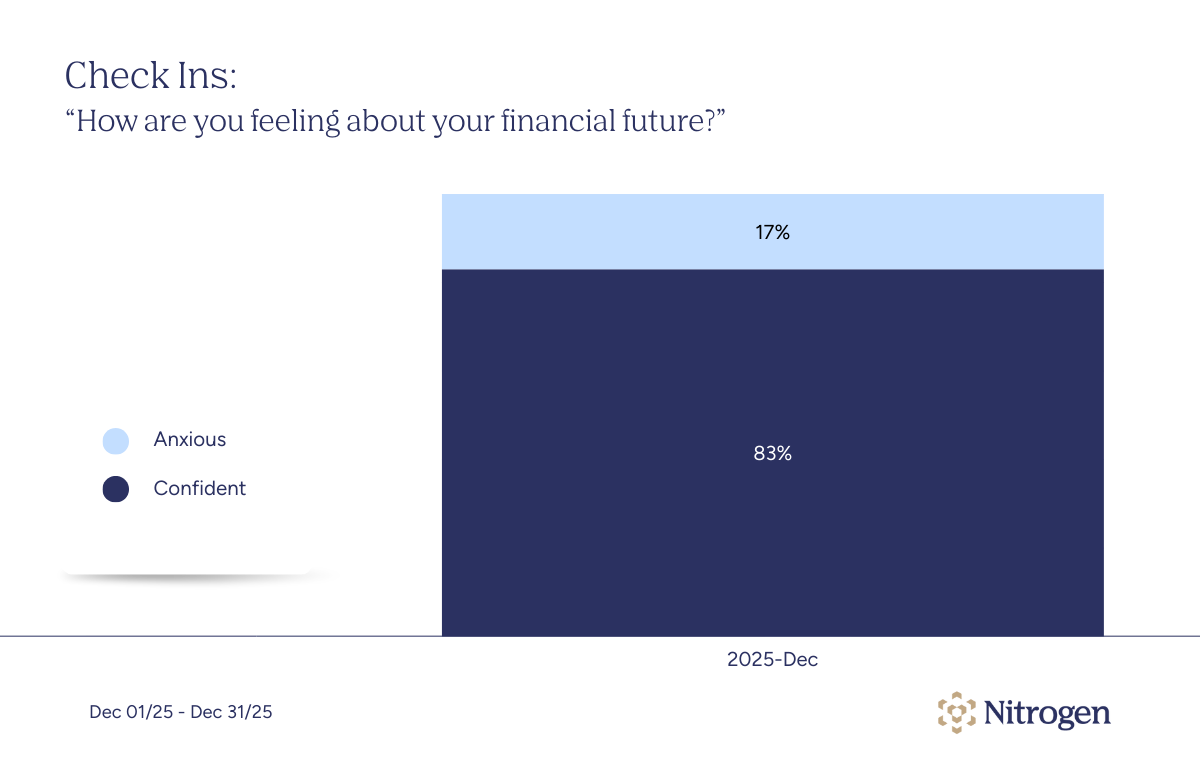
But our data tells a different story. In December, 83% of clients reported feeling confident about their financial future. That was the highest reading we recorded all year. Confidence rebuilt after a soft spring and strengthened through the second half as markets recovered. While the general public grew more anxious, clients remained steady.
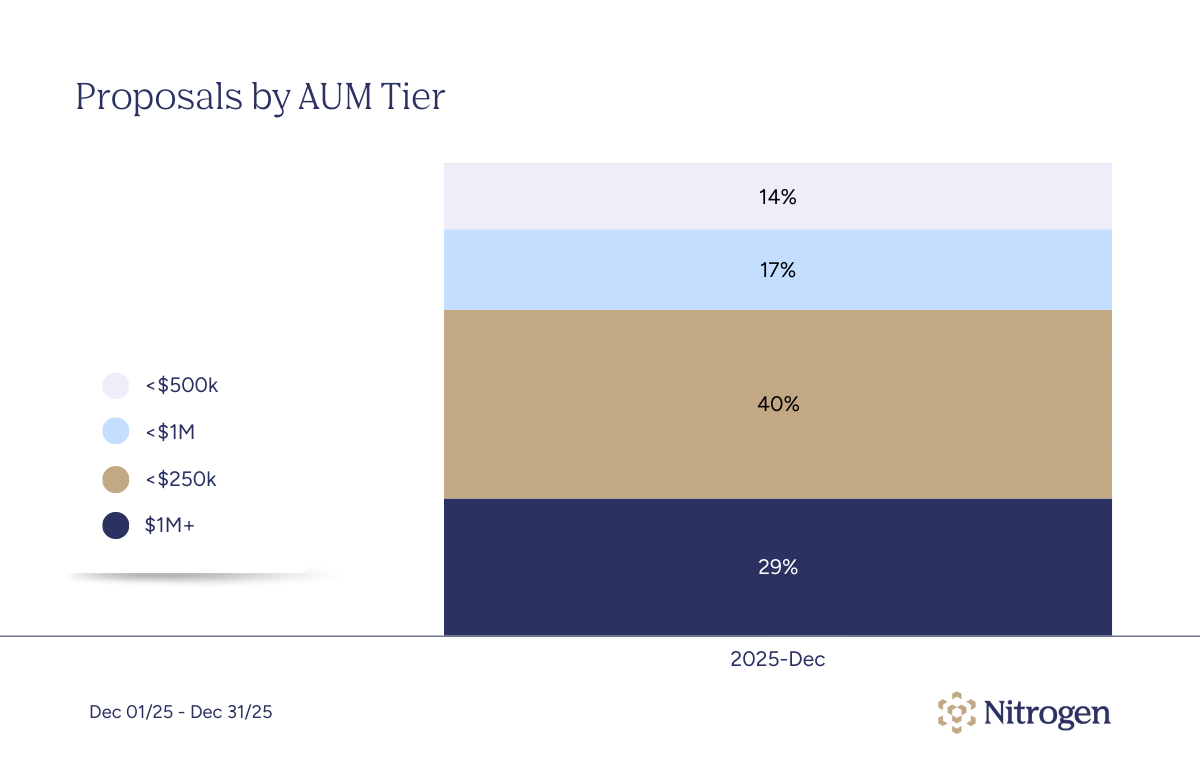
The difference could reflect the client base advisors work with every day. More than 60% of advisors on Nitrogen serve households holding over $250,000 in net worth, and a significant share serve clients north of $1.0 million. For these households, economic pressure shows up differently. Strong market gains tend to outweigh higher grocery bills or rising prices for essentials.
This data also lines up with what we heard from advisors throughout the month. The usual year-end “noise” was missing. There were fewer reactive calls and less pressure to make last-minute changes to portfolios. Because client sentiment was so high, reviews stayed focused on progress and long-term positioning rather than reassurance.
Investor sentiment follows the rally
That sense of security was reinforced by what clients saw on their screens every day. It’s much easier to feel confident about the future when the market is performing in the present. While the headlines were full of geopolitical threats, stocks barely noticed. Equity indices finished the year with double-digit gains and sat near record highs.
The sentiment data from our data reflects this tailwind.
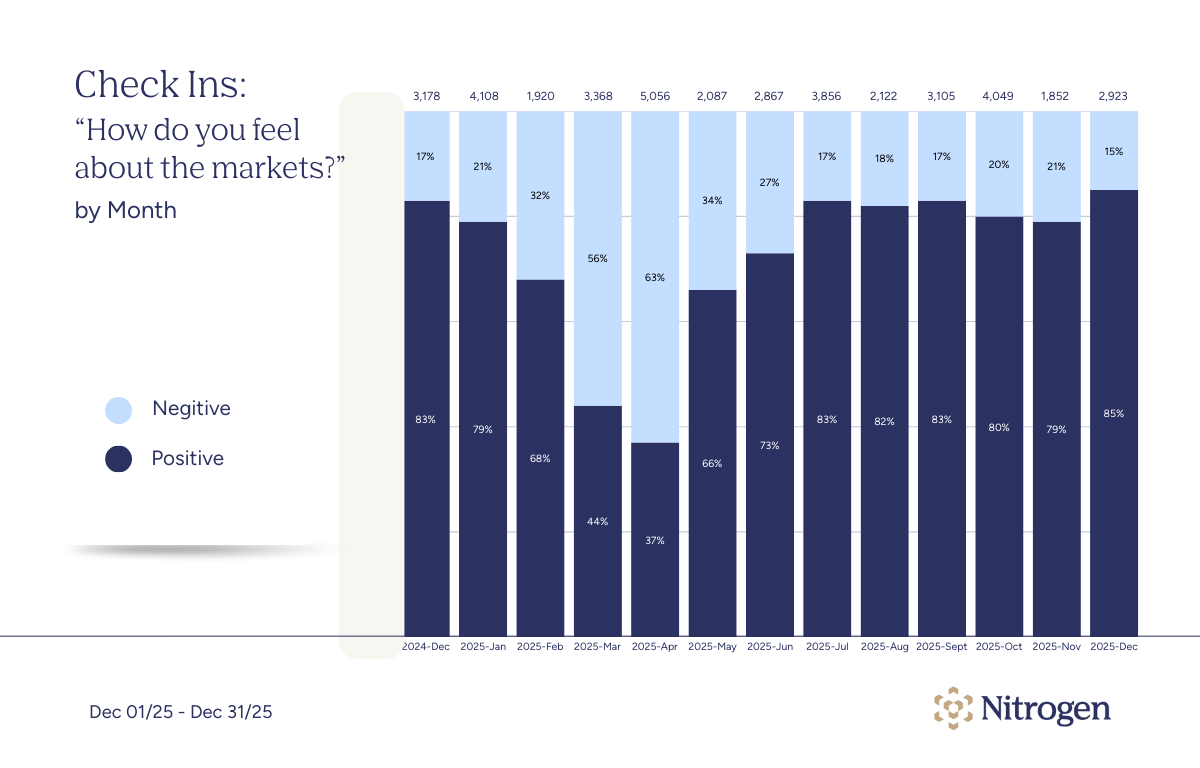
In December, 85% of clients reported feeling positive about the markets. Like personal confidence, this was the highest reading we saw all year. The optimism that began building in the summer carried through to the end of 2025.
When confidence holds at this level, the advisor’s job changes. The role shifts from calming fear to maintaining momentum. Meetings move faster and the planning process stays on track because market anxiety no longer slows things down.
How advisors responded
So, with clients feeling great and the markets hitting record highs, you might expect to see a shift in strategy. It would be natural for some to want to chase the end-of-year rally or lean harder into equities.
The data, however, points in the opposite direction. Advisors encouraged clients to stay the course.
As sentiment climbed, advisors barely adjusted their allocations in proposals. Nitrogen’s data shows that equity allocations held within a very tight range throughout the month. Most hovered around the low-50% mark. Advisors didn’t overhaul their models or ramp up risk just because the mood had improved.
Cash and fixed income allocations followed the same pattern. Allocations to these assets stayed remarkably consistent in December. We saw no rush to dump cash or rotate out of defensive positions to capture more of the equity rally. Advisors simply maintained the balance they had already established.
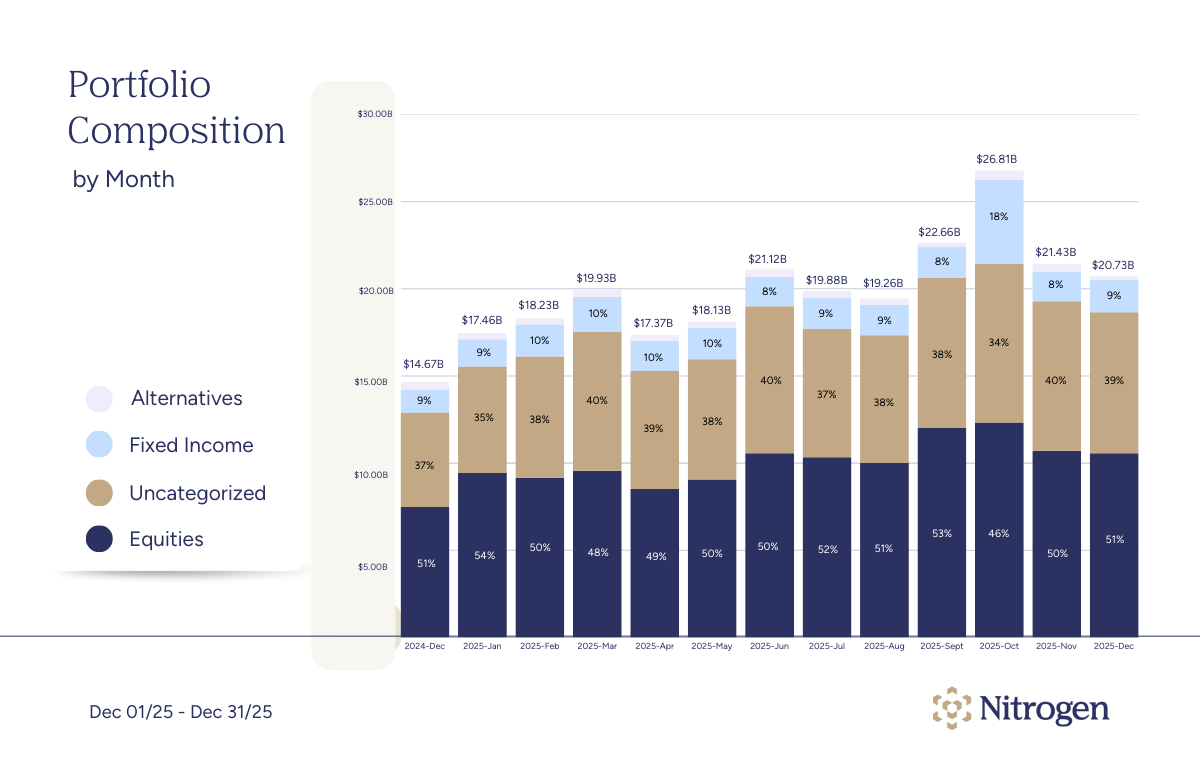
In other words, this restraint is the real story. Advisors absorbed the holiday optimism without letting it dictate strategy.
December brings a holiday slowdown
This advisor restraint was likely possible because much of the heavy lifting had already happened. By the time the markets began their year-end sprint, most strategies were already in place. This is reflected in the natural rhythm of the month. December is rarely an urgent time for the wealth management industry. Most advisors see their calendars clear out by the second or third week. Client meetings drop off as families start thinking about the holidays. The focus moves to finishing reviews and locking in allocations while new projects tend to wait until January.
Our data backs up this seasonal shift.
Average daily proposal volume on Nitrogen dropped to roughly $1.0 billion in December. This was a step down from $1.2 billion proposed in November, which was the most active month of the year.
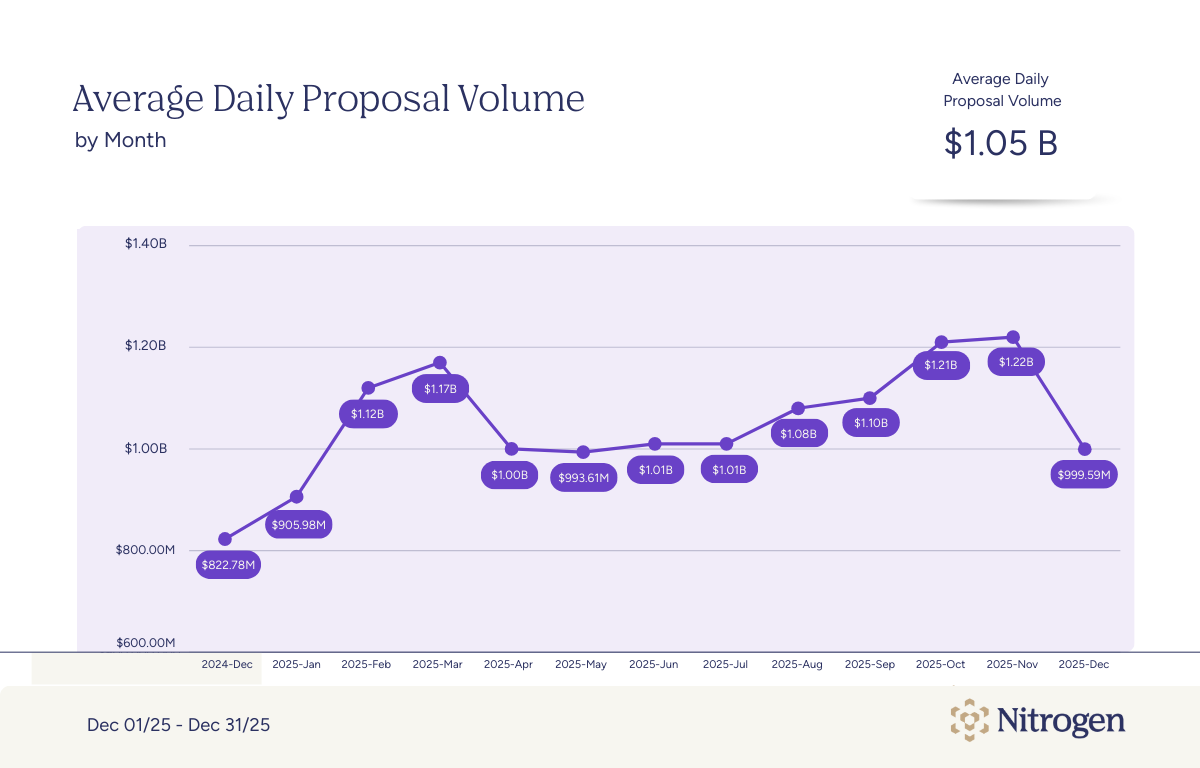
This looks more like completion than caution. Advisors didn’t pause because they were worried about headlines. They slowed down because most of the work was already done.
The bottom line
As the year closed, discipline stood out more than any surge or pullback. Advisors finished the year with a clear-eyed restraint in the face of bad news. When the headlines were shouting about invasions and layoffs, the data shows advisors sticking to their plans, reinforcing progress, and staying focused on what matters.
Where does your firm stand on these signals and shifts? Join the advisors using data to drive client decisions. Book a demo today.
About Nitrogen Signals & Shifts
Each month, Nitrogen analyzes proposal and sentiment data from across its product suite to help advisors understand what’s driving client decisions. With more than 1,000 proposals created daily, these insights highlight how advisors adapt and how investors stay invested. Thank you for reading this edition of Nitrogen Signals & Shifts. The next issue will be published in early February. Subscribe at the top of this post so you never miss an update.