


Client Anxiety Hit a One-Year High. Did It Move Portfolios?
March didn’t give investors much room to relax.
Markets slid, oil prices jumped, and geopolitical tensions escalated quickly. It was the kind of environment where confidence gets tested and headlines start to drive the conversation.
But when you look at what advisors were actually doing, the picture is steadier than you might expect.
Each month, we analyze more than 1,000 advisor-generated portfolio proposals per day to understand how portfolios are evolving in real time. In March, sentiment clearly shifted as volatility picked up and clients grew more cautious.
At the same time, advisor behavior remained consistent. Activity stayed elevated, and portfolios moved far less than the broader market narrative might suggest.
The signals below highlight where sentiment changed and where discipline held.
Signal 1: Client anxiety jumps to its highest level in a year
Investor sentiment turned quickly in March.
Over 48% of clients reported feeling negative about the markets, up from just 17% in February. More importantly, 34% said they feel anxious about their financial future. That is the highest level of anxiety recorded since the tariff-driven volatility in April 2025.
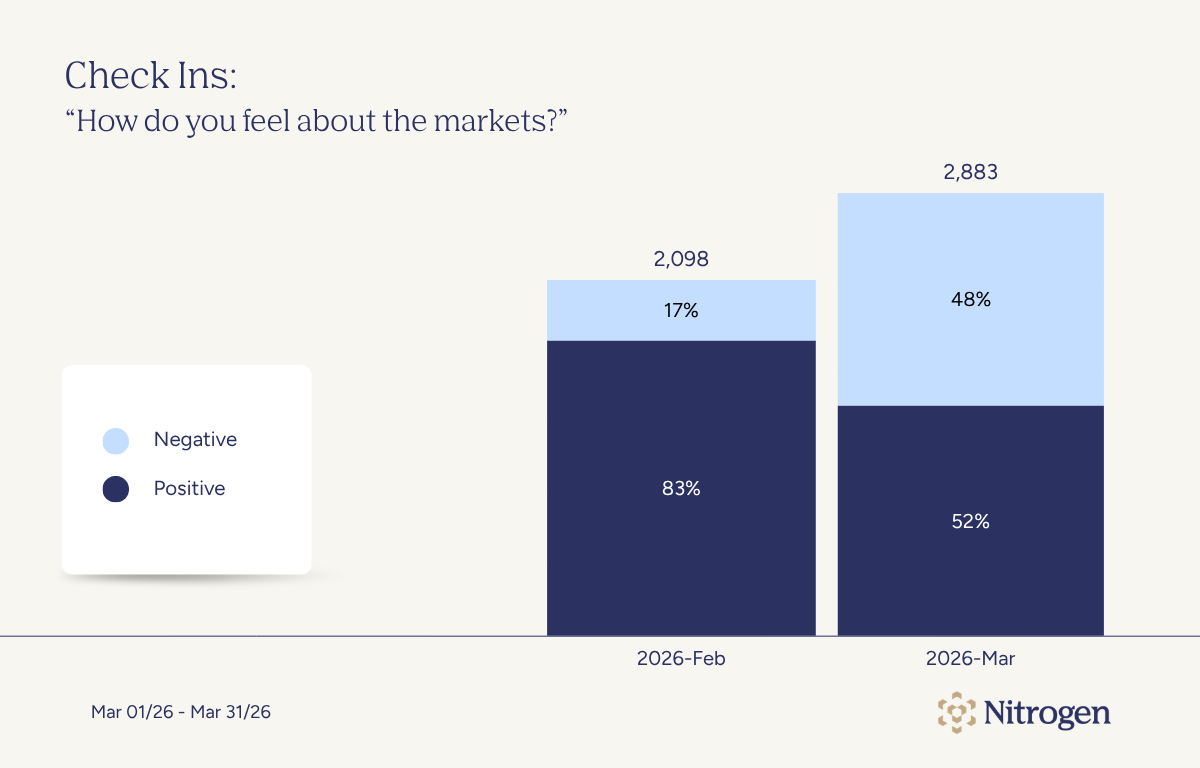
This represents a clear shift from the steady optimism seen earlier this year. Sentiment is no longer broadly positive. It’s split, and anxiety is rising alongside it.
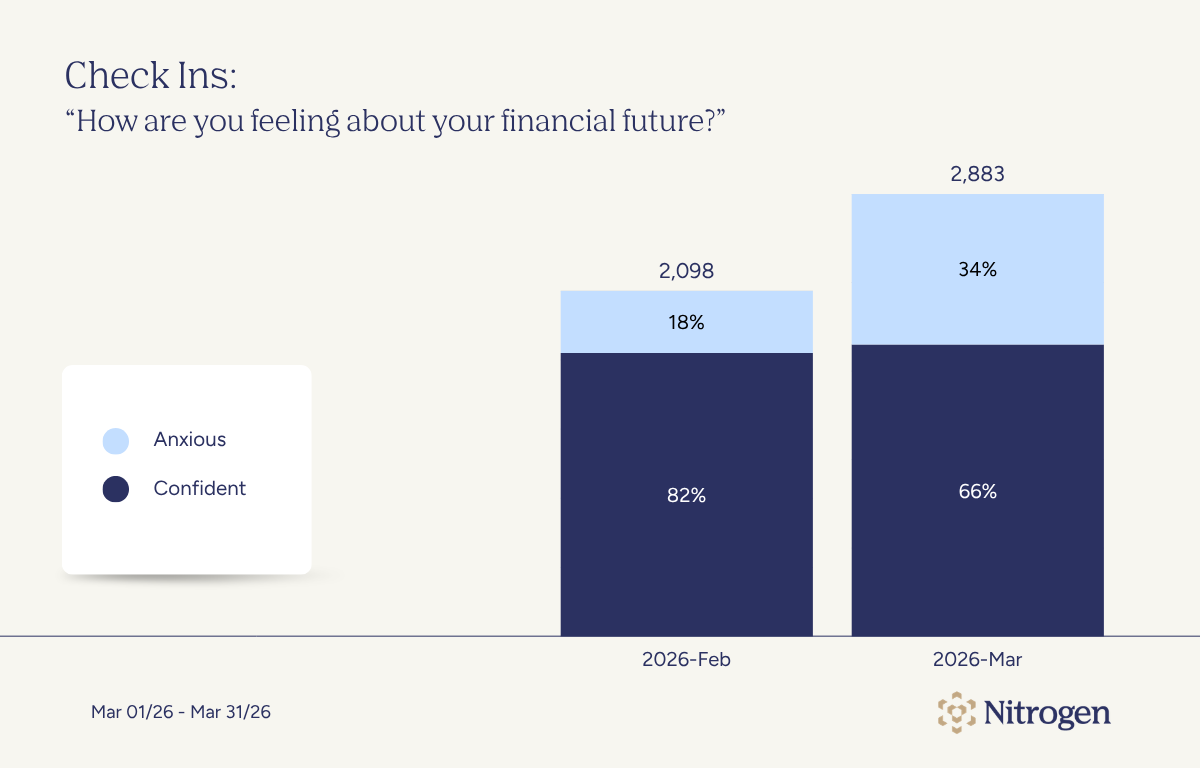
For advisors, the shift is less about the number and more about the speed. When sentiment changes this quickly, clients are more likely to question decisions they were comfortable with just weeks ago. This is where proactive outreach and clear framing matter most.
Signal 2: Portfolios didn’t follow the headlines
Even as sentiment turned more negative, portfolio allocations barely moved.
Equities accounted for roughly 50% of allocations in March, with fixed income at 8%. Those levels are essentially unchanged from February.
That stability stands out. In a month defined by sharp market moves and rising anxiety, there was no broad shift out of equities or into defensive positions.
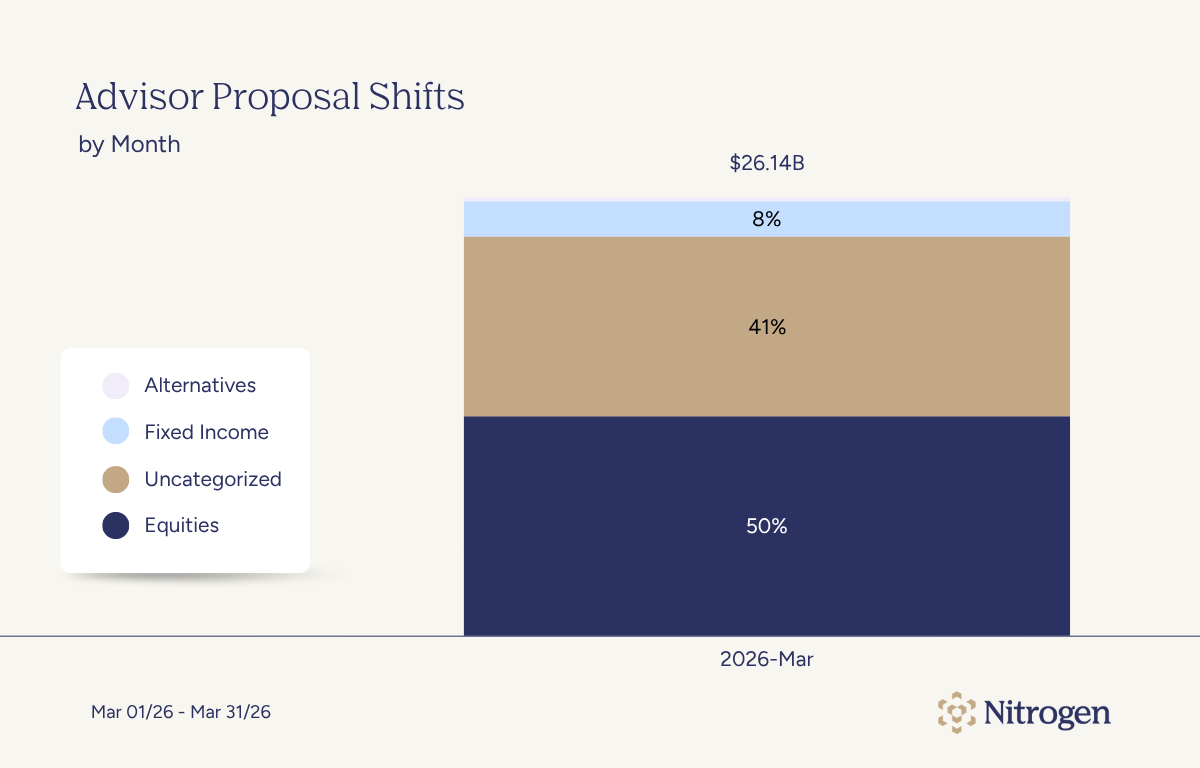
Advisors aren’t repositioning portfolios in response to short-term volatility. They’re staying the course, even as client sentiment becomes more uncertain.
Signal 3: Cash edged up, slightly
Money market allocations rose slightly in March, reaching 6.9% of portfolios. In dollar terms, that’s $1.80B in cash and money market allocations against $26.1B in total proposed volume.
That increase is real, but still modest from 6.1% in February. In a month where nearly half of clients reported feeling negative about the markets and anxiety about the financial future hit its highest level in a year, a much larger rotation to cash would have been understandable. It didn’t happen.
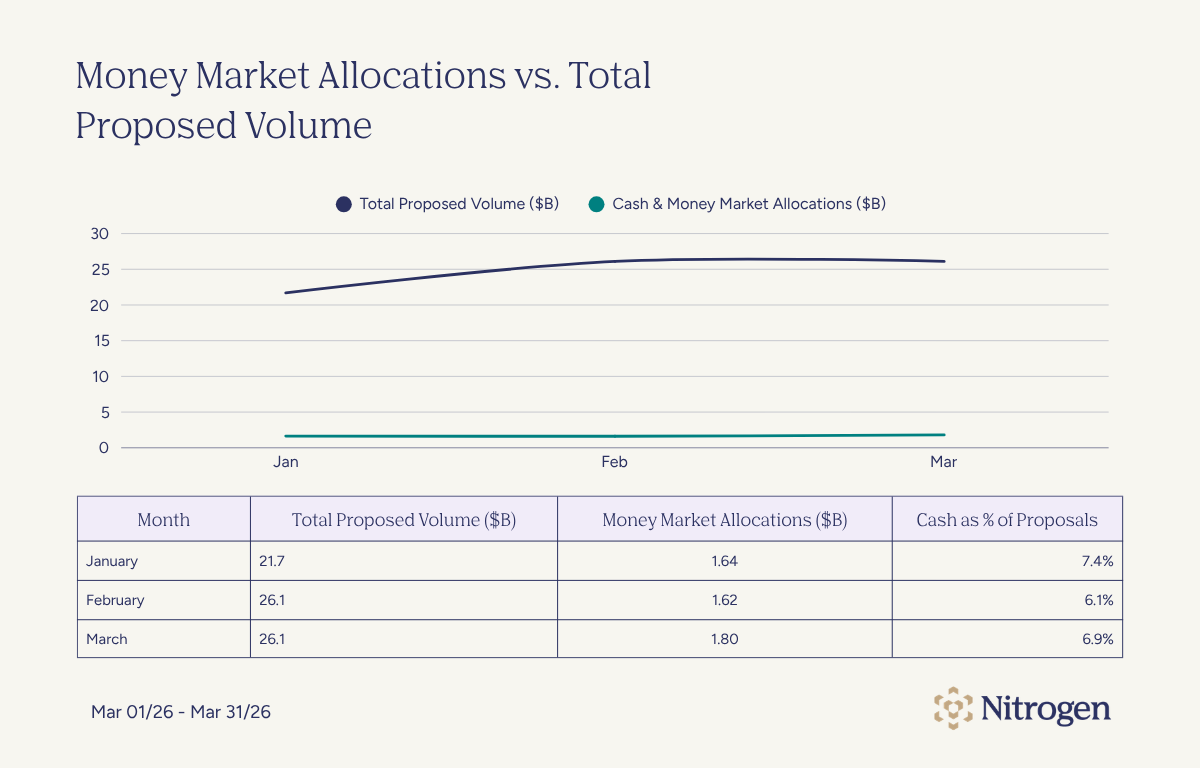
Advisors moved the dial slightly toward liquidity without abandoning their positioning. It suggests advisors are acknowledging client anxiety without letting it drive portfolio decisions.
Signal 4: Engagement stays high as volatility rises
Advisor activity remained elevated in March.
Average daily proposal volume reached $1.25B, down from February’s peak but still well above typical levels.
In a more volatile environment, that level of activity stands out. Advisors didn’t step back as markets became more uncertain. They continued building proposals and engaging with clients.
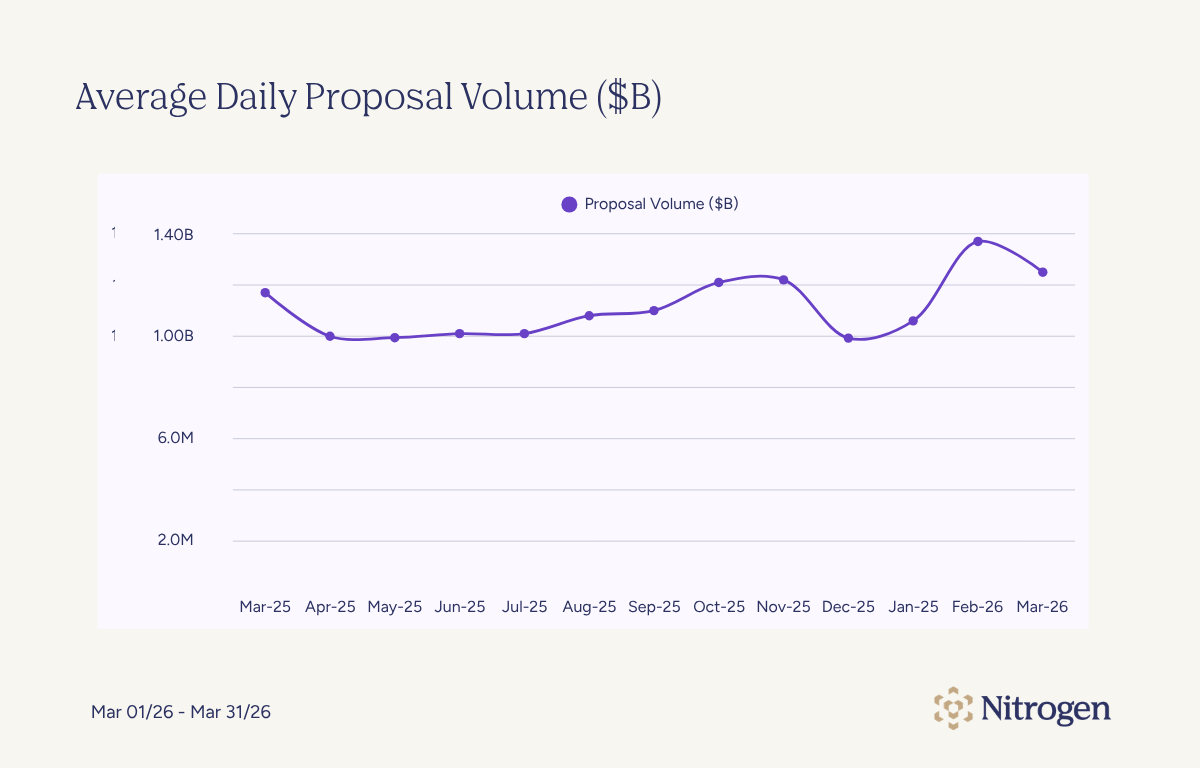
In other words, activity isn’t dropping off. It’s shifting toward conversations and portfolio reviews rather than reactive changes. Advisors are staying present without chasing the market.
Signal 5: The lineup shifted, but the core held
The core building blocks of advisor portfolios remained firmly in place in March.
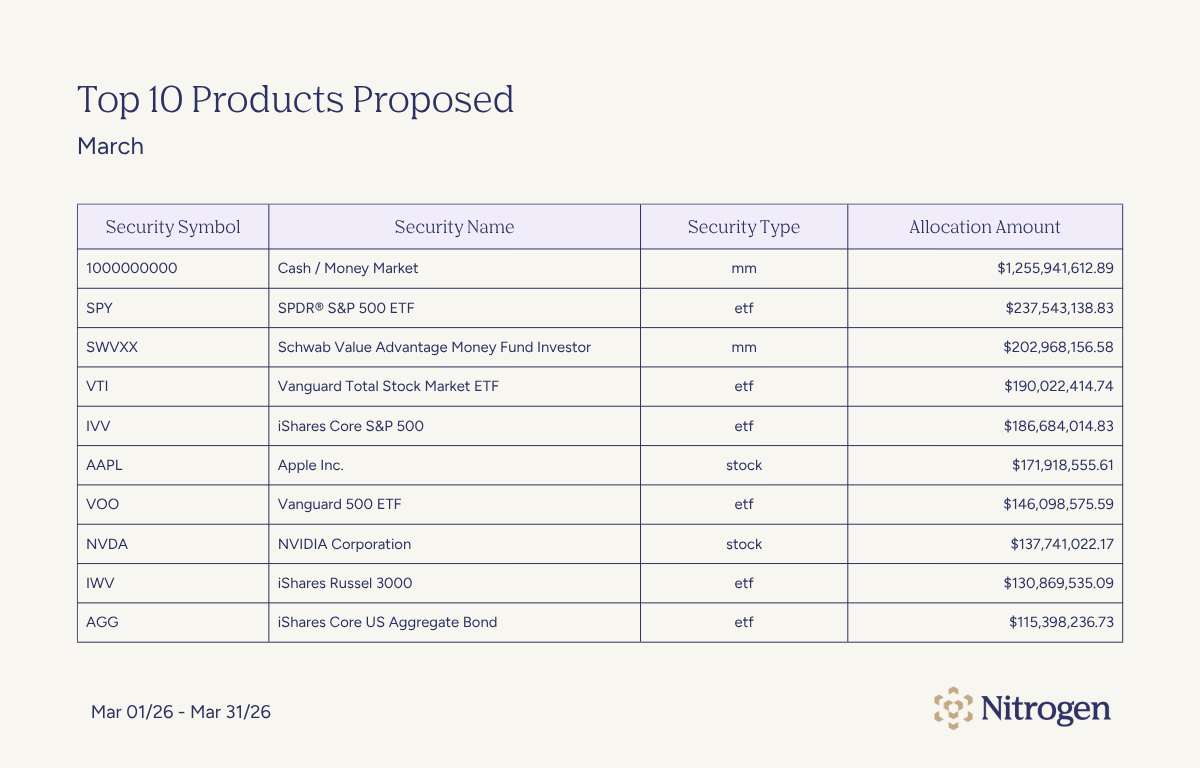
S&P 500 ETFs, large cap equities, and core bond exposures continued to dominate proposals. Cash and money market positions held the top spot, and SPY, IVV, VOO, and AGG all stayed anchored in the top ten.
The moves at the margins are worth noting though.
QQQ and First Trust Direct Indexing US All Cap both dropped out of the top ten from February. Vanguard Total Stock Market ETF (VTI) and iShares Russell 3000 (IWV) took their place, a shift away from concentrated, tech-heavy exposure toward broader market coverage.
Advisors weren’t abandoning equities or moving to the sidelines. They were widening their equity exposure across a larger slice of the market, in a month where volatility gave them every reason to do otherwise.
Discipline under pressure
The data from March points to a clear dynamic.
Clients are more anxious. Advisors are staying steady.
Sentiment shifted quickly as volatility picked up. But portfolios didn’t follow the same path. Allocations held. Cash levels remained stable. Core holdings stayed in place. At the same time, advisor activity remained elevated as client conversations increased.
This is what disciplined portfolio management looks like in a more uncertain market.
For advisors, the implication is different from what it was just a month ago. Periods of stress aren’t a signal to make sweeping changes. They’re a test of alignment. A test of whether portfolios match client expectations. And a test of whether clients can stay invested when it matters most.
Nitrogen helps advisors use data like this to anchor better client conversations. See how it works by booking a demo.
About Nitrogen Signals & Shifts
Each month, Nitrogen analyzes proposal and sentiment data from across its platform to help advisors understand what’s driving client decisions. With more than 1,000 proposals created daily, these insights highlight how advisors adapt and how investors stay invested. Thank you for reading this edition of Nitrogen Signals & Shifts. The next issue will be published mid-May. Subscribe today so you never miss an update.