


Client Confidence Stayed High in February. So Why Did Advisors Trim Risk?
Markets gave investors plenty to feel good about in February.
The Dow Jones Industrial Average crossing the 50,000 mark made headlines, and our investor sentiment data stayed firmly in optimistic territory. If you were looking for reasons to feel upbeat about the market, they weren’t hard to find.
But Nitrogen’s latest proposal data tells a more nuanced story.
Each month, we analyze more than 1,000 advisor-generated portfolio proposals per day to see how portfolios are evolving in real time. February’s data shows advisors staying active, but disciplined. Sentiment remained strong, activity picked up, and portfolios continued to evolve as advisors moved through a period of heightened client engagement early in the year.
The signals below highlight where conviction is building and where discipline is holding.
Signal 1: Client Mood is Firmly Positive
Investor sentiment remained elevated in February.
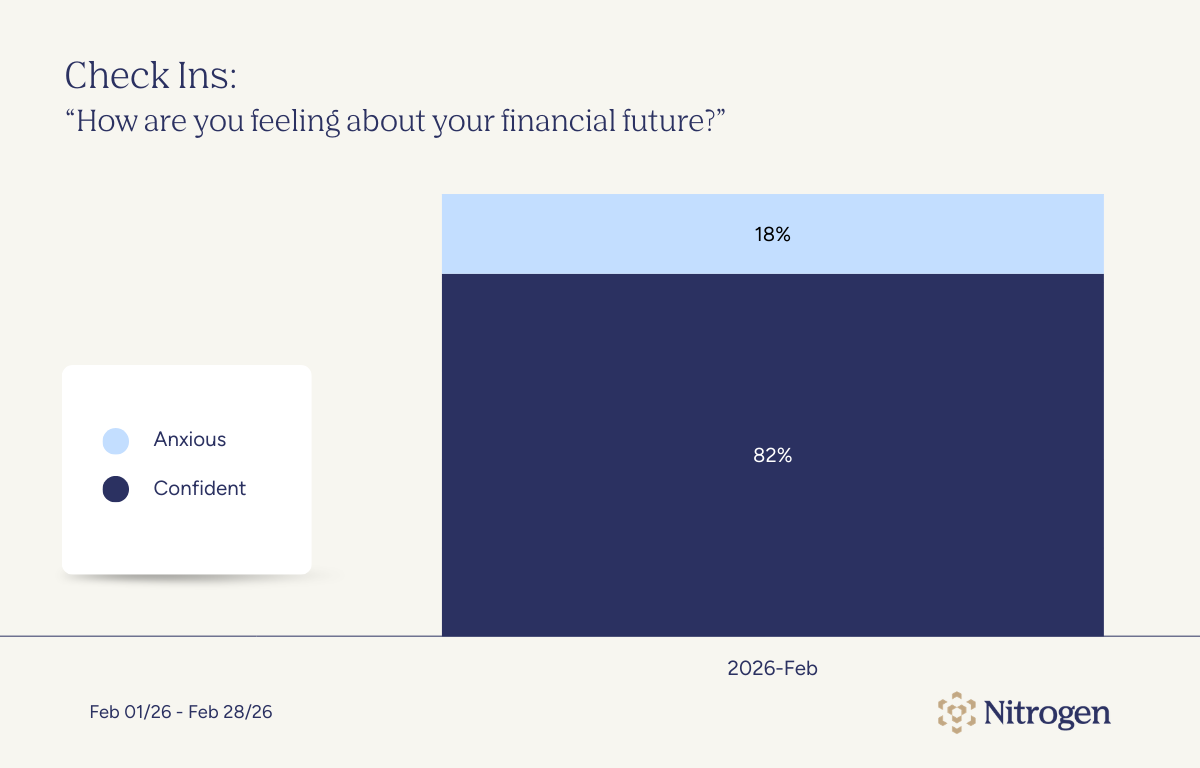
83% of clients reported feeling positive about the markets, while 82% said they feel confident about their financial future.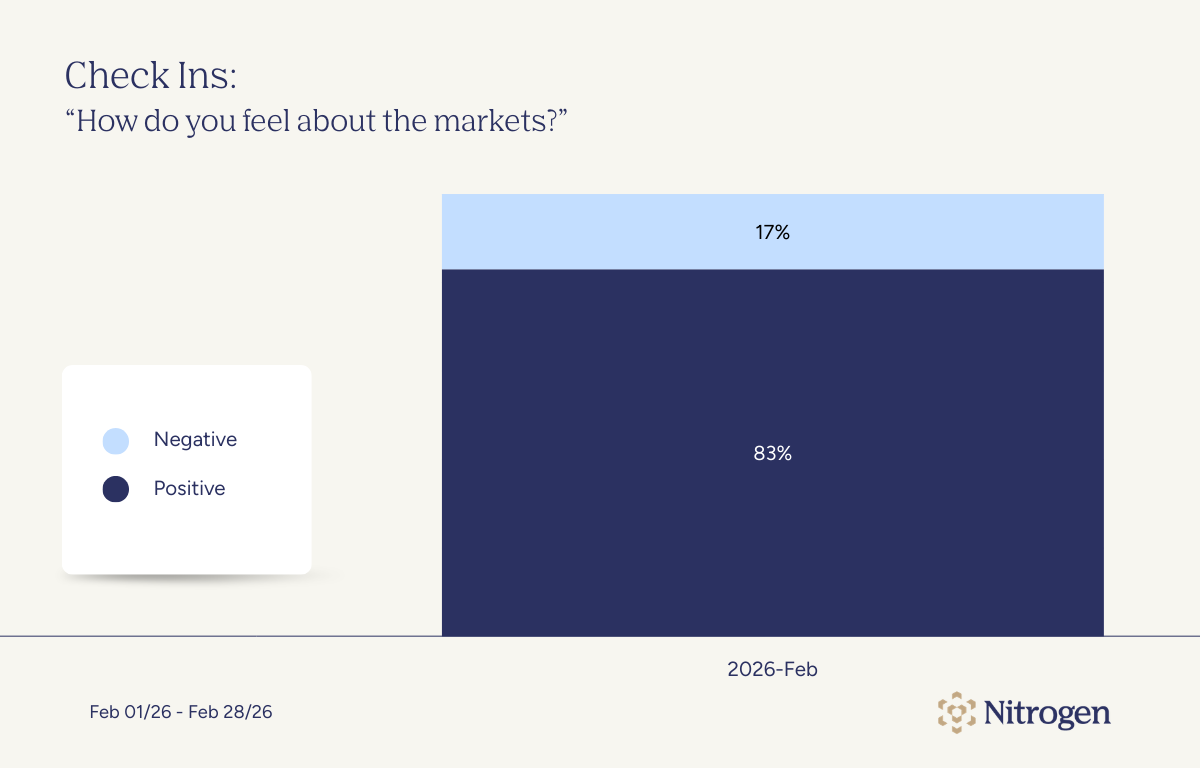
This marks a continuation of the steady climb in sentiment seen over the past several months. Confidence has not only recovered from earlier volatility, it has also stabilized at a high level.
For advisors, this creates a different kind of challenge. When clients feel good, conversations shift away from risk management and toward participation. The question becomes less about protecting downside and more about staying aligned with long-term goals without overextending.
Signal 2: Risk is Being Trimmed, Not Chased
Even as sentiment remains strong, portfolios are not becoming more aggressive.
Equities accounted for 50% of portfolio allocations in February, down from 53% in January.
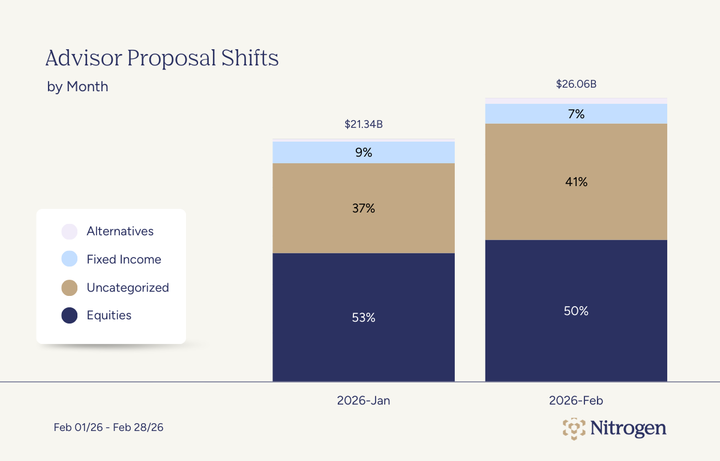
This is not a large move, but it is a meaningful one. Advisors appear to be using market strength to rebalance rather than increase exposure.
The takeaway: portfolios are being adjusted at the margins, not repositioned wholesale. Advisors are maintaining exposure while quietly managing risk.
Signal 3: Cash Is Becoming Less Prominent, Not Disappearing
Liquidity is starting to move, but slowly.
Money market allocations totaled $1.62B in February, compared to $1.64B in January, even as overall proposal volume increased.
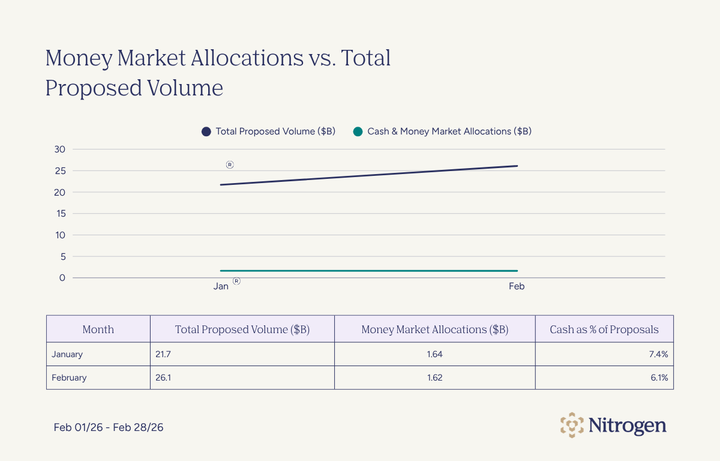
Importantly, dollar allocations to money markets remained relatively stable month over month. The shift is being driven more by rising activity than by a sharp rotation out of cash.
This suggests advisors are not rushing capital back into the market. Instead, they are redeploying selectively while maintaining flexibility.
Signal 4: Advisor Activity Signals Engagement, Not Urgency
Proposal activity accelerated meaningfully in February and reached all-time highs.
Average daily proposal volume hit $1.37B, up from $1.06B in January.
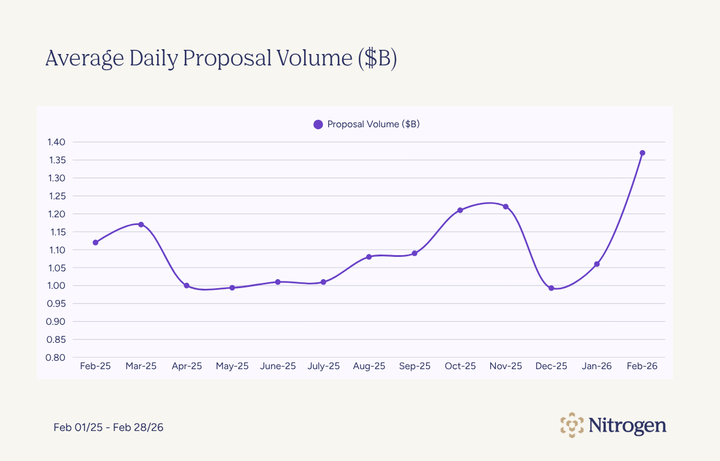
This represents the highest level of activity in the past year and reflects a seasonal surge as advisors reconnect with clients and revisit portfolios after year-end.
But the composition of those proposals matters more than the volume. The data shows increased engagement without a corresponding increase in risk-taking.
Advisors are active, but not reactive.
Signal 5: Portfolio Construction Is Getting More Intentional
The usual suspects still dominate advisor proposals, but a couple of shifts are worth noting.
Familiar building blocks like the S&P 500 and core bond ETFs remained prominent.
Over the past year, Invesco QQQ Trust (QQQ) ranked as the 10th most commonly proposed product on the platform but in February, it jumped to fourth place.
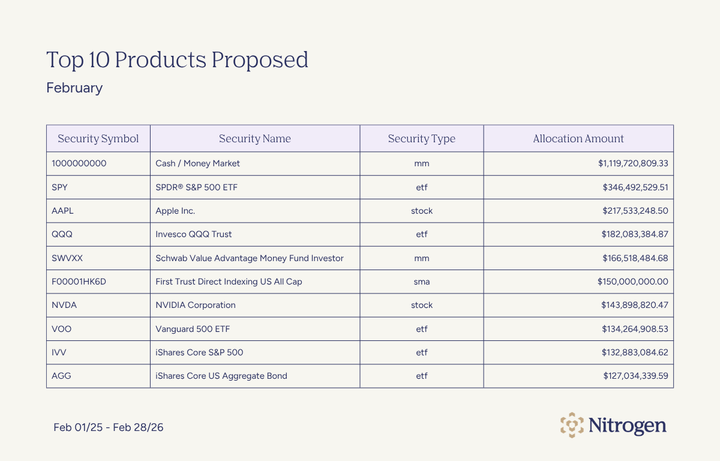
That move suggests some advisors are leaning a bit harder into technology exposure.
Another notable development: direct indexing strategies appeared among the most proposed solutions, pointing to increased demand for customization and tax efficiency.
This combination, broad beta with selective tilts and customization, suggests portfolios are becoming more intentional without becoming more complex.
The Bigger Picture: Discipline in a Strong Market
The data from February points to a clear dynamic.
Clients are confident. Advisors are cautious.
Proposal activity is rising, but risk exposure is being managed carefully. Cash is being redeployed, but not all at once. Portfolios are evolving, but through incremental changes rather than sweeping shifts.
This is what disciplined portfolio management looks like in a strong market.
For advisors, the implication is clear. Periods of optimism are not a signal to take on more risk. They are an opportunity to refine portfolios, reinforce long-term plans, and ensure clients stay aligned with their goals.
The work may be quiet, but it is critical.
Where does your firm stand on these signals and shifts? Join the advisors using data to drive client decisions. Book a demo today.
About Nitrogen Signals & Shifts
Each month, Nitrogen analyzes proposal and sentiment data from across its platform to help advisors understand what’s driving client decisions. With more than 1,000 proposals created daily, these insights highlight how advisors adapt and how investors stay invested. Thank you for reading this edition of Nitrogen Signals & Shifts. The next issue will be published mid-April. Subscribe at the top of this post so you never miss an update.