


Clients Felt Better in April. So Why Did Proposal Activity Drop?
April gave advisors an interesting mix.
Markets moved higher. Volatility eased. Economic data stayed relatively strong. But clients weren’t exactly feeling confident. Market and client sentiment were telling two different stories at the same time, and advisors had to navigate both.
Each month, Nitrogen analyzes more than 1,000 advisor-generated portfolio proposals per day to better understand how advisors are adjusting portfolios in real time. In April, the data pointed to a measured shift: clients calmed down, advisors put some cash back to work, and core portfolio risk stayed steady.
Signal 1: Client anxiety improved, but did not disappear
Client sentiment recovered from March’s anxiety spike.
In March, 48% of clients surveyed said they felt negative about the markets. In April, that number dropped to 34%, a meaningful improvement that suggests clients were feeling less reactive as markets stabilized and volatility cooled.
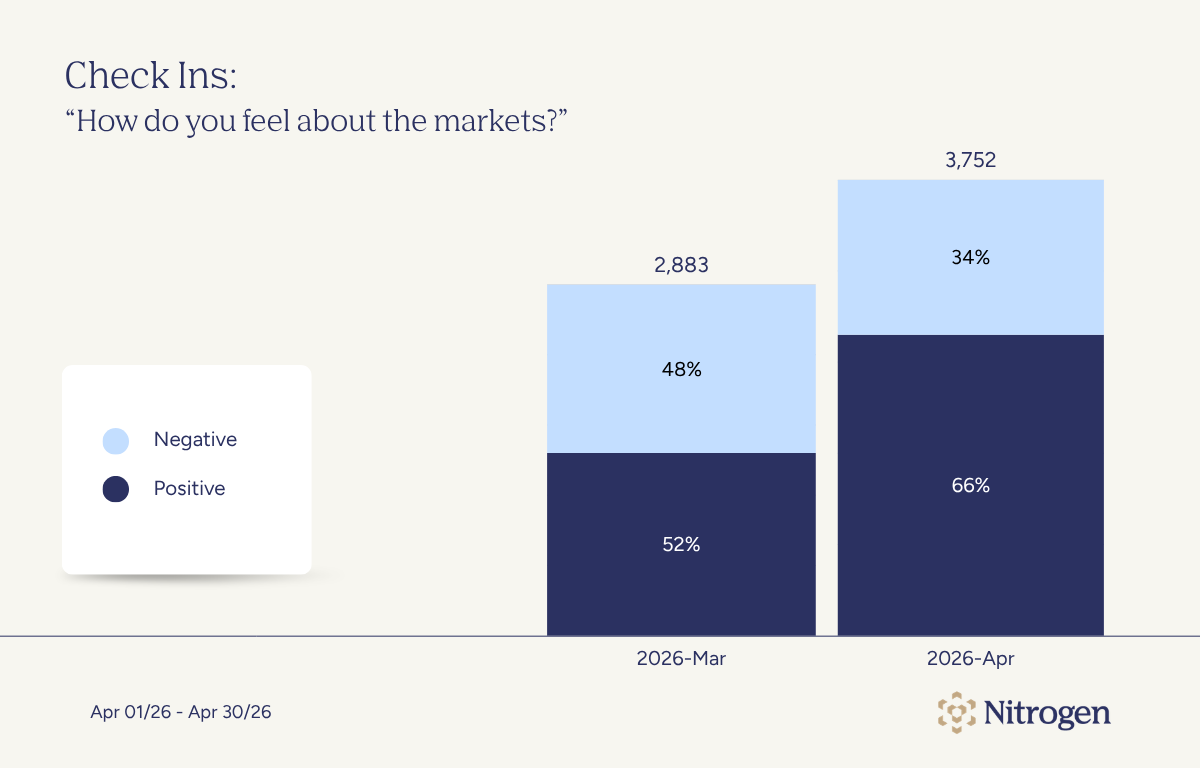
April 2026 Check Ins: How Do You Feel About the Markets?
Views about personal finances improved too.
In March, 34% of clients said they felt anxious about their financial future. In April, that number fell to 26%.
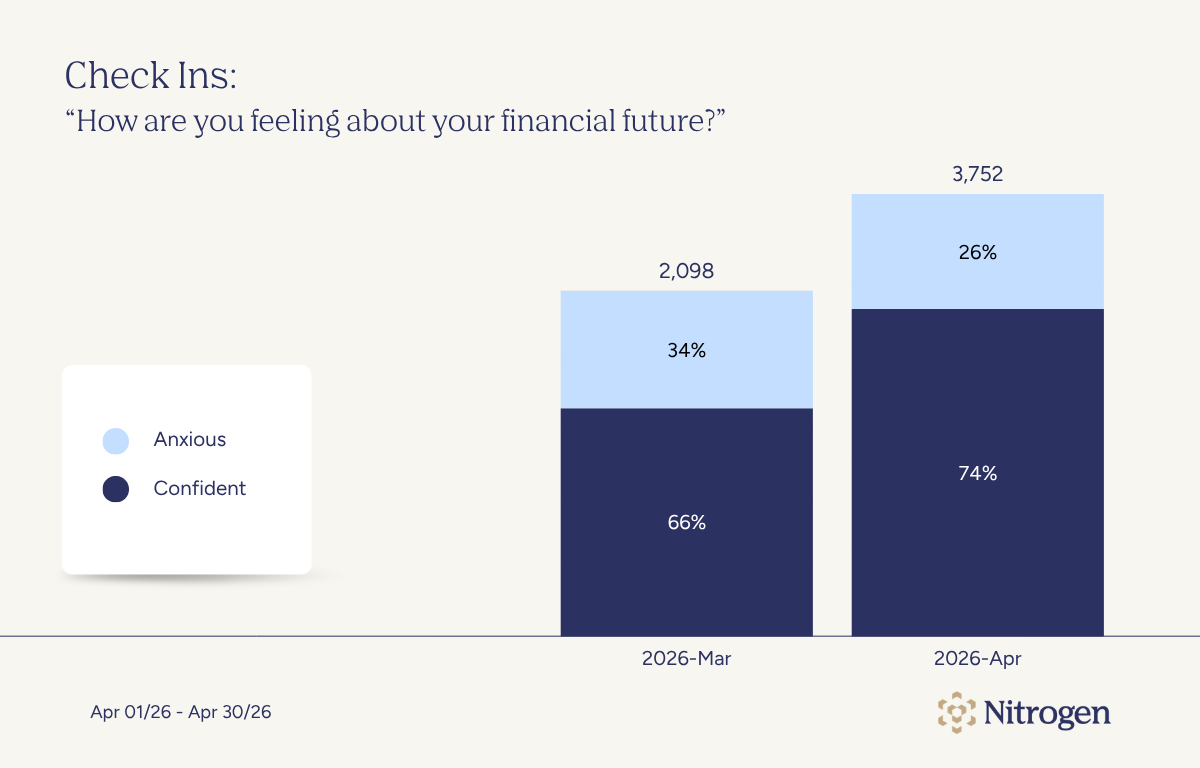
April 2026 Check Ins: How Are You Feeling About Your Financial Future?
Clients were still more worried about the broader market than their own financial future.
For advisors, that’s a useful signal. It suggests planning conversations may be helping clients separate short-term market concerns from their long-term financial goals.
Signal 2: Portfolio risk stayed steady
Despite stronger markets and improving sentiment, portfolio allocations barely moved.
Equities accounted for roughly 50% of allocations in April, the same level seen in March. Fixed income remained at 8%, also unchanged from the prior month.
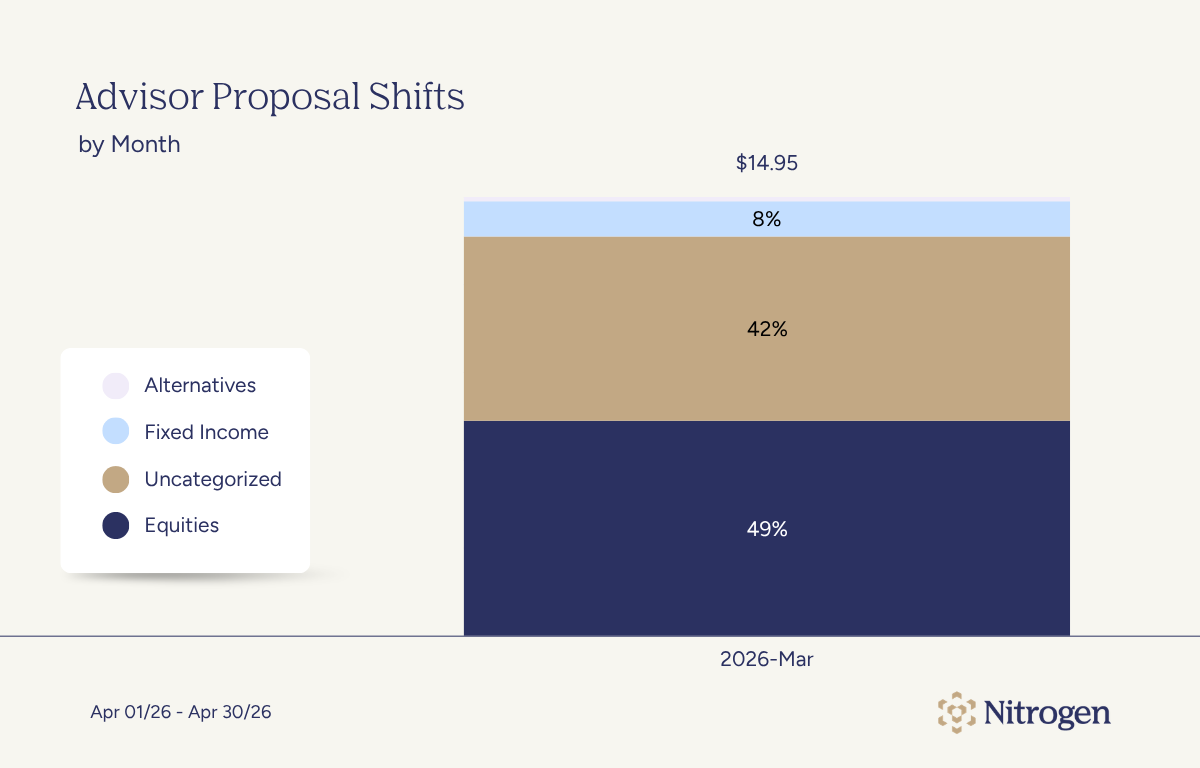
April 2026 Advisor Proposal Shifts
Advisors had an opportunity to chase the rally or pull back defensively. Broadly speaking, they did neither.
Instead, they kept portfolios aligned with longer-term positioning. That’s exactly the kind of discipline clients need when headlines and emotions start pulling in different directions.
Signal 3: Cash held steady
Money market allocations as a share of proposals held consistent in April.
Cash came in at 6.9% of total proposed volume, unchanged from March and up slightly from 6.2% in February.
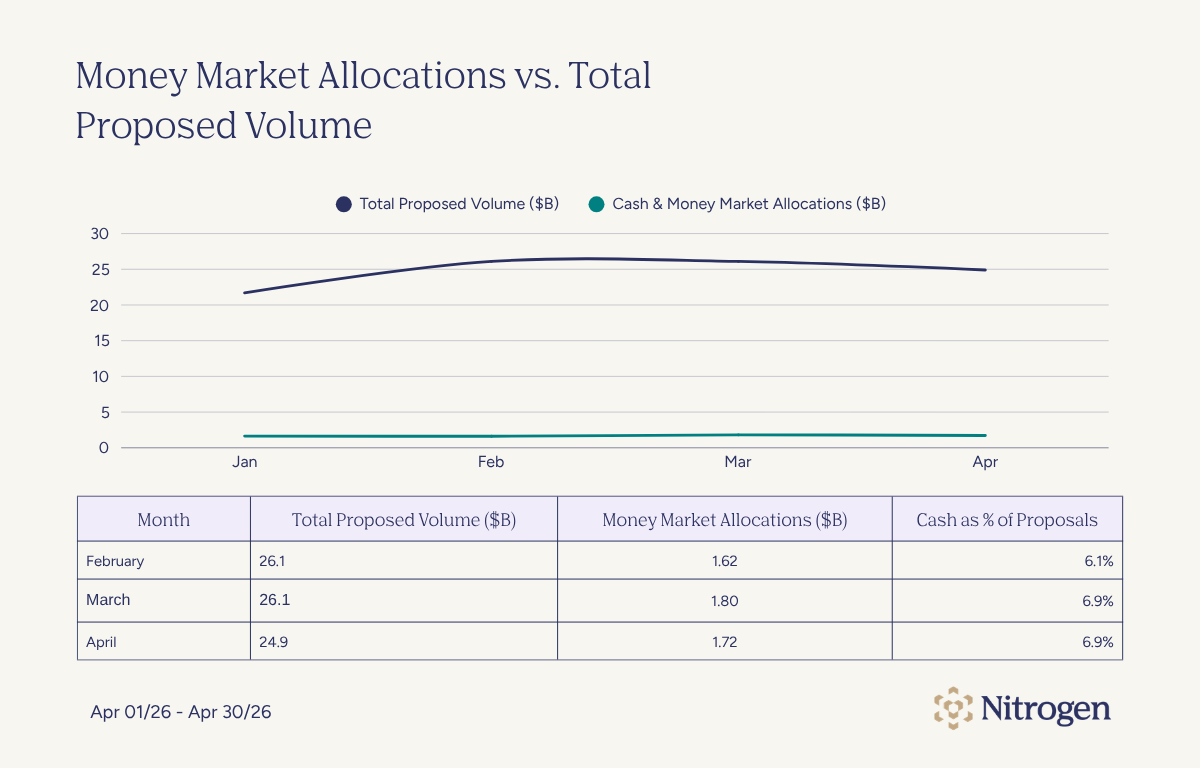
April 2026 Money Market Allocations vs. Total Proposed Volume
Advisors aren’t flooding into equities, and they aren’t retreating into cash either. Money market exposure has been stable for two consecutive months, a sign that most advisors are holding their positioning rather than reacting to short-term market moves.
Signal 4: Proposal activity pulled back after two elevated months
Advisor proposal activity dropped notably in April.
Average daily proposal volume came in at $918 million, down from $1.25 billion in March and $1.37 billion in February. To put that in context, the typical range over the prior year had been closer to $1.0–1.1 billion per day, meaning February and March were both outliers, and April came in below the norm.
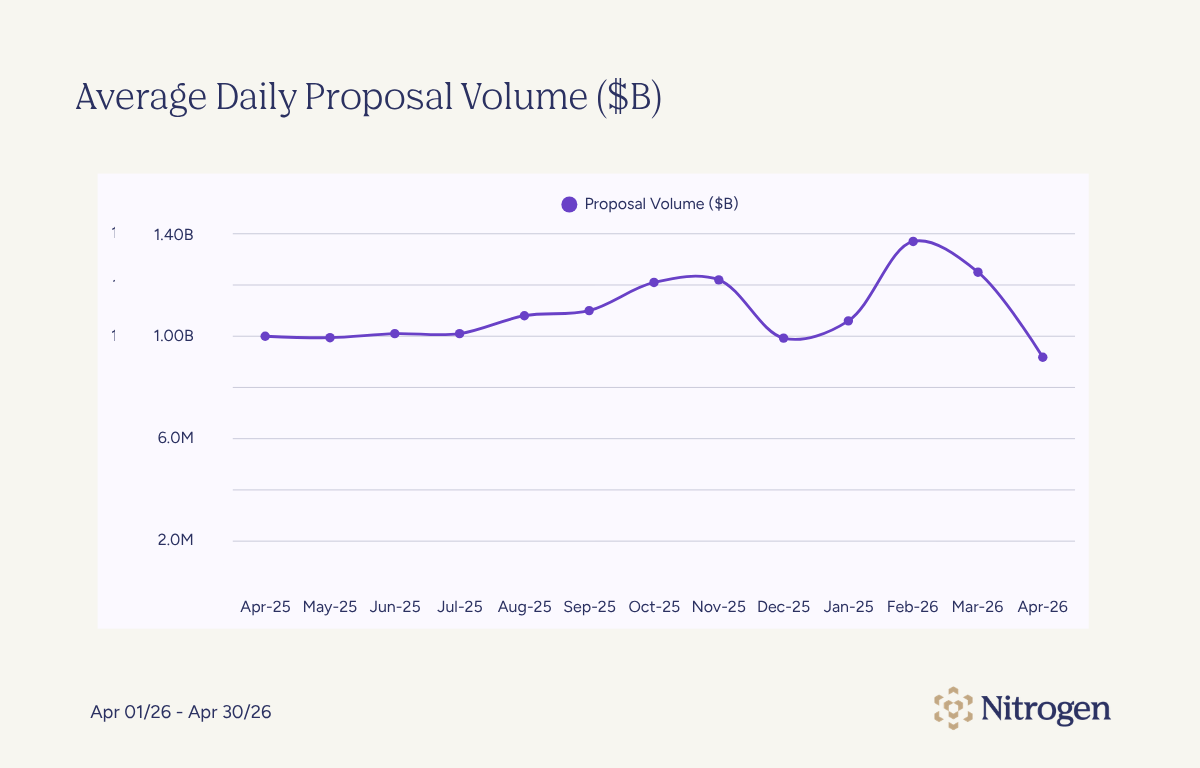
Average Daily Proposal Volume 2025-2026
The pattern makes sense when you look at what preceded it. February and March brought a spike in client anxiety, a jump in negative market sentiment, and elevated volatility. Advisors responded by doing more: more reviews, more proposals, more client conversations. By April, markets had stabilized, sentiment had improved, and there was less urgency driving the volume.
A quieter proposal month following two unusually active ones isn’t a concern. It’s what a catch-up cycle looks like on the way back to baseline.
Signal 5: Core holdings held, with one new standout
Mainstream index and bond funds continued to dominate advisor proposals in April.
Broad market exposure and core portfolio building blocks remained central to advisor activity.
But one holding stood out: NEOS Nasdaq-100 High Income ETF, QQQI, appeared as the second most purchased investment by dollars among advisors.
That’s notable because it had not previously appeared in the top 10 in prior months.
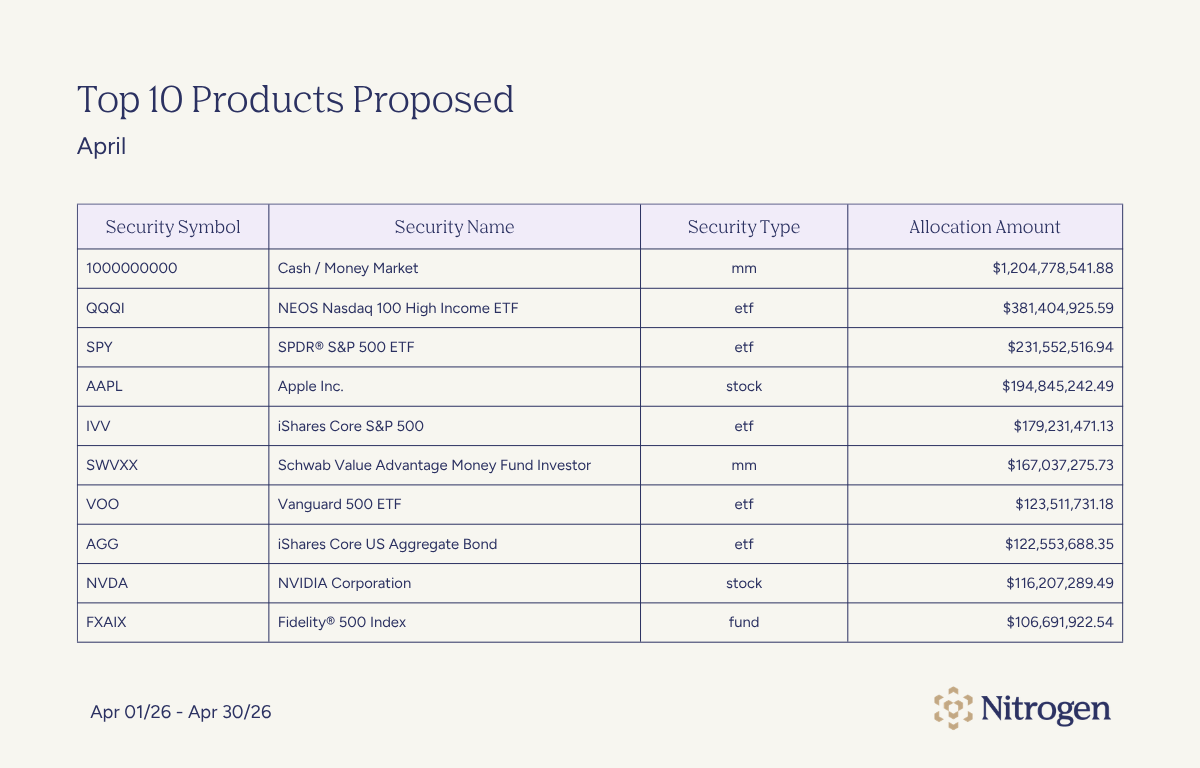
April 2026 Top 10 Products Proposed
It’s too early to call this a broader trend, but it’s a signal worth watching.
QQQI’s appearance suggests some advisors may be looking for ways to pair Nasdaq-100 exposure with an income-oriented strategy, especially while clients remain cautious despite stronger equity markets.
A measured redeployment, not a major reset
April’s data reflects a practical, disciplined month.
Clients felt better than they did in March, but they weren’t fully confident yet. Advisors responded by keeping portfolio risk steady, trimming cash allocations, and continuing to build proposals at a healthy pace.
The data does not show advisors making sweeping portfolio changes. But rather, it shows them refining how their clients are positioned.
Cash moved lower, but equities didn’t spike. Proposal activity cooled, but stayed active. Core holdings remained dominant, while QQQI’s appearance hinted at more interest in income-oriented equity exposure.
When market performance and client confidence diverge, advisors have a job to do: help clients separate what they feel from what their plan requires.
April’s data suggests advisors are doing exactly that.
See how advisors use Nitrogen data and Risk Number® insights to guide client conversations through changing markets. Book a demo today.
About Nitrogen Signals & Shifts
Each month, Nitrogen analyzes proposal and sentiment data from across its platform to help advisors understand what’s driving client decisions. With more than 1,000 proposals created daily, these insights highlight how advisors adapt and how investors stay invested. Thank you for reading this edition of Nitrogen Signals & Shifts. The next issue will be published mid-June. Subscribe here so you never miss an update.