


Estate Planning Conversations Shouldn’t Wait Until Retirement
Estate planning is often treated like a legal task. Something clients handle with an attorney, file away, and revisit only when life forces the issue.
But for advisors, estate planning can be much more than that.
It can be a relationship-building conversation. It can help clients clarify what matters, prepare the people they love, and make future decisions easier for their families. It can also help advisors build trust with spouses, children, and other key people who may one day inherit wealth.
That matters in an era shaped by the Great Wealth Transfer.
Advisors who wait until a client is older, ill, or already in transition may miss the chance to become a trusted resource for the next generation. If heirs only meet the advisor after a major life event, the relationship starts at a difficult moment. If the introduction happens earlier, trust has time to grow.
The key is knowing how to make the conversation relevant.
A 32-year-old new parent, a 48-year-old business owner, and a 72-year-old retiree aren’t thinking about legacy in the same way. They’re at different stages of life, with different responsibilities and family dynamics.
That’s why advisors need to adjust the conversation. At every stage, estate planning should help clients answer three practical questions:
- Who needs to know what?
- What decisions need to be documented?
- How can we make things easier for the people who may need to act later?
Here’s how advisors can make those conversations more useful across life stages.
Clients in their 20s and 30s: Make it about preparedness
Younger clients may hear “estate planning” and assume it doesn’t apply to them.
They may not have significant assets yet. They may be focused on paying down debt, buying a home, building savings, or starting a family. Some may think estate planning is only for older clients or people with complex wealth.
That’s why the conversation needs to feel practical, not intimidating.
For clients in this stage, estate planning is less about wealth transfer and more about preparedness. Marriage, home ownership, having a child, starting a business, and opening a 529 plan can all create decisions worth documenting.
Advisors can frame the conversation around the life the client is already building:
“You’ve made a lot of important decisions recently. Let’s make sure the right people know what you want and where to find what they need.”
That keeps the discussion grounded. It also helps younger clients see estate planning as a normal part of financial planning, not a topic reserved for later in life.
This is also a chance to build good habits early. When clients get comfortable talking about important decisions now, those conversations may feel easier as their lives become more complex.
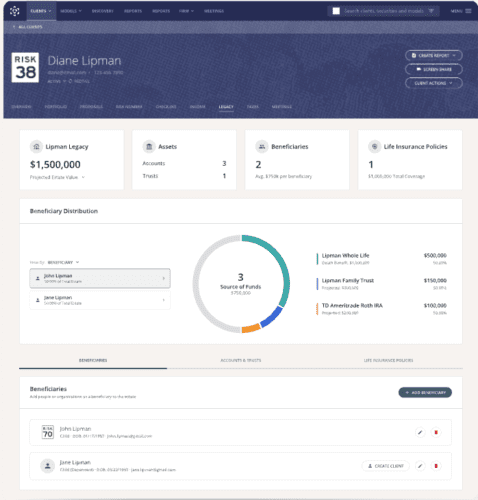
Nitrogen’s new Legacy Center helps clients visualize how assets may transfer across generations.
Clients in their 40s and 50s: Make it about coordination
By midlife, estate planning often becomes more layered.
Clients may be in their peak earning years. They may be raising children, helping aging parents, managing multiple accounts, or preparing for an inheritance. Some may own a business or may be thinking more seriously about charitable giving.
This is when estate planning becomes a family coordination issue.
Many clients in their 40s and 50s are already seeing what happens when planning conversations take place too late. They may be helping parents organize accounts, find documents, or figure out who’s responsible for what.
That lived experience can make them more open to organizing their own plan before there’s urgency.
Advisors can open the door with questions like:
“Who would need to be involved if something happened to you or your spouse?”
OR:
“Have your beneficiaries been introduced to the people who help manage your financial life?”
These questions shift the conversation from documents to continuity. They also give advisors a natural way to begin building relationships with key family members before a wealth transfer event occurs.
And that early connection is important.
If the advisor’s relationship is only with one person in the household, continuity can be fragile. A spouse may not understand the plan. Adult children may not know who the advisor is. Heirs may have no context for the guidance the advisor has provided over the years.
Estate planning conversations can help close that gap before decisions need to be made under pressure.
Retirees and older clients: Make it about clarity
For retirees and older clients, estate planning conversations may feel more immediate. But immediate doesn’t mean the conversation should wait until there’s a crisis.
At this stage, clients may need to review beneficiaries, clarify legacy wishes, or prepare family members for future responsibilities. They may also need to make sure key people know whom to contact and where important information lives.
The advisor’s role is to make the process feel manageable.
Instead of leading with everything that could go wrong, lead with the value of preparation:
“You’ve done a lot of work to build this plan. Let’s make sure the people who may need to act on it later have the right information.”
That framing respects the client’s work while creating space for a practical discussion.
It can also help families avoid the common scramble that happens when heirs are left searching for documents, account details, passwords, advisor contact information, or instructions during an already stressful time.
For retirees, estate planning conversations are often less about documents and more about helping family members feel prepared.
That means helping the client answer questions like:
- Do you know the right people to contact?
- Are beneficiaries current?
- Does the spouse understand the plan?
- Are important documents easy to find?
- Have family members been prepared for future responsibilities?
These questions may seem simple, but they can make a major difference for families when the time comes to act.
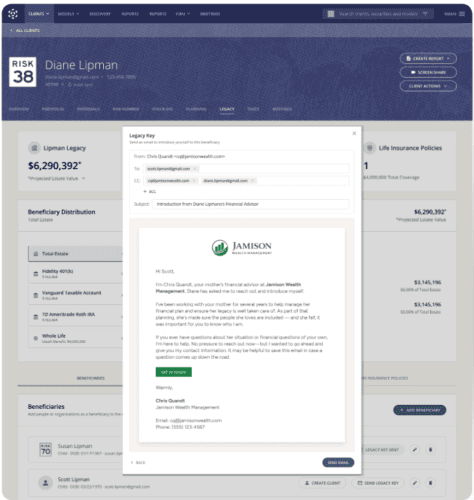
Nitrogen’s new Legacy Key feature helps advisors create natural introductions to the next generation before a transition occurs.
The opportunity advisors often miss
Estate planning conversations can help advisors do more than prepare clients for the future. They can help build trust with spouses, children, and heirs before major transitions happen. When families already know the advisor, continuity becomes easier during stressful moments.
Interested in learning more about how to have these conversations with clients? Nitrogen recently launched Legacy Center, a new tool designed to help advisors support estate planning discussions and build stronger continuity across generations. Book a demo to learn more.
Frequently Asked Questions
When should advisors start estate planning conversations?
Advisors can start when a client experiences a major life event, such as marriage, having a child, buying a home, starting a business, receiving an inheritance, or preparing for retirement. The conversation can begin with simple organization and become more detailed over time.
Do younger clients really need estate planning?
Yes. Younger clients may not need complex estate strategies, but they still need to make basic decisions. Beneficiaries, guardianship, life insurance, and account access can matter long before retirement.
How can advisors make estate planning conversations more comfortable?
Focus on preparation, organization, and family communication. Clients may be more receptive when the conversation is framed around helping loved ones, reducing future confusion, and making important information easier to find.
What is Nitrogen’s Legacy Center?
Legacy Center is a new Nitrogen tool that helps advisors support estate planning conversations and visualize how assets may transfer across generations. It’s designed to make estate planning a natural part of the advisor-client relationship rather than a one-time legal exercise.
What is Legacy Key and how does it help advisors?
Legacy Key is a Nitrogen feature that helps advisors create warm introductions to the next generation before a wealth transfer occurs. Rather than waiting until a major life event forces the introduction, advisors can use Legacy Key to build trust with spouses, children, and heirs while there’s still time for those relationships to develop.
How does Nitrogen support multi-generational client relationships?
Nitrogen’s Legacy Center and Legacy Key features are built specifically to help advisors navigate the Great Wealth Transfer. By surfacing estate planning conversations earlier and making it easier to connect with key family members, Nitrogen helps advisors stay relevant across generations rather than losing assets under management when wealth changes hands.
Do I need to be an estate attorney to use these features?
No. Legacy Center and Legacy Key aren’t legal products, they’re relationship and communication features. Advisors use them to facilitate the right conversations, document client wishes, and connect with the right family members alongside their clients’ legal counsel.
Where can I see Legacy Center in action?
You can book a demo to see how Legacy Center and Legacy Key work within the Nitrogen platform.