


How Financial Advisors Can Prepare Clients for Market Volatility
Markets gave clients plenty to react to in March.
Headlines were hard to ignore. Escalating conflict in Iran. Oil prices climbing. Stock markets pulling back. The kind of environment where even steady investors start to feel uneasy.
According to thousands of client surveys captured in Nitrogen’s products, client anxiety recently reached its highest level since April 2025. And yet, advisors didn’t flinch. Portfolios stayed largely unchanged. Allocations held steady. Discipline remained intact.
That disconnect is where the real risk shows up.
When clients feel uncertain, they don’t evaluate portfolios the way advisors do. They react. They second-guess. And if they don’t fully understand the risk they’re taking, even a well-aligned strategy can feel wrong in the moment.
This is where volatility does its damage. Not by exposing weak portfolios, but by exposing unclear expectations.
The advisors who navigate these periods best don’t try to outmaneuver the market. They make sure their clients already know what to expect by clearly defining risk and showing how their portfolio is built to behave before the next downturn arrives.
Volatility exposes gaps in client expectations
When markets get volatile, they can expose a gap that’s been there all along. A gap between what the client thinks they signed up for and how their portfolio is actually designed to behave.
That gap stays hidden in calm markets. Returns are steady. Conversations are easy. Nothing forces the issue. Then the market pulls back.
Suddenly, the experience doesn’t match the expectation. Losses feel larger than anticipated. Normal market movement feels like something is wrong.
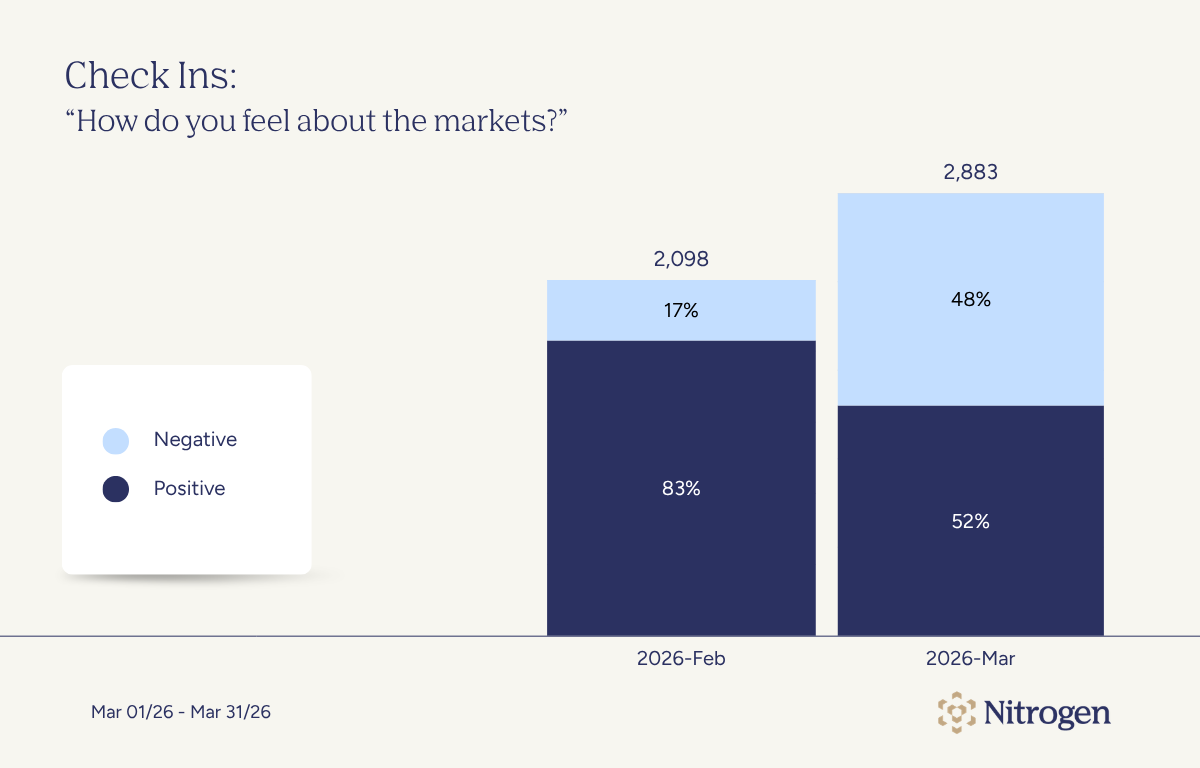
According to thousands of client surveys captured in Nitrogen’s products, client anxiety recently reached its highest level since April 2025.
That’s where traditional risk conversations break down.
Terms like conservative, moderate, and aggressive sound clear at the start. But they rely on interpretation. And interpretation changes quickly when markets get uncomfortable. What felt acceptable on paper can feel very different in practice.
This is when advisors feel the shift. More calls. More uncertainty. More conversations that aren’t about strategy, but about reassurance. Not because the portfolio failed. Because the expectation was never fully defined.
And if that gap isn’t addressed, it rarely stays contained. It turns into reactive decisions. Pulling back at the wrong time. Changing course mid-plan. Outcomes that don’t reflect the original strategy.
It’s like getting dressed for unexpected weather.
The forecast sounded mild. You step outside into a storm. Nothing about the day is unusual, but you’re not prepared for it.
Volatility doesn’t create these moments. It brings them forward.
Which is why the most effective advisors focus less on reacting to the market and more on making sure their clients understand exactly what their portfolio is built to do before the next downturn ever begins.
A clear definition of risk changes the conversation
You can’t close an expectation gap without defining the expectation first. And for many advisors, that’s where the breakdown begins.
Risk is still framed in broad terms. Conservative. Moderate. Aggressive. Labels that sound clear, but depend entirely on how each client interprets them. It works in calm markets but can breakdown quickly when conditions change.
What felt reasonable a few months ago can suddenly feel like too much risk when portfolios start to move. A better approach is to define risk in a way that removes interpretation altogether.
This is where the Risk Number® comes in.
The Risk Number is an objective, quantitative measurement of an investor’s true risk tolerance and the risk in a portfolio. Nitrogen’s patented technology calculates a score on a scale from 1 to 99, using a scientific framework that won the Nobel Prize for Economics.
For example, a client with a Risk Number of 50 is aligned with a portfolio that could experience a decline of roughly 9 to 10 percent in a difficult six-month stretch. A client with a Risk Number of 70 is comfortable with a larger potential drawdown, closer to 15 percent over the same period.
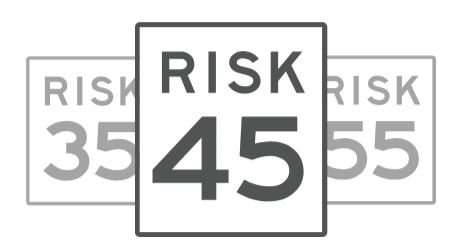
Instead of relying on labels, you’re anchoring the discussion in something specific. Clients can see the level of risk they’re taking and understand what that might feel like before it happens.
Going back to the weather analogy, this doesn’t stop the storm. But it makes sure no one walks outside expecting sunshine and gets caught in the rain.
And when expectations are defined this clearly, volatility feels different. Not because the market hasn’t changed, but because the client’s understanding has. Fewer surprises. Fewer reactive decisions. More confidence in staying with the plan when markets get uncomfortable.
Show clients what to expect before it happens
Even when risk is clearly defined, clients don’t fully internalize it until they see it. That’s where conversations can fall short.
A number sets expectations. But in a volatile market, clients want to know what that actually looks and feels like.
This is where Stress Tests change the conversation.
Instead of talking through hypotheticals, advisors can run a portfolio through real market events. Periods like the 2008 Financial Crisis or strong bull markets that clients already recognize.
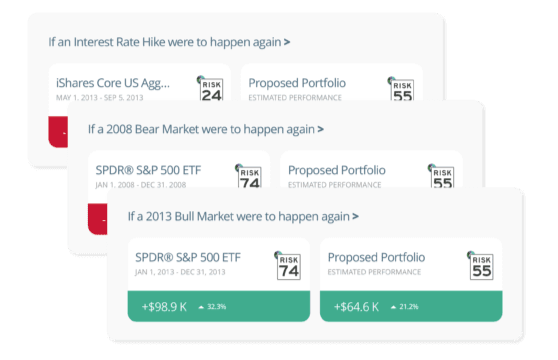
Now the discussion becomes more concrete. Clients can see how their portfolio would have behaved in those environments. How much it may have declined. How it recovered. What staying invested would have required.
That context makes the tradeoffs clear.
For example, when a client asks why their portfolio isn’t keeping up with the market, you can show them exactly why. A portfolio aligned to a lower Risk Number may not rise as quickly in strong markets, but it’s also designed to experience smaller losses when conditions reverse.
That’s the moment the strategy clicks.
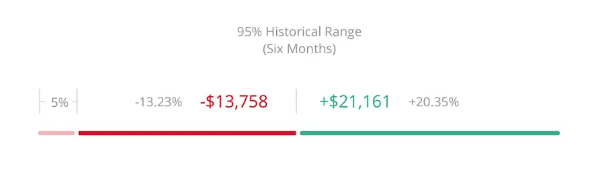
Stress Tests become even more effective when paired with the 95% Historical Range™.
This range shows the likely upside and downside a portfolio could experience over a six-month period. Instead of focusing on a single return target, clients see what is considered normal for their portfolio.
When markets move, clients aren’t comparing performance to an abstract goal. They’re comparing it to a range they’ve already seen and discussed.
We saw this play out with advisors on the Nitrogen platform in March. As volatility picked up and client anxiety reached its highest level in a year, advisors didn’t make sweeping changes to portfolios. Allocations held steady.
The difference wasn’t in the market. It was in how expectations were set.
Advisors had a way to show what “normal” looked like before volatility arrived. And when clients recognize that what’s happening falls within that range, the conversation shifts from fear to reassurance.
Volatility is a test of alignment
Periods like this don’t come with much warning. Sentiment shifts quickly. Headlines take over. Clients start to question decisions they were comfortable with just weeks earlier.
But as we saw in March, the advisors who navigate these moments best aren’t the ones making the most changes. They’re the ones who prepared their clients for it.
They defined risk clearly. They showed what to expect. And they gave clients a framework to understand what was happening in real time.
That preparation shows up when it matters most.
Fewer reactive decisions. More productive conversations. Clients who stay aligned with the plan, even when markets get uncomfortable.
In moments like these, what matters most is simple. Do clients understand what their portfolio is built to do, and are they prepared for how it behaves when markets move?
The advisors who answer that question early build stronger relationships and more resilient businesses.
Interested in learning how to apply these principles in your practice?
If you want to give your clients that level of clarity and confidence, book a demo to see how Nitrogen helps you define risk, set expectations, and guide clients through any market environment.
Frequently asked questions
What is the Risk Number® in simple terms?
The Risk Number® is an objective, quantitative measurement of an investor’s true risk tolerance and the risk in a portfolio. Nitrogen’s patented technology calculates a score on a scale from 1 to 99, using a scientific framework that won the Nobel Prize for Economics. That gives advisors and clients a precise, shared number that replaces vague labels like “moderate” or “aggressive” with something concrete and comparable.
Why isn’t “moderate” or “aggressive” good enough?
Those terms are open to interpretation. What feels moderate in a calm market can feel very different during a downturn. Without a clear definition, clients may believe they signed up for one experience and encounter another when markets move.
How do Stress Tests help in client conversations?
Stress tests show how a portfolio would have behaved in real historical scenarios, like the 2008 Financial Crisis. This helps clients connect abstract risk to real outcomes, making it easier to understand tradeoffs and stay aligned during volatility.
What is the 95% Historical Range™?
The 95% Historical Range shows the range of gains or losses a portfolio is expected to experience over a six-month period. Instead of focusing on a single return, it sets realistic expectations for what is normal.
How do these tools help reduce client anxiety?
When clients know what to expect, market movements feel less surprising. Clear expectations and visual context help reduce emotional reactions and support better long-term decision making.
When should advisors introduce these concepts?
From the first meeting and ideally, before volatility happens. Setting expectations early makes it much easier to guide clients through uncertain markets without reactive decisions.
How does Nitrogen help advisors use these tools?
Nitrogen brings the Risk Number, Stress Tests, and the 95% Historical Range (and so much more) into one platform, making it easy to define risk, illustrate outcomes, and guide client conversations with clarity and consistency.