
The January Growth Blueprint: Turning Resolution Seekers into Clients

Every January, advisors face a familiar frustration. Interest in financial planning spikes as the New Year starts. Search traffic climbs. Content gets clicks. Yet calendars stay stubbornly light.

That gap creates a quiet drain. You invest in marketing to capture the seasonal surge, only to spend weeks following up with prospects who never quite commit. You can see the traffic flowing through your site, but it doesn’t translate into meetings.

So what’s going on?

The challenge stems from a common misalignment between advisor expectations and January prospect psychology.

January prospects are not referrals who are ready to buy. They’re resolution seekers. They arrive with motivation, but also caution. They want to feel organized and back in control, yet they fear being pulled into a high-pressure sales process before they fully understand their own situation. That difference in mindset calls for a very different approach.

The January Growth Blueprint works by meeting prospects where they actually are. It replaces an early sales conversation with orientation, diagnosis, and reassurance. By following a four-step sequence designed around the resolution seeker’s psychology, advisors can turn seasonal curiosity into booked meetings without pushing harder than the prospect is ready for.

Let’s dive in.

Step 1: Align content with the January mindset

Most January marketing falls short because it assumes prospects feel confident and ready to act. Advisors often use this time to publish market outlooks or firm credentials. In practice, this often shows up as content like “How Our Monte Carlo Simulations Inform Portfolio Construction,” including detailed breakdowns of portfolio performance, or long explanations of sophisticated investment frameworks.

But resolution seekers are not looking for sophistication, yet. They’re looking for footing. For the January prospect, such technical content can feel like joining a gym for the first time and being handed an Olympic training program on day one. The expertise is real, but the message is unintentionally clear: you’re not ready for this yet.

At this stage, prospects want help framing their situation rather than a display of expertise. They don’t want to feel judged or rushed. So content that acknowledges common starting points is far more effective.

Some suggestions:

  • The “Fresh Start” Checklist: A simple guide that ignores last year’s mistakes and focuses on the three most impactful moves for the first quarter.
  • The “Where Do I Stand?” Snapshot: A short self-assessment that helps readers place themselves on a simple spectrum (behind, on track, ahead) without assigning blame.
  • Common Mistake Guides: A blog post titled “Five things even smart people get wrong in January” to normalize their current anxiety.
  • The “You Are Not Behind” Essay: A perspective piece explaining why most people feel off-track in January, even when their situation is completely normal.
  • The “No-Pressure” Orientation: An article explaining that a first chat is about gathering facts, not making permanent life changes.

Content designed this way builds momentum without adding pressure. Prospects come away feeling informed and supported, not evaluated.

Step 2: Lower friction with diagnostics

In January, traditional “free consultation” offers often stall momentum instead of moving it forward. For prospects who are still forming priorities, committing to a 60-minute discovery call can feel premature. Many hesitate because they don’t yet have enough context to decide whether a meeting will be worth their time.

At this stage, prospects prefer to gather information before initiating a conversation. They want to understand where they stand, identify gaps, and see how their current situation compares to expectations. Diagnostics meet this need by allowing prospects to engage privately and build context before speaking with an advisor. As a result, they tend to perform better than early-stage sales conversations in January.

To capture this intent, it’s often helpful to replace your primary consultation call to action with a diagnostic starting point. A diagnostic provides immediate value and gives prospects a clear reason to engage before speaking with an advisor.

Common diagnostic entry points include:

  • The Risk Alignment Check: Invite users to find their Risk Number using a tool like Nitrogen to see if their current portfolio matches their actual comfort level.
  • The Retirement Readiness Score: Offer a quick calculator that provides a simple “on track” or “off track” status.
  • The Portfolio Stress Test: Provide a way for prospects to see how their current holdings might react to a market downturn.

Diagnostics also help protect your time. By adding a small number of qualifying fields, such as investable asset ranges or retirement timelines, you can quickly distinguish high-priority prospects from those better served through automated follow-up. This ensures outreach remains personalized and relevant.

This changes how your website actually works. Diagnostics turn it from a static brochure into a functional entry point. You enter conversations with objective data already in hand. And most importantly, diagnostic tools turn curiosity into a concrete next step, making it easier to move from digital engagement to a productive conversation.

Step 3: Surface the starting point

By this point, your content has familiarized prospects with your approach and your diagnostic has given them a safe way to engage. The remaining question is purely practical: can they actually find that starting point?

Many advisory websites treat engagement links as a secondary detail. The primary call to action often lives on a contact page or inside a navigation menu. That structure works when prospects are browsing casually. In January, however, that becomes a bottleneck.

Resolution seekers tend to move quickly once they decide to explore an option. If the next step is unclear or hard to find, they often exit and continue their search elsewhere. From a practical standpoint, this means a large share of high-intent traffic never reaches your intake process.

The fix is clearer placement, not additional messaging.

Your diagnostic tool should appear wherever a prospect would reasonably look for direction. The goal is to remove ambiguity about how to start and reduce the effort required to take the first step.

Four placements consistently perform well:

  • Blog posts: Place a contextual link to your diagnostic at the end of relevant articles, or immediately after discussing a related problem. This gives readers a logical next step while their motivation is highest.
  • Homepage hero section: Replace “Schedule a call” with a direct link to your risk questionnaire. Use plain language such as “Start your 2026 risk check” so visitors immediately understand what will happen next.
  • Email signature: Add a short line beneath your contact details. For example: “Find your Risk Number in five minutes.” This turns routine correspondence into a consistent entry point.
  • LinkedIn featured section: Pin your diagnostic tool at the top of your profile. Prospects who review your background can begin the process without navigating away or searching for a contact page.

When your starting point is visible and unambiguous, more prospects complete the first step. Fewer abandon the process due to uncertainty or friction. And over time, this shifts your website from a digital brochure into a predictable source of leads.

Step 4: Turn insight into conversations

Generic follow-up performs poorly in January for a simple reason: prospects are comparing options. Many submit forms or complete tools on multiple sites within the same week. Messages without context or specificity tend to blend together and get ignored.

In practical terms, generic follow-up is like holding a sign that says “guest” in a crowded airport arrivals hall. It technically works, but no one knows it’s meant for them. A message that includes their name, their destination, or their flight number cuts through immediately.

Resolution seekers respond best to follow-up that demonstrates two things immediately: speed and familiarity with their situation. They want to see that their inputs were reviewed and that the next step will be useful, not redundant.

When someone completes a diagnostic or engages with your content, respond while the interaction is still fresh. Use the data they provided to anchor the outreach in something concrete and relevant.

Practical ways to do this include:

  • Reference their results: Open with their Risk Number or the primary goal they selected to show you’re working from their data, not a template.
  • Position the meeting as a short working session: Describe it as a brief walkthrough of their results, focused on interpretation and next steps.
  • Offer one immediate observation: Share a single insight from their output that helps them understand what you’re seeing before the meeting.

This approach improves conversion because it reduces uncertainty. Prospects know what the conversation will cover and why it’s worth their time. It also differentiates your firm in a crowded inbox by replacing generic follow-up with context and relevance.

And over time, this consistency can compound into higher show rates and more productive first meetings.

Turning early interest into qualified conversations

January growth rarely comes from increasing pressure on prospects. It comes from removing friction at the moment they’re most motivated, but least certain. When you replace early sales asks with diagnostics and relevant follow-up, engagement becomes easier and conversations start with context instead of resistance.

Using this January Growth Blueprint supports this shift in a practical way. It gives prospects a clear starting point, provides advisors with usable data before the first meeting, and filters serious inquiries from casual interest without adding manual work.

Nitrogen is built to support that process. If you want to see how a diagnostic-led approach fits into your current marketing and onboarding flow, book a demo today to explore the platform.

How to Lead the Tax Conversation (Without Crossing the Line)

Most advisors don’t lead tax conversations. In fact, many avoid them altogether.

Some worry about compliance. Others assume their client’s CPA has it covered. But either way, something gets lost: leadership. While everyone looks backward at what already happened, few advisors focus on what clients could still change.

And that silence can be costly. Missed opportunities pile up. Planning decisions go uncoordinated. Tax strategies stay stuck in software instead of making it to the return.

So, what’s the solution?

In our latest webinar, Steven Jarvis, CPA and CEO of Retirement Tax Services, offered a practical path forward. He showed advisors how to approach tax planning with confidence, focusing on education and coordination to ensure they aren’t providing advice.

This shift creates a powerful opening. Advisors who lead the tax conversation build deeper trust, create stickier client relationships, and stand apart from firms that rely on software alone. Done right, tax planning becomes more than a service. It becomes a reason clients stay and refer.

Want to dive deeper? Watch the full webinar recording to hear directly from Jarvis and learn how top advisors turn tax conversations into lasting client value.

How advisors spot planning opportunities

Tax planning starts with a habit: reviewing your client’s tax return.

Jarvis argues that most advisors don’t ask for their clients’ 1040s. And when they do, they often miss what matters. But the return isn’t just paperwork. It’s a diagnostic tool that reveals gaps, flags mismatches, and sparks smarter planning conversations.

Reviewing tax returns, Jarvis explains, doesn’t require giving advice. It requires asking better questions. When advisors treat the return as part of the plan, not just a filing detail, they uncover opportunities that clients and CPAs can overlook.

This matters because CPAs look backward. They report what happened. Advisors, by contrast, focus on what clients can still change. That forward-looking mindset creates value and builds trust. Clients see strategy come to life on the return.

And that represents a real opportunity. Advisors who own the tax conversation don’t just look smarter. They create clarity. They lead. They become the one professional in the client’s life who sees the full picture and connects every decision to the tax consequences that follow.

That kind of insight builds loyalty. It deepens relationships. And it sets advisors apart from firms that treat taxes like a checkbox at the end of the year.

In one example from the webinar, Jarvis highlighted an advisor meeting a prospect worth about $10 million. After scanning the return, they noticed something odd: almost no interest income. That detail led to a discovery. The prospect held $4 million in cash, sitting in a checking account earning nearly nothing.

The CPA didn’t catch it. They simply reported the number. The advisor, by asking one question, opened the door to a much bigger conversation. One conversation that showed immediate value and positioned them as a true financial partner.

This wasn’t tax advice. It was awareness. And it turned a tax return into a turning point.

Stay compliant. Still lead on taxes.

But while the value of tax planning is clear, one question still lingers for many advisors: What about compliance?

No one wants to overstep. The fear of crossing the line into tax advice keeps many advisors from taking any action at all. But as Jarvis explains, the rules are more straightforward than they might seem.

The IRS defines tax advice as two specific actions: representing a client before the IRS or interpreting unclear guidance where no legal precedent exists. Most advisors already avoid both, which creates space to deliver value through education and coordination.

Jarvis encourages advisors to take the lead without giving direct advice. That means focusing on intent, not instruction. Instead of saying, “Convert exactly this much to a Roth,” explain the tradeoff, outline the strategy, and involve the CPA for implementation.

To help advisors navigate this, Jarvis emphasized the importance of breaking down complex tax ideas into simple, visual terms so clients understand why a strategy matters. The goal is simple: take complex tax topics and explain them in a way clients can actually understand.

One of his go-to frameworks is the “four tax buckets,” a way to illustrate how different types of income are taxed:

  • Ordinary Income Bucket: W-2 wages and interest, taxed at higher rates
  • Tax-Deferred Bucket: Traditional IRAs or 401(k)s, taxed when withdrawn
  • Capital Gains Bucket: Sale of investments, often taxed at lower rates
  • Tax-Free Bucket: Roth IRAs and other accounts with no future tax impact

These buckets give advisors a visual way to talk strategy, like why a Roth conversion may make sense, without making predictions or promises. The advisor explains the logic, the client sees the impact, and the CPA confirms the details.

In other words, the financial advisor never provides tax advice. They’re providing insights.

Turn tax planning into a repeatable system

Now that you know where the line sits, the next step becomes clear: build a repeatable process that fits naturally into your workflow. Tax planning doesn’t need to feel complex or time-consuming. With a few simple steps, you can deliver value without taking on risk.

When you treat tax planning as a system, not a project, you gain consistency across your client base. You create a clear process that surfaces opportunities, deepens relationships, and positions you as a proactive planner.

Jarvis suggested the following step for where to begin:

  • Request tax returns annually. Ask for a copy of each client’s return every year. Explain that accurate planning depends on accurate data. Without the return, you guess at loss carryovers, tax brackets, and contribution limits, creating unnecessary risk.
  • Prepare a simple year-end summary for clients. Create a short recap of tax-related actions, like RMDs, Roth conversions, or rebalancing, that you supported during the year. This makes it easier for clients to report things correctly and reduces the risk of details getting lost. It also reinforces the advisor’s value by showing the work behind the scenes and strengthening the perception of proactive service.
  • Prepare a checklist. Don’t rely on memory. Create a standard tax planning checklist for every client meeting. It keeps your process consistent, helps you spot repeatable wins, and turns tax planning into a core service you can scale.
  • Put tax coordination on the calendar. Building strong relationships with CPAs and other centers of influence doesn’t happen by accident. Jarvis recommends systematizing your outreach, especially during the “off-season,” so you’re proactively coordinating with tax professionals before next year’s planning cycle begins. It helps ensure your clients’ tax prep reflects the work you’ve done together and opens the door to referrals from professionals who see your value firsthand.

The tax conversation is yours to lead

Tax planning touches every part of your client’s financial life. When you take the lead by asking better questions, spotting overlooked details, and coordinating with the CPA, you move from managing portfolios to guiding outcomes. That shift builds trust and makes your advice indispensable.

But here’s the challenge. Many advisors know they should lead on taxes, yet they struggle to find the time, confidence, or process to do it well. Tax returns feel dense. The data feels scattered. Without a repeatable system, tax planning turns into something that always gets pushed aside.

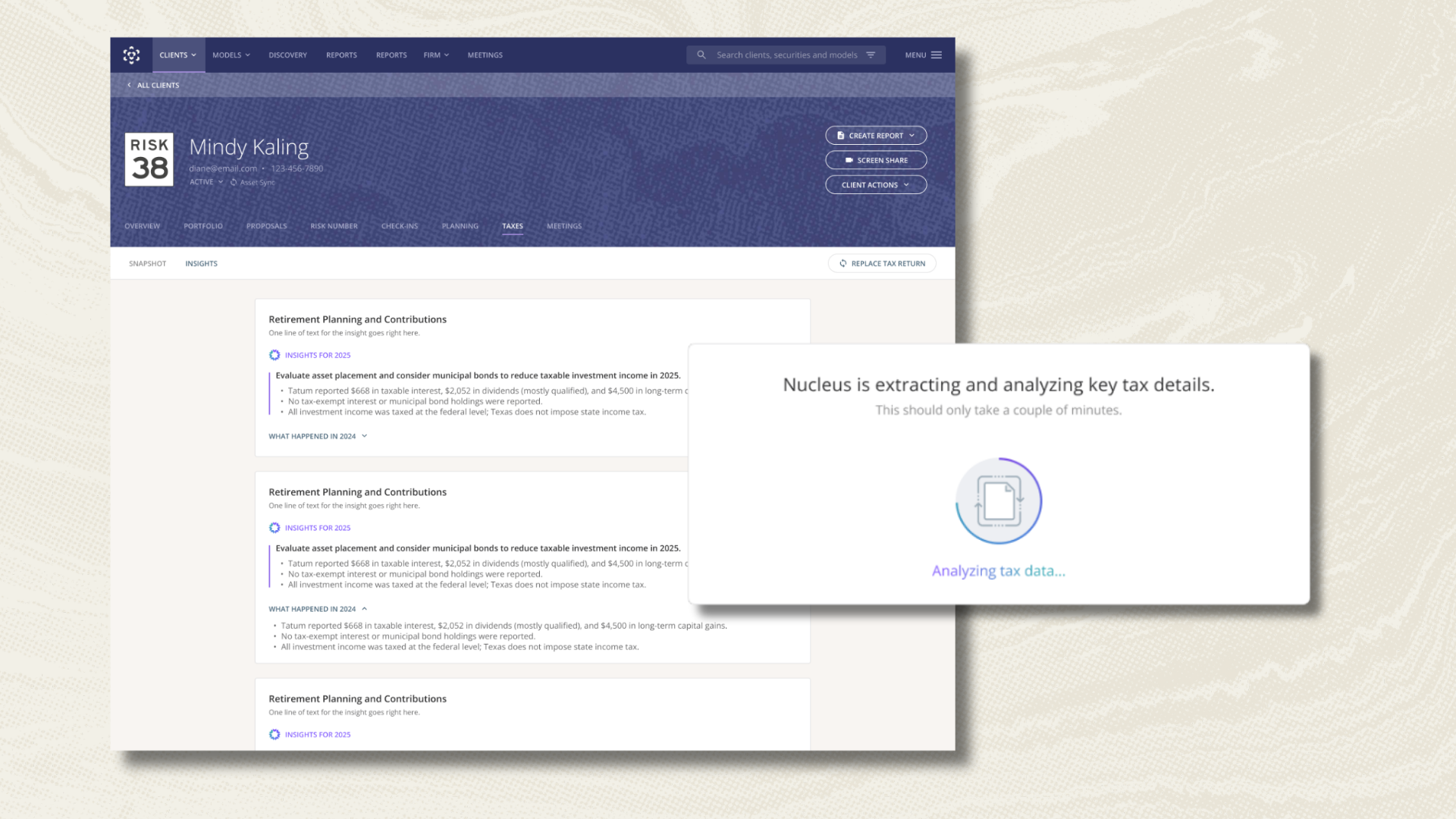
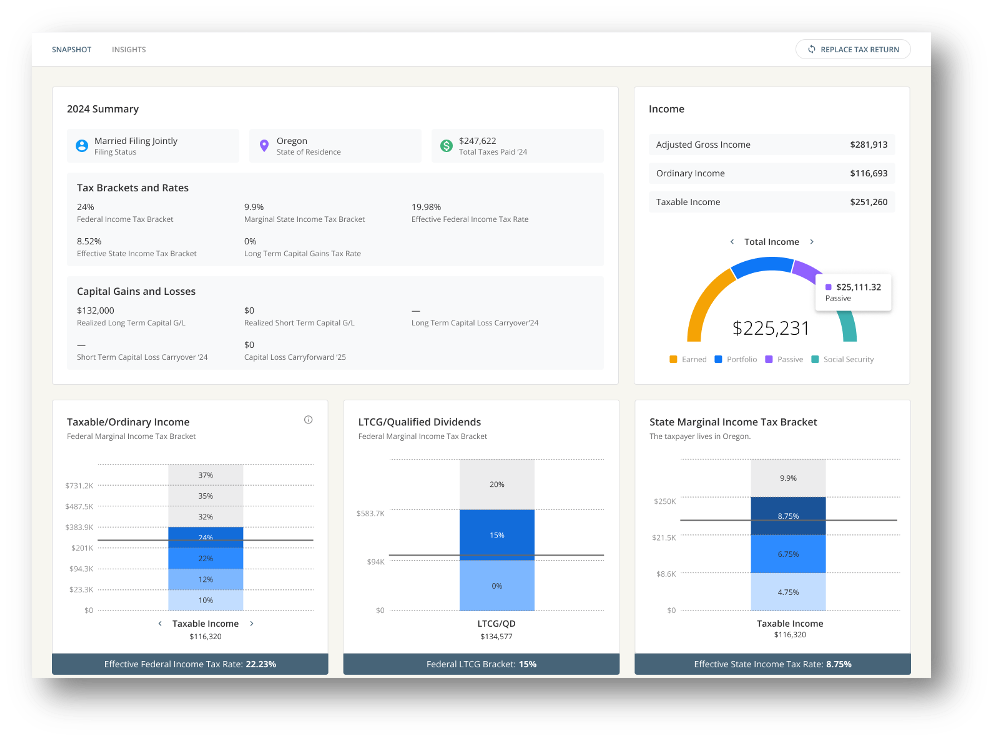
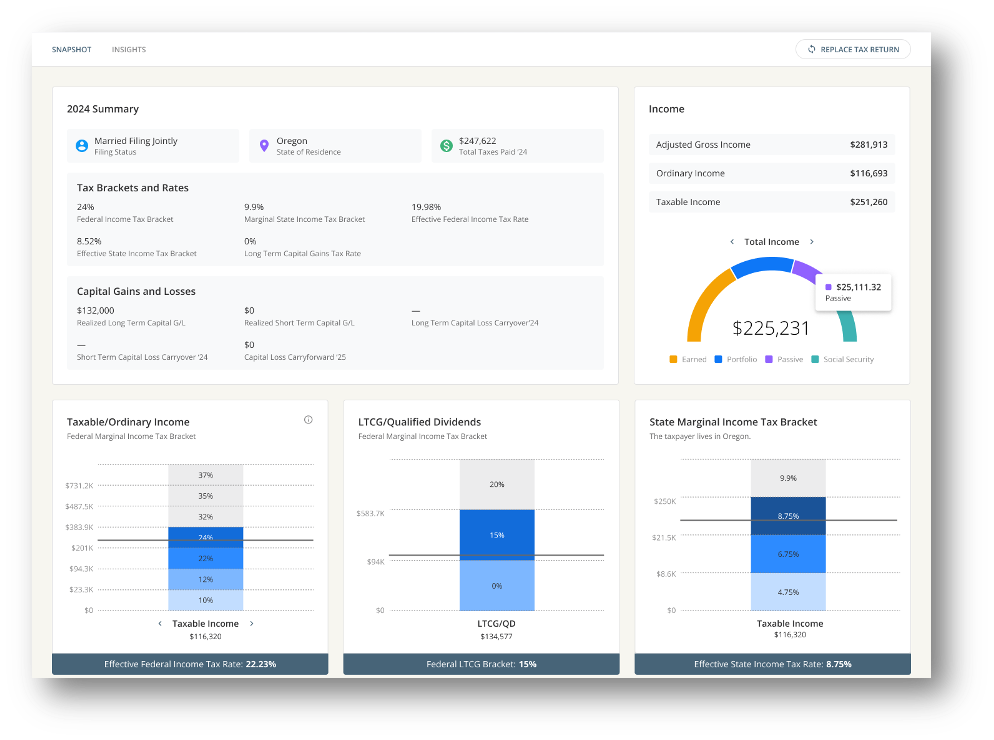
That’s where Nitrogen’s AI Tax Center comes in. Built directly into the Nitrogen platform, it transforms any 1040 into a clean, client-ready tax snapshot complete with smart, AI-generated insights. Within seconds, you can identify hidden accounts, uncover high cash balances, and visualize opportunities for Roth conversions, charitable planning, or tax loss harvesting.

There’s no need for extra logins or manual data entry. All you need to do is drag and drop a client’s 1040 to start a tax-aware conversation that clicks.

Interested in learning more? Book a demo to see how the AI Tax Center helps you uncover real opportunities and lead the kind of conversations clients remember.

And if you’re looking to stay sharp on the latest tax strategies year-round, be sure to subscribe to Steven’s Retirement Tax Services Podcast.

Still Fighting Your Tech Stack? 5 Fixes to Make 2026 Smoother

Every January, advisors start the year with the same goal: make this the year operations feel easier. Fewer fire drills. Less scrambling. Systems that support the work instead of slowing it down.

Then review season hits.

Tax prep overlaps with client meetings. Data is outdated. Automations half-fire. Integrations quietly fail. Review prep depends on memory, manual checks, and last-minute fixes. Nothing is broken enough to force a reset, but everything adds friction at exactly the wrong time.

The problem usually isn’t the tools themselves. It’s that tech stacks naturally drift over time as workflows evolve. Without regular checkpoints, they stop reflecting how the firm actually operates today.

A short housekeeping pass in January can change that. A focused reset that removes friction before it compounds and ensures your systems support the year ahead instead of working against it.

Below we’ve highlighted five practical housekeeping tasks advisors can tackle now to get their tech stack back under control. You’ll see where small breakdowns tend to hide, which systems are worth checking first, and how to reduce the manual work and last-minute scrambling that shows up every review season.

Think of this as a reset. A way to make sure your tools are doing their jobs so you can focus on yours.

1. Clean up your CRM data

Planning conversations depend on details that often fade into the background inside the CRM. A missing birthdate forces a pause mid-meeting. An outdated retirement date skews the entire discussion. Incomplete beneficiary or trusted contact information turns a straightforward question into follow-up work. Small gaps compound quickly when the system meant to support planning no longer reflects reality.

It’s like trying to bake a cake with missing ingredients. You can keep moving forward, but every step requires guesswork, substitutions, and second checks. Instead of focusing on the outcome, you spend the whole time compensating for what should have been there from the start.

January is the right time to reset that foundation. Focus on the CRM fields that directly shape review conversations and client experience:

  • Birthdates and retirement dates
  • Risk tolerance notes
  • Beneficiary and trusted contact information
  • Communication preferences

When CRM data is complete, everything downstream improves. Reviews stay focused on decisions, not fixes. Advisors lead conversations with confidence instead of caveats. Fewer gaps mean fewer follow-ups, less manual cleanup, and a smoother review season overall.

2. Audit tasks and automations

At some point, a task fires at the wrong time. A review reminder shows up after the meeting already happened. An onboarding checklist assumes a role that no longer exists. A service request sits untouched because no one realized the trigger changed. These failures rarely announce themselves. They surface mid-week, mid-review, or mid-client call, when fixing them costs the most.

The New Year creates a rare window to audit these workflows before pressure exposes their flaws. Focus on the automations that support reviews, onboarding, and ongoing service. The goal is not to add more tasks, but to make sure the existing ones reflect how work actually moves through the firm today.

Here’s where to get started:

  • Walk through one full review workflow from trigger to completion
  • Identify tasks that fire too late, too early, or without a clear owner
  • Remove automations tied to outdated roles, processes, or service models
  • Consolidate overlapping tasks that create noise instead of clarity
  • Adjust timing and triggers to match real-world review and prep cycles

Well-tuned tasks and automations reduce friction long before clients feel it. Review prep becomes predictable. Internal follow-ups drop. Advisors stop relying on memory to keep work moving and start trusting systems that surface the right actions at the right time. That reliability protects your focus during busy seasons and frees up capacity for client-facing work.

3. Confirm integrations still work as intended

At some point, two systems stop agreeing. Performance numbers look different depending on where you check. A planning assumption fails to update. A report pulls incomplete data five minutes before a review. Integrations rarely fail all at once. They drift. Small changes like software updates, permission resets, or field mapping adjustments interrupt data flow quietly, then surface at the worst possible time.

January gives you room to catch those issues before clients do. Start with integrations that support reviews, planning assumptions, and reporting. Then:

  • Confirm data arrives on schedule, not hours or days late
  • Verify information populates the correct fields in each system
  • Spot-check a small sample of client records across connected tools
  • Look for mismatches in balances, assumptions, or performance data
  • When something is off, trace it back to the source instead of applying manual fixes

Reliable integrations remove last-minute uncertainty. Advisors enter meetings confident that numbers match across systems. Review prep stays focused on decisions instead of reconciliation. Teams spend less time chasing discrepancies and more time using data that holds up under pressure, especially when calendars tighten and mistakes carry higher costs.

4. Review user access and permissions

Eventually, someone asks a question no one can answer confidently. Who has access to client records? Who changed that field? Why does a former employee still appear in the system? These moments usually surface during audits, security reviews, or internal conversations. By then, untangling access feels reactive instead of routine.

January creates space to address access intentionally. Start with systems that hold sensitive client data and drive daily work. Then work through access with purpose.

Suggested steps:

  • Pull a current list of all users for each core system
  • Match access levels to current responsibilities, not historical roles
  • Remove permissions tied to former employees or outdated functions
  • Review vendor access and confirm both purpose and duration
  • Document ownership so future changes follow a clear process

Clear access supports faster decisions and stronger accountability. Advisors delegate work without hesitation. Compliance reviews move with less friction. When questions arise, answers come quickly and with confidence.

5. Standardize review prep workflows

Too many review meetings still depend on last-minute effort. One person pulls performance. Another checks cash balances. Someone notices a beneficiary issue minutes before the call. When prep relies on individual habits instead of a shared process, inconsistency creeps in and preventable errors slip through.

It’s like assembling furniture without instructions. The pieces eventually fit, but only after wasted time, frustration, and avoidable mistakes under pressure.

A standardized review prep workflow brings order to that chaos. Start by defining what “ready for review” actually means across the firm. Then build a repeatable process that includes:

  • A clear checklist covering data validation, planning assumptions, and client-specific updates
  • Defined ownership, so every step has a responsible person
  • Timing rules that surface tasks automatically and in the right sequence
  • Centralized access to planning-critical information to reduce manual handoffs

Consistent prep protects advisor capacity and client confidence. Reviews start on time and stay focused on decisions. And fewer surprises lead to fewer follow-ups after the meeting.

Modern efficiency for the 2026 Advisor

If this list feels long, that reaction is understandable. Five housekeeping tasks can sound like a project instead of progress. The key is not to do everything at once. Pick one or two areas creating the most friction today and start there. Even a small cleanup can remove outsized drag from review prep and client conversations. Momentum matters more than completion.

The ultimate goal of this January reset isn’t just to clean up, it’s to ensure your firm is positioned for maximum efficiency throughout 2026. At Nitrogen, we build our tools to be the backbone of that efficiency.

We are proud to offer over 50 integrations with the industry’s leading CRMs, custodians, and reporting tools, ensuring your data flows exactly where it needs to be without the manual “drift” that causes review season stress. This commitment to a seamless tech stack is why Nitrogen earned an 8.7 “Superior” rating in the 2025 Ezra Group Wealthtech Integration rankings.

Whether you are utilizing our Tax Planning capabilities to uncover alpha or leveraging our Research Center to vet investment strategies, Nitrogen ensures your tech stack works for you, not against you. By automating the heavy lifting of data analysis and reporting, we help you eliminate last-minute scrambling and enter every review meeting with total confidence.

Book a demo to see how teams use Nitrogen to simplify review prep and reduce last-minute cleanup.

Is the Cash Drag Over? Advisors Rotate from Safety to Conviction

November data reveals a dramatic reversal: The defensive “cash hoarding” of October has dissolved, replaced by a surge in equity proposals and renewed client confidence.

Welcome to the Nitrogen Signals & Shifts, where we analyze more than 1,000 advisor-generated portfolio proposals each day to uncover trends shaping investor behavior and portfolio construction.

Last month, we reported a “Quiet Rotation” into liquidity. November’s data tells the sequel: Execution. The massive cash positions proposed in October appear to have been holding patterns. In November, advisors hit the “buy” button. Equity allocations spiked back to 50% of proposed portfolios (up from 46% in October), while pure fixed income proposals dropped sharply.

This wasn’t a passive drift but rather an active redeployment of capital into a rising market, underpinned by a client base that has remained unwaveringly confident throughout the quarter.

Top Products in Proposals

The most striking data point in November is the drop in raw cash volume. In October, Cash/Money Market proposals hit a staggering $4.19 billion. In November, that number normalized to $995 million. This suggests that the liquidity raised in October was strategic “dry powder” that has now been deployed.

Cash Allocation from October 2025 to November 2025

While Cash/Money Market remains the single top line item due to its ubiquity in every portfolio, the real story is in the equities chasing it:

  • Tech Dominance Returns: Apple (AAPL), NVIDIA (NVDA), and Microsoft (MSFT) combined for over $407 million in proposals, signaling that advisors are comfortable adding alpha-seeking risk back into portfolios.
  • The Index Backbone: The “Big Three” ETFs (SPY, VOO, IVV) commanded nearly $417 million in volume, acting as the primary vehicle for this re-entry into equities.
  • New Entrant: Interestingly, the Prudential FlexGuard (SMA) cracked the top 10 with $90 million in proposals, suggesting a continued appetite for buffered or structured downside protection even as risk exposure increases.

Top Products in Proposals for November 2025

Advisor Portfolio Shifts

The asset allocation mix saw a sharp reversal from October’s defensive posture.

  • Equities: Surged to 50% of the proposal mix (up from 46% in Oct).
  • Fixed Income: Compressed to just 8% (down from 18% in Oct).
  • Models & Allocations: A significant 40% of proposals fell into “Uncategorized/Models”, indicating a heavy reliance on model marketplaces to execute these shifts efficiently.

This 50% equity weighting is a clear signal: Advisors believe the year-end rally has legs, and they are ensuring clients aren’t left on the sidelines.

Portfolio Composition Comparison of October 2025 and November 2025

Household Proposal Trends

Despite the aggressive shift in strategy, the “who” remained remarkably consistent.

  • $1M+ Households: accounted for 30% of proposals (steady vs. 29% in Oct).
  • $500k–$1M Households: held at 17%.
  • Under $500k Households: comprised 53% of all proposal activity.

This consistency reinforces a key takeaway from our series: Advisors are not segmenting strategy by wealth tier. The pivot back to equities was executed across the board, from the mass affluent to the high-net-worth.

Household Proposal Trends in October 2025 compared to November 2025

Money in Motion

Advisor activity continues to accelerate. Average daily proposal volume climbed to $1.22 billion in November, up from $1.21 billion in October and $1.09 billion in September. This steady month-over-month increase confirms that advisors are busier than ever. The “holiday slowdown” hasn’t hit; instead, advisors are using the year-end window to lock in allocations for 2026.

Average Daily Proposal Volume by Month in 2025

Confidence Remains Rock Solid

Perhaps the most critical insight is the resilience of the investor psyche. Despite the portfolio volatility and reallocation, client sentiment has remained remarkably steady.

  • Market Outlook: 79% of clients continue to report feeling “Positive” about the markets, virtually unchanged from October’s 80.
  • Financial Future: A robust 81% of investors reported feeling “Confident” about their financial future, a slight uptick from 79% the prior month.

This creates a “Green Light” environment for advisors. High confidence combined with rising markets reduces the friction of moving cash into equities. The anxiety we tracked earlier in the year has largely dissipated, replaced by a constructive outlook for the year ahead.

Investor Sentiment from October 2025 to November 2025

Conclusion

If October was about “Preparation,” November was about Participation

The data shows advisors moving with precision, raising cash when uncertainty peaked, and deploying it as clarity returned. The sharp pivot back to a 50% equity weight demonstrates that advisors are actively managing the risk/reward trade-off, rather than “setting and forgetting.” 

As we head into the final weeks of the year, the message from the data is clear: The cash is off the sidelines, and portfolios are positioned for growth.

2025 in Review: From Anxiety to Action

If 2025 proved anything, it is that advisors act as the ultimate emotional anchor for their clients. A look back at the full year reveals a dramatic story of resilience, with April serving as the critical turning point.

The year’s most challenging moment arrived in the spring, when investor sentiment cratered. 

Check-In Behavior from Jan-Nov 2025

Positive feelings about the markets plummeted to a yearly low of 37% in April, while nearly half of all investors (48%) reported feeling “Anxious” about their financial future.

In previous cycles, such a drop in sentiment might have frozen activity. In 2025, the opposite happened. Throughout the turbulent spring months, advisor proposal volume held steady near $1 billion per day, proving that advisors didn’t retreat. 

Average Daily Proposal Volume by Month in 2025

Instead, they engaged, guiding clients through the volatility and preventing panic selling when confidence was at its lowest point.

That steady hand paid off. As we close the year, the “April Anxiety” has been replaced by renewed conviction:

  • Sentiment Recovery: Investor confidence in their financial future has climbed 29 points from its low, hitting a year-high of 81% in November.
  • Record Activity: Proposal volume has surged to $1.22 billion per day, proving that clients are not just feeling better, they are taking action.

From the defensive liquidity shifts of October to the aggressive equity deployment of November, 2025 was a masterclass in tactical portfolio management.

Where does your firm stand on these signals and shifts? Join the advisors using data to drive client decisions. Book a demo today.

About Nitrogen Signals & Shifts
Each month, Nitrogen analyzes proposal and sentiment data from across its platform to help advisors understand what’s driving client decisions. With more than 1,000 proposals created daily, these insights highlight how advisors adapt and how investors stay invested. Thank you for reading this edition of Nitrogen Signals & Shifts. The next issue will be published in early January. Subscribe at the top of this post so you never miss an update.

The Prospecting Playbook: How Natasha McPherson Wins Clients with Confidence Using Nitrogen

For many financial advisors, the gap between sophisticated financial planning and client understanding can be wide. Industry jargon often leaves prospects feeling insecure or confused. However, for Natasha McPherson, Managing Director at Hall Wealth Management, bridging that gap has become a science, literally.

In a recent webinar, Natasha shared her “prospecting playbook” and revealed how she uses Nitrogen (formerly Riskalyze) to win clients, drive efficiency, and build unshakeable trust.

Here are the 5 key takeaways from Natasha’s approach to turning prospects into lifelong clients.

1. The “Explain It Like I’m Five” Philosophy

Natasha’s background is unique. She began her career as a touring rock musician before pivoting to wealth management after navigating her own financial challenges. This non-traditional path gave her a crucial insight: clients do not speak “finance.”

Natasha argues that even a five-year-old should be able to understand the risk and reward of a portfolio. When advisors use heavy jargon, clients can feel insecure or suspect the advisor is talking in circles. Nitrogen enables her to present complex data in layman’s terms, creating an immediate “aha!” moment where the client feels empowered rather than overwhelmed.

2. Planting the Seed: The Curiosity Hook

How do you start the conversation about risk without it sounding like a compliance check? Natasha plants a seed early in her interactions, whether at a seminar or a first meeting, with one simple question:

“Have you ever taken a Nitrogen questionnaire?” 

Most prospects say no, which opens the door for Natasha to explain that her firm brings science into the equation. She explains that the questionnaire isn’t just a form; it identifies their specific “Risk Number.

She describes this number as a personality test for their money:

  • The Aggressive Investor: Put the pedal to the metal, party hard, maybe miss the plane.
  • The Moderate Investor: Chill at the Marriott, enjoy the sand, order room service.

By aligning the client’s “personality” risk number with their portfolio’s risk number, she highlights misalignments that most clients didn’t even know existed.

3. The “GPA” Analogy: Visualizing Portfolio Efficiency

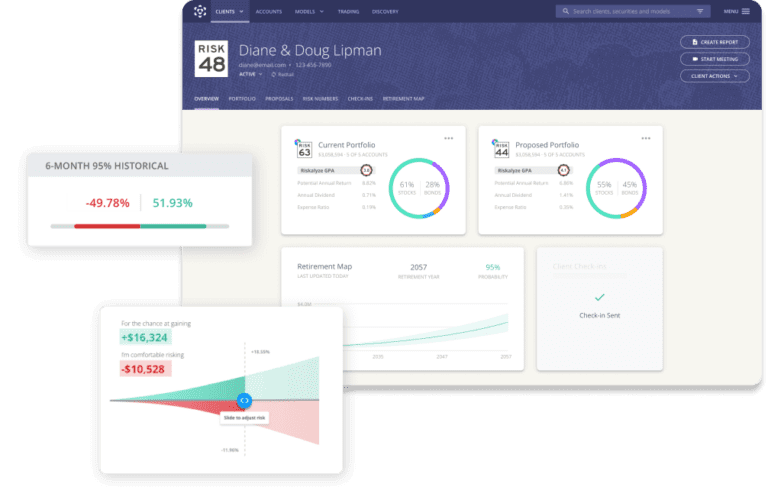
Once a prospect provides their statements, Natasha uses Nitrogen to generate a “GPA” (Grade Point Average) for their current portfolio. This is one of her most effective closing tools because everyone understands school grades.

  • The Failing Portfolio: If a prospect’s current portfolio shows a GPA of 2.5, she tells them, “Right now, you’re basically failing high school”.
  • The Proposed Portfolio: She then presents a proposal with a higher GPA, perhaps a 4.1, effectively “getting them into Harvard”.

She uses this visual comparison to discuss other metrics simply:

  • Annual Range Midpoint: Explaining realistic return expectations (e.g., 7.53% gain).
  • Expense Ratios: clarifying “charges” inside the funds so clients see exactly what they are paying.

4. Stress Testing: The Power of “What If?”

Trust is built when you can show a client exactly how their portfolio would handle a crisis. Natasha utilizes Nitrogen’s Scenarios feature to stress-test portfolios against historical events, such as the 2008 Financial Crisis or the COVID-19 pandemic crash.

She puts the numbers side-by-side:

  • Current Portfolio: Might show a historical downside of 31%.
  • Proposed Portfolio: Might show a downside of only 23.8%.

Natasha notes, “Losing less is better than losing more”. This data-driven approach removes emotion and advisor “feelings” from the conversation, relying instead on historical analytics to prove that her proposed strategy offers better protection.

5. Efficiency at Scale

For advisors, time is money. Natasha highlights how the platform acts as an additional employee for her firm.

A major efficiency booster she utilizes is Nitrogen’s AI Statement Capture. Instead of manually typing in tickers and holdings, she simply uploads a PDF of the prospect’s statement, and the system populates the portfolio automatically. This allows her to prep for meetings in minutes rather than hours, giving her more time to focus on strategy and client relationships.

The Verdict

The results speak for themselves. Natasha revealed that since using Nitrogen in every single prospect meeting, she has almost a perfect close rate, only ever losing three potential clients (and only due to their inability to pay planning fees).

By treating Nitrogen as her “most important employee” during meetings, she simplifies the complex, validates her value through data, and wins clients with confidence.

Click here to watch the full replay and experience Natasha’s playbook in action.

Train Your AI Assistant: A Practical Guide for Advisors

AI is already reshaping how advisors work.

It can save hours, generate drafts in seconds, and help you stay visible with less effort. No more blinking cursors. No more juggling every task yourself.

But there’s a reason many advisors hesitate. What if it gets something wrong? What if it sounds robotic or worse… non-compliant?

Those fears are valid and worth addressing.

Take the recent case of a New York lawyer who used ChatGPT to write a legal brief. The AI delivered six precedent cases in seconds. It looked convincing, but the citations had been entirely made up. The court fined the firm and threw out the case.

For advisors, the stakes are just as real. One unchecked message could confuse a client or raise red flags with compliance.

That’s why at Nitrogen, we’ve found it helpful to think of AI not as a computer, but as a junior assistant.

It’s smart, fast, and eager to help. But it doesn’t always understand your clients, and it doesn’t know when it’s wrong.

Like any new hire, it needs clear direction, regular oversight, and a final check before anything goes out. This is how AI becomes an efficiency tool, not a liability.

So how do you turn this mindset into action? Here are four techniques to make your AI assistant work for you clearly, safely, and in your voice.

1. Give your AI assistant real assignments

AI sounds helpful in theory, but one question can stop some advisors in their tracks: What exactly am I supposed to ask it for?

Like an intern, you don’t need to give it your most important job on day one. Start with small, useful tasks:

  • Draft a birthday note for a top client
  • Rewrite a blog post into a short email
  • Outline a LinkedIn post about recent market swings
  • Create a quick explanation of the Risk Number® for a new prospect

Then you can edit the drafts as needed.

This is one of the biggest benefits of AI. It gets you past the blank page.

Instead of starting from scratch, you’re reacting to a first draft. That saves time, reduces stress, and helps you get back into a creative flow more quickly.

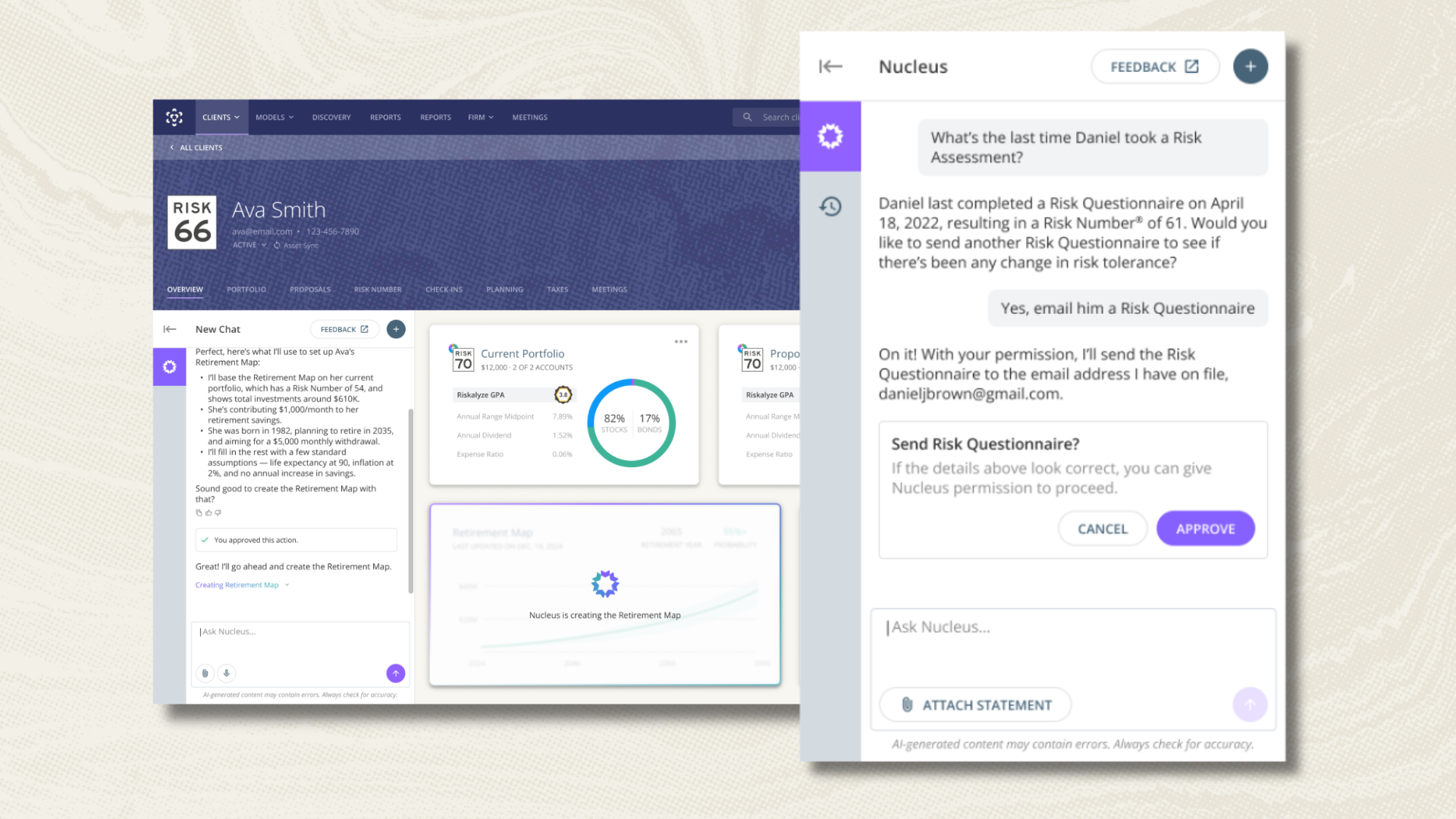
Once you’re comfortable with the basics, Nitrogen’s AI Meeting Notetaker can take it even further.

It joins your client meetings (with permission), transcribes the conversation, and automatically generates a clean, simple summary.

It also creates CRM-ready notes and follow-up actions, reducing the need to toggle between apps or spend hours writing recaps.

You stay in control, editing and approving the output. But the busywork is already handled.

2. Give better direction, get better results

Most advisors treat AI like a search bar. They type in a question and expect a polished answer.

But AI isn’t built to find responses. It creates them from whatever you feed it. So if your input is vague, the output will be too.

Once again, think of it like managing a junior team member.

You wouldn’t say, “Handle this.” You’d say, “Write a short, reassuring email for a retired client. Keep the tone supportive and avoid industry jargon.”

The key to using AI well is learning how to give direction. Be clear, specific, and structured.

Here are some of the details you might want to provide in your prompts:

  • Who is it for? (e.g. a nervous retiree or a tech-savvy prospect)
  • What tone should it use? Calm? Upbeat? Friendly? Professional?
  • What format do you need? Email? Social post? Summary? Meeting Prep?
  • What context matters? Market movement? Client concerns? A recent meeting?

You’ll still need to review the result. But you’re saving time when not starting from scratch, and the quality improves dramatically.

3. Feed your intern the backstory

If AI sounds robotic, it’s not because the tool is broken. It’s because it doesn’t know you yet.

Most advisors give AI a basic prompt and get a basic response. But think about how you’d work with a new assistant.

If you just say, “Write a note about long-term investing,” you’ll get something that sounds ripped from a textbook.

But if you share a quick story, offer your usual phrasing, or explain the client’s situation, the results start to sound more like you.

Just like training an intern, the more background you give, the better the work gets.

For example, here are a few things you can feed into a prompt:

  • A short client story (without personal/confidential details)
  • An analogy you like to use
  • The tone you’re aiming for
  • A sample of how you’ve explained a concept before

Instead of asking AI to fill in the blanks, show it how you think. You’ll spend less time rewriting and more time polishing something that already sounds like your voice.

For example, try a prompt like this:

“Write a short email that explains the importance of staying invested during market volatility to investors with a Risk Number of 40-60. Use an analogy, like weathering a storm, to make the concept easier to understand.”

Clear context is what turns generic AI into a useful assistant.

Give it the raw materials, and let it do the heavy lifting.

4. Set boundaries your AI assistant can’t cross

Here’s the part that makes most advisors nervous: compliance.

You’ve seen what happens when AI gets it wrong. Maybe you’ve even tried creating something with ChatGPT and thought, “There’s no way I can send this.”

The fear is valid. In a regulated profession, the cost of getting it wrong is too high.

But here’s the good news: AI can be safe, but, once again, you have to treat it like any new assistant.

You would never give interns access to sensitive client information. And you don’t let them send emails without reviewing their work.

The same rules apply here. There are two simple guidelines to keep your AI use in bounds:

First, never enter client-specific or personal information into open models.

Most public AI tools don’t store data securely or privately. Once it’s in, you lose control.

A better approach is to describe a scenario in general terms. You’ll get what you need without risking exposure.

Second, always review before anything goes out.

AI doesn’t know your clients. It doesn’t understand your tone. And it won’t tell you when it’s making something up.

You’re still the editor. Before you send a message or publish a post, make sure it’s accurate, clear, and sounds like you.

You’re still the advisor. AI is just an intern.

Bottom line: AI can’t think for you or know your clients the way you do. But it can help you move faster, write more often, and spend more time on what matters most.

The trick, as we’ve said throughout this article, is to treat AI like your new office intern. It’s eager to help and surprisingly capable, but always needs supervision. With the right oversight, it becomes one of the most useful tools on your desk.

Looking for more help with getting started?

We’ve created an AI Prompting 101 guide with five ready-to-use prompts written specifically for financial advisors. Each one is built to save you time, reduce guesswork, and help you sound like yourself.

Whether you’re writing emails, social posts, or client updates, these prompts will help you put your AI intern to work quickly and confidently.

Download the guide and try your first prompt today.

The Quiet Rotation: Advisors Pivot to Liquidity as Clients Stay Cool

October data reveals a decisive shift to cash, even as investor confidence holds firm.

Welcome to the Nitrogen Signals & Shifts, where we analyze more than 1,000 advisor-generated proposals each day to uncover trends shaping investor behavior and portfolio construction.

October’s data tells a story of caution, but not fear.

The “wait and see” approach evaporated, but advisors didn’t flee to bonds as expected. Instead, they shifted decisively into liquidity. Advisors trimmed equity exposure to 46% while Money Market funds surged to become the single dominant asset class.

The data suggests advisors are proactively acting as architects of stability, adjusting portfolios as markets evolve, while keeping investors grounded and optimistic about the long term.

Top Products in Proposals

Cash and cash equivalents remain the most proposed product on the Nitrogen platform nearly every month of the year. Nearly all advisor portfolios include a core cash position, so Cash / Money Market consistently holds the top spot. What stands out in October is not that cash led the rankings, but how much more advisors allocated to it.

Cash allocations rose from $1.11 billion in September to $4.19 billion in October, marking the largest month-over-month increase this year. That jump is well above the monthly range of approximately one to 1.3 billion dollars, and it signals a strong preference for liquidity as advisors prepare clients for year-end.

Cash Allocation from September 2025 to October 2025

Within equities, advisors continued to rely on their core lineup. The SPDR S&P 500 ETF (SPY), iShares Core S&P 500 ETF (IVV), Vanguard 500 ETF (VOO), Apple (AAPL), Microsoft (MSFT), and NVIDIA (NVDA) all appeared in the top ten again, just as they have throughout the year.

The change, however, was in the proportion of new money. While SPY allocations held steady at $286.7 million, the acceleration into Cash / Money Market funds was exponential, signaling that while advisors are holding the core, they are aggressively hedging with liquidity.

Advisors also massively increased their use of the Schwab Value Advantage Money Fund (SWVXX), which surged to $208.9 million, reinforcing the broader shift toward safety and liquidity.

Top Products in Proposals for October 2025

Advisor Portfolio Shifts

Advisors significantly adjusted their portfolio composition month over month. Equities dropped from 53% in September to 46% in October while fixed income rose from 8% to 18%.

This shift reflects a clear move toward stability and yield. Advisors appear to be positioning clients more defensively, favoring predictable income streams and capital preservation as they head into year-end.

Portfolio Composition Comparison of September 2025 and October 2025

Household Proposal Trends

Often, when we see massive portfolio shifts, like moving billions into cash, the assumption is that advisors are prioritizing their largest, most complex households.

The data proves otherwise.

Despite the surge in activity, the distribution of proposals by household size remained virtually unchanged from September to October.

  • $1M+ Households: Held steady at 29%.
  • $500k–$1M Households: Held steady at 15%.
  • Under $500k Households: Shifted a negligible 1% (from 40% to 39% in the smallest tier).
Article content
Household Proposal Trends in October 2025 compared to September 2025

Advisors aren’t just triaging their “A-List” clients during this rotation. They are democratizing safety. Whether a client has $100k or $10M, advisors are proactively adjusting portfolios to lock in yields and reduce risk. This is what fiduciary care looks like at scale.

Money in Motion

Proposal volume increased from an average of $1.09 billion per day in September to $1.21 billion in October, marking a ~11% month-over-month rise.

This uptick indicates that advisors are not sitting on the sidelines. Instead, they are redeploying assets, adjusting risk, and actively engaging clients through new proposals. The sustained flow of activity underscores the continued appetite for portfolio realignment as market conditions

Article content
Average Daily Proposal Volume by Month in 2025

Investor Sentiment

Despite the portfolio rebalancing, investor sentiment remained remarkably steady.

  • Market outlook check-ins stayed largely positive, dipping slightly from 83% positive in September to 80% in October.
  • Confidence in financial futures held firm, with 79% of investors describing themselves as confident, versus 80% the prior month.

Contextualizing this stability is the significant rise in communication volume. The number of check-ins surged 30% vs September volume, signalling an increase in advisor-client touchpoints.

Typically, a spike in check-in volume correlates with client anxiety. However, in October, advisors increased their engagement without uncovering a corresponding drop in confidence. This suggests that advisors were successfully managing expectations, helping clients focus on long-term goals even as allocations became more defensive.

Article content
Investor Sentiment from September 2025 to October 2025

Conclusion

October’s data reveals a critical theme: Preparedness.

Advisors are taking a measured approach, increasing liquidity and fixed income exposure, while maintaining steady communication with their clients. The data shows that advisors aren’t just reacting to risk; they are actively managing it.

Even as allocations evolve, investor confidence remains stable. This is a testament to the clarity and trust advisors foster through ongoing, data-driven conversations.

At Nitrogen, we believe the advisor’s ability to demonstrate this balance between preparedness and optimism during high-impact moments such as proactive reviews is the foundation of fearless investing.

Where does your firm stand on these signals and shifts? Join the advisors using data to drive client decisions. Book a demo today.


About Nitrogen Signals & Shifts

Each month, Nitrogen analyzes proposal and sentiment data from across its platform to help advisors understand what’s driving client decisions. With more than 1,000 proposals created daily, these insights highlight how advisors adapt and how investors stay invested.

Why Most Year-End Reviews Fall Flat (and What to Do Instead)

Most year-end reviews start the same way. You walk through performance reports, share market commentary, and recap what happened this year. It feels thorough, but you can often see clients start to drift as the numbers take over the screen.

Because here’s what advisors often miss: by December, most clients aren’t thinking about benchmarks. They’re wondering whether their plan still fits their lives, what they can afford for holiday shopping, where they’re going to be in the new year, and the list goes on. But when the meeting opens with performance, the focus shifts to short-term results instead of long-term goals. And even when the numbers look fine, clients can leave feeling unheard.

And the data supports this. According to a 2025 study by Wealthtender, nearly 90% of client reviews written about financial advisors focus on relationship quality and emotional factors, while only about 10% mention portfolio strategy. In other words, when clients think back on their experience, they remember how well they felt understood, not the performance recap that opens most meetings.

So what should a year-end review really start with? That’s where a “Life First” approach comes in.

Instead of diving straight into charts, you begin by asking what changed in their world this year. Family milestones, job shifts, health updates, or anything else that shaped their decisions all belong in the conversation before the spreadsheets come out. And this isn’t only about how you open the meeting. A Life First review keeps those updates at the center of the entire conversation, which helps you frame every decision around the client’s real priorities.

For advisors, many find that this approach makes the meeting easier to navigate, reduces backtracking, and creates clearer next steps. It also leads to a calmer, more collaborative discussion because the client can see how each part of the plan connects to their life, not just the market.

But then the obvious question is: how do you actually run an effective Life First review? It starts with three simple techniques that uncover what matters most and give clients more clarity heading into 2026.

3 Techniques to Run an Effective “Life First” Review

1. The “reverse” agenda

Some of the most important shifts in a client’s financial life never appear on a statement. They show up in small comments or updates they don’t think of as “financial” at all. This first question brings those moments into the meeting so you can anchor the review in the year they actually lived.

Try a simple opener like, “Before we dive in, what has changed in your life this year?”

This sets that tone immediately. It signals that the meeting begins with their world, not the market’s. When clients feel understood early, the conversation becomes easier and more open.

Listen for updates they may not connect to their plan, such as:

  • Family or caregiving changes
  • Job transitions or uncertainty
  • Moves or downsizing decisions
  • Health updates or lifestyle shifts
  • Milestones they’re planning for

These details often reveal shifts in priorities, timelines, or comfort with risk. They also give you a clearer picture of what the plan needs to support in the coming year. Starting here strengthens the relationship and creates a more collaborative meeting where the rest of the discussion stays aligned with the life they’re building.

2.  The “sleep well” test

Some clients walk into a year-end review carrying a level of uncertainty they don’t name directly. They flip through their statements quickly or give polite nods that signal something is off. Instead of guessing what’s behind the tension, pause and invite it into the conversation.

Ask, “How are you feeling about your plan?”

It’s a simple question that opens the door to the emotional side of investing. Many clients hesitate to bring up concerns because they don’t want to sound uninformed, yet these early signals often point to something in their life or plan that needs attention.

As you listen, watch for clues such as:

  • Unease about recent volatility
  • Doubt about being on track
  • Hesitation around upcoming decisions
  • Comparisons to headlines or market news
  • Overwhelm with complex financial terminology

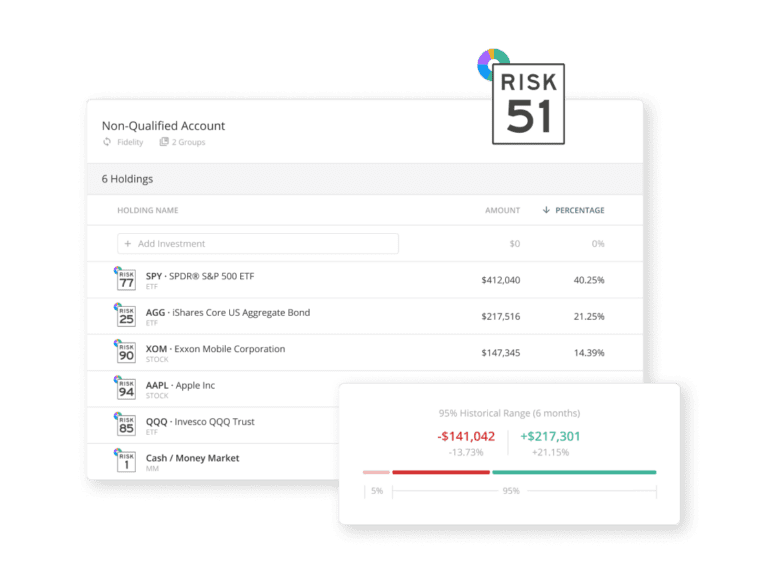
When you hear any of these, shift the conversation from guessing to showing. Turn the screen and pull up a visual that grounds the discussion. One clear view of the portfolio’s 95 Percent Historical Range can help clients understand what’s normal, what’s within expectation, and whether recent movement fits inside their comfort zone.

A visual gives clients something they can interpret immediately. It often makes the rest of the meeting clearer, more focused, and more productive for both of you.

3. Future-casting

Year-end reviews often stay centered on what happened this year, but clients make better decisions when you anchor the meeting in what’s ahead. Shifting the conversation toward upcoming milestones reminds clients that their plan is designed to support their life, not react to every market headline.

You can accomplish this by asking, “What might change for you in 2026?”

This question prompts clients to think about real events taking shape in the year ahead. Clients naturally think in terms of moments, not market cycles, and naming those moments gives you the clarity you need to guide the plan forward.

Listen for the events that often carry financial weight, such as:

  • Family milestones like weddings or new children
  • Moves or housing decisions
  • Retirement timing
  • Career transitions or business shifts
  • Education timelines or caregiving needs

These details often reveal where the plan may need to adjust. A move can change cash flow. A wedding can shift savings priorities. A retirement date may need a closer look. When clients walk through these moments, the meeting becomes grounded in their future instead of the market’s past.

Once again, this is an ideal moment to turn the screen toward the client and show how the plan supports what’s ahead. Clients forget numbers but remember how they feel, and one clear visual is far more impactful than a long PDF.

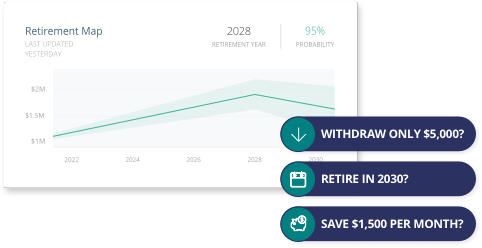
Nitrogen’s Nominal Retirement Maps graph, for example, helps them see how upcoming milestones affect their long-term probability of success. Pairing that view with their Risk Number and detailed portfolio stats gives clients context they can grasp immediately.

Together, these visuals replace uncertainty with clarity and help clients see exactly how the next chapter fits into the strategy you’ve built together.

Turn your review into the meeting clients remember

A Life First review changes the way clients experience your advice. It turns the conversation from a look back at market movements to a clear discussion about their goals, priorities, and the life they’re building. When you pair that approach with simple visuals from Nitrogen clients can see the connection between their decisions and their plan in a way that feels immediate and understandable.

Interested in learning how Nitrogen can strengthen your year-end reviews?

Click here to see how our platform can elevate your client conversations.

What Growth-Minded Advisors Need to Know in 2026: 4 Lessons from Dan Zitting

The financial advisory business has fundamentally changed. The old engine of growth, passive referrals, is sputtering in a digital world where prospects demand more proof and a modern experience before they even pick up the phone.

Referrals still happen, yet they don’t always convert on their own. Younger investors are now more likely to research you before they reach out. They look for clarity about your process, evidence of your value, years of experience, and what tools you use to help them understand your approach.

At the same time, advisors are managing more technology and more administrative work than ever. The friction builds quickly, and every hour spent navigating systems is an hour not spent with clients.

On The Modern Financial Advisor Podcast, Nitrogen CEO Dan Zitting explained the bigger shift behind these trends. Growing your business now requires removing friction from your workflow and giving clients the clarity they need to feel confident in their plan. When prospects understand your process and clients understand their plan, they are far more likely to engage and stay.

Here are four insights from that conversation that can help you deepen trust, strengthen your pipeline, and grow with confidence.

1. Better conversations lead to more referrals

The clearest path to growth is about better conversations.

When clients understand how their portfolio matches their comfort with risk, they feel confident in the plan. That confidence leads to trust. And trust leads to retention, referrals, and long-term growth.

But too often, risk conversations start with assumptions. Younger clients must want growth. Older clients must want safety. As Dan puts it, “Those stereotypes are completely false.” The data confirms it. A retiree might be comfortable taking more risk. A 30-something might panic in a volatile market. Age tells you very little about how someone will respond when things get bumpy.

That’s why Nitrogen built the Risk Number®. It gives each client a personalized score from 1 to 99 that reflects their actual comfort with risk. It removes the guesswork and creates a clear, visual way to set expectations from day one.

When clients see their risk score and understand how it connects to their plan, the entire relationship shifts.

They ask better questions. They stay grounded during volatility. And they’re more likely to refer you to others because they have a story to tell about how you helped them stay on track.

2. Referrals only work when your digital presence backs them up

Referrals still matter, but today’s prospects need more than a name. They want evidence.

Before they ever call, they’ll check your website, scroll through your content, and decide whether they trust you based on what they find.

Dan made the point clear: A referral is no longer a finish line. It’s the starting line. Prospects want to understand how you help, what makes your approach different, and whether you’re someone they can trust with their future.

That means your digital presence is now part of the client experience. When it reflects your process and makes your value clear, you build trust before the first meeting. When it’s vague or outdated, you lose momentum you didn’t even know you had.

Growth still starts with referrals, but it only continues when prospects can see who you are and how you help.

3. Cold outreach still works… when it adds value

Referrals may start the conversation, but they rarely close it. Today’s investors do their homework. They scan your website, check your credentials, and often wait for a reason to take the next step.

That’s why Dan encourages advisors to revisit a tool many have left behind: outbound outreach. Not the pushy kind. Not the boiler room tactics. But thoughtful, intentional touchpoints that signal you’re engaged and ready to help.

A simple voicemail. A short, helpful email. Even a quick check-in by text. These aren’t pressure moves. They are digital breadcrumbs. Each one builds familiarity and keeps you top of mind while the prospect continues their search.

The key is to show up before the prospect is ready to schedule time. When you do, you control the story. You give them something to react to. And you position yourself not just as a name they heard once, but as a real professional with something to offer.

Growth today isn’t about waiting. It’s about showing up early and often with something that makes the next step easier.

4. Friction is a hidden drag on your business

For most advisors, the biggest threat to growth is not competition. It is administration.

Every day, hours disappear into data entry, meeting prep, system hopping, and the slow grind of trying to keep multiple tools in sync. None of it feels meaningful, yet all of it pulls you away from the conversations that actually move your business forward.

On the podcast, Dan Zitting put it simply. Advisors want to spend less time in software, not more. But many firms still rely on workflows that require retyping information, filling out forms, or stitching together reports by hand. It is the same friction advisors dealt with years ago, just in digital form.

This is where technology should be doing the work. Modern AI can prepare meetings, surface insights, summarize conversations, and generate client-ready material without forcing advisors to click through endless screens.

As Dan noted, the real goal is a world where the software handles the complexity and the advisor stays focused on clients.

Reducing administrative drag represents one of the fastest ways to create more capacity for client conversations and more confidence across your entire book of business.

The Bottom Line for Financial Advisors

If you’re feeling the pressure of slower growth, more complexity, and prospects who expect more than just a referral, you’re not alone. The way people choose financial advisors is changing. But as Dan explains, that shift is also an opportunity.

With the right mindset and the right tools, you can reduce friction in your practice, deliver a client experience that builds confidence, and turn passive referrals into meaningful growth.

Want the full conversation?

Listen to the episode here: Redefining Growth for Advisors with Dan Zitting

Curious how Nitrogen helps you put these ideas into action?

Schedule a conversation with our team today.

How to Run Client Meetings That Win Trust and Drive Growth

Every advisor has been there.

A meeting that should have built trust falls flat. The client smiles and says, “Let me think about it.”

The charts were solid and the portfolio analysis airtight, but something didn’t click. The client left uncertain. You left wondering what you could have said differently.

That gap isn’t about numbers. It’s about clarity. When meetings feel overwhelming or unclear, clients lose confidence. And when confidence fades, relationships follow.

The best advisors don’t just review performance. They make every conversation simple, structured, and human. They use their meetings to build belief, not just present data.

In the next few sections, we’ll break down how to elevate your meetings before, during, and after each conversation so every client walks away feeling confident and ready to move forward.

Before the meeting: Prepare to lead with confidence

The best meetings begin long before the first handshake. Preparation is how great advisors steady their focus, anticipate what matters most, and show clients they’re worth trusting.

But preparation can be harder than it sounds. When calendars are full and client details are scattered, it’s easy to lose the thread that connects the story. The difference between a meeting that drifts and one that clicks often comes down to a few intentional minutes beforehand.

A simple rhythm before each meeting can make all the difference:

  • Revisit past meeting notes, recent emails, and open action items.
  • Refresh your sense of the client’s risk alignment and portfolio mix.
  • Note any market, tax, or life updates that could affect their plan.
  • Choose one visual or story that turns a complex idea into something clear.
  • Define your goal for the meeting: reassurance, decision, or next step.

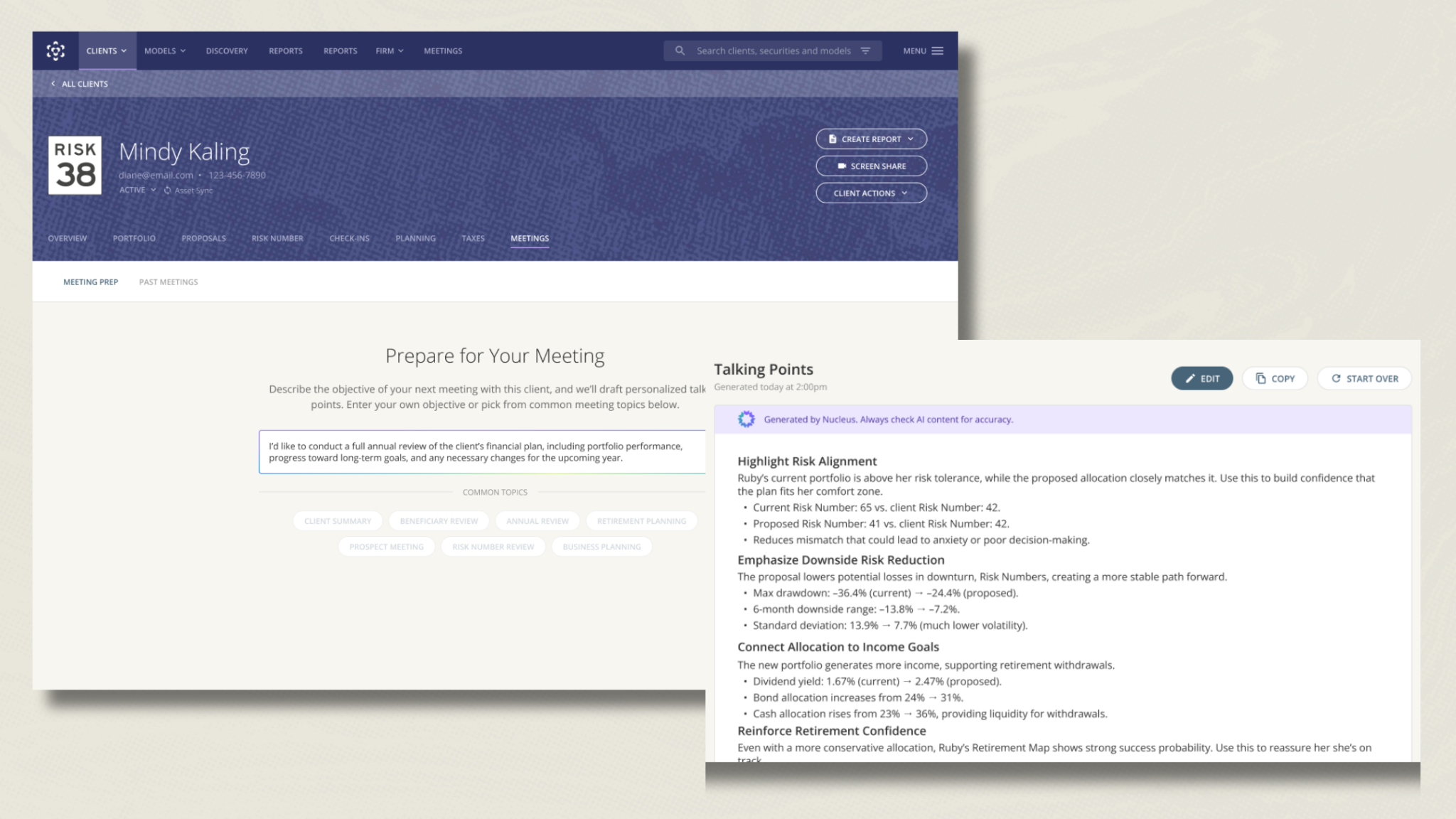
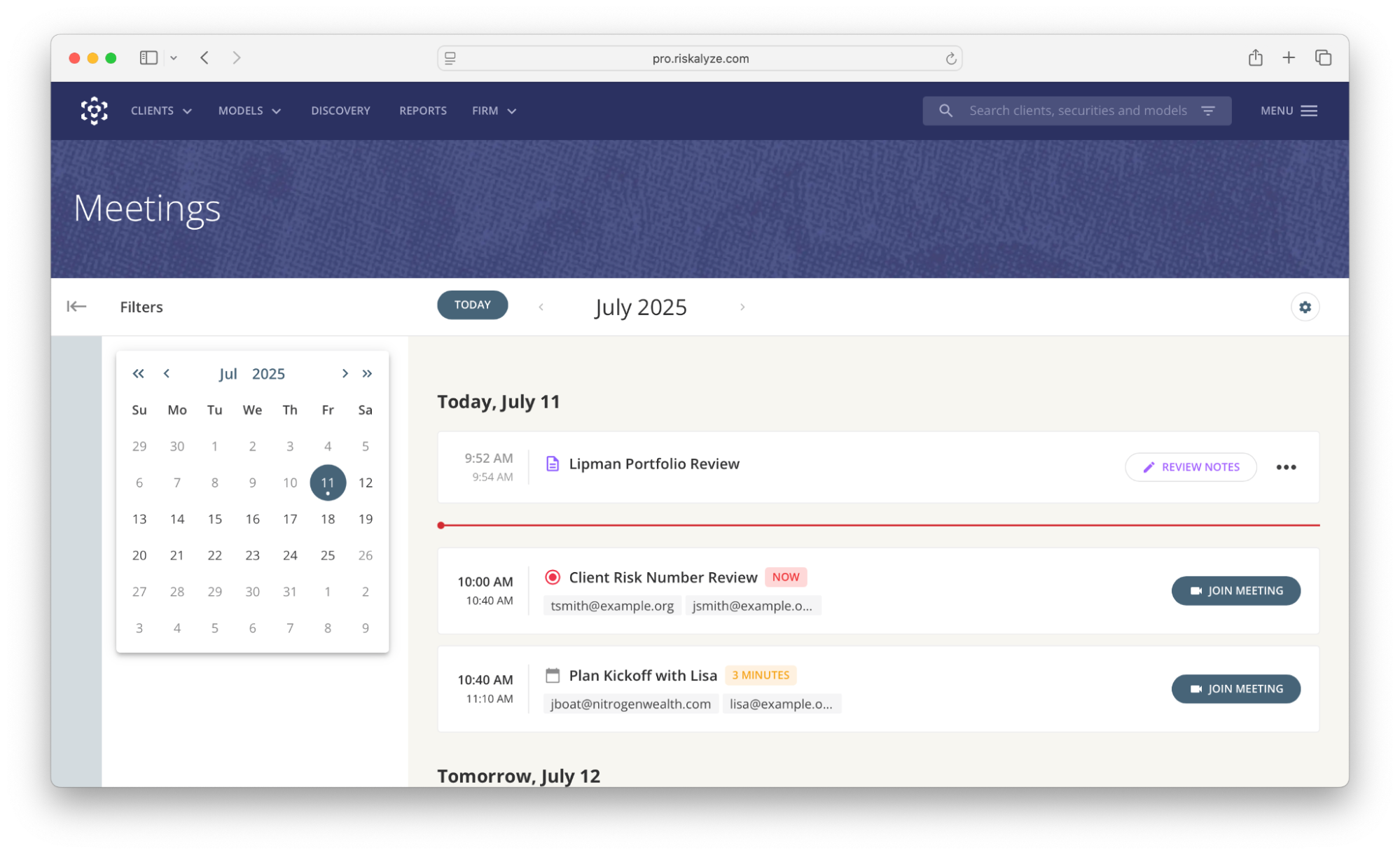
Nitrogen’s AI Meeting Notetaker makes that rhythm effortless. It surfaces the right details, like past notes, portfolio context, and actionable insights, so you can walk in ready to make every minute count.

Preparation sets the tone. When you walk in informed and intentional, clients feel it.

During the meeting: Ask better questions, earn deeper trust

The best meetings aren’t presentations. They’re conversations.

Bad meetings are easy to spot. The advisor talks too much, the slides do the heavy lifting, and the client nods politely while counting the minutes. It’s a download of data instead of a dialogue. Nothing wrong is said, but nothing sticks.

Great advisors do it differently. They use the meeting to understand, not impress. They turn what could be a performance into an exchange of ideas. That starts with discovery: the most powerful skill an advisor can develop.

From the first meeting with a prospect, discovery is what builds connection. Prospects decide quickly if you get them. Within minutes, they know whether you’re there to sell or to listen.

The advisors who win those moments ask questions that draw people out:

  • What prompted you to start looking for an advisor right now?
  • How do you define financial success for your family?
  • When have you felt most confident or least confident about your investments?

Those questions replace pressure with curiosity.

And discovery doesn’t end there. Clients want to feel understood long after they sign on. Ask what’s changed since your last conversation, how they’re feeling about the current environment, or what decisions are keeping them up at night. Invite feedback: What’s one thing I could explain better for you? Questions like these turn performance reviews into meaningful dialogue.

Of course, listening is only half the equation. The best advisors also show what understanding looks like. That’s where visuals change everything.

At Acorn Financial, Co-Founder Todd Tarantino uses client-facing monitors in every meeting so investors can see exactly what he’s working on. With Nitrogen’s portfolio comparison tools, he walks clients through how their current holdings align with his recommended models. They can see potential outcomes, stress scenarios, and tradeoffs in real time.

AI Income Center Dashboard Overview

Visual planning tools like the AI Income Center make it easy to show clients where they stand today and how your advice moves them forward.

Todd says those visuals “simplify complex concepts by illustrating them instead of relying on me to explain them.” The result? Clients not only understand their portfolios better. They trust the reasoning behind every decision.

After the meeting: Follow-through that keeps clients close

What happens after the meeting often matters just as much as what happens in it. Clients may not remember every chart or market update, but they’ll always remember how you made them feel once the conversation ended. Clarity, consistency, and follow-through turn a good meeting into lasting trust.

That trust, however, is fragile. Nitrogen’s 2025 Firm Growth Survey found that 68% of investors would consider leaving their advisor for someone who provides more personalized communication and technology-driven insights. And when markets get rocky, 85% say proactive reassurance is one of the most valuable parts of the client experience. In other words, it’s not performance that wins loyalty. It’s consistency, clarity, and follow-through.

The best advisors don’t leave that loyalty to chance. They build it, piece by piece, in every follow-up. Here are a few habits that help those relationships last:

  • Summarize what was discussed and agreed on. Send a brief recap that outlines what you covered, what decisions were made, and any key insights that came out of the conversation. Keep it short and client-friendly; something they can reread a week later and still understand without context. Clear summaries help clients feel confident that their plan is moving forward.
  • Define the next steps. End every meeting with a clear direction. “I’ll send over your summary and proposal this week,” or “Let’s touch base after the quarter ends to review your progress.” Simple statements like these keep clients oriented and show that their advisor is in control of the process.
  • Reaffirm open communication. Follow up with a short reminder that questions are always welcome. Take a simple line like, “If anything comes up between now and our next meeting, reach out. I’d rather hear from you before worry sets in.” That tells clients you’re accessible and proactive, not just reactive when markets move.

Once again, visual communication plays a powerful role here. The right visuals turn your follow-up from a document into a story.

Instead of sending a text-heavy summary or dense report, include one image that shows what progress looks like: a quick chart of their portfolio alignment, a snapshot of progress toward their goals, or a simple visual timeline of upcoming milestones.

When clients can see the narrative of their own plan, they remember your meeting as clear and reassuring.

In the end, meetings make the relationship

Every great advisor knows that meetings are where everything comes together. Preparation sets the tone. Discovery builds trust. Clarity keeps clients close.

Technology doesn’t replace that. It amplifies it. The right tools make preparation sharper, explanations clearer, and decisions easier for clients to believe in.

If you’re ready to elevate every client and prospect conversation, see how Nitrogen helps you lead with purpose and clarity. Discover how our platform equips advisors to prepare smarter, visualize simply, and strengthen relationships at every step.

Schedule your demo to start leading more confident client conversations.