


Stocks Held Steady. Investor Confidence Didn’t.
September sent investors plenty of mixed signals. The S&P 500 edged lower, while a sharp selloff in U.S. government bonds pushed the 10-year Treasury yield to levels not seen in nearly two decades. Nitrogen’s client sentiment data recorded its biggest monthly decline since March.
Each month, Nitrogen analyzes more than 1,000 advisor-generated portfolio proposals per day to see how advisors are responding to changing markets. September’s data reveals how that growing unease showed up in client sentiment and the portfolios advisors proposed.
Signal 1: Client mood
Seventy percent of clients said they felt positive about the markets in September, down from 83% in August. The 13-point decline was the sharpest since March and brought market sentiment to its lowest level since April.
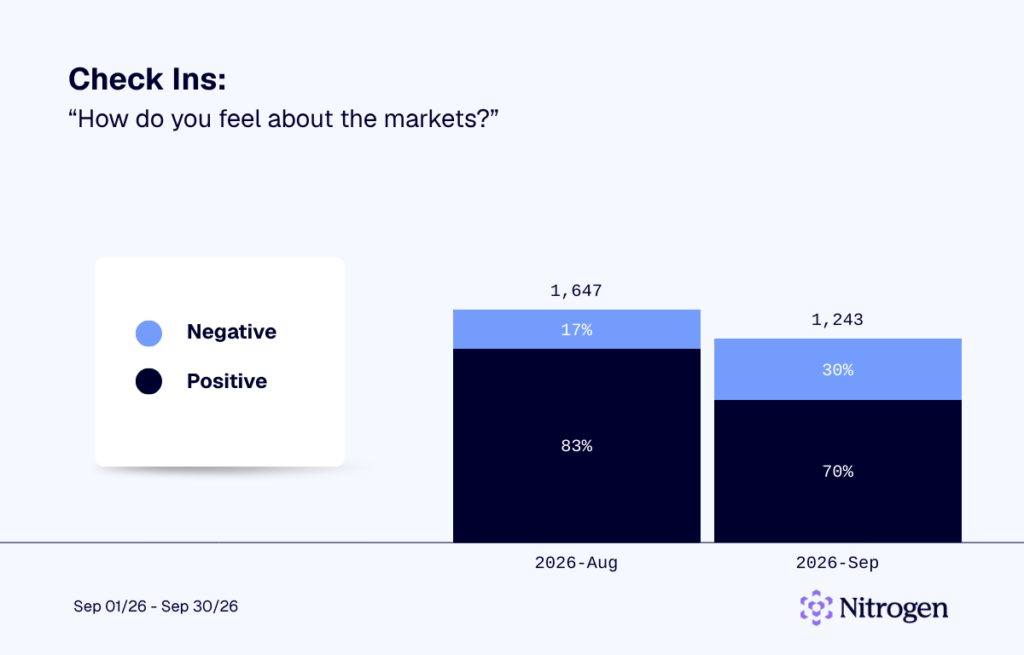
September Check-Ins: How Do You Feel About the Markets?
Confidence in personal finances also weakened. Seventy-five percent of clients said they felt confident about their financial future, down from 82% in August.
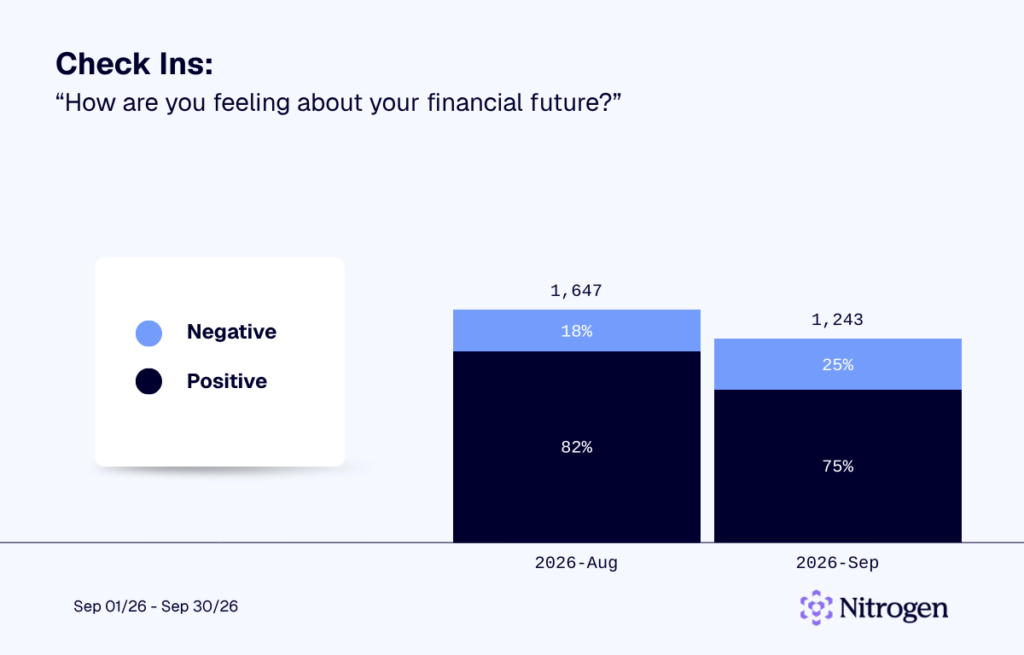
September Check-Ins: How Are You Feeling About Your Financial Future?
September’s decline in client confidence came despite relatively little movement in the S&P 500. However, the sharp selloff in U.S. government bonds and rising interest rates added uncertainty elsewhere in the markets. Even after the decline, most clients remained positive about both the markets and their own financial futures.
Signal 2: Risk posture
Advisors pulled back on equity exposure in September. Equities accounted for 52% of proposed allocations, down five percentage points from 57% in August. The 52% share still matches the levels recorded in May 2026 and September 2025.
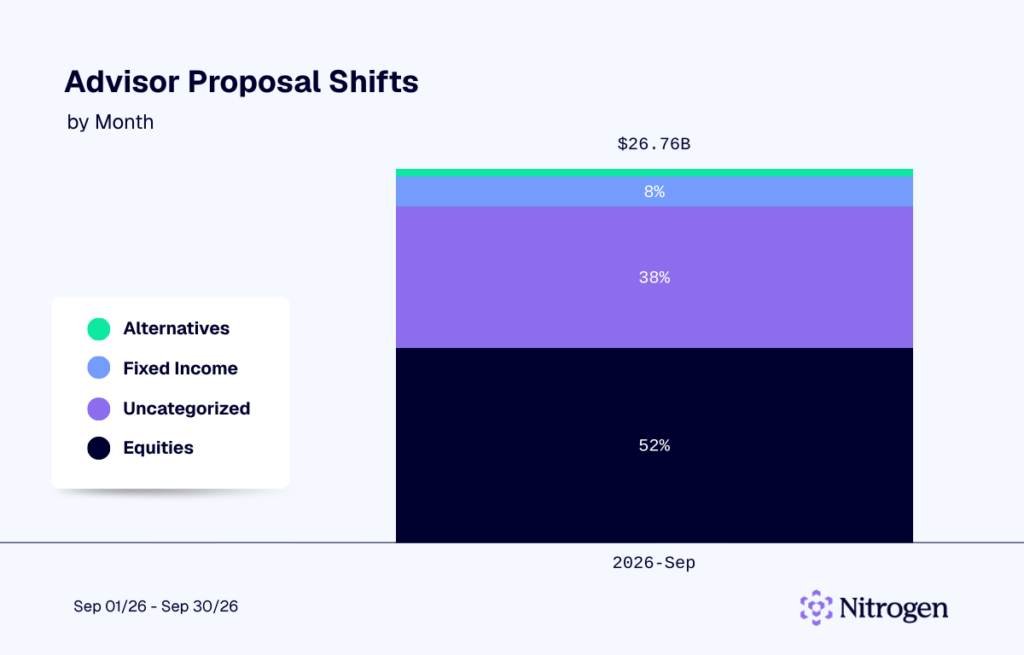
September Advisor Proposal Shifts
September’s pullback followed an unusually bullish August, when equity allocations reached their highest level in the past year. Over the same period, uncategorized allocations rose five points to 38%, while fixed income held at 8%.
Signal 3: Liquidity positioning
Cash and money market allocations held at approximately 7.0% of proposed volume in September, in line with August and the highest readings since May.
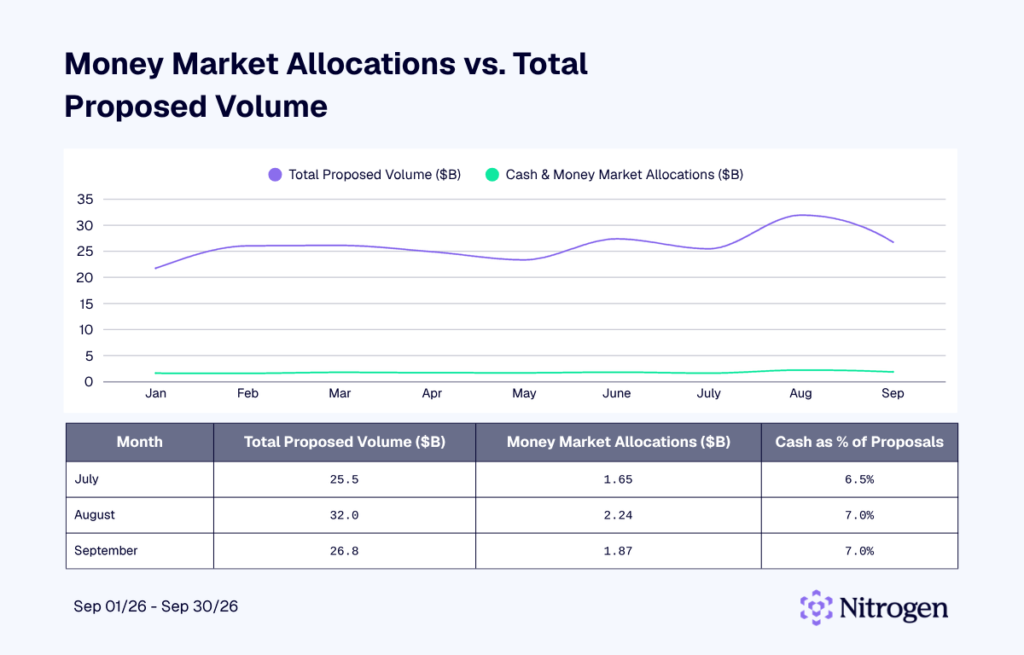
Money Market Allocations vs. Total Proposed Volume
Total proposed volume fell by more than $5 billion from August, and cash kept pace, holding its share. Advisors left their liquidity cushion where it was while trimming equity exposure, a measured adjustment alongside weaker client sentiment.
Signal 4: Advisor activity
Advisor activity cooled in September following an unusually busy August. Average daily proposal volume declined to $1.29 billion, down from $1.39 billion the previous month. Advisors also generated an average of roughly 1,120 proposals per day, down from about 1,220 in August.
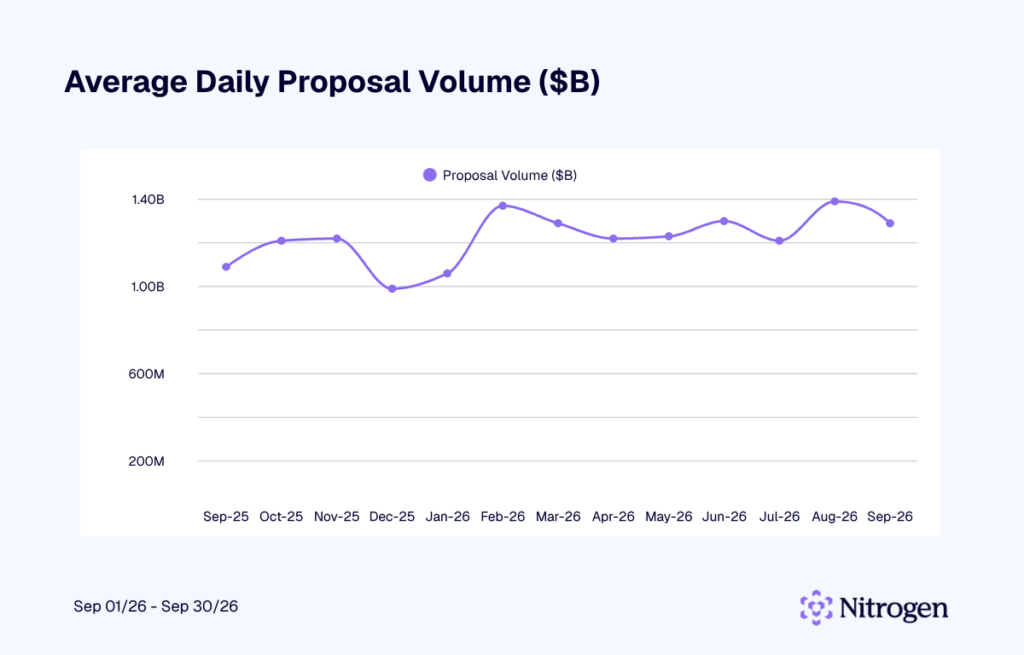
Average Daily Proposal Volume
September’s average daily proposal volume remained higher than most months over the past year. Following August’s unusually strong showing, the decline looks more like a return to typical activity levels than a significant slowdown.
Signal 5: Concentration
Seven of August’s top 10 investments remained on the list in September, led once again by Cash/Money Market and the SPDR S&P 500 ETF Trust (SPY). Three new additions appeared: the Vanguard S&P 500 ETF (VOO) and two S&P 500-linked products, Prudential FlexGuard and PruSecure. They replaced the Vanguard Value ETF (VTV), Vanguard Growth ETF (VUG), and PGIM Ultra Short Bond ETF (PULS).
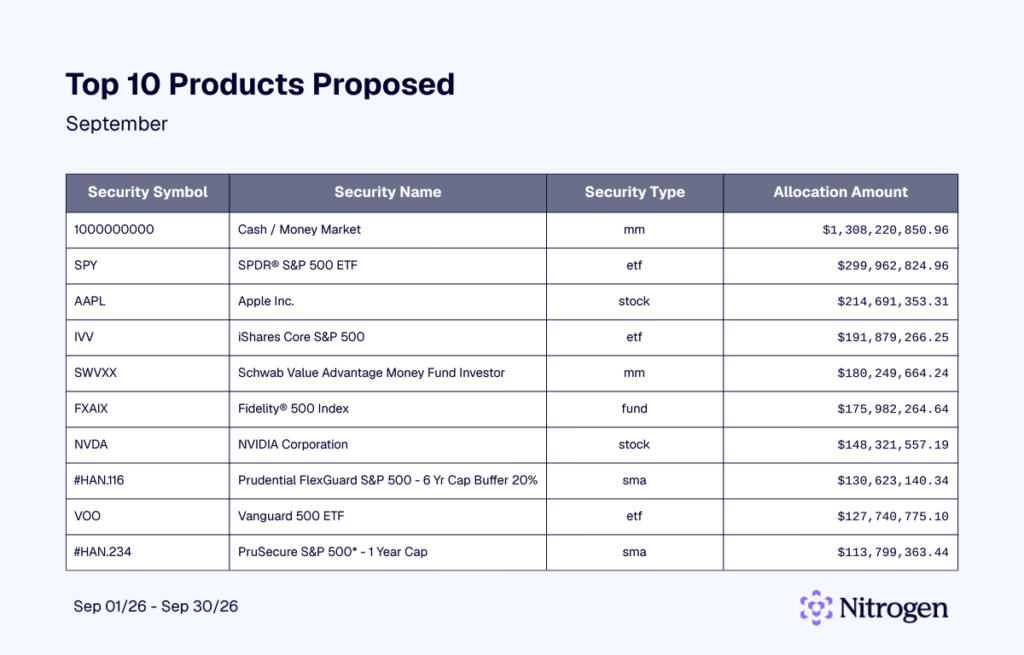
September Top Products Proposed
The two newcomers stand out against September’s decline in client confidence. Both provide exposure linked to the S&P 500, with features that can limit gains in exchange for some degree of downside protection, depending on the product’s terms. Their appearance may point to advisor interest in managing equity risk while keeping exposure to potential market gains.
Client Confidence Can Move Before Markets Do
September showed how quickly client sentiment can change. The S&P 500 barely moved, yet client confidence fell sharply after several months of relatively positive readings.
Clients draw on more than stock market performance when they think about their financial outlook. Rising interest rates and broader economic uncertainty can weigh on confidence even when equities hold steady. Regular check-ins give advisors a direct read on how clients are feeling, so they can start the conversation early.
See how advisors use Nitrogen data and Risk Number® insights to guide client conversations through changing markets. Book a demo today.
About Nitrogen Signals & Shifts
Each month, Nitrogen analyzes proposal and sentiment data from across its platform to help advisors understand what’s driving client decisions. With more than 1,000 proposals created daily, these insights highlight how advisors adapt and how investors stay invested.
Thank you for reading this edition of Nitrogen Signals & Shifts. The next issue will be published in November. Subscribe at the top of this post so you never miss an update.