

Stocks Were Flat in August. Why Did Advisors Get More Bullish?
August sent investors plenty of mixed signals. Stocks were relatively flat, while rising oil prices and a selloff in long-term bonds added uncertainty elsewhere in the markets. Advisors, however, made a much more decisive move: equity exposure in proposed portfolios climbed to its highest level in more than a year.
Each month, Nitrogen analyzes more than 1,000 advisor-generated portfolio proposals per day to see how advisors are responding to changing markets. August’s data offers a look beneath the surface at where advisors were putting client money and how investors were feeling along the way.
Signal 1: Client mood
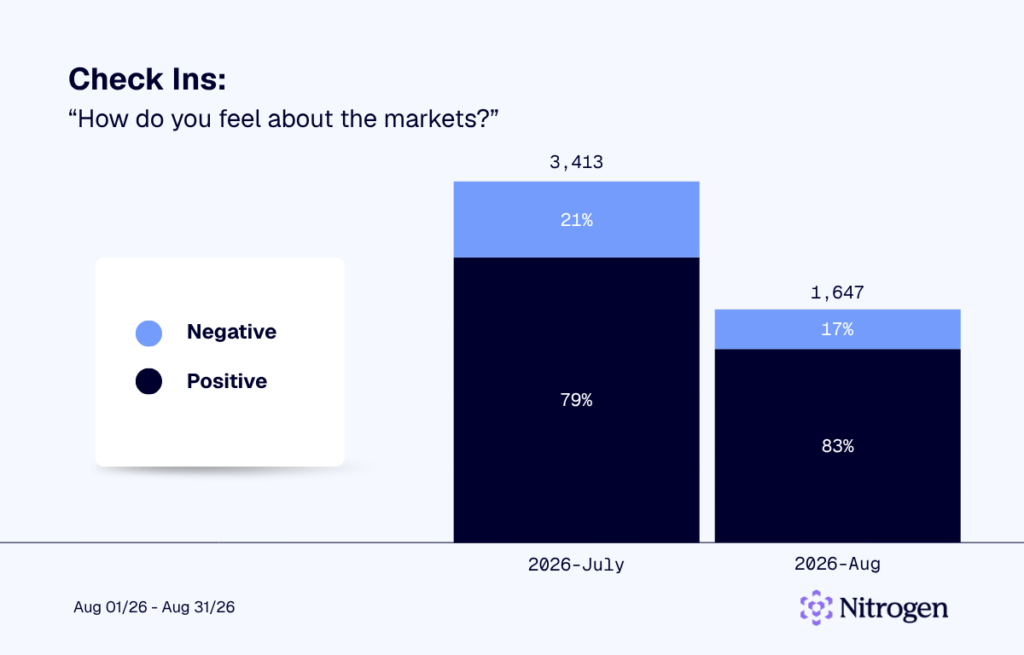
Eighty-three percent of clients said they felt positive about the markets in August, up from 79% in July. The four-point increase reversed the previous month’s decline and brought market sentiment back in line with the stronger readings seen earlier this year.
Confidence in personal finances was even steadier. Eighty-two percent of clients said they felt confident about their financial future, up a percentage point from July.
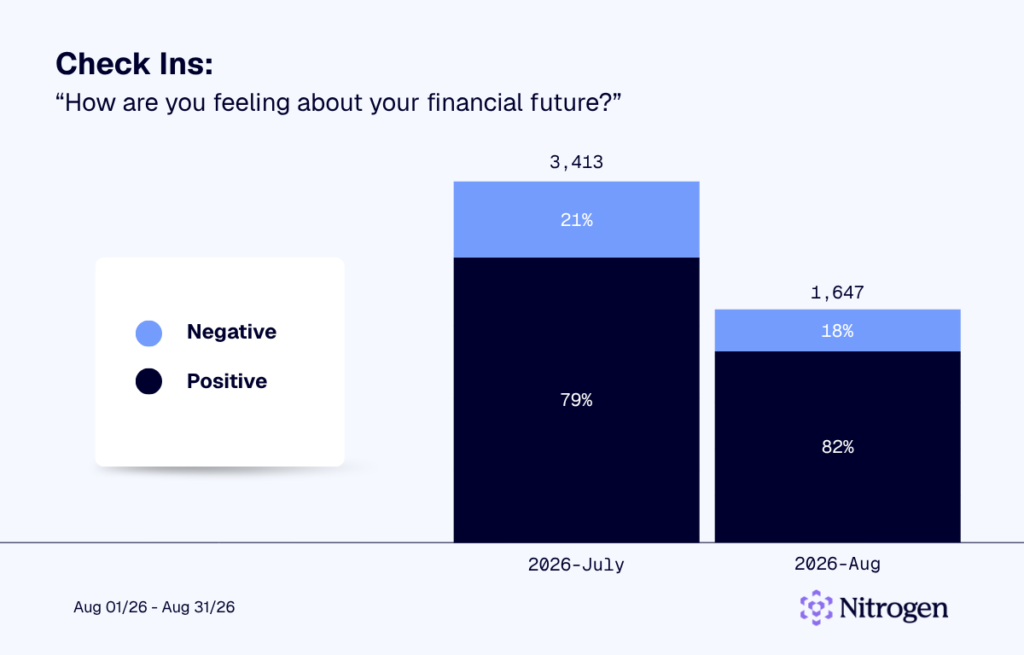
Clients remained broadly positive despite a more complicated market backdrop in August. Sentiment toward the markets improved, while confidence in personal financial futures barely moved. Even as rising oil prices and interest rates created new uncertainty, there was little sign of that uncertainty spilling over into how clients felt about their own finances.
Signal 2: Risk posture
Advisors made an even bigger move toward equities in August. Equities accounted for 57% of proposed allocations, up six percentage points from 51% in July and 10 percentage points since June. That was the highest equity allocation recorded over the past 13 months. Fixed income held steady at 8%.
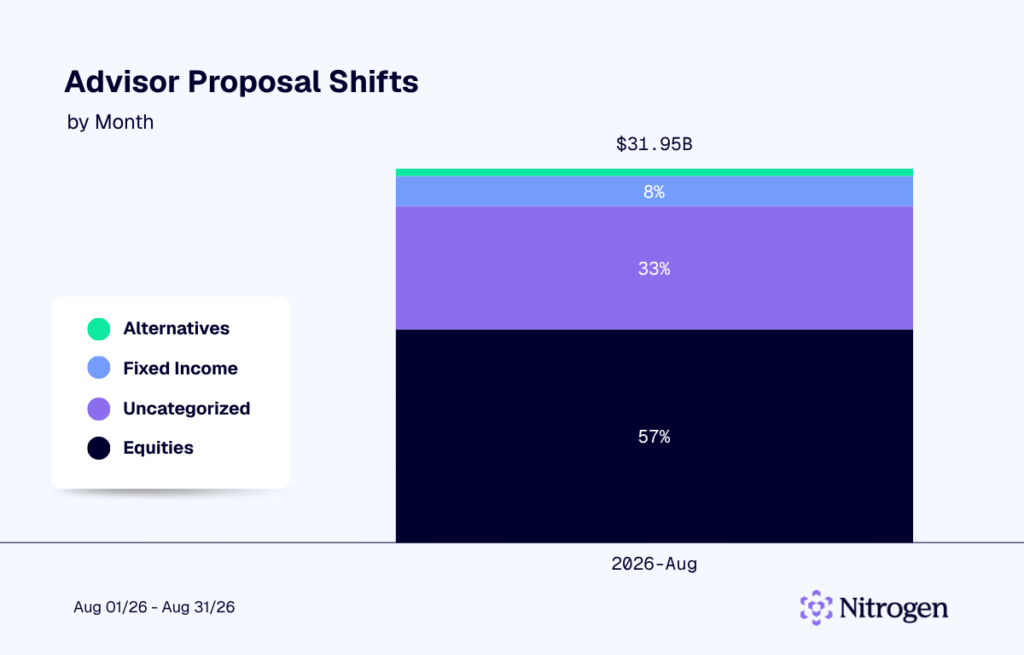
That equity increase stands out against a month when stocks themselves were relatively flat. Rather than simply following a strong move higher in equities, advisors continued increasing equity exposure amid a more complicated market backdrop. August marked the second consecutive month of higher equity allocations, extending a shift that began earlier in the summer.
Signal 3: Liquidity positioning
Cash and money market allocations edged higher in August, accounting for approximately 6.9% of proposed volume, up from 6.4% in July. The increase interrupted two consecutive months of declining cash allocations.
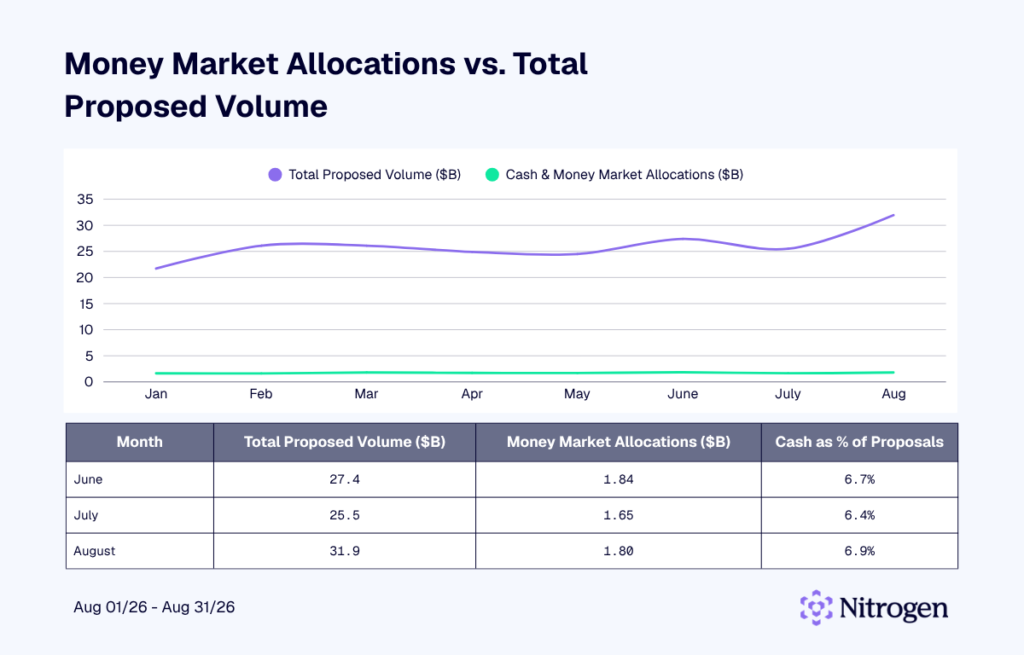
The increase adds some nuance to the shift toward equities. Advisors substantially increased equity exposure without drawing down their liquidity positions. With cash allocations remaining near recent levels, August’s proposals suggest advisors were comfortable taking more equity risk while keeping some capital readily available.
Signal 4: Advisor activity
Advisor activity rebounded sharply in August. Average daily proposal volume climbed to $1.39 billion, up from $1.21 billion in July and the highest level recorded over the past 13 months. Advisors also generated an average of roughly 1,220 proposals per day, up from about 1,080 the previous month.
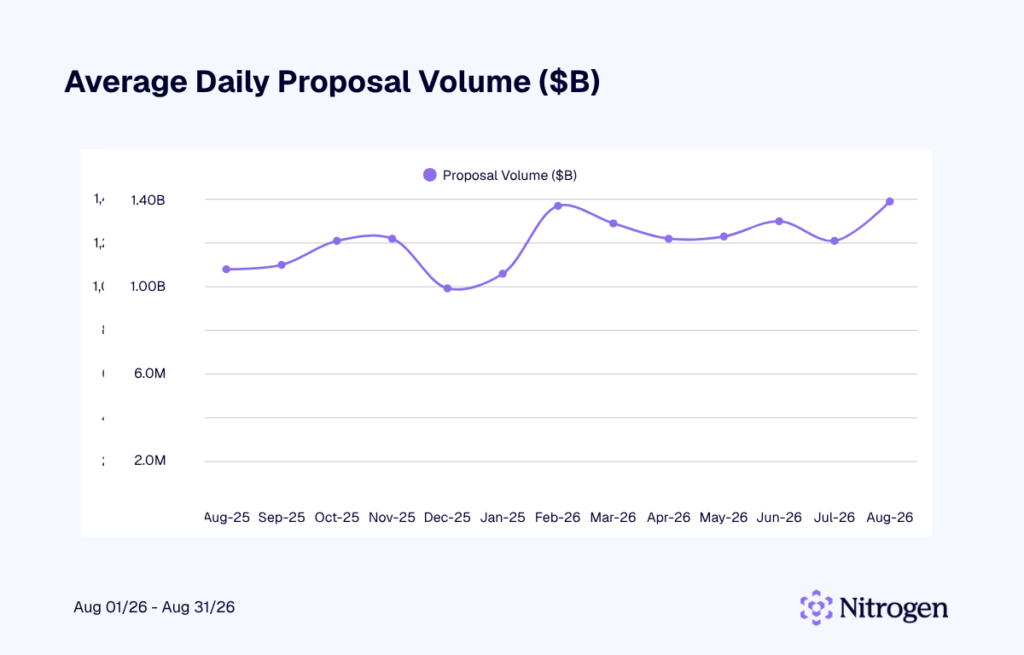
The rebound was notable for a month when advisor activity might typically be expected to remain slower. August falls squarely in the summer vacation season, and relatively quiet equity markets offered little obvious reason for a surge in portfolio activity. Yet proposal volume reached its highest level in more than a year.
Signal 5: Concentration
August brought more turnover among the investments appearing most frequently in advisor proposals. Seven of July’s top 10 remained on the list, led by Cash/Money Market and the SPDR S&P 500 ETF Trust (SPY). The Vanguard Value ETF (VTV), Vanguard Growth ETF (VUG), and PGIM Ultra Short Bond ETF (PULS) were the three new additions, replacing the Vanguard S&P 500 ETF (VOO), Vanguard FTSE Developed Markets ETF (VEA), and iShares Core U.S. Aggregate Bond ETF (AGG).
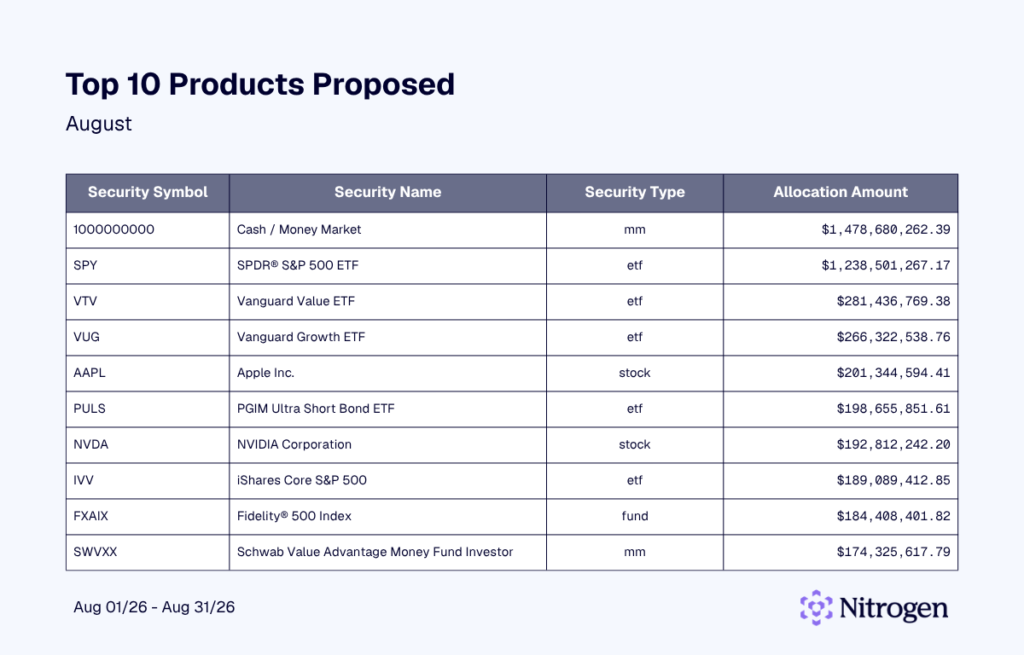
The new additions point in a few different directions. VTV and VUG provide exposure to opposite sides of the large-cap equity market, while PULS focuses on ultra-short bonds. Their simultaneous appearance fits with the broader August data: advisors increased equity exposure while continuing to hold liquidity and shorter-duration options in proposed portfolios.
Mixed Signals Didn’t Stop Advisors From Moving
August was an unusual month. Markets offered few obvious cues, yet advisors became more active and showed a greater willingness to take equity risk.
That may be the most interesting signal in this month’s data. Advisors didn’t appear to be waiting for the market outlook to become clearer before making portfolio decisions. At the same time, the continued emphasis on liquidity suggests they weren’t abandoning flexibility either.
Clear direction from the market isn’t always available. Having better insight into how clients feel about risk, and how their portfolios line up with it, can help keep those conversations grounded no matter what the headlines say.
See how advisors use Nitrogen data and Risk Number® insights to guide client conversations through changing markets. Book a demo today.
About Nitrogen Signals & Shifts
Each month, Nitrogen analyzes proposal and sentiment data from across its platform to help advisors understand what’s driving client decisions. With more than 1,000 proposals created daily, these insights highlight how advisors adapt and how investors stay invested.
Thank you for reading this edition of Nitrogen Signals & Shifts. The next issue will be published in October. Subscribe at the top of this post so you never miss an update.