Five Reasons Clients Fire Their Advisor

Losing clients can be discouraging at best, but…it happens. Even the best of advisors can’t keep everyone for the long haul. How are we supposed to keep those favorite clients around? Whether you’re looking to grow your business or become elite at retention, it’d be wise to ask and answer a simple question:

Why do clients fire their advisors?

Financial Advisor Magazine conducted a study of nearly 1,400 advisors to discover the most common explanations clients gave for firing their previous advisor. Here are the top five documented reasons financial professionals get dumped.


23% said the advisor made claims in which they couldn’t deliver.

Promoting your value by touting returns is old-school. Traditionally, we’d say something like, “We’re targeting an 8% return with this portfolio.” The investor doesn’t consider your long-term perspective, and only hears “8%.” Oops. We’ve locked in expectations. The market has only hit its own average once in about 25 years, and that’s a tough risk to take.


34% said the advisor’s investment performance was poor.

Number four is a logical progression of number five. If you paint a target that’s nearly impossible to hit, you shouldn’t be surprised when you miss it. If performance ends up anything lower than the expectations you’ve cast, you’ll hear, “Why aren’t I getting my returns?” And when things are looking up? “Why is the market beating my portfolio?” It’s a lose-lose. You’re fired.

44% said the advisor failed to return their phone calls promptly.

We’ve all experienced the phone ringing off the hook. The best solution (beyond leaning into your CRM and a finely-tuned schedule) is to curtail the volume of voicemails you’re receiving by coaching your clients effectively. While no advisor could (or should) eradicate inbound inquiries completely, the best behavioral coaches receive the least amount of frantic calls spurred on by investment drama on CNN.

51% said the advisor failed to understand their goals and objectives.

It seems like a wealth management 101 topic, doesn’t it? Of course you should demonstrate a crystal-clear understanding of your client’s retirement objectives and investing goals. So, why do half of all former clients feel they’ve been misunderstood? It certainly sounds like a by-product of The Best Interest Economy. Investors are more aware of the fiduciary standard they want from their advisor, and if you’re not on the same page, they’ll feel empowered enough to show you the door.

72% said the advisor failed to communicate with them.

Great news — The number one reason clients fire their advisor is the simplest one to address. Imagine a client engagement process where communication is a two-way street. Proactive advisors develop a plan to check in with clients regularly and gauge their sentiment about their financial future. They then systematize their client engagement process inside their favorite CRM or other software.

The verdict is in: clients stick around if they’ve received clear, realistic expectations and are then proactively coached by their advisor. We’ve found that investors who receive little communication about their wealth make unfortunate, short-term decisions.

It all stems from our definition of risk tolerance

“How far can a portfolio fall within a fixed period of time before the investor will capitulate and make an emotionally-charged, poor investing decision?”

All of our research points to a simple truth: while investors should be focused on the long term, they react to risk in the short term, and emotional reactions to risk are the number one killers of long-term financial goals and results. So keep communicating, keep coaching your clients behaviorally, and keep them around for the long haul.

The Advisor’s Guide to Virtual Meetings

After a year of virtual events, remote meetings, and online networking happy hours, it’s become more critical than ever that financial advisors invest in a quality tech set-up to support and enhance their message. Whether you’re meeting with a long-term client or potential prospect, hosting a webinar, or presenting during a virtual event, the right tools ensure you’re presented in the best light (literally) to share your message.

Continue reading “The Advisor’s Guide to Virtual Meetings”

Helping Clients Fall in Love with their Risk Assessments

By: Nick Harding, MBA
Senior Managing Director of Care and Success


Do you ever sit down in your favorite chair on a Friday night, start up Netflix, and then spend thirty minutes scrolling through thousands of on-demand television shows and movies—only to put your iPad down because “there’s nothing to watch?”


We live in a world of limitless possibilities where activities that used to require a full night out can now be started up with a finger tap in our home, and yet we still find ways to complain.


Netflix has recognized that its users sometimes need a little additional guidance in deciding what to choose, and it’s been making design updates to help return more relevant content. The company just updated its menu to include a “New and Popular” tab to get you watching its latest documentary with less taps and clicks.


Here at Nitrogen, we recently upgraded the Risk Number questionnaire to what we call the Next-Gen Risk Assessment. It’s as seamless, smooth, and easy to use as possible—much like choosing a show to watch on Netflix.


Our product teams gathered a tremendous amount of research and data from extensive trials to arrive at the most intuitive user experience that is still built upon the robust methodology we’re known for. And still, from time to time, we’ll hear about an advisor who is struggling with a client when it comes to engaging with the risk assessments.


It sounds a bit like those of us who still can’t find anything to watch on Netflix—and if that’s your client—there’s still hope for them!


Here’s the bottom line: every client is different.


If you’re an advisor who’s ever gotten a comment from a client about not liking risk assessments, we’re here to help you optimize your approach by making your conversation about risk as relevant and enjoyable as possible for your clients.


Here’s a step-by-step guide for how to run your meetings and lead your clients to a better understanding of their personal risk, and a greater appreciation for what you do.


How to Run a Perfect Meeting using Risk Assessments

The next time you have a client in your office and you want to talk about their risk by using risk assessments, you can follow this script to make sure the process is smooth and impactful for everyone involved.


Before we get into the details, here are three high-level best practices to keep in mind.


  • Best Practice #1: Communicate Clearly. Explain why you need to do a risk questionnaire in the first place. Prepare a script so you say the same thing to each client. You’ll get into a rhythm, become more confident in what you say, and create a consistent experience for everyone you work with (your clients and compliance department will thank you)!


  • Best Practice #2: Ask Questions. The goal isn’t necessarily to arrive at a Risk Number as quickly as possible—risk assessments are designed to help you know your clients better along the way. That can only happen when you take time to pause and check in to make sure your client understands the ramifications of each question.


  • Best Practice #3: Confirm Again. After you wrap up a questionnaire, you have the perfect opportunity to double-check anything your client seemed unsure about, and ask the all-important question: “Does this Risk Number feel like you?”


With those tips in mind, let’s look at a step-by-step guide for how to successfully take your clients through risk assessments in Nitrogen.


The Beginning: Explain the Purpose of Risk Assessments

As an advisor, you help clients understand their finances at a deeper level than they can on their own, and that’s exactly what risk assessments empower you to do. 


Start by explaining that you need to quantify their risk as an individual, and also learn about the risk of the other entities a client might own—like a business they run, or their entire family household. Each entity or “money bucket” you identify can have different levels of risk which all come together to form a cohesive plan for their life.


That plan is developed by creating a new questionnaire and identifying the amount they have to invest. This step is critical, because your planning and discussion can vary greatly depending on if a client has $100,000 or $10 million to invest.


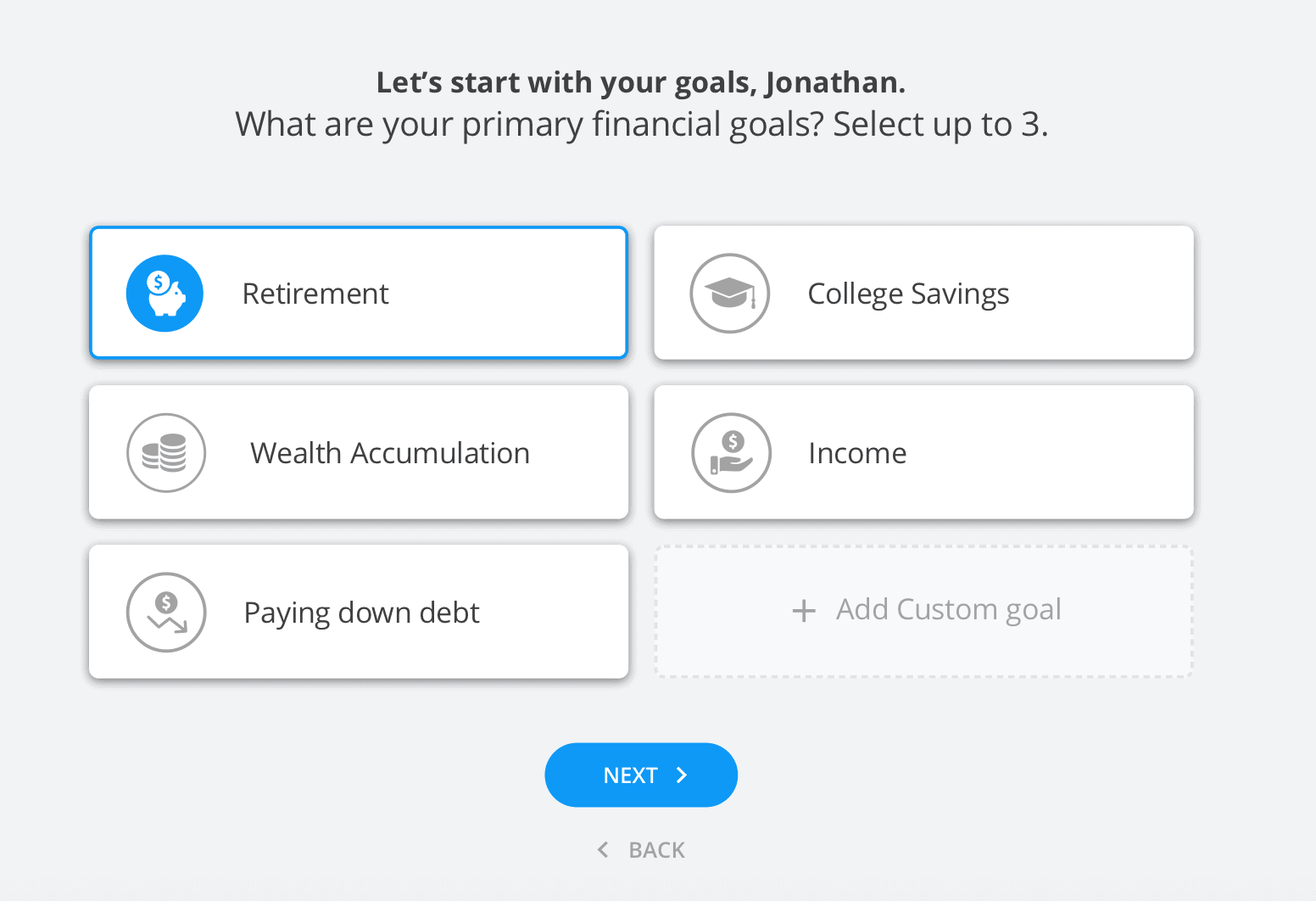
Next, risk assessments will take you into goals territory. I tell advisors not to let this part get too overwhelming. It doesn’t affect the outcome of the client’s Risk Number, and it can change over time. We’ve included it as a helpful data point for you to capture about an investor.
pasted image 0 (1)

If you want to add more conversational opportunities, you can also create a custom goal instead of selecting from our pre-built options.

You’ll end the introductory section by setting your client’s age and retirement year. This isn’t meant to set their future decision in stone, and is designed to get you talking about when they want to make the leap into retirement.

The Middle: Tell Me How You Feel

The next part of the questionnaire is my personal favorite—and if you position it correctly, it will probably be yours (and your client’s) too.

Start by telling your client you want to get a sense of how they feel about the markets and their financial future. It’s super easy. All they have to do is give you a figurative thumbs up or thumbs down to two questions that you’ll show them. These market sentiment questions don’t affect their Risk Number either—they simply start you off with a foundation by which you can “check in” with clients over time. 

At this point, we’ve entered the risk/reward tradeoff part of the conversation where the rubber meets the road. Each question tries to get your client to think deeply about how much money they could be comfortable losing in a given time span and still feel okay about their long-term financial plan.

This part of the risk assessment is where Nitrogen truly shines. Most risk questionnaires try to figure out the percentage of a portfolio a client is comfortable with losing—but percentages don’t affect our brains the way that cold, hard cash does.

When you walk through this middle portion, you want to keep clients focused on the real, relevant dollar amount. They might tell you at the beginning that they’re okay with taking a 20% hit over a six-month timeframe, but do they still feel that way when you show them they’ll be looking at a $200,000 loss?

If I’m an advisor in this situation, this is where I want to double-down and check for understanding. Don’t be afraid to ask a question twice, especially if your client suggests they’re comfortable with losing a large amount. You want to make sure they grasp the significance of the decisions they’re making, because one day, this situation may not be  hypothetical.

The Wrap Up: Putting it to the Test

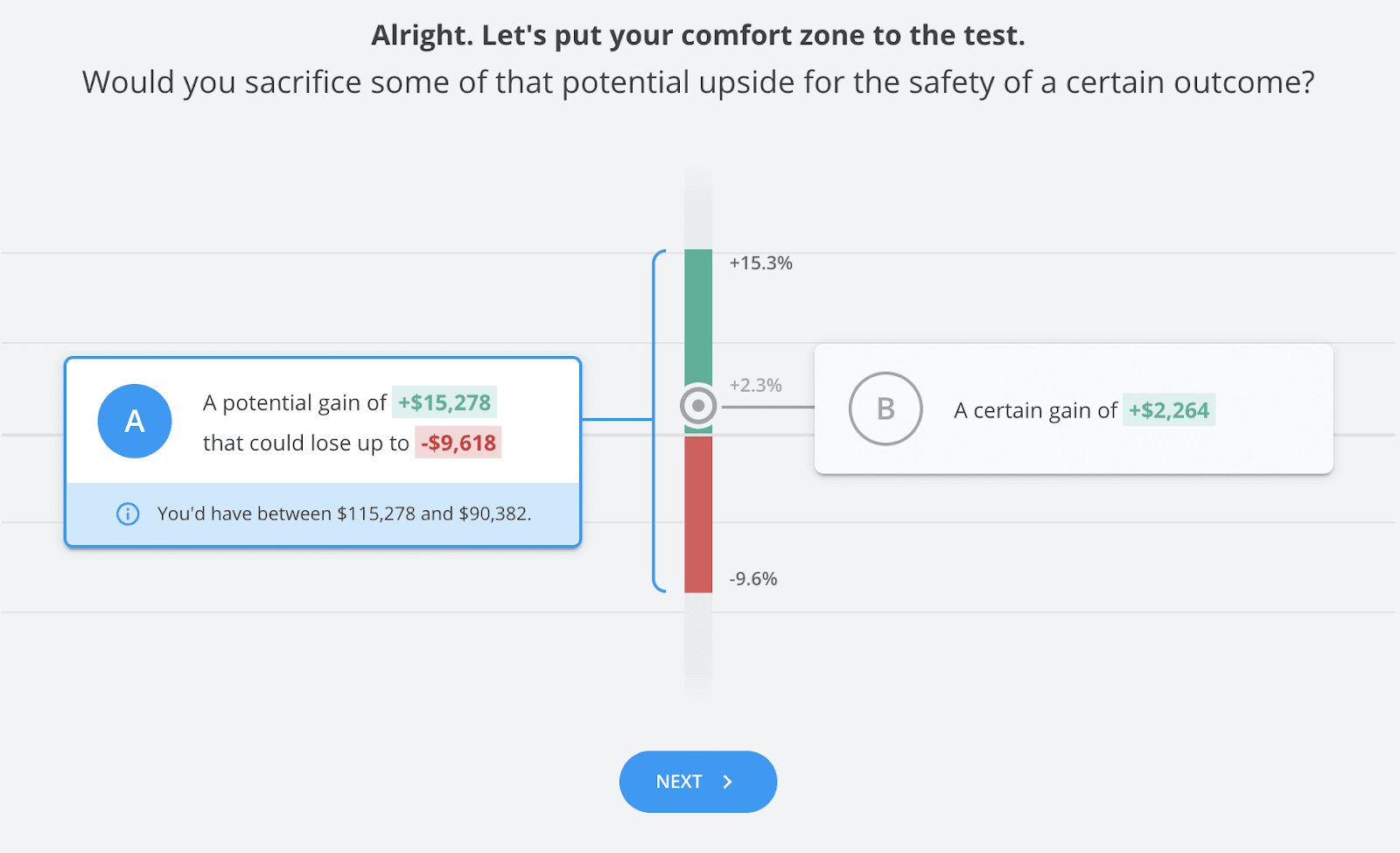
The last portion of the questionnaire tasks you with finalizing your client’s mindset about risk and reward. In this section, clients are going to rate their preference between two potential scenarios.

These “what if” scenarios allow the two of you to freely discuss the merits of downside and upside possibilities. It’s also where I would recommend explaining the 95% Historical Range™. You want them to know that when you touch base again in six months and their situation falls within that comfort range, they’re still on track to reach their goals.

Here’s the catch (and why assessing risk is so important): If they want to reach those goals, you know they need to accept the possibility of some downside risk. 

The “what if” situations allow your client’s to consider how they would respond ahead of time in these scenarios, and it provides you with critical information about their behavior and approach as different risk/return scenarios are presented.  The “what if” questions will present scenarios like, would you rather:

  1. Get a possible gain of $290,000 at the risk of losing $190,000?

  2. Or would you rather get a certain gain of $37,000?

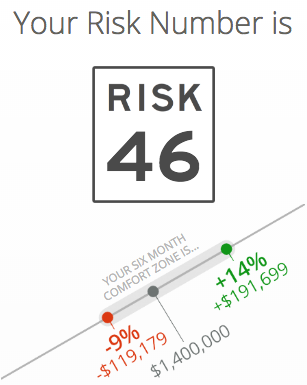
When the “what if” questions are finished, your client gets their Risk Number, and you receive the opportunity to incorporate that result into their financial plan.
pasted image 0 (2)

Now comes the most important part. You want to make sure that they confirm that yes, that Risk Number really does “sound like me.” They should feel comfortable and confident with the number and comfort range they see.

It’s at this point that you want to reiterate that the Risk Number isn’t a static number. If anything major changes in their life, they should feel empowered to retake the questionnaire. We all adapt and change throughout our lives in large and small ways, and our risk tolerance is no different. The great news is you can email them a link for them to retake the questionnaire at home at their own convenience. They’ll already be familiar with the process since you’ve walked them through it, and they should be able to complete the new questionnaire in a few short minutes.  

After speaking with multiple advisors, risk assessments improve the overall interaction for both the advisor and the client alike, as well as offer the advisor a critical opportunity to provide their unique advisor intelligence and expertise throughout the experience. 

The questionnaire is your time to ask key “why” discovery questions to dig beneath the surface, get a client to think more about their financial future, and help you understand them at a deeper level. 

Here are some great starter questions that you can (and should) use to follow up on answers that might surprise you so you can keep the conversation engaging:

  • “What about that answer was appealing to you?”
  • “What struck you about that question?”
  • “Why do you think that’s the right choice for your goals?”
  • “How did that question make you feel?”

The Wrong Way to Use Risk Assessments

There is one definitive way to use risk assessments incorrectly—and that is to give up on a struggling client. While many clients find these questionnaires intuitive and can take them on their own, others need a little hand holding only you as their financial advisor can provide.

There might be terms throughout the process that clients don’t understand, or questions that give them pause. These are the opportunities for you to engage in conversation, adjust your approach, and tailor the questionnaire experience to each person.

Our most successful advisors use this inherent flexibility to tailor the experience for each of their clients. If you have a client who likes to get to the point, you can be more concise and go through the questionnaire with more of a bullet point mentality than a drawn out conversation. 

A financial advisor understanding a client’s desired level of risk and investment objectives is akin to a doctor needing to know a patient’s symptoms and health goals before they can prescribe a plan for long-term health. 

Risk assessments allow you to leverage a process and technology to explain to clients that you have the best approach to get them to the most confident place possible. 

In the End, Not Every Client Needs a Questionnaire!

As great as risk assessments are for increasing client buy-in and generating new leads, there will be many times when a questionnaire isn’t the right experience. These may be clients who you already know quite well, who aren’t detail oriented, or who have the mindset that they hired you to take all the “work” out of managing their money. Setting a Risk Target for them is a great approach to take in these situations.

“We never use risk questionnaires with clients. We use Nitrogen instead.” – Tom, advisor in Texas

That’s right—some advisors set Risk Targets for 100% of their clients! It might be because they specifically prefer that client experience, or because their institution mandates a different questionnaire or assessment process. Either way, Risk Targets are an easy way to translate their existing approach into Nitrogen and arrive at an ideal Risk Alignment for that client.

Empowering the World to Invest Fearlessly

Risk assessments in Nitrogen provide you with a solid foundation to get peace of mind about client relationships, their tolerance for risk, and their investment goals. It not only covers you for compliance, it also helps you do what you do best. 

And that is to empower your clients to invest fearlessly—and in return, make a tremendous impact on their world.

Nitrogen 101: What is the Risk Number?

Want to know what makes Nitrogen tick? There are a few fundamental components. Today, we’ll discuss the component most central to your client’s success—the Risk Number.


The Risk Number® is an objective, quantitative measurement of an investor’s true risk tolerance and the risk in a portfolio. Our patented technology calculates a “risk score” on a scale from 1-99, utilizing a scientific framework that won the Nobel Prize for Economics. As you can see, we’ve shaped it like a speed limit sign, so a higher Risk Number means a higher level of risk and potential return.

Thousands of firms have found it to be a far more efficient way to discuss risk with a client than subjective terms like “moderate” and “aggressive,” and the Risk Number also removes the danger of stereotyping investors based on age (young and aggressive, old and conservative). The subjectiveness of those terms is the most dangerous part of the equation; you could have an investor, an advisor, and a portfolio all labeled as aggressive, but they all could mean very different things by that term.

Nitrogen | Risk Number Models

Understanding the Risk Number is simple, which makes it an invaluable resource for advisors. Clients get frustrated and confused when bombarded with standard deviations, Sharpe ratios, and scatter plots. It’s not that clients have too little information; the problem is that clients are overwhelmed. The Risk Number boils that complexity down into understandable terms—it is a simple way to communicate what percentage of potential downside risk a client is comfortable with over a six-month period.


We know that generalizing client risk tolerance doesn’t work. Investors view risk through their own, unique lens to gauge risk and return tradeoffs. The speed limit metaphor helps instill an understanding of that risk. Sometimes it’s prudent to slow down depending on weather conditions—the same is true of risk.

Much of the impetus of Nitrogen is centered in these questions to articulate a simple, objective measure for investors and advisors to deepen communication. Advisors orient conversations around how much risk investors can handle over the short term to hit their long-term objectives.

Here are a few examples of the relationship between downside risk and Risk Number:

Potential Downside RiskRisk Number
0.00%1
-1.50%20
-5.50%35
-9.50%50
-15.00%70
-20.00%85
-25.00%90
-35.00%95
-40.00%97
-55.00% or lower99


To determine a client’s Risk Number, advisors either use Nitrogen’s risk assessment, or they simply set a risk target if they already know the client well. Once an advisor has determined an investor’s Risk Number, they can choose one of our Risk Number model portfolios to match, import one of their own model portfolios, or build a unique strategy for the client. By building a portfolio whose aggregate downside risk potential aligns with the client’s risk tolerance, an advisor can set clear expectations and serve as a behavioral coach during market volatility.

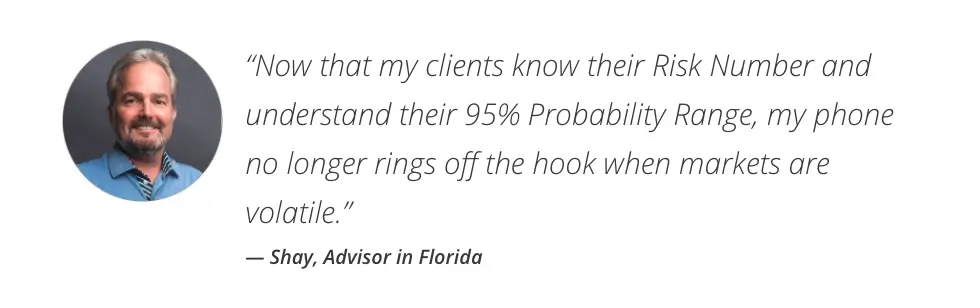
A quote from Shay, an Advisor in Florida: "Now that my clients know their Risk Number and understand their 95% probability range, my phone no longer rings off the hook when markets are volatile."

Most people don’t know exactly how much risk is in their existing portfolio, which is why the Risk Number can be such a powerful tool for lead generation and getting new clients over the line. An advisor using Nitrogen can review an investor’s current investment portfolio, calculate its Risk Number, and compare it to that investor’s personal Risk Number. Often, we find a significant difference between the amount that investors are willing to risk and the amount of risk they are actually taking. This creates a powerful “seal the deal” moment where the advisor is to be able to speak well about the value they provide and how they’ll be able to help their clients maximize their satisfaction with their investment lineup. And for existing clients, it’s a way to be up-front and drive alignment between the risk the client has, wants, and needs.

The beauty of the Risk Number is how it empowers investors to stay the course during the short term so they don’t lose sight of the long term. We believe all long-term investors are made one short-term decision at a time, which is what makes our six-month historical range so effective. Every time an advisor designs a portfolio for a client, Nitrogen calculates a range (e.g. –7% to +12%) that constitutes a 95% probability for that portfolio’s outcome, six months from then. Put another way: A portfolio with a range that matches the client’s comfort zone therefore has a 95% probability of staying within the client’s risk tolerance. When the market dips, the Risk Number reminds a nervous client that they’re still within their risk tolerance.

About the Risk Number – Riskalyze

Equipped with the Risk Number, advisors can focus the conversation on the client’s biggest fear—suffering losses—and turn that into the confidence needed to make the right decisions. It builds and deepens client-advisor relationships, and creates a common language that helps remove ambiguity. The Risk Number also empowers fearless investing by quantifying something as complex as an investor’s unique emotional reaction to risk and presenting it with the simplicity of a single number.

We’re such firm believers in the Risk Number that we’ve built an entire wealth management platform around this very concept. Nitrogen allows advisors to pinpoint how much risk their clients can handle, and aligns a client’s portfolio to match. Our robust financial advisor software provides tools for analyzing investment risk, retirement planning, and building and implementing investment portfolios, all using our proprietary Risk Number® to help quantitatively measure investor risk tolerance, risk capacity, and portfolio risk on a scale from 1 to 99.

Here are just a few ways our core features align to the Risk Number:

  • Risk Assessments: How much risk do your clients want? Use leading scientific theory to objectively pinpoint an investor’s Risk Number, whether you’re sitting across the room or across the world.
  • Portfolio Analysis: How much risk do your clients have in their portfolio? Does an investor’s risk tolerance match with how they’re invested? A portfolio-wide Risk Number and 95% Historical Range enable you to make investment decisions and demonstrate alignment to your new prospects and existing clients.
  • Retirement Maps: How much risk do your clients need to reach their goals? You won’t have to wonder if a client’s risk preference will allow them to achieve their goals— you can calculate their probability and build a map to success.

If you’re looking to drive better alignment between your clients and their portfolios (and eliminate a lot of manual work and speculation in the process), you can book a demo of Nitrogen today. Our product experts will walk you through exactly how our platform will boost your productivity, protect your valuation, attract new clients, and help them understand how you’re looking out for their best interests.


Interested in digging into the Risk Number a bit more? Here are a few of our all-time favorites:

• Risk Numbers by State

• What to do when a client’s Risk Number surprises you

• The Math Behind Nitrogen (a white paper!)

The Top 20 Advisor Websites of 2020

In today’s world, having a website for your advisory firm is a must. But with nearly 2 billion results for “financial advisor” in Google, standing out from the crowd is more challenging than ever. If prospects can’t find you online, they may find a competitor or even turn to a robo-advisor. When done well, a website can be an essential marketing tool for any firm looking to attract prospective clients and engage the ones they have.

At its core, an advisor’s website should serve at least three purposes:

1. Introduce Your Services

2. Build Trust

3. Gather Information

For a website to be successful, it needs to address these requirements and be well-designed, which is no easy feat. So we’ve gone through the entire internet (okay, maybe not the whole internet) to highlight the top 20 financial advisor websites of 2020 and how they’re able to accomplish these goals. We’ve called out some takeaways and hope it provides some design and concept inspiration for your website!


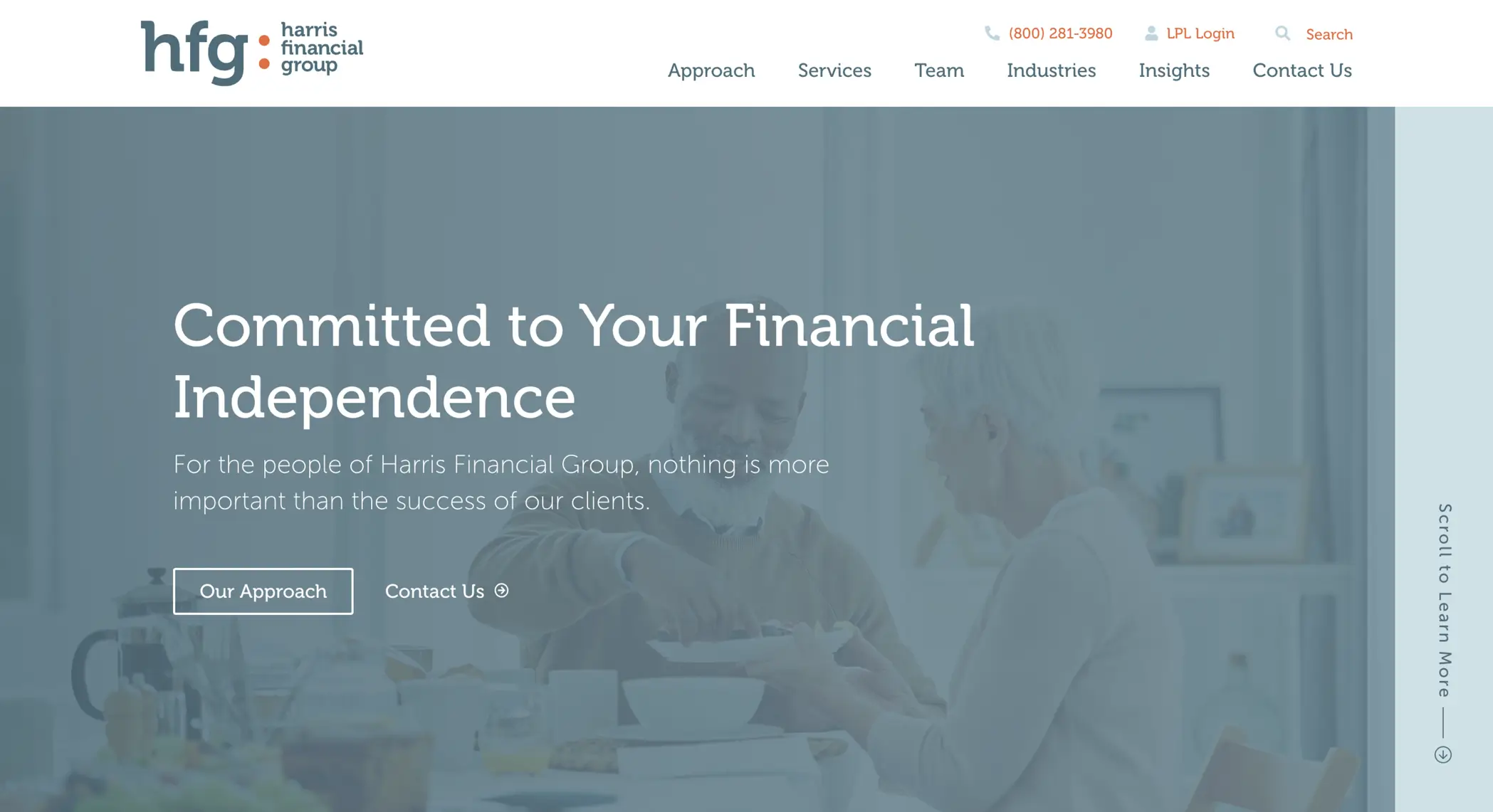
1. Harris Financial Group | www.harrisfinancialgroup.com

HarrisFinancialGroup

The first thing you see is the comprehensive range of advising services offered by the firm. The homepage lists five sections: services offered, team listing, a highlight of their target industries, recent news, and a contact form. Sleek design and straightforward navigation set the Harris Financial website apart from so many others. The minimalist approach also demonstrates who they are and keeps the focus where it belongs. The clear call to action (in this case, the “What’s Your Risk Number?” button at the top) captures prospects’ information in an inbound, non-salesy way. Their simple layout also converts well into a mobile format.

LESSON LEARNED: KEEP IT SIMPLE


2. Simonet Financial | www.simonetfinancial.com

Simonet

It’s no wonder that an advisory firm led by Bill Simonet would lead with transparency. The team at Simonet Financial knows their audience and does a great job of establishing who they are as a firm and who they help. The little touches of their tech stack, FAQ section, and pricing let prospective clients see their transparency – which goes a long way in establishing trust.

LESSON LEARNED: BE TRANSPARENT TO GENERATE TRUST


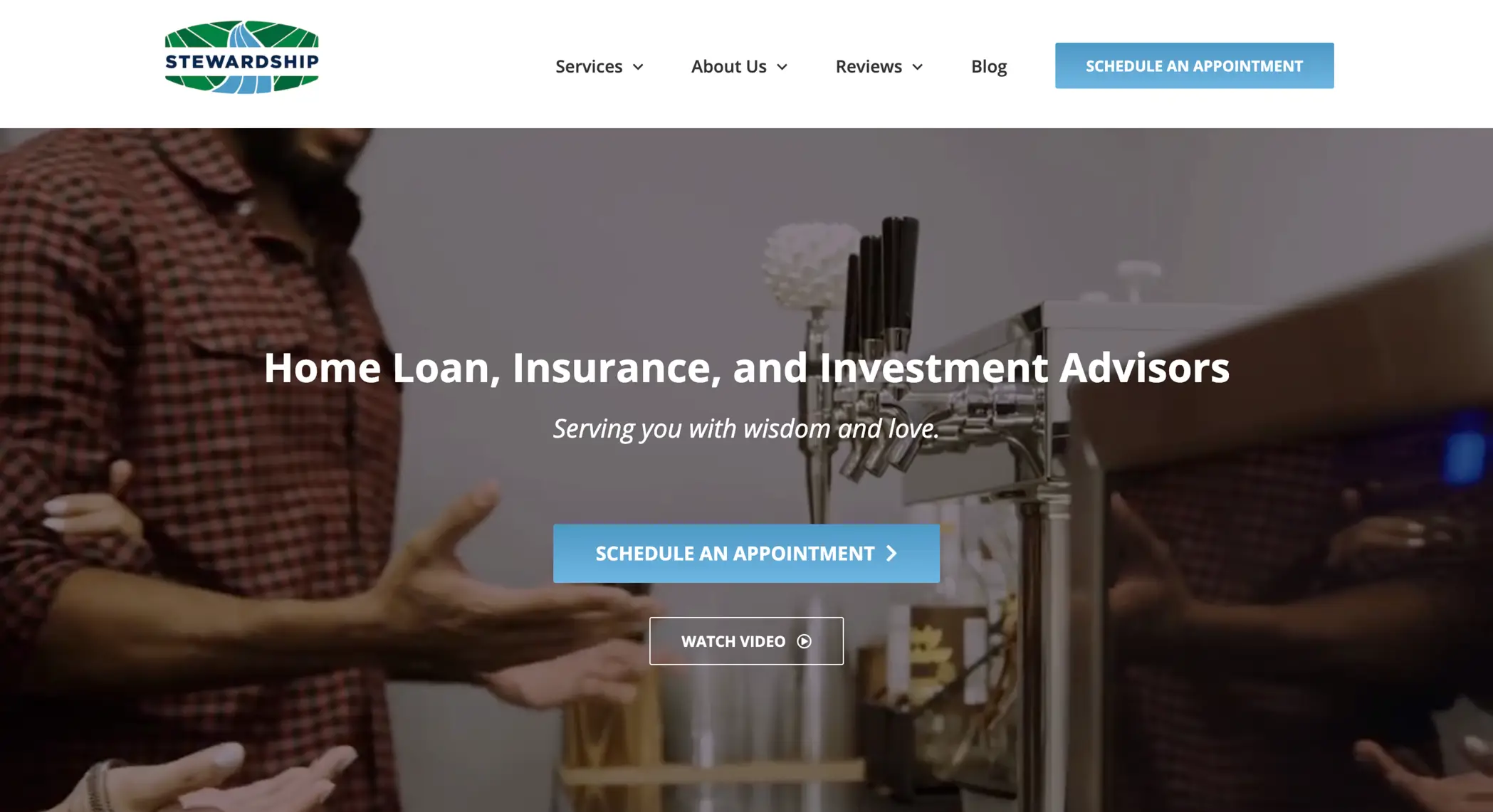
3. Stewardship | https://stewardship.pro/

StewardshipFrom the opening video to the informational graphics on the homepage, the Stewardship team uses every pixel to explain the how and why behind their client experience process. Right away, visitors are introduced to a video and a clear call-to-action to schedule an appointment. As you explore the website, you keep coming back to a clear idea: the Stewardship team is different, and they are ready to show you why.

LESSON LEARNED: TELL THEM HOW YOU’RE DIFFERENT


4. RLS Wealth | https://www.rlswealth.com/

RLSWealth

RLS Wealth has polished its website to be consistent with their values. This approach is an example of branding done right; potential clients immediately come to a clear understanding of the firm’s purpose and mission. And what more could you expect from Justin Castelli, a wildly influential voice in the industry and co-founder of Advisors Growth Community? This website personifies the firm’s brand.

LESSON LEARNED: BRAND YOURSELF


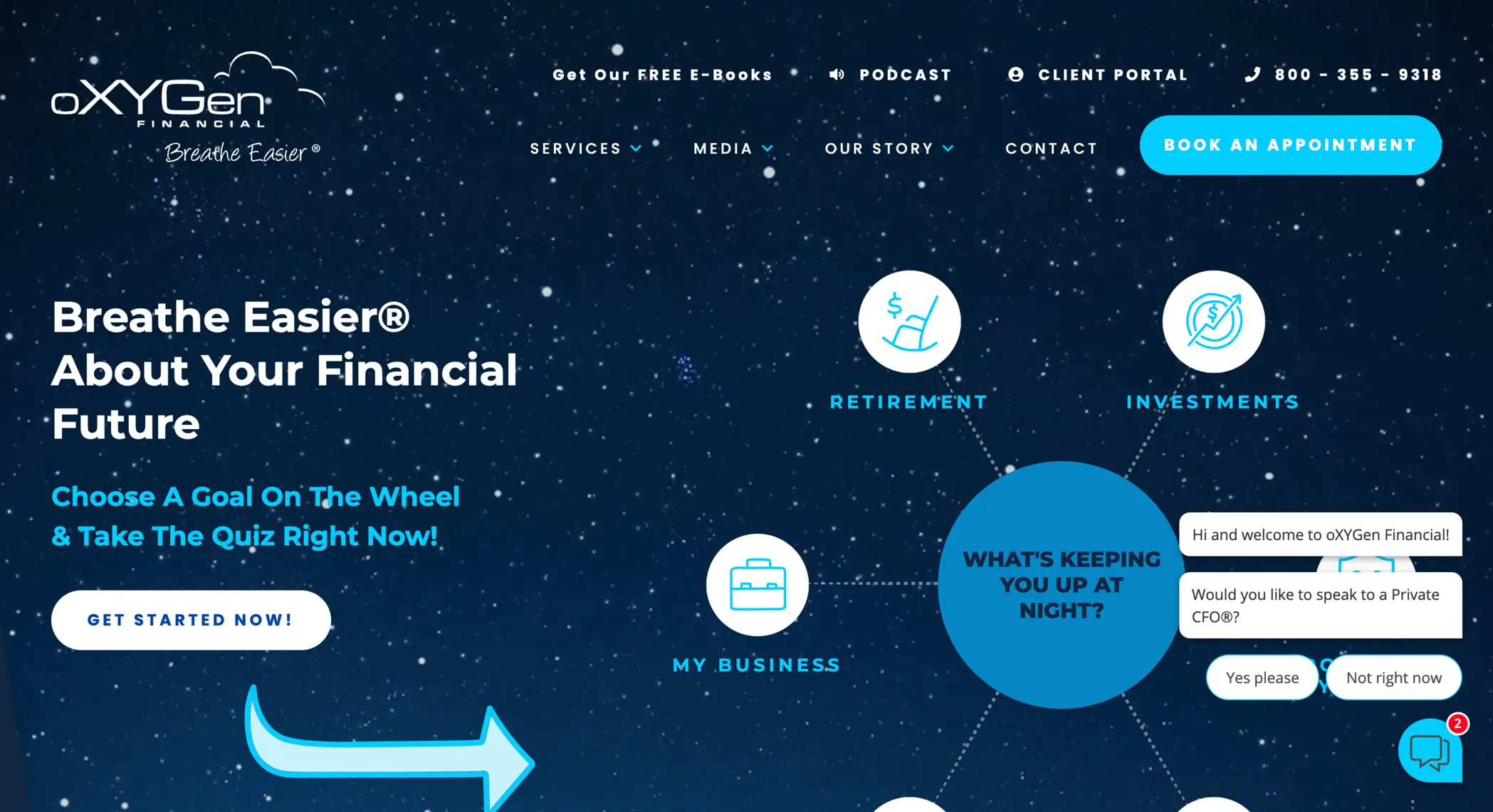
5. oXYGen Financial | https://oxygenfinancial.com/

Oxygen-1

The team at oXYGen has recognized that it’s not enough to have a website—you need to have a good one. This website wins for the most creative concept and here at Nitrogen, we kept coming back to the ingenuity shown through the creative design and intuitive interface. A website set in the stars isn’t something you’d typically associate with a financial advisor’s website – but let’s give them bonus points for creativity!

LESSON LEARNED: PROVIDE REASONS FOR VISITORS TO STAY ON YOUR SITE


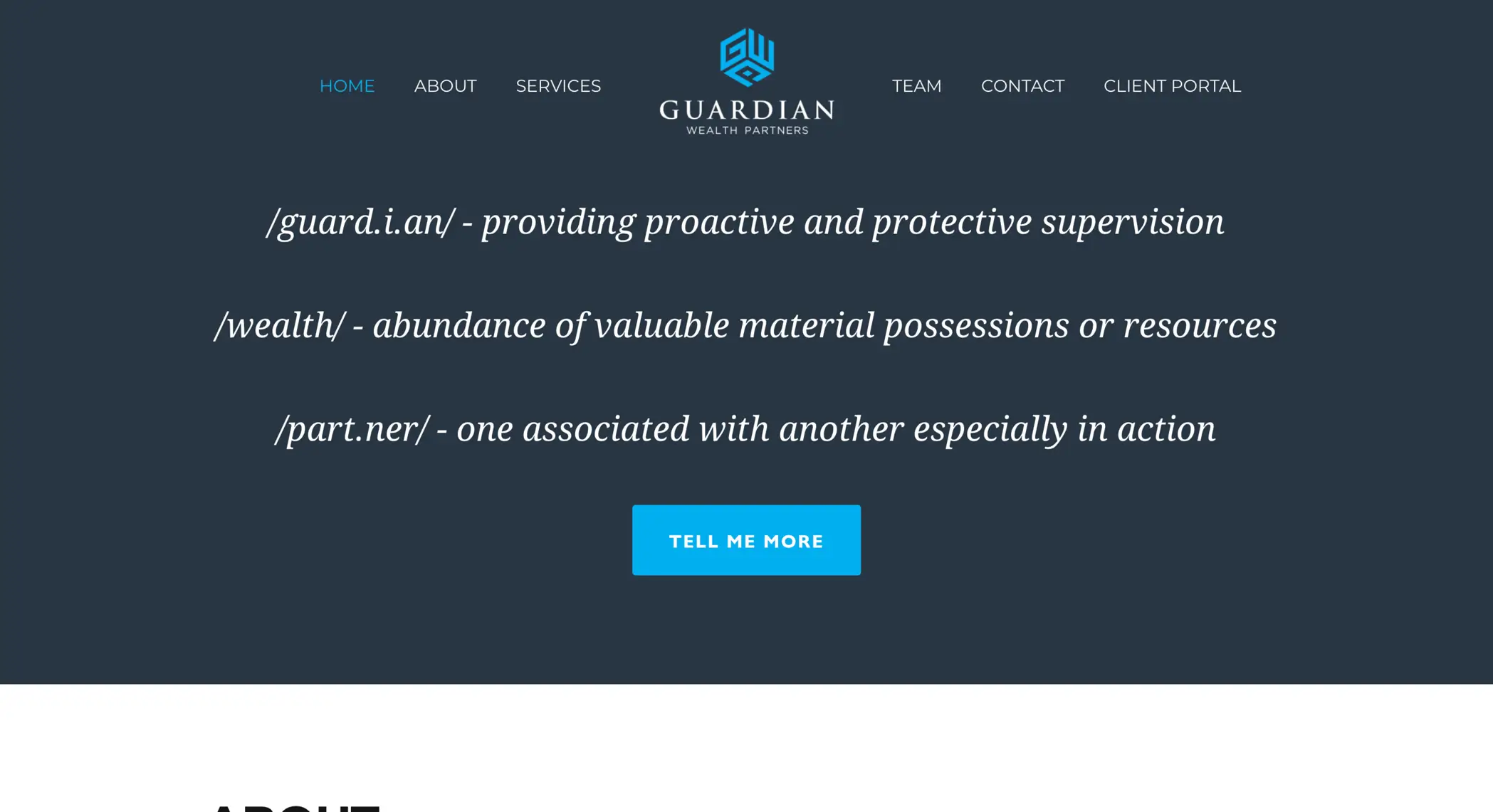
6. Guardian Wealth Partners | https://www.guardian-wp.com/

Guardian

The firm’s first action of defining the meaning behind its name showcases expertise. With a simple design and quick access to the client portal, which gives investors immediate access to log in and check on their account balance and performance, Guardian Wealth Partners creates the foundation of trust that investors seek in their financial advisor. Often simple is better, and their team highlights this through the entire website experience.

LESSON LEARNED: TALK LIKE AN EXPERT


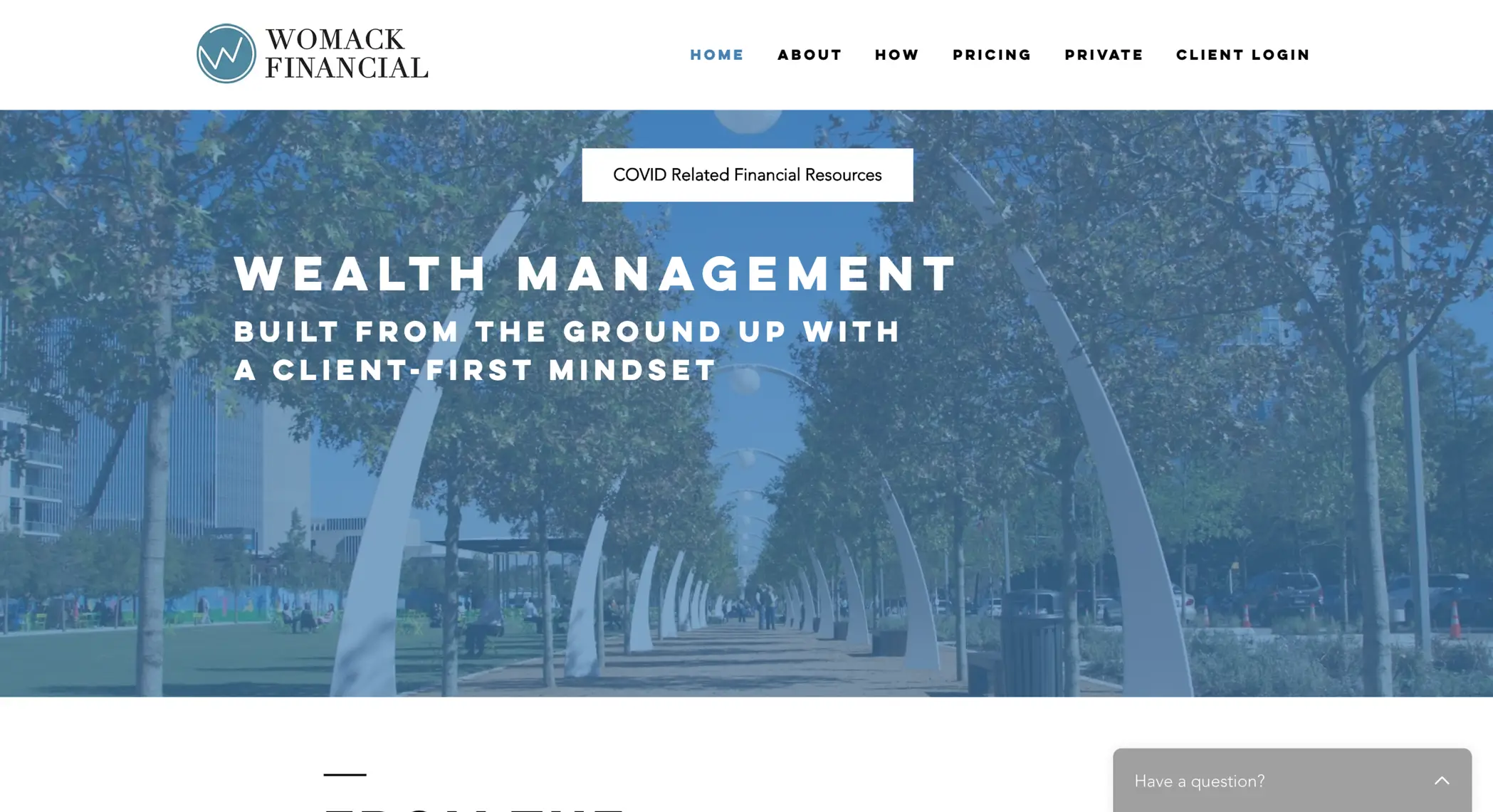
7. Womack Financial | www.womackfinancial.com

WomackFinancial

Womack’s mantra of a “client-first mindset” fits in with the site’s slick look, and the values of mutual trust, communication, and transparency are visible throughout the site’s design. Firms need to keep their core message in line with their website visuals. Making sure the two match means a better first impression and less chance for confusion – what you say and what that looks like go hand-in-hand.

LESSON LEARNED: HAVE THE LOOK MATCH THE MESSAGE


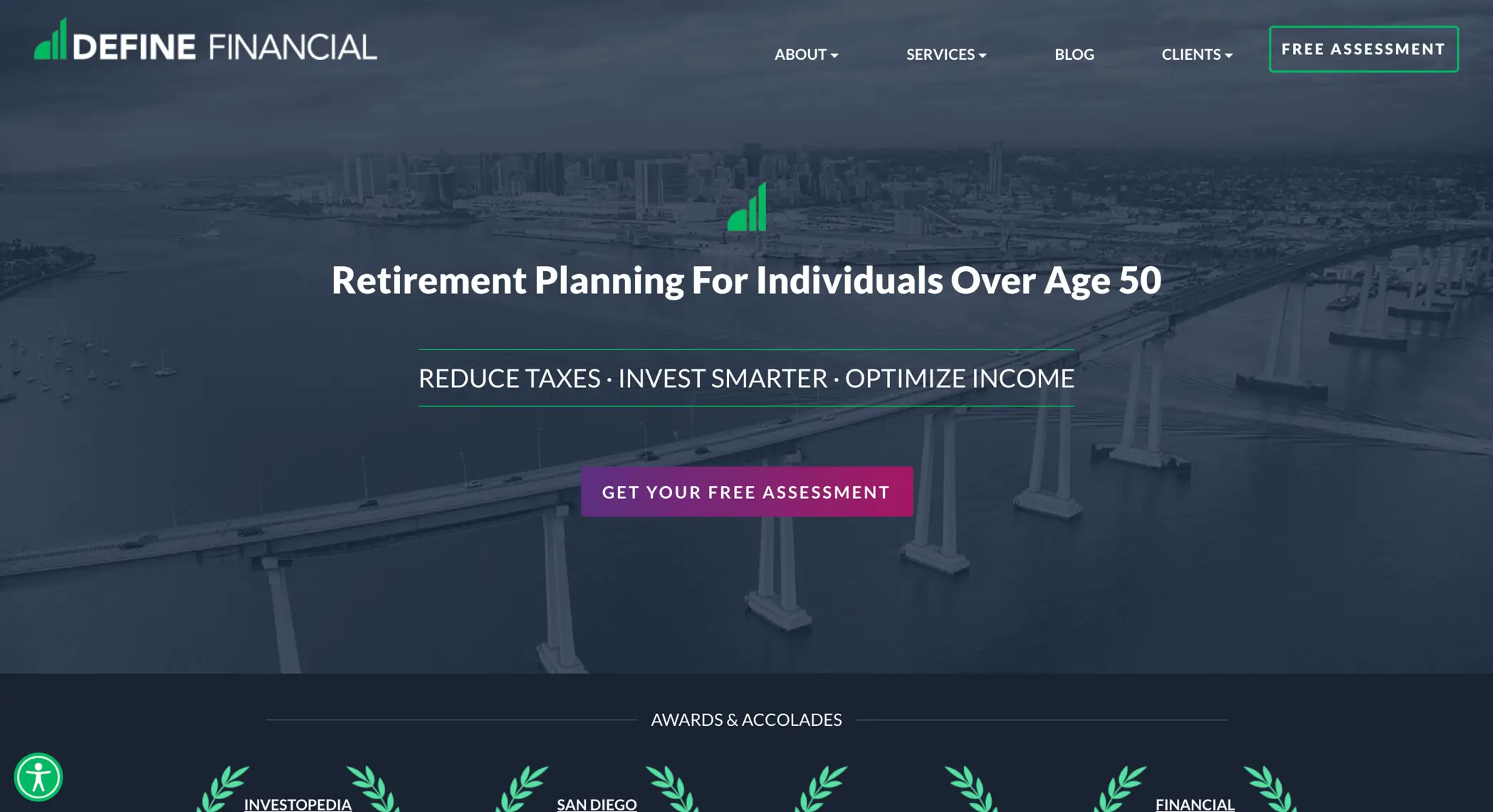
8. Define Financial | https://www.definefinancial.com/

DefineFinancial

The team at Define Financial created a website that not only works as intended on a desktop browser but transitions beautifully on mobile. Without any loss of functionality, clients and prospects have access to the case studies, downloadable resources, and complimentary appointment scheduling, whether on their phone or at their desk.

LESSON LEARNED: DESIGN WITH FUNCTIONALITY IN MIND


9. Global Wealth | https://globalwealth.ie/

GlobalWealth

We hop across the pond to feature the only international firm to make the list. The home page for this firm features beautiful, high-quality photos of Ireland, and with a name like Global Wealth, we’d expect nothing less. A list of client portals and pricing gives investors quick access to answer their most important questions.

LESSON LEARNED: EMPOWER CLIENTS WITH ANSWERS


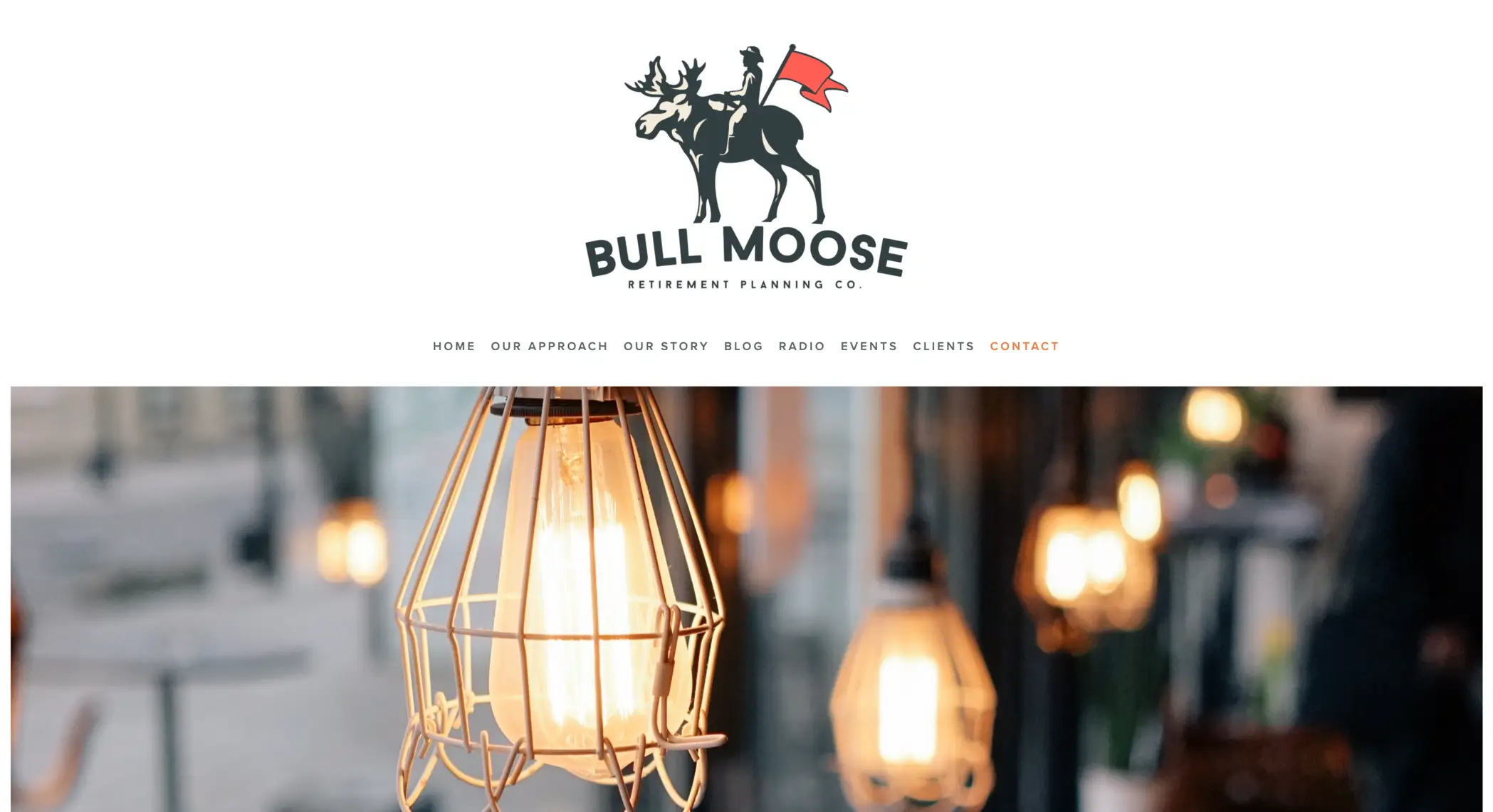
10. Bull Moose Retirement Planning Co. | https://www.bullmooseretirement.com/

BullMoose

Bull Moose Retirement introduces themselves with a classic, American aesthetic. The website uses clean design and high-resolution pictures to show quality – which can be a handy tool in demonstrating competency. “After all, if their site is good, I bet their other services are just as good…” Their message also describes their specialty: financial strategies for those in or nearing retirement. No-fuss, no muss (like Teddy Roosevelt himself).

LESSON LEARNED: HAVE A CLEAR MESSAGE


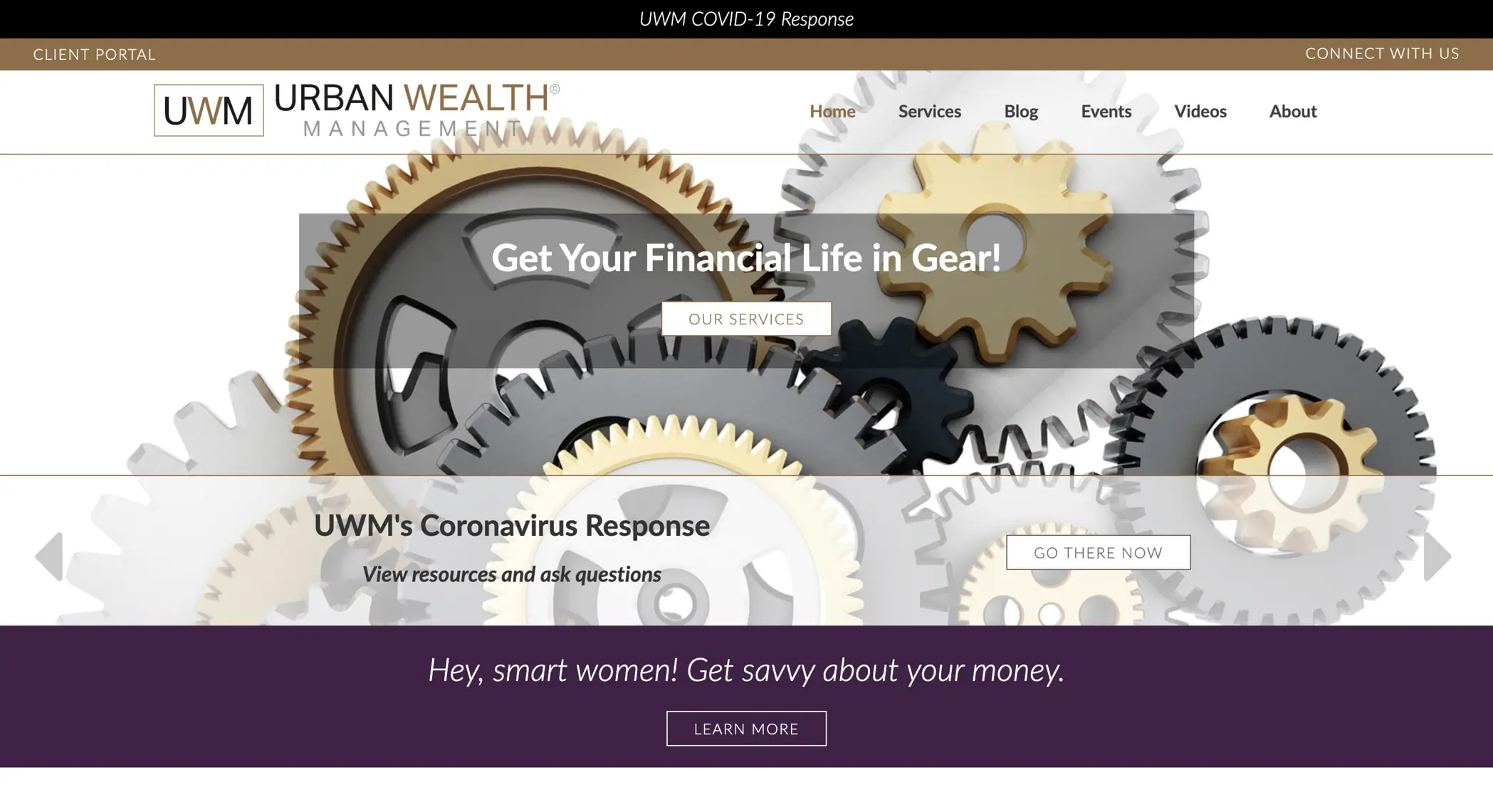
11. Urban Wealth Management | www.urbanwm.com

UrbanWealth

Based in El Segundo, California, this firm uses photos and graphic design to showcase its uniqueness in the industry. The firm’s mission seeks to help women with financial planning and determine their approach to wealth management. Their website’s crisp design affirms the bold mission. Their team is also featured prominently on the landing page, a good strategy for showing transparency.

LESSON LEARNED: MAKE YOUR MISSION KNOWN


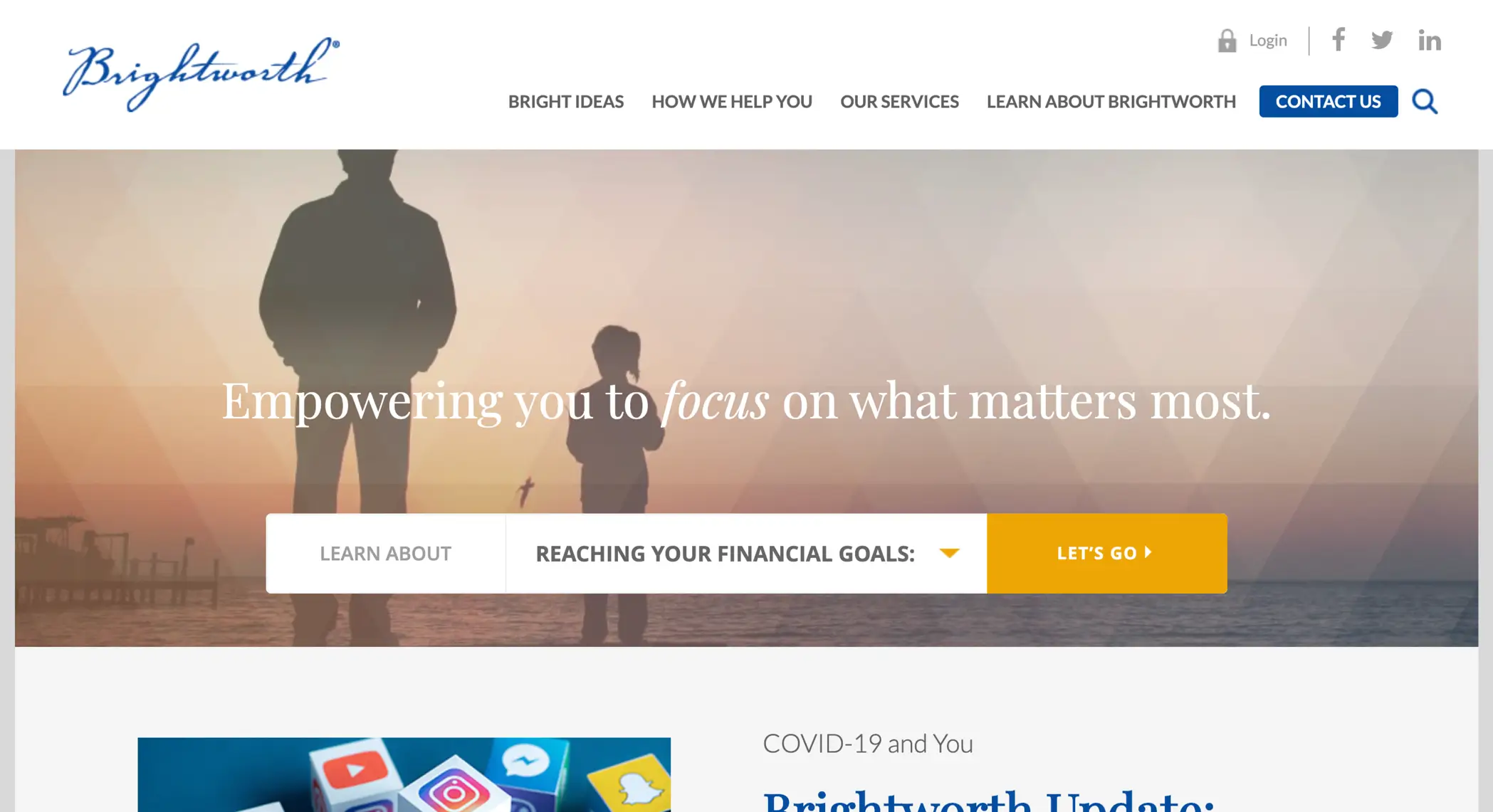
12. Brightworth | https://www.brightworth.com/

Brightworth

Theirs is the only website we could find that offered the viewer a personalized experience right at the start. Brightworth’s “Learn About” form with personalized links reinforces their offering as a “Private Wealth Counsel,” and that attention to discretion and luxury is well-represented from the first impression. These details are what high net worth prospects look for when choosing advisors.

LESSON LEARNED: KNOW YOUR AUDIENCE


13. Capital Investment Advisors | https://www.yourwealth.com/

CapitalInvestmentAdvisors

Capital Investment Advisors (or CIA) shows how a domain name can be a powerful tool when creating an online presence. “Yourwealth.com” is a phrase that is easy to remember and often searched, which can be an advantage for those looking to increase site traffic. As a general rule of thumb, a URL shouldn’t exceed 13 characters between the dots. This firm also offers e-books and other content when visitors provide their contact information, which allows for a gathering and sharing of knowledge that benefits everyone.

LESSON LEARNED: THINK ABOUT YOUR DOMAIN NAME


14. Black Barn Financial | https://blackbarnfinancial.com/

Screen Shot 2022-04-28 at 10.08.34 AM

This boutique firm in Austin, Texas, provides contact opportunities within seconds of the viewer visiting their page. By highlighting outlets such as its newsletter, social accounts, email, phone, and office location, local visitors will recognize the address and area code. The page highlights the firm’s activity in the community and how the founder, Sara Glakas, founded the Austin Women’s Investing Group. As a reader, It quickly becomes clear: Black Barn Financial serves and cares for the Austin community.

LESSON LEARNED: OWN YOUR LOCATION


15. Guelich Capital Management | https://guelichcapital.com/

Guelich

This website focuses on an easy to use and pleasant experience for the site visitor from start to finish. Captivating photography of the Roanoke Valley and an emphasis on what makes them different is where Geulich Capital Management stands out from other advisor websites.

LESSON LEARNED: CATER TO YOUR COMMUNITY


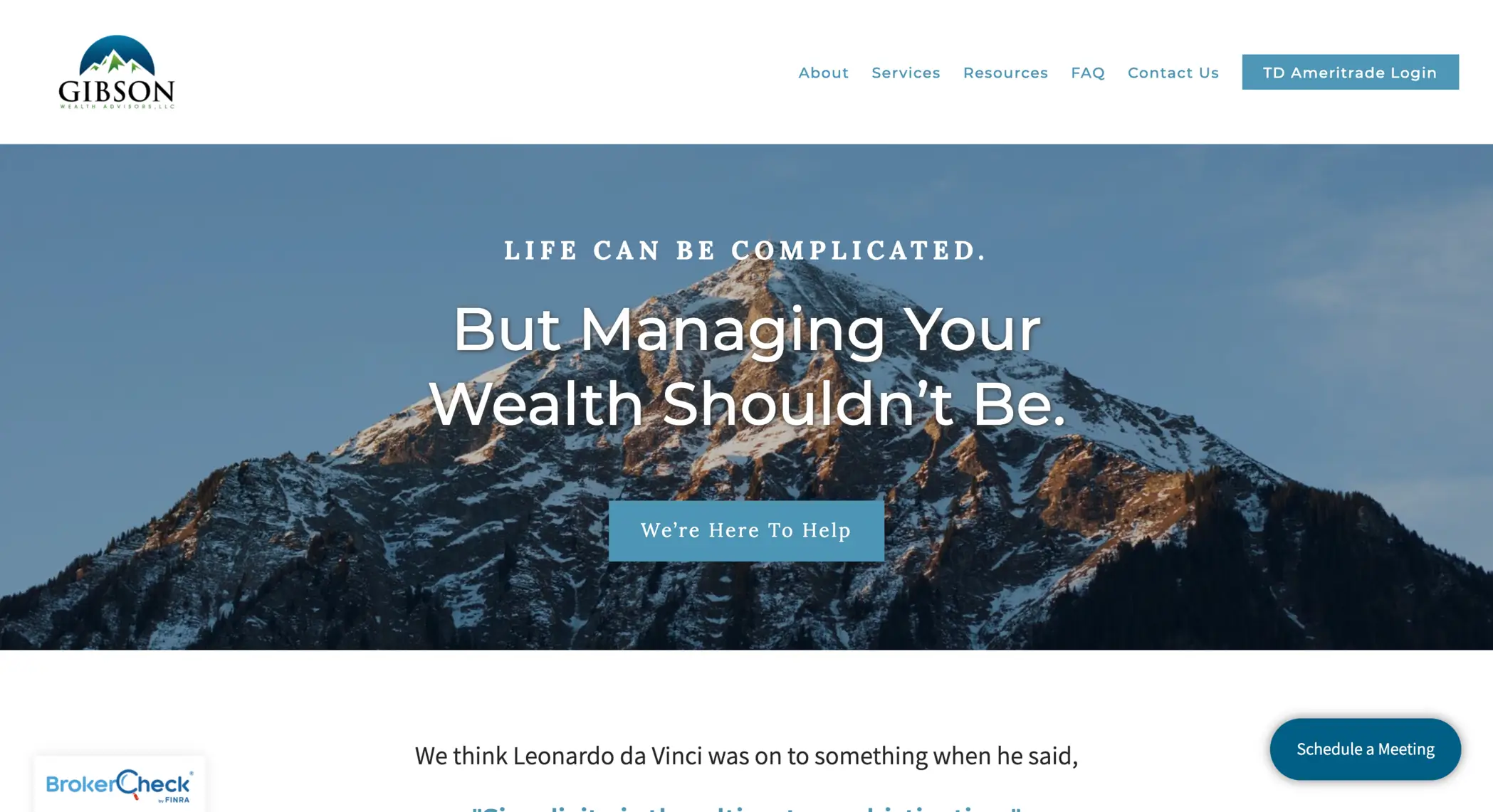
16. Gibson Wealth Advisors | https://gibsonwealthadvisors.com/

Gibson

Beautiful design, adventurous imagery, and a canine on staff all make the Gibson Wealth Advisors website an excellent example of an advisor website to watch. The website offers a wealth of resources, including information for finding an investor’s Risk Number®, and the site is designed with accessibility in mind.

LESSON LEARNED: DESIGN FOR BEAUTY AND FUNCTION


17. Sammons Wealth | https://sammonswealth.com/

SammonsWealth

A website is a great way to provide visitors an understanding behind your perspective and approach to investing. Whether it is to attract an ideal client or highlight the firm’s culture, clients appreciate personal touches – in their advisor and their website. Another great tip: the home page highlights the clients that make the best fit with the firm.

LESSON LEARNED: DARE TO BE DIFFERENT


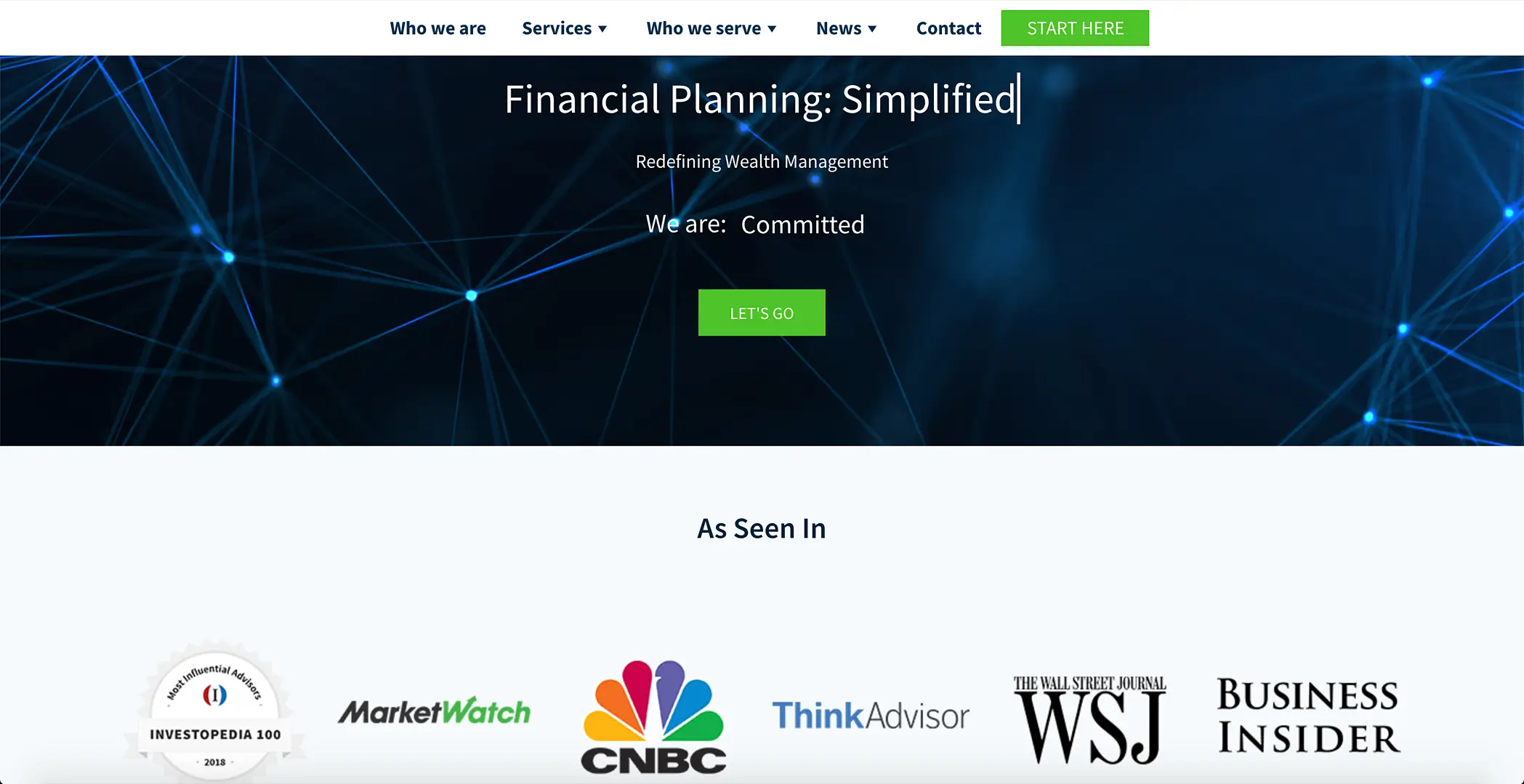
18. Sherman Wealth | https://shermanwealth.com/

Screen Shot 2020-10-08 at 12

From the list of media outlets to the instant call and text option, Brad Sherman and the team at Sherman Wealth offer visitors various resources. The website does a fantastic job of highlighting media outlets and news sources where the firm has been featured, which is an excellent way to showcase expertise in the field.

LESSON LEARNED: ESTABLISH CREDIBILITY


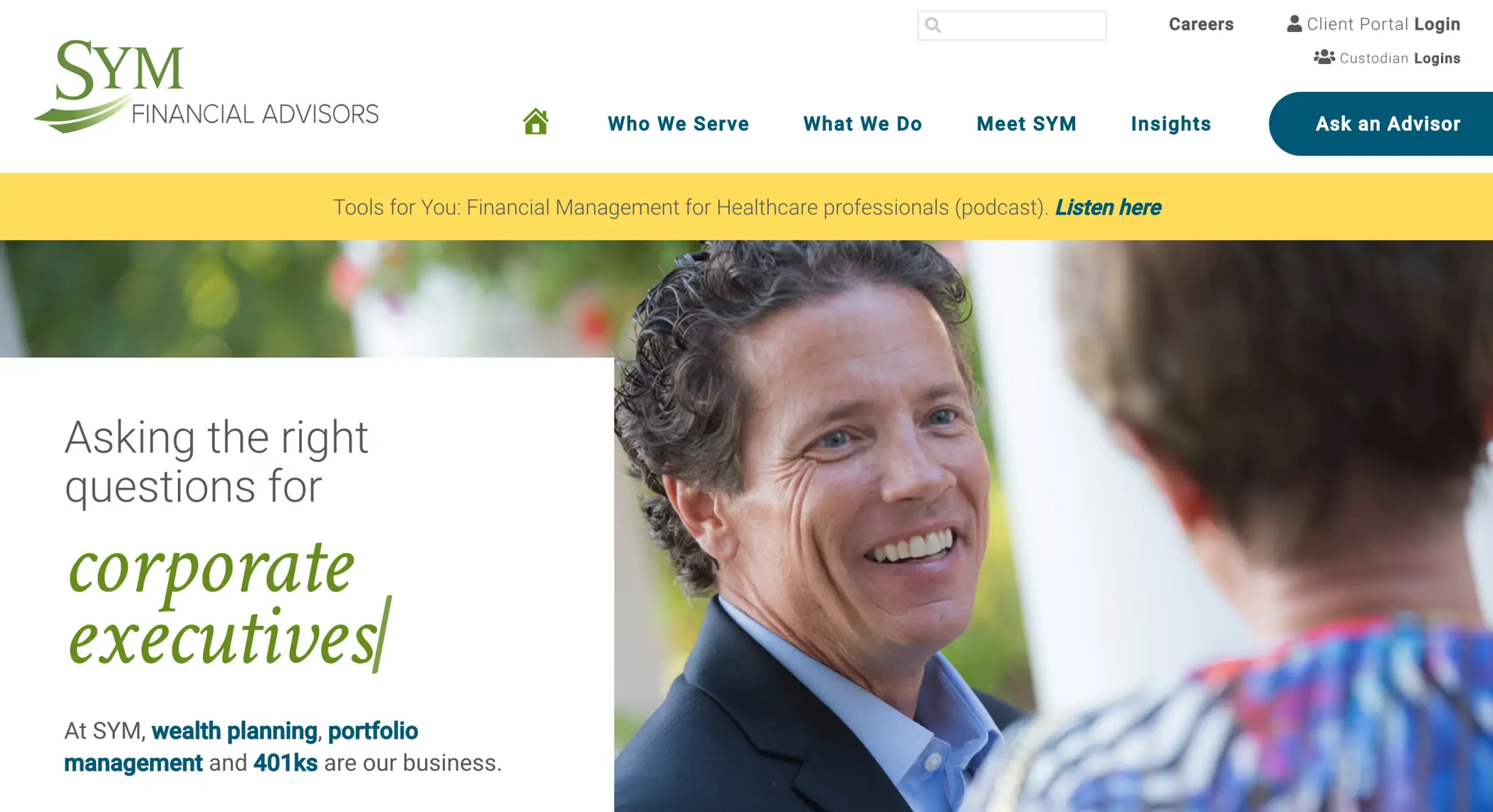
19. SYM Financial Advisors | https://www.sym.com/

SYM

The intentional strategy behind the SYM Financial website allows the firm to build trust and promote clarity to their prospects and clients. From financial tools to podcasts, the site serves as a resource and offers various options for the reader. Visiting your website through your client or prospect’s perspective can do wonders when building a space that confidently provides valuable information.

LESSON LEARNED: VIEW THROUGH THE LENS OF YOUR AUDIENCE


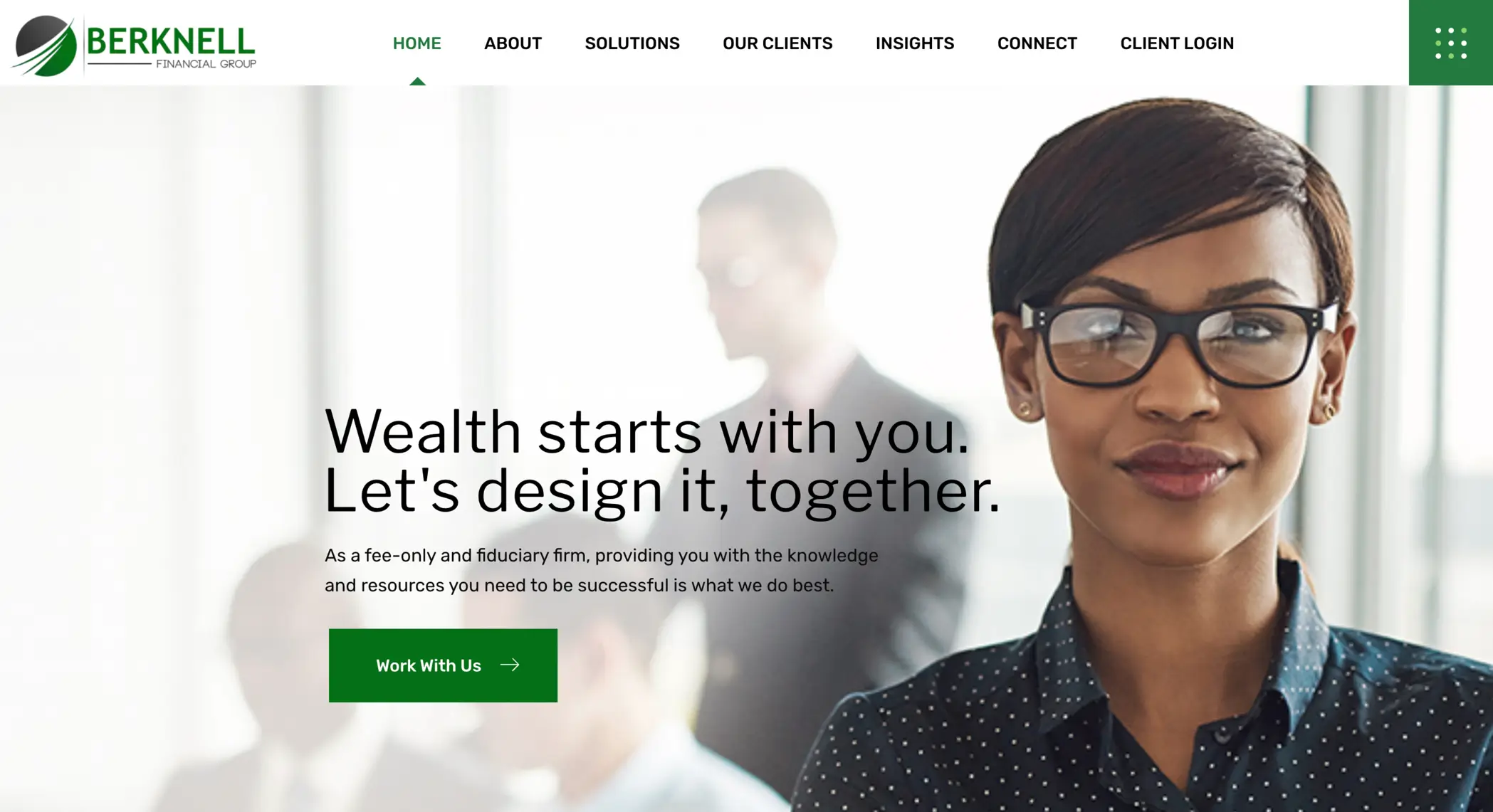
20. Berknell Financial

Berknell

A website that features a professional visual, and a clear call-to-action, captures a visitor’s attention. But what separates the site is the emphasis on the firm’s culture and the value of an advisor. Berknell Financial provides a dedicated web page highlighting their firm’s culture, allowing prospective clients a behind-the-scenes look at what fuels founder Dasarte Yarnway.

LESSON LEARNED: SHOW YOUR CULTURE


We hope you find this content useful in your practice. The best advisors use their website to build trust and promote transparency to their prospects and clients. The lessons learned above all point to an intentional strategy to use a great domain name, promote their unique brand, and provide compelling resources to visitors. Utilizing all of the above, you should see a healthy ROI for your efforts.

Want to learn how to embed risk assessments into your site to capture prospects’ Risk Number and other meaningful information? The Lead Generation Questionnaire is a helpful tool to convert prospects into clients. Learn more here.


websitesblogCTA-02

Schedule a Demo: