My Three Favorite Features

As a product manager at Nitrogen, I get to talk to advisors on a regular basis – discussing their day-to-day work processes, how they interact with their clients, and the problems that Nitrogen can solve for them through technology. Central to all of these conversations is the Risk Number, and what that simple expression of risk tolerance and alignment has done to transform the advisor-client relationship.

Advisors tell me all the time how the Risk Number facilitates a simpler conversation around market volatility and the tradeoff between risk and reward.

Simply put, everyone just gets the Risk Number. From the “highly-detailed” client who writes love letters to standard deviations, to the clients who pay an advisor so they never have to look at a number again – everyone has a Risk Number and everyone understands it.

I’m proud to be a part of the team that has changed the way advisors talk with their clients, but the Risk Number isn’t all we do! There are hundreds of features in our platform (seriously – you should see our product inventory!) and today I’ll highlight a few of my favorite conversation starters – Stress Tests, Retirement Maps, and Stats.


Stress Tests

Stress Tests

No matter how much you steer a client toward staying invested within their comfort zone so they can meet their long-term goals, people have a natural inclination for that “grass is greener” mentality. They watch the news. They talk to their neighbor. They know how the market is performing, and from there, it’s an easy jump to that age-old question: “Why is the market beating my portfolio?”

With Stress Tests, we’ve empowered advisors to answer that question – to have that conversation – with the click of a button. Everyone wants more returns and higher ceilings on their investments, but we invest within our risk tolerance because not everyone is comfortable with the potential downside that comes with aiming for that additional return. Stress Tests equip advisors with a simple, visual presentation of this concept – expressed through the lens of historical market scenarios.

This naturally facilitates some very crucial talking points around the differences between, say, a 50 portfolio and an 85 portfolio. In an up market like 2013, that 85 portfolio is likely to beat the 50 by a wide margin, but if a market similar to the one we saw in 2008 were to occur, that same 85 would lose much more than a Risk Number 50 client may be comfortable with. We’ve selected four historical market scenarios to display by default within the Stress Tests view, but you can easily hide the ones you don’t want or put on your “power user” hat and display any custom Scenarios you’ve saved. Not sure how? Check out our KB articles on Stress Tests and Scenarios or schedule a call with one of our awesome coaches to learn more!


Stress Tests

Retirement Maps

After you’ve determined how much risk a client is comfortable with, and how much risk they have in their current investments, the next step is to determine how much risk they need in order to meet their long-term goals. Here’s where Retirement Maps step in.

While there is tremendous value in developing a detailed financial plan, Retirement Maps allow the advisor to keep the conversation around retirement lightweight. With just a few simple inputs (initial investment, monthly savings, retirement date, and monthly withdrawal after retirement) we’ll determine how likely a client is to retire with the amount of money they need. If you’ve already developed a proposal for this client, you can easily flip between their current investments and your proposal for their portfolio to illustrate the differences. I just love how simple this chart is. Give us four basic inputs and we’ll do all the hard math, allowing you to focus on the client. By no means is this meant to be an exhaustive result, but it’s a great tool for advisors to reorient a client toward a long-term mindset. I love it for these scenarios as well:

  • Demonstrate to someone with high risk tolerance why they don’t need to expose themselves to all that risk in order to meet their retirement goal.

  • Reassure an uneasy client that six months of volatility is well within expectations for their portfolio.

  • Help clients see that you can have volatility and still hit your goals.

Our Retirement Maps are so effective at making these conversations productive. Make sure your client sees that green retirement probability every time they’re in your office.


Stress Tests

Stats

Stats is such an interesting case because we delayed building out a more robust analytics module for a long time. We were focused on innovating the advisor-client engagement process and keeping all that math under the hood. Month after month, though, this remained our most requested feature by advisors – particularly advisors who love building portfolios in Nitrogen.

We shipped Stats for Nitrogen Premier back in June, and it includes a ton of useful analysis for advisors, surfacing interactive performance illustrations, dynamic analytics tables, visual correlation analysis, sector and region breakdowns, and much more. So much of our focus here went into the visuals. We wanted to create a platform for analysis that provided value to the advisor, but was presentable and approachable in a way so many analytics tools aren’t.

What we’ve heard from the advisors using Stats is one of the reasons I love working in product. Powerful visuals promote powerful conversations, and we’ve seen this with Stats over and over again. Not only are advisors using Stats when building out portfolios, they’re also using it in meetings with their more analytically-inclined clients.

With Stats, it’s easier than ever to illustrate a client portfolio’s performance in line with its benchmark, while surfacing some meaningful statistics for the time frame you select. Whether or not you choose to explain Sharpe Ratios, the presentational aspect of Stats works well with clients to reassure them of all the considerations that go into building their portfolio, while also providing you with some useful talking points on portfolio composition.

If you’re one of the many advisors already taking advantage of Stats, all I can say for now is “stay tuned.” The response has been so positive, and we’re just getting started!

Having a role in building products at Nitrogen is truly a privilege. What I’ve found is that for every feature we build, there are thousands of conversations we facilitate. Thank you for having those conversations with your clients and helping us to empower the world to invest fearlessly.
Target Date Funds and Risk

By Mike McDaniel,
Chief Investment Officer


What’s In A Name?

The path to fearless investing requires the abolition of failed industry semantics. There’s a fine line between marketing gimmicks and meaningful naming conventions.

Oftentimes a quantitative process can help separate the wheat from the chaff when it comes to these investment naming conventions.

One concerning trend is the marketing focus and corresponding asset growth in “target date funds.” Target date funds aim to match an investors age or time horizon with a portfolio. There is consensus on the naming convention of such funds (e.g. Brand X 2030 Fund, Brand Y 2030 fund, etc.). But that’s where the similarities between target date funds stop and the need for a more quantitative view arises.

Don’t get me wrong, some target date funds have redeeming qualities like low expenses, simplicity of gaining exposure to a diversified number of investments within a single investment, etc. But these are just small parts of what makes a great investment.

More to investing than your age and/or time horizon

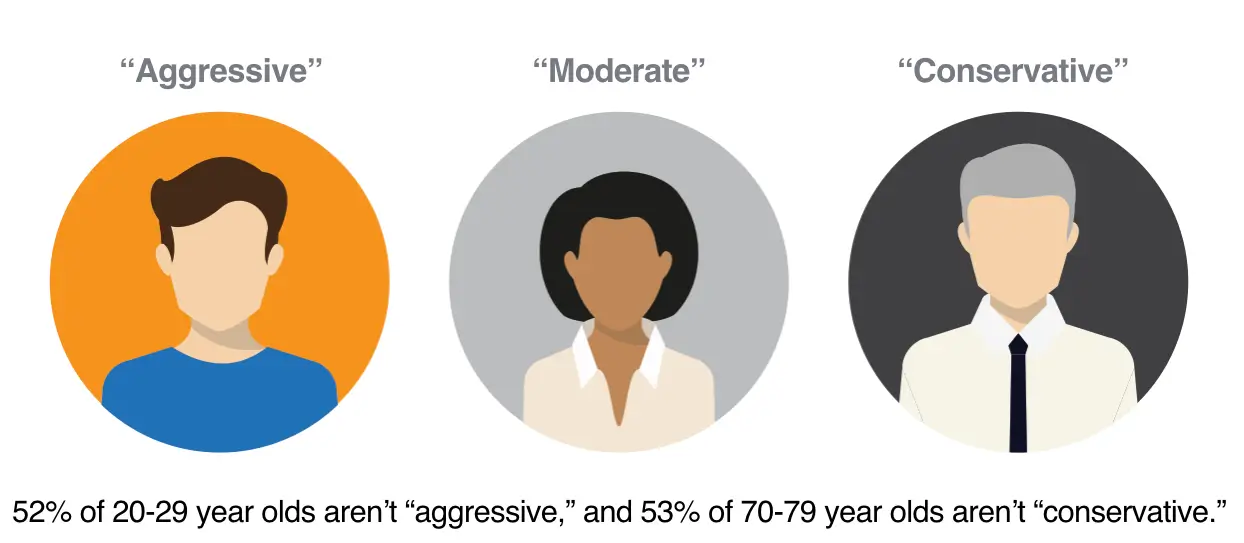
Our data repeatedly confirms that determining an investor’s risk preference based on the stereotypes of age and time horizon is often wrong. In fact, an independent team of academics reviewed our risk questionnaire data and determined that many investors bucked their stereotypes. For example, 52% of 20-29-year-olds aren’t “aggressive” and 53% of 70-79-year-olds aren’t “conservative.” Choosing a target date fund based on the same stereotypes is a recipe for bad decisions.

Investors that are inappropriately invested have a higher propensity to react emotionally when, not if, the markets turn negative. Without quantifying an investor’s risk preference accurately, an advisor and investor are at risk of failure.


image1_600x200

Dates Are Not Math

Don’t let the numbers in the target date funds fool you, if you’re using old-fashioned semantics of age and time horizon to choose a target date fund, you’re doing it wrong.

The investment composition of similarly named target date funds varies, sometimes drastically, between asset managers. The allocations between stocks, bonds, cash, and alternatives vary even between target date funds. In addition, the strategy or process of how the target date funds reduce risk over time depends on the target date fund provider.

Blindly using target date funds ignores the differences in risk/reward composition. A quantitative analysis should be used to align each investor’s risk preferences with the proper investments, including target date funds.

Target Date Funds Are Not Created Equal

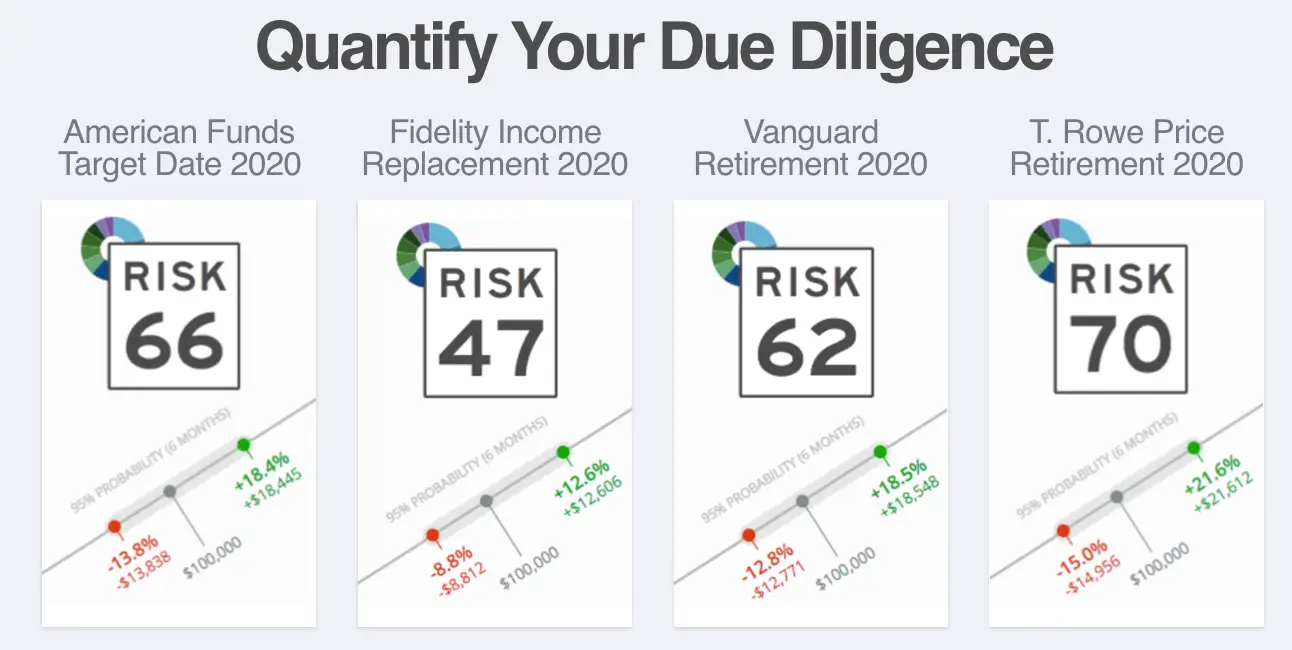
To highlight my point, check out the difference in Risk Numbers between four highly-respectable target date fund providers listed below.


image2_1292x650

Going by date alone exposes investors to a wide array of downside. If an investor’s risk tolerance isn’t properly quantified, the chances of them staying with the investment strategy goes down exponentially. Putting assets in a fund and saying “trust me” is part of the reason why investing feels broken for many investors in the first place. Are all of these good funds? Sure. But when we don’t take into account risk, target date funds are just the same old semantics wrapped in fancy packaging.

Making Target Date Funds Work

Of course we want clients to invest for the long term. The problem is that investors react to risk in the short term. Quantifying a client’s unique risk tolerance and accepting that the short term matters is the way we can get them invested in a strategy that works.

With Nitrogen, we can find an investor’s Risk Number and then match them to a portfolio that aligns with their goals and risk tolerance. Just like all target date funds differ, so too do investors. A retirement date isn’t math and it’s not a cohesive investment strategy. Do you know what is? Quantifying risk tolerance and investing in the right funds that factor in the right amount of risk/reward.

Throwing assets into a target date fund isn’t fearless investing. The proper quantitative process to determine the risk preferences and risk composition of the available investments can help advisors ensure client alignment with the correct investment vehicles.


Mike McDaniel is a practicing investment advisor, and is Nitrogen’s co-founder and Chief Investment Officer.

Advisors: What to Do in a Bull Market

There’s never been a better time to be a financial professional.

We love seeing advisors seize opportunities amidst favorable markets and new technology, but bull markets don’t last forever.

In the long term, markets don’t travel in a straight line, do they? Even with corrections, the markets have always found a way to go up again. We’re experiencing all-time highs, but the data shows that all-time highs typically lead to…more all-time highs.

According to Barry Ritholtz, not investing when something is at an all-time high is perhaps the worst investing advice anyone could ever give (or receive).

Bull Markets have multiple benefits: rosy investor outlooks, low fear and high greed. We believe there are some distinct strategies advisors can harness to better empower the world to invest fearlessly, and now’s the perfect time to implement them.

We can’t predict when the next bear market will hit, or how long it will last, but the current environment means that advisors can thrive, and clients can reap the benefits that this bull market has to offer.

Bull Market Benefits

Since March 9, 2009, the S&P 500 has advanced 320%, the Dow Jones Industrial Average has risen 286% and the Nasdaq has soared 521%. While every market experiences volatility and corrects itself, as healthy markets should, numbers don’t lie.

The current market, even with some dips in February, June, and August, still has great potential ahead. We’re on the cusp of the greatest transfer of wealth in history, totaling nearly 30 trillion in assets. Advisors that seize that potential will see decades of job security, through even the next bear and bull markets.

Happy Investors

It’s a running joke for many advisors: “Are investors ever really happy?” The punchline may be up for debate, but the point is that investors are more manageable when they’re not swallowing losses.

The key to happy investors is setting the right expectations, and this is where technology in the hands of talented advisors truly shines. Investors react to risk in the short term, and when advisors aren’t afraid to talk about risk, investors aren’t afraid to make the right decisions.

Happy investors know what is “normal” for their portfolio.

Low Fear

The big difference between bull and bear markets is the type of fear. As many advisors during the 2008 crisis can attest, investor panic is at much higher levels during a bear market. Volatility can still exist in a bull market, of course, and investors are emotional regardless of how well the market is doing, but fear can be managed with the right methodologies.

Empowering the world to invest fearlessly is the Nitrogen mission, and it’s a mission our advisors put into practice every day. Investors today are lower on the fear spectrum than they were 9 years ago when the markets were in freefall. Advisors that properly manage risk can harness human behavior in the long term.

High Greed

There is some fear in today’s market and it’s either: 1) the fear of the bull market ending or 2) the fear of missing out. The fear and greed spectrums go hand-in-hand, and right now investors are more inclined than ever to participate in the market.

The fear and greed index has been in the green over the past year, and times of correction are a busy time for value investors. But truthfully, anytime should be a good time to buy.

Looking at over 100 years of data on the Dow going back to 1915 shows that stocks have had 1,252 highs, which works out to an average of about 12 new highs every year. Assuming the average investor is in the markets for 40 years, that would be almost 500 highs in a lifetime of investing in stocks.

With labor participation rates holding steady, greed tracking so highly, and data showing that long-term investing has always paid off, now is a great time to invest aggressively. Gathering assets and growing your book of business will never be as easy as it is right now.

Bull Market Strategies for Advisors

With things going so well, it’s easy to stay the course and enjoy the ride. But that wouldn’t be the wisest thing to do, especially with so many factors in your favor. Advisors have a limited-time opportunity to make a real impact on their business and for investors. Opportunity only knocks so much.

The mission is to gather assets and capitalize on favorable markets and excited investors. A piece of cake, right? Getting started is the hard part. You can try to secure additional assets from your existing clients, but that may only go so far.

For your existing clients, discuss why having their assets managed in the same place matters. You want visibility of all assets so that you can make informed decisions. If you can see the scope of your client’s wealth, you can more accurately manage it and make better long-term decisions.

Clients may work with multiple advisors, they may have 401(k)s with former workplaces, they could have a brokerage account from many years ago. Make an effort to bring them all under your umbrella.

Once you’re able to secure additional assets from current clients, look into bringing new clients into the fold.

Actively Gather Assets

The culmination of the above factors is what makes a bull market the ideal time for advisors to grow their book of business. Growing your AUM has two major benefits: success now and protecting yourself from bear markets in the future.

One of the reasons prospecting is so essential is because attrition is always working against you. There’s no guarantee that you’ll have the same clients 5, 10, or 20 years from now. As James Pollard, a marketing consultant to advisors said, “Prospecting should be your never-ending responsibility, unless you want your revenue growth to slow down.”

Ramping up your client acquisition strategy now makes sound financial sense. If you’re unsure of where to start, check out these advisor tips for prospecting clients.

One of the most effective ways to attract clients, we’ve found, is through an advisor’s website.

Build A Better Website

In the age of digital marketing, more people are turning to the internet in search of financial advisors. While referrals are still a great way to secure new business (more on that a little later), the number of people looking for financial advice is much bigger than your current circle.

When considering a website, it’s easy to fall for the misconception, “if you build it, they will come.” These days it’s not enough to have a website. You need one that’s well-designed, elicits trust, and turns these internet visitors into real prospects. Then, it’s time to drive people to it.

Getting information from visitors is essential. Nitrogen advisors are able to embed our Risk Assessments directly onto their website, capturing the prospect’s Risk Number, contact information, net worth, and more in one easy place.

The truth is: you don’t have to be a webmaster to have a fantastic website. One popular solution is utilizing companies like Advisor Websites. They specialize in creating beautiful websites with an advisor’s unique needs in mind.

If you need inspiration and want to see firms that are taking advantage of their web presence, check out 15 Great Financial Advisor Websites.

Get Referrals from Existing Clients

In his book Cultivating The Middle Class Millionaire, Russ Alan Prince says 70% of loyal millionaires said they’re willing to refer people to their primary advisor. It’s the preferred way to secure new clients: there’s a built-in trust from the beginning and a proven record of results. It’s a huge opportunity that some advisors don’t take full advantage of.

Seek referrals from your best clients and have warm messages ready for any referrals they send your way. Sending a risk questionnaire with a friendly message and an invite to a customer appreciation gathering is a great way to break the ice.

Look to expand professional referrals as well. Fostering relationships with CPAs has great potential for referrals and is a mutually beneficial business relationship.

Bull markets are an exciting time for investors and advisors. People are interested in investing and are actively seeking advisors online. Combined with a historic transfer of wealth and advisor technology better than ever before, advisors have all the incentive to get out there and earn a larger market share.


Actively gather assets. Whether through existing clients or by amping up your prospecting efforts, now’s the time to grow the business.


Build a better website. More people are interested in investing and looking for advisors online. Capture their attention and turn these internet prospects into clients.


Get referrals. Talk to your best clients, send messages, throw a customer appreciation gathering, or grow your CPA network. There are plenty of ways to get your name in front of your ideal customers.


Bull markets aren’t strangers to corrections, but risk-wise advisors are equipped to handle any dips along the way. The risk-first approach works and helps advisors set the right expectations so that investors aren’t derailed by short-term reactions to risk. There’s plenty of prosperity to go around and, statistically, there are only more highs left to come.

Therefore: just invest. Fearlessly.

If you’d like to see how Nitrogen advisors are utilizing the Risk Number to close new clients, we’d love to schedule a personal demo. See why some advisors are calling this the best closing tool they’ve ever seen.

What Advisors Are Saying About Nitrogen Academy

By Chris Quandt, Community Customer Service Manager


One of the questions we always ask ourselves is how we can make the Nitrogen customer experience better. That question launched Nitrogen Academy, one of our big announcements from last year’s Fearless Investing Summit.

If you missed the announcement, you’re probably wondering, “What is Nitrogen Academy?”

It’s exclusive customer-only content that gives users additional layers of information, like the calculations behind the Risk/Return Scenario on an investment, for example.

Nitrogen Academy is more than a webinar, training session, or article. It’s a library of interactive media, bite-sized lessons, and self-assessments geared toward providing actionable value in an easy to understand way.


We recently surveyed Nitrogen Academy users and here’s what we found out:

  • Seven out of ten advisors said they learned something new about the Nitrogen product or picked up a new best practice.
  • Over half of the respondents reported that they felt like they became a better Nitrogen expert because of the academy.
  • Half of advisors said that by working through the Academy, they streamlined their Nitrogen learning curve by an average of four hours.

Want talking points and best practices for using Nitrogen in client meetings? What about a deep-dive into the Risk Number and the methodology behind Nitrogen? The Academy has a lesson for that.

A lot of advisors we talk to barely have time to blink let alone fit one more thing into their day. We made the lessons so that you can learn at your own pace when it’s most convenient for you. And since not everyone is on the same schedule, teams love the flexibility of accessing lessons at their own time. No more herding cats for a two-hour webinar.

How are advisors leveraging Nitrogen Academy?

  • Working through one or two lessons a day. Lesson completion time is typically 5-15 minutes.
  • Grabbing a cup (or two) of coffee and completing Nitrogen Academy over the course of a weekend. (Yep! We’ve seen it done.)
  • Using Academy as a training tool for administrative assistants and office support staff.

The feedback we’ve received has been amazing. Here’s what some advisors are saying about Nitrogen Academy:


“Very well presented and great tips to use Nitrogen for my client benefits. Thank you.” – Alfredo


“Love learning about new features.” – Tyler


“Like the practical focus – how is this actually used. Very helpful.” – Sharon


“I learned about features I wasn’t using [Check-ins] and got a more comprehensive perspective on Risk Numbers and how they are calculated. I think the best thing about the Academy is that it gives you a path to learn on, versus doing it piecemeal.” – Fred


Are you ready? Nitrogen Academy is available to all Nitrogen users and it’s already included in your subscription. Log in to Nitrogen or just click this handy button below:

To the Academy!
Happy learning!


Not yet a Nitrogen user? Join a tour and see the Risk Number in action. We’d love to see you around the Academy.

What Makes A Great Tech Stack?

The technology advisors use to manage client accounts–whether it’s a CRM, risk tolerance, or portfolio management tool—is the heart of an advisory firm. But if it’s not working for everybody, or if you encounter some of these common problems, you might need an upgrade.

What are the signs your tech could use a reboot, and what kind of solutions should you look for when vetting new technology? We’ve outlined the solutions to your tech woes.What’s something that all high-functioning, cooperative, and streamlined teams have in common?

A) A mutual agreement to “stay out of the way.”
B) A shared hatred of microwaved fish, elevator music, and office parties?
C) A tech stack that is intuitive and customizable, built with a collaborative environment in mind, and designed to accommodate a variety of reporting tasks with ease.

If you chose A, you should schedule a team-building retreat pronto, but if you chose C, you would be 100% correct!

When it comes to an advisory firm’s tech stack, it should centralize the book of business so that important information is accessible, secure, and serving clients more efficiently. If your software falls short, look for these key features:

– Intuitive technology that is easy to use and easy to understand.
– Has value to every member of the firm.
– Great design that communicates complex data visually.
– Meets your needs for price, features, and benefits.

The technology advisors use to manage client accounts – whether it’s a CRM, risk tolerance, and/ or portfolio management tool – is the heart of an advisory firm, and if it’s not up to snuff the entire team is affected. What are the signs your tech could use a reboot, and what kind of solutions should you look for when vetting new technology? Consider the issues outlined in the below PDF when selecting the software for your tech stack.

At Nitrogen, we believe that great technology should fade into the background and let your work as an advisory practice shine. Want to build your own tech stack? We’ve got your firm covered from front office to corner office. We’ll walk you through everything you need to know.

What’s Next for the DOL’s Fiduciary Rule

A lot has happened since Nitrogen’s VP of Partnerships, Kyle Van Pelt, wrote about the Department of Labor’s Fiduciary Rule and the new Best Interest Economy.”


  • Applicability date delayed until Jan 2018.
  • Rule partially in effect June 2017.
  • Nevermind…DOL Fiduciary Rule full implementation delayed until July 2019.
  • Fifth Circuit Court rejects rule as DOL “overstepping authority.”
  • DOL (essentially) dead.
  • Wait! Appeals Court in the Tenth Circuit upholds rule.
  • DOL alive?

The DOL’s Fiduciary Rule has become the Schrödinger’s Cat of the regulatory landscape. One thing remains constant: firms all over the country have invested significant time and resources into enforcing the rule, and the rule is still partially in effect. Walking away from this genie isn’t really an option.

The SEC is working on its own fiduciary rule that could apply to all accounts, not just retirement accounts, which would provide a fiduciary standard across the industry. It wouldn’t be out of the question to assume that the SEC benefitted from witnessing the opposition the DOL FR received. Could we finally have a rule that isn’t 1000 pages long with an FAQ that requires its own FAQ?

Even though the DOL FR is mostly dead, our opinion remains unchanged: the Best Interest Economy is here to stay. A recent article from MarketWatch detailed three ways in which the DOL’s fiduciary rule has already changed the industry and the public’s perception of it:

  1. Many companies decided not to fight the new rule and started bragging in their advertising that they put their customers’ interests first. Several brokerage firms eliminated front-end commissions in favor of an annual asset charge, and dozens of companies created a class of generally less costly mutual fund shares.
  2. Several states have taken up the cause. Massachusetts is actively pursuing efforts to protect retirees; Nevada has passed its own fiduciary rule; and Connecticut, New York, Maryland, and New Jersey have fiduciary rule proposals on the table.
  3. Consumers have been put on notice: The battle against the fiduciary rule confirms that many companies put their customers “second.” Consumers now know that they should be cautious when dealing with financial advisers and feel free to ask directly if their interests come first.

Articles like this highlight what is at stake in the fiduciary rule debate: client trust. For all of the DOL FR’s obvious faults, myriad exceptions, and major gaps, it established fiduciaries as not just a standard but the gold standard in the eyes of investors.

States have stepped in to pick up the regulatory slack as the fiduciary rule floundered in the courts, but we don’t believe that investors benefit from patchwork rules. Should residents of Nevada, Massachusetts, and Maryland be the only ones to expect a fiduciary, for example? Ultimately, it will be up to the SEC to enact an industry-wide fiduciary rule that applies to all accounts.

The three core pillars of the Best Interest Economy remain unchanged:


Pillar 1

Pillar Number One:
Fee Compression


In the Best Interest Economy, advisors will have to disclose fees to an indisputable degree of clarity, and fees must be “reasonable.”

The most interesting aspect of this discussion is that few are arguing that a 1% advisory fee is unreasonable. The focus has been on products that charge 5%, 6%, 7% commissions. Fee benchmarking tools will further drive this kind of clarity around what a “fair” cost of advice is.

But the real change in fees comes from the asset management side. The days of the 300+ basis point managed account programs are numbered, especially when that eats up 50-60% of the client’s average returns. ETF providers are leading the way with internal expenses going to single digits in the most extreme cases.

Where our industry delivers value, fees will continue to be justified, and it’s clear that real advisors who help their clients make great decisions, plan for the future, and navigate complexity deliver value. That kind of advisor can continue to make healthy margins by adding scale and efficiency to their business.


Pillar 2

Pillar Number Two:
Digital Platforms


Clients are already putting a lot of pressure on advisors to up their technology game. They want a wealth management experience like they get from their credit card company, their bank…and pretty much every other critical part of their lives. When clients have to transport themselves back to the nineties to check on their wealth, that’s clearly a problem.

The good news is that this is changing. Advisors are investing in technology. The onus is now on the technology companies to deliver excellent client-facing experiences so that all the spending doesn’t go to waste.

Here’s the best news: this is the solution to fee compression, and your clients are presenting it to you on a silver platter. An advisor’s most valuable asset is their time. The advisor is the product, and they only have so many hours to spend with clients. By delivering better client experiences and focusing their time where they actually deliver value, advisors gain substantial scale and efficiency, letting them bring on more clients while minimizing overhead. This is an advisor’s best weapon against fee compression.


Pillar 3

Pillar Number Three:
Quantitative Methodology


We’ve heard the term “data is the new oil” countless times in the past five years. To put it another way, decisions without data are becoming a thing of the past.

Facebook won’t make a decision to change their algorithm or news feed without substantial testing data to back that decision up.

Employees that present data-less solutions at Uber’s corporate offices are asked to leave the room until they can return with numbers to support critical decisions.

Today, data has never been more accessible, and we have oceans of data to draw from to determine who our best clients are, how much risk they can handle, how to align them with the right amount of risk, and how to help them reach their goals.

How will you be able to prove that you are acting in a client’s best interests if you do not have the quantitative data to back it up?

Advisors that succeed in the Best Interest Economy will use a quantitative approach, not a subjective one.


What happens to the DOL’s Fiduciary Rule no longer matters. The cat’s already out of the bag. (Or is it in the bag?)

See what Nitrogen CEO Aaron Klein has to say about what’s next for the Best Interest Economy.


To get a deep-dive into our quantitative methodology and learn how 20,000+ advisors are empowering the world to invest fearlessly, download our exclusive ebook, The Advisor’s Guide to Fearless Investing.

Creative Recruiting Strategies for Advisors

The demand for talented financial professionals has never been greater, considering more baby boomers approaching retirement, an aging population overall, and the replacement of traditional pension plans with individual retirement accounts. The Bureau of Labor statistics estimates that employment of personal financial advisors is projected to grow 14 percent from now to 2026, faster than the average for all occupations. The rise of the “robo advisor” had far less impact than anyone predicted, and with more access to innovative tools than ever, it’s a truly great time to be a financial advisor! 

Advisory firms are looking to find additional advisors, junior advisors, administrators, and other staff to support the business, but finding great talent is a challenge in itself. The right candidate can be anywhere and there are thousand of hiring websites and job boards online. How do you find them?

Nitrogen is no stranger to team growth—when advisors flock to the Risk Number® as quickly as they have, we’ve got no choice but to scale a team of “A” players to support them! We’ve grown from 90 to 210 members of team Nitrogen in the past year with the help of our incredible recruiter. 

Brian Gelfuso is Nitrogen’s Director of Recruiting (and hiring guru), and we asked him about recruiting strategies that can make your firm stand out. He outlined his favorite methods on finding the best hires for the job, and how to make sure it’s a perfect fit.


Forget the Traditional Job Board 


Monster, Indeed, Careerbuilder, et. al., are good resources but should by no means be your only way of finding good candidates. You won’t find your dream candidate only searching through stacks of resumes. At Nitrogen, we hire “A” players, always, and sometimes it takes some creative tactics to find them. 


Learn the Art of Self-Selection 


Self-selection is a way to add a layer between the resume application and the interview. One method is inviting eligible candidates to an open company event like an open house strategy, game night or happy hour mixer. You’ll find out which candidates are really interested by seeing who attends and it gives you different interactions with candidates to see how they interact in groups and less formal settings. This strategy can lower the screening process and save time. 


Handpick Your Dream Candidates 


Passive candidates are most likely to be your dream hires. To attract your dream candidate, you need to tell them you want them. Don’t be afraid to go a little out of your way to get their attention, and get personal. Examples: LinkedIn targeting and personalizing messages to specific candidates (nothing generic—research the candidates profile and spark their interest). A text message from the CEO (or equivalent leader) will go a long way to explain why they should join the company. Flattery pays off. 

Unlikely Places Bring Great Talent 

Don’t make the mistake of always focusing on industry-specific experience when you recruit. You can teach someone about your industry, you can develop young talent, candidates can earn their certifications over time…but you can’t teach passion, urgency, and a willingness to go the extra mile. Doing a local search or visits to local businesses (retail stores, restaurants) can sometimes find you hidden talent that would be great for your company. 

Attend Events, NOT Career Fairs 

Career fairs tend to be useless since the best candidates already have jobs. Look for great talent at events that are not traditionally recruiting related such as Meetup groups, college business groups, or college clubs. The industry is hungry for young advisors. One of the benefits is that you’ll meet potential candidates that are already passionate about what they do. 

Use Social Media to Stand Out 

Job descriptions posted on job boards won’t make your company stand out and don’t show what is special about your company or culture. Be active on social media to make your company more appealing to recruits (Twitter, Videos, or Podcasts). When you’re open about your company’s culture and core values, it’s easier for candidates to know if the position will be a cultural fit. When you have a culture match you’ll have less turnover, and that means less money wasted on hiring and recruiting because you picked right the first time.

Be Strategic 

Advertise your open position in places frequented by your ideal candidates. Look for specific online communities in your industry as opposed to job boards (like the ones mentioned above). Do a search for “Junior Advisors or Financial Advisors” and you might find multiple forums where you can let people know you’re hiring. We partnered with Penn State to bring real-life fintech into the classroom—check with local colleges in your area to see if they offer similar programs. 

Use Referral Incentives 

Some of your best hires come from people you know and trust—referrals. Let both your employees and network know you are looking to hire. “A” players flock together, and if you’ve created a team full of these assets, they can be an effective recruitment tool. Include a note in your email signature or LinkedIn header indicating that you’re hiring, and always offer referral rewards to show your appreciation. 

We hope you find these creative recruiting techniques helpful in your hiring efforts! We believe financial professionals are worth betting on deep into the future, and the future’s looking bright. Use these tips to attract the very best our industry has to offer and empower fearless investing for decades to come.


Marketing for Advisors

Connecting with prospects and nurturing clients is a skill that many advisors have to learn the hard way. With technology, compliance, and advisory landscapes changing all the time, it’s difficult for advisors to market themselves AND provide world-class service to their clients. We’re in awe of those that do!There’s an easy-to-follow marketing principle that we think can help known as The Four Rights:

The right message, to the right audience, at the right time, in the right medium.

Whether you’re trying to attract more prospects, or just deepening relationships, this strategy makes sure your communications aren’t missing the mark.

The Right Message… 

Communicating the right message means asking the right questions:

  • What am I trying to say? (ex. How would I explain this to someone I know well?)
  • What is the emotion I’m trying to convey? (ex. urgency, delight, worry, curiosity, anger)
  • What actions would I like the reader to take? (ex. download, go to website, call, sign up, share)

There are hundreds of thousands of financial advisors, stock experts, and apps out there trying to reach the same pool of potential investors. Asking the questions above can keep you from fading into the rest of the “noise.” Think about the articles, social media, and other content you’ve recently interacted with: why did you take action? What made the message relevant and personalized to you? When the message matters to us, we’re more likely to take action.

...To the Right Audience… 


If you’re looking to attract clients or just network with other advisors, these audiences have distinct needs that don’t often intersect. A helpful tool for identifying these audiences is to create “personas” with some criteria. Examples include:

  • A young technical professional in my area with 100k potential AUM
  • An ultra-high-net-worth executive looking to retire in less than ten years
  • A retiree who was an entrepreneur and passed down the family business
  • An advisor in my area looking to expand their practice

Creating a message with purpose is pointless if the intended audience never sees it, so it’s important to be specific. It’s easy to think, “Why not market to everybody?” But casting a wider net rarely results in a bigger catch. The key to reaching the desired audience is relevance: as the old saying goes, “riches are in the niches.” Don’t be afraid to specialize if you feel you are best suited to a certain profession, demographic, or age group. We encounter different types of investors every day, and everyone has different needs, fears, and priorities. Whether you choose to cater to retirees, divorcees, young professionals, lawyers, carpenters—being a specialist doesn’t limit opportunities, it only makes the potential clientele easier to find.

One of our company’s core values is Focus. We think in the long term and focus on doing a small number of things really well. We choose to make a deep impact rather than trying to boil the ocean. Consider if your approach might benefit from a little more focus, as well.

…At the Right Time…

Timing is a tricky concept in marketing because there is notoriously bad data everywhere you look. Some claim it’s the time of day; others say a general date is okay, while some say a “moment” is more important. How does this answer anything (it doesn’t) and how much of a surgeon do you have to be just to make sure your message gets an audience? It’s easier than you think.

Some “experts” say posting on Tuesday mornings is best, others say Monday afternoons have a better payoff, and we’re happy to tell you that, for the most part, none of that matters. The exact timing of a post only makes a difference in select industries, so there is no problem posting at 10 am EST rather than 3 pm EST. The best advice is to use old-fashioned common sense: a well-crafted message published at 2 am will not perform as well as a post at 2 pm, unless you’re marketing exclusively to night owls or vampires. In the realm of “right time” marketing, aim for relevance and you’ll be fine!

For even more examples: we’ve found that tax-related topics published in June won’t have urgency of action, and in-depth white papers won’t have a high response rate if they’re related to problems that are too far on the horizon. Take advantage of moments, events, and top-of-mind subjects. Ask yourself these questions when timing your message:

  • Is this relevant right now?
  • Will a good portion of my audience see it today?
  • Does this message align with things my clients are interested in this time of year?
  • Should I market to night owls and vampires?

It’s also helpful to think about your routine. Are you a morning person? Do you prefer to check emails in the afternoon, or does the timing not matter since you’re always on mobile? Insight into your own habits could be the data you need to time your messages right.

…In the Right Medium.

We created a Social Advisor Guide with stats on the most popular social media platforms and how advisors utilize them to increase AUM. Whether you’re trying to reach new prospects, or sending information to current clients, using the right medium for your message is essential. Research suggests that 26% of ultra-high-net-worth clients are regular LinkedIn users. If this is an audience you’re targeting heavily, your right message to the right audience at the right time will fall flat if you decide to use email or Facebook instead. The right medium is what binds your strategy together, and using a variety of mediums is the key to being effective across many audiences. This requires some trial and error but there are some free resources out there to make this process easier.

Hootsuite is a social media marketing and management dashboard that offers free and business plan options, depending on your needs. The metrics, functionality, and scheduling features make it a helpful tool for beginners and advanced advisors.

CRMs have also enabled helpful integrations for a variety of marketing tools, which can be a good option for those wanting to manage their prospects and outreach efforts seamlessly. Redtail, one of the most popular CRMs for financial advisors, supplies a list of recommended Marketing Tools with instructions for each. If you’re using a CRM, see if they may have a similar list.

Sometimes the answer is a little more analog—talking in person. As much as modern communication has gone digital, it’s important to accept that sometimes talking face-to-face is the best medium for what you’d like to say. Weigh your options and be open to being unconventional. Ask yourself these questions:

  • Is this the best format for my message?
  • Does this medium make sense for my audience?
  • Is this the best way or the easiest way?

Our risk questionnaire is a lead gen machine that advisors can utilize in a variety of mediums including on a website, social media, email, and more. Imagine being able to gather a Risk Number from anywhere!

To see how advisors are utilizing our risk questionnaire to attract prospects on their website, check out 15 Great Advisor Websites.


When advisors communicate the Right Message to the Right Audience at the Right Time and in the Right Medium, they revolutionize their business: they find more prospects, they build their network, and they improve their client relationships. If you’re a Nitrogen user, we provide a free Advisor Marketing Kit so that you can promote your business and the Risk Number easily, and across a variety of platforms.

Not a Nitrogen user yet? We’d love to give you a personal tour so you can see how 22,000+ advisors are empowering fearless investing for yourself.

The “Four Rights” was originally developed by Roger Flessing during his time as VP of Communications at World Vision.


Volatility Still Exists

A couple of weeks ago, an advisor asked us a very specific (and very timely) question:

“Stocks are at an all-time high, bonds are at an all-time high, we’re in the longest Bull market in history—how do I remind my clients that volatility still exists?”

[Cue the first week of February.]

As of Thursday, the Dow closed 10.4% below its January 26, 2018 record high of 26,616.71, entering “correction” territory for the first time since February 2016. January gains were erased in less than 48 hours. Volatility knocks.

It’s been easy for investors to take the buoyancy of this market for granted. Those of us that remember the Dot Com Bust and 2008 financial crisis had a decade (or two) of buffer from those losses. But it’s important to keep in mind that, even in good economies, a straight line is rare, perhaps even unhealthy.

It’s only natural that the market would experience a correction, but for many, this correction seemed like a rude awakening. The two biggest robo advisors on the market experienced site outages that kept users out of their accounts. But this also kind of makes sense: robo advisors didn’t hit the scene until after the recession in 2008. In their existence, they don’t have much experience talking down a client, or giving reassurances, or preparing for the worst. Their only real taste of volatility was Brexit, and even that wasn’t handled with the level of care you’d expect for a huge sociopolitical event.

This week, it’s no wonder that they were unprepared, and it’s also no wonder that their customers were left in the lurch. These platforms may have heralded a new wave of fintech innovation, but tech can’t replace empathy.

Not to be too hard on Wealthfront or Betterment—it’s worth mentioning that some human advisors were also blindsided by the response from their clients. Suddenly, advisors had to flex a muscle that had gone unused with clients who didn’t know what the next day, or the next day, would bring.

The group of advisors most equipped to handle this unexpected flux of volatility? Advisors that adopted the risk-first approach and have been talking about the importance of fearless investing all along.

If there’s a lesson to be learned, it’s that volatility does still exist. That risk is, and always has been, very real. This week gave us a rare opportunity to see the power of the Risk Number® in action and witness the impact it’s making for advisors and their clients. Some of the greatest compliments we’ve received as a company came from our advisors during what should’ve been a very difficult time.


The fearless investing movement is working, and this proves that when advisors aren’t afraid to talk about risk, their clients aren’t afraid to make the right decisions. Seeing our mission in action only gives us more confidence as we head deeper into 2018.

At the T3 Conference this week, we predicted that 2018 is going to be the “Year of the Advisor,” and the volatility we experienced this week only confirms it. There is no group better equipped, better qualified, or better suited to these situations than advisors. What an opportunity you have to demonstrate your value to your clients!

Volatility may be alive and well, but it’s no match for fearless investing.

Nitrogen 101: What is the 95% Historical Range?

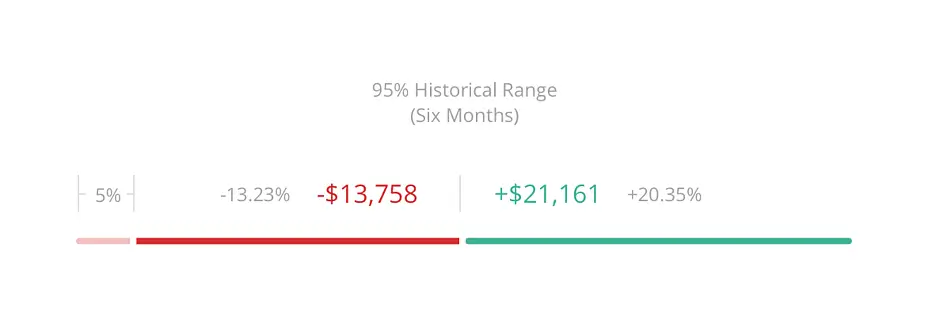
Want to know what makes Nitrogen tick? Today, we’ll discuss the way we measure client expectations—the 95% Historical Range.


The 95% Historical Range is the cornerstone of setting client expectations with Nitrogen. It is the range of possible gains or losses a portfolio might experience over a six-month period. We’ve found that investors make better decisions when they understand what is normal for their portfolio, and our advisors use this data to keep their clients from making short-term decisions that kill long-term goals.

Together with the Risk Number, the 95% Historical Range helps advisors focus the conversation on risk. This approach, also known as the Third Wave of Advice, embraces the concept that the short term matters. We’ve focused on a six-month timeframe because we believe that the industry standard of one year is simply too long for investors to “hang in there” during volatile times.

If an advisor tells a client that their portfolio could gain 8% in the next year, the client will fixate on that number. If six months go by and their portfolio is only up 1%, they might start to wonder why it’s not performing as well as it ought to be (again, the only figure they know is 8%). Giving clients a range of reasonable expectations, rather than focusing on a narrow pinpoint, will protect them from both the fear of loss and the disappointment of less-than-stellar gains in the short term. This is what makes the 95% Historical Range so effective in setting expectations.

95_Historical

The Six-Month 95% Historical Range is calculated from the standard deviation of the portfolio (via covariance matrix). The 5% left over is a statistical standard of downside risk that can’t be quantified (Black Swans, unforeseeable market events), and it represents a “devastating loss” for the client. After thorough testing in different market environments, less than 1% of portfolios have actually dipped into that 5% devastation range.

With the 95% Historical Range, advisors can use simple terms to set client expectations for upside and downside alike. It makes behavioral coaching easy for advisors as they guide their clients through one short-term decision at a time.


Articles you might like:

Nitrogen 101: What is Prospect Theory?

Nitrogen 101: What is the Risk Number?

Investing is Broken Part 3: Bad Expectations Sabotage Us

Schedule a Demo: