Built Together: Our Gratitude for the Financial Advisors Who Inspire Us

At Nitrogen, we’re constantly inspired by the dedication, compassion, and impact that financial advisors bring to their work. Every day, advisors empower their clients to make informed decisions, navigate life’s complexities, and pursue financial well-being with confidence. It’s a partnership that goes beyond just software and services; it’s about building something meaningful together. Today, we’re taking a moment to share some of our favorite stories and reflections from our team on why we’re so grateful to be a part of the journey of tens of thousands of advisors around the country.


Micaela, SVP of Operations

“One of the uniquely beautiful things about serving in the wealth management space is the tight-knit community that persists year after year and decade after decade. One of my favorite things is connecting with the amazing financial advisors who have brought us along as long-term partners on their journey to empower the world to invest fearlessly, client after client, and year after year.”


Justin, Chief Product Officer

“As a values-driven company, we love recognizing those same principles in the advisory firms we serve. Abound Financial comes to mind — what a great culture of client-centric, values-aligned, good people who genuinely enjoy working together. We’re grateful to serve them and tens of thousands of other advisors out there who operate in the same way or aspire to.”


Monet, VP of Account Management

“Advisors truly wear so many hats, and that’s what drives us to keep improving our tools. Hearing how advisors use Nitrogen to provide reassurance during volatile markets inspires us to push even harder to refine what we offer. They’re not just tech users—they’re advocates, coaches, and trusted mentors to their clients. Being part of that journey is something I’m incredibly grateful for.”


Carly, Director of Account Management

“Meeting with our customers re-ignites my passion for Nitrogen. What excites me most is seeing how our technology complements the expertise of advisors who are deeply committed to their clients’ success. Advisors consistently show up with passion, making dreams a reality and helping clients achieve financial peace of mind amidst a world that is often uncertain.

The work they do isn’t easy, but their drive for growth and genuine care for their clients is what makes the difference. It’s inspiring to support professionals who put people first and make a lasting impact on the financial futures of individuals and families.

In my role at Nitrogen, I take the same approach—people first, with a genuine care and commitment to our customers’ growth and success.”


Max, Director of Solutions Consulting

“One standout customer that comes to mind is Farm Bureau, whose team brings such dedication and passion to their work. Collaborating with them has been a rewarding experience, as they consistently push for innovative solutions to better serve their clients. It’s partnerships like these that remind us why we do what we do—helping advisors deliver fearless, personalized advice every day.”


Dan, VP of Corporate Marketing

“When I think about the incredible advisors we have the privilege of working with here, so many stories come to mind. Take Aileen Grant, an advisor in Texas, who brings goodies for our team to enjoy at every Fearless Investing Summit — a meaningful gesture that shows just how thoughtful she is. Then there’s Glen Jackson, an advisor in Washington D.C., who frequently sends encouraging notes that brighten my day and is always quick to lift others up. Domenick D’Andrea and I speak at least weekly, exchanging ideas on how to enhance Nitrogen and discussing the latest in his business. And LeRoy Bizzel, who treats everyone he meets like an old friend, and is always ready to share a bit of inspiration. Then there are Neil and Adam Howard, who bring the fun side to the business — from gracious invitations to their home to each year taking me for a spin in their latest sports car. They show that this industry can be as enjoyable as it is impactful. I could go on and on about the incredible advisors we work with daily and that go beyond just customer interactions; I count it a privilege to call them friends.”


Mitch, Managing Director

“One advisor story that sticks with me is from someone who shared how they used Nitrogen to build trust with new clients who were initially hesitant about financial planning. With the right tools, this advisor could demonstrate clear, actionable steps toward their clients’ goals, which completely changed the relationship dynamic. They’ve since become one of their clients’ most trusted resources. Knowing that we play a small part in these transformations makes all the hard work worth it.”


Stephanie, Senior Advisor Coach

“Before I started here, I knew very little about investing or how advisors serve their clients. But after working with hundreds of advisors over the years, I’ve gained so much more perspective around the importance of confidently investing for the future and the impact of how much advisors care for their clients. I’m so grateful that I get a chance to serve and learn from advisors and contribute to their success and impact in even the smallest way.”


Alex, Managing Director

“I think of the advisors I’ve met who genuinely want to change the industry for the better. They don’t just want technology to improve efficiency; they want it to enhance every aspect of their client interactions. Partnering with advisors who are that passionate about what they do inspires us to keep innovating. We’re building for people who are reshaping what it means to be a financial advisor, and that drives us every day.”


Mark, Lead Product Manager

One of the best parts of my job is meeting with advisors and hearing how they’re using Nitrogen. They’re candid with their feedback, which is invaluable. We once had an advisor point out a small feature improvement that hadn’t occurred to us, but it ended up making a huge difference in how they could manage client interactions. That feedback loop is what makes Nitrogen so advisor-centered — we’re building solutions with advisors, not just for them.


Gratitude for the Journey Ahead

As we look to the future, we’re deeply grateful for the financial advisors who inspire us, challenge us, and partner with us in our mission. It’s their feedback and dedication that drive us to create solutions that genuinely support their goals. Building Nitrogen together with advisors has been an incredibly rewarding journey, and we’re excited to continue innovating alongside them.
What Happened in 2024? A Look Back at the Biggest Wealth Management News This Year

It’s hard to believe that 2024 is quickly coming to an end. Now, as we prepare for a new year ahead, it’s the perfect time to reflect on the pivotal moments that shaped the wealth management industry over these past months. 

From exciting mergers to the continued rise of artificial intelligence (particularly in the finance space), this year brought about important shifts that could continue impacting our industry in 2025 and beyond.

Below, we’ve gathered and summarized what we think are the 10 most significant stories of the year in the wealth management industry.

Major CEOs exited their positions

This year, we saw a wave of leadership shake-ups and changes from some of the industry’s largest institutions. Starting off in January, Bill Crager announced his plans to step down as Envestnet’s CEO after spending more than two decades at the company. As of April, he has transitioned into a Senior Advisor role and will continue working more closely with clients and partner relationships, according to the press release.

In April, Ron “Omani” Carson announced his departure from Carson Wealth Group, which had been acquired by Bain Capital in 2021. Former LPL CIO Burt White stepped in and continues serving as Carson Wealth’s new CEO.

Then in October, we were shocked to learn that former LPL CEO Dan Arnold was fired for violating the employees’ code of conduct. No additional information has been released about that situation, but the shake ups in powerful seats across the industry are still reverberating. 

The rise of AI in wealth management

It might come as no surprise that artificial intelligence took center stage this year—especially as more wealth management firms embraced AI-driven tools designed to enhance client interactions and boost operational efficiency. 

Platforms like Jump (an AI-driven note-taking app) are pushing the boundaries of what’s possible for advisors—like converting conversations into notes, tasks, and compliance-friendly records.

Read more about AI and wealth management here.

The first wave of SEC Marketing Rule violations

While the SEC’s New Marketing Rule went into effect in 2021, it looks like 2024 was the year the SEC started targeting out-of-compliance firms firmly. Across the industry, we saw our first real big wave of Marketing Rule violations—and it’s likely we’ll continue to see the SEC cracking down on violations into 2025 and beyond.

As RIAs continue testing the waters and implementing new policies and procedures to address these changes, compliance-focused tech tools like Testimonial IQ and WealthTender are gaining traction fast. 

Demographics are shifting

You’ve likely heard that the Great Wealth Transfer has already started—the period of time in which $84 trillion in wealth will trickle down from Baby Boomers to their Gen X and Millennial children or grandchildren. For financial advisors, preparing for this shift is paramount to attracting future wealth builders and investors. 

Another important demographic to continue addressing? Women, particularly those who outlive their spouses. Around 70% of women actually leave their financial advisor within a year of their spouse’s death, indicating that their previous advisor wasn’t meeting expectations.

Major industry mergers and acquisitions continued

In May, it was announced that Buckingham Strategic Wealth and Colony Group were merging. While certainly not the only acquisition announcement of 2024, this one was headline-worthy. Representing hundreds of billions in AUM and tens of thousands of clients, this merger made a big impact across the wealth management space. 

Read more about the merger here.

Clients are clear: Holistic planning is in

The next generation of investors grew up in a much different world than their parents and grandparents, and they expect their advisors to adapt their firm to meet their expectations. For example, younger clients expect a digitally driven client experience, as well as more holistic planning services (beyond portfolio management).

Plenty of surveys and studies have been conducted in recent years, including this report by Morningstar. The takeaway? As more options for DIYing investments become available and accessible to the masses, clients expect their advisors to help in other areas of their financial lives as well.

Robinhood buys TradePMR

In November, Robinhood certainly shook the finance world with news that it had negotiated a $300 million acquisition of TradePMR. This seemingly marked the consumer financial technology giant’s strategic pivot toward the wealth management and RIA markets. 

Advisors may want to watch closely as this acquisition unfolds—it could very well mark a new era of financial service offerings for investors (particularly those who prefer to begin with a DIY investment approach). 

Wealth management returns to working in-office

Several major firms, including Fidelity, Orion, and Altruist, made headlines when they instructed employees to officially return to the office in 2024. 

While some transitions were smoother than others, this shift in remote work policy follows suit with other large tech companies and corporations outside of the wealth management space.

Bain acquires Envestnet in multi-billion dollar deal

In perhaps one of the year’s largest WealthTech deals, Bain Capital acquired Envestnet in a multi-billion dollar deal this past September. As a take-private deal, this strategic move was done in an effort to further Envestnet’s mission of supporting RIAs with their growth and productivity goals.

Nitrogen’s Fearless Investing Summit revealed exciting updates

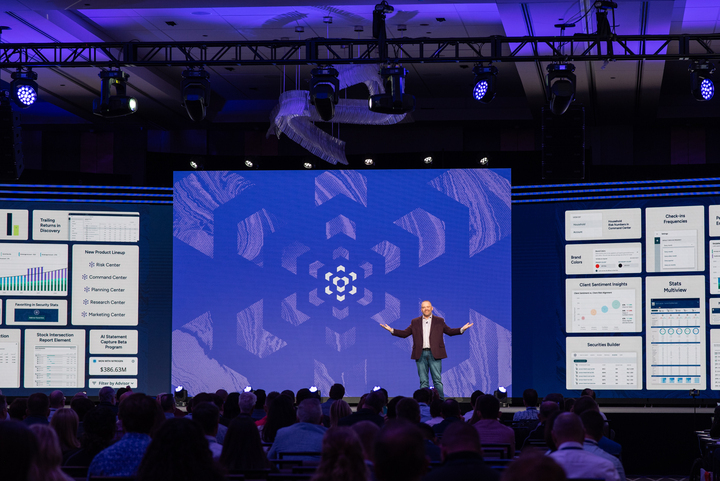
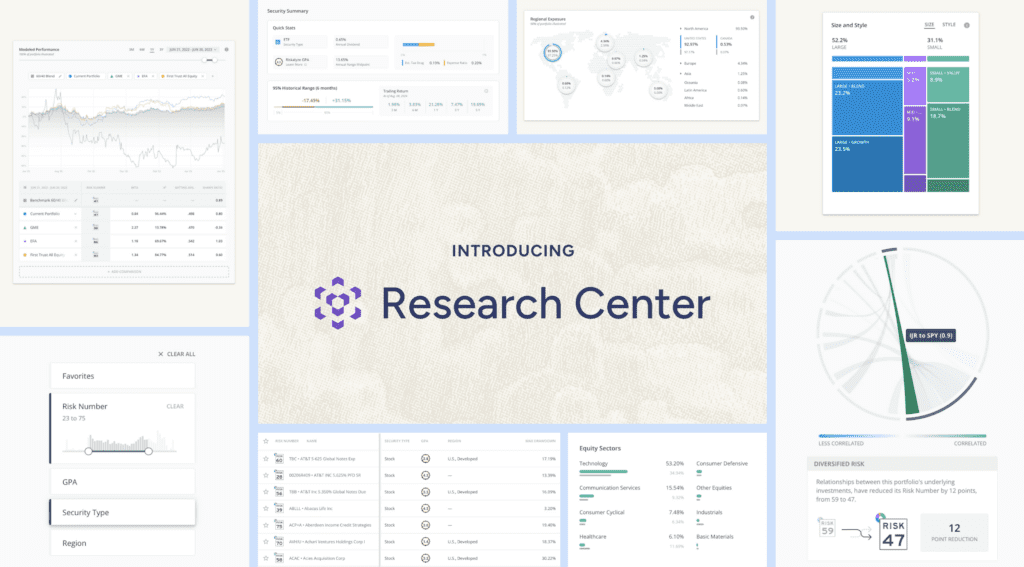
At this year’s annual Fearless Investing Summit, we unveiled our latest updates—showcasing the tech-driven tools advisors can leverage to deepen client relationships and streamline workflows. Among the highlights, we introduced enhanced functionality across the platform’s core products, including Risk Center, Income Center, and Research Center.

Through our ongoing commitment to innovation, our goal is to help advisors simplify and streamline operations—all while delivering a more personalized experience that attracts and converts high-quality prospects into long-lasting clients.

From newsworthy changes in leadership to evolving client needs, 2024 appeared to be a year of transformation in the wealth management industry. At Nitrogen, we’re committed to empowering your firm with the tools and insights needed to thrive in a rapidly changing landscape. 

Learn more about how we can support your firm’s growth goals in 2025. Schedule a demo today to get started.

The Ultimate Guide to Cancelling a Timeshare: What Every Investor Needs to Know

Looking to get out of a timeshare contract? This comprehensive guide walks you through the entire timeshare cancellation process, from understanding your legal rights to executing a successful exit strategy.

Table of Contents

  1. Understanding Timeshare Contracts
  2. Legal Rights and Cooling-Off Periods
  3. Valid Reasons for Timeshare Cancellation
  4. Step-by-Step Cancellation Process
  5. Working with Exit Companies
  6. Common Pitfalls to Avoid
  7. Alternative Solutions
  8. FAQs

Understanding Timeshare Contracts

Timeshare contracts are legally binding agreements that can be complex and challenging to navigate. Before pursuing cancellation, it’s essential to understand the key components of your contract:

  • Ownership type (deeded vs. right-to-use)
  • Maintenance fee obligations
  • Contract duration
  • Transfer and resale rights
  • Cancellation clauses

Many timeshare owners find themselves surprised by rising maintenance fees and difficulty booking desired dates. Understanding your contract is the first step toward successful cancellation.

Legal Rights and Cooling-Off Periods

Most states provide a “cooling-off” period after signing a timeshare contract. During this time, you can cancel without penalty. Key points include:

  • Cooling-off periods typically range from 3-15 days
  • Some states offer extended periods for specific circumstances
  • Written notice is usually required
  • Delivery method requirements vary by state

State-Specific Cooling-Off Periods

  • Florida: 10 days
  • California: 7 days
  • Nevada: 5 days
  • Hawaii: 7 days

Valid Reasons for Timeshare Cancellation

Common legitimate reasons for timeshare cancellation include:

  1. Misrepresentation during the sales presentation
  2. Financial hardship
  3. Health issues preventing usage
  4. Significant fee increases
  5. Breach of contract by the resort
  6. Fraudulent practices
  7. Death of a co-owner

Documentation supporting these reasons strengthens your cancellation case.

Step-by-Step Cancellation Process

1. Review Your Contract

  • Locate your original contract
  • Identify cancellation clauses
  • Note any deadlines or requirements

2. Gather Documentation

  • Sales presentation materials
  • Communication with the resort
  • Financial records
  • Evidence of misrepresentation
  • Medical documentation (if applicable)

3. Write a Cancellation Letter

  • Include contract details
  • State clear reasons for cancellation
  • Request written confirmation
  • Send via certified mail

4. Follow Up

  • Document all communications
  • Keep delivery receipts
  • Monitor your credit report
  • Maintain detailed records

Working with Exit Companies

When considering a timeshare exit company:

Red Flags to Watch For:

  • Upfront fees without guarantees
  • Pressure tactics
  • Unrealistic promises
  • No physical business address
  • Limited or negative reviews

Legitimate Company Characteristics:

  • Transparent pricing
  • Written contracts
  • Clear timelines
  • Escrow payment options
  • Strong references
  • BBB accreditation

Common Pitfalls to Avoid

  1. Stopping maintenance payments without legal cancellation
  2. Falling for scam relief companies
  3. Signing over power of attorney without proper vetting
  4. Accepting verbal promises without written documentation
  5. Missing response deadlines
  6. Failing to document communications

Alternative Solutions

If cancellation isn’t possible, consider these alternatives:

  1. Resale Options
    • List on specialized timeshare resale sites
    • Work with licensed real estate agents
    • Consider timeshare resale companies
  2. Deed-Back Programs
    • Research resort-sponsored programs
    • Understand qualification requirements
    • Review all associated costs
  3. Rental Strategies
    • Cover maintenance fees through rentals
    • Use rental management companies
    • List on vacation rental platforms
  4. Donation Options
    • Evaluate legitimate charities
    • Understand tax implications
    • Verify organization credentials

Frequently Asked Questions

Q: Can I cancel my timeshare after the cooling-off period?
A: Yes, but it may require proving misrepresentation, fraud, or other valid reasons for cancellation.

Q: Will cancellation affect my credit score?
A: Proper legal cancellation shouldn’t impact your credit score. However, stopping payments without cancellation can damage your credit.

Q: How long does the cancellation process take?
A: Timeline varies from 3-12 months depending on circumstances and resort cooperation.

Q: Can I sell my timeshare instead of canceling?
A: Yes, but the resale market is challenging. Most timeshares sell for significantly less than the purchase price.

Q: Should I hire a lawyer for timeshare cancellation?
A: Legal representation can be beneficial, especially for complex cases or when dealing with uncooperative resorts.

Conclusion

Timeshare cancellation requires careful planning, documentation, and often professional assistance. Understanding your rights and following proper procedures increases your chances of successful cancellation. Remember to:

  • Act quickly once you decide to cancel
  • Document everything
  • Research thoroughly before hiring help
  • Maintain payments until legally canceled
  • Seek professional advice when needed

Disclaimer: This guide provides general information and should not be considered legal advice. Consult with a qualified attorney for specific guidance regarding your situation.

Ready to deliver the kind of clarity clients actually value?
Nitrogen equips advisors with interactive planning, risk, and client-engagement tools that turn complex conversations into confident decisions. See how our platform helps you keep clients invested and your firm growing at nitrogenwealth.com.

Buying the Right Wealth Management Technology Partner: Why ‘Buying the Seller’ Matters for Financial Advisors

For financial advisors, any tool you bring into your practice is more than just software — it’s a long-term partner in your firm’s success. Whether you’re acquiring portfolio management tools, retirement planning tech, client engagement solutions, or risk assessment software, choosing a partner you can trust is as important as the product itself. After all, reliable software can only be built by a reliable company.


Why “Buying the Seller” Matters in WealthTech

The adage “Buy the seller” holds true — you trust the individual behind the product before trusting the product itself. You know the experience you’re going to receive when you walk into an Apple Store. You understand how the Ritz-Carlton is going to respond to a service request. You know the attention to detail and precision you can expect when you buy from Rolex. 

At this year’s Fearless Investing Summit, Rise Growth Partner’s Joe Duran shared, “A trustworthy brand delivers a promise that is consistently kept, again and again.” The same principle applies in SaaS: you’re not just buying software; you’re buying the values, stability, and track record of the company that built it. Your tech partner should not only support your current goals but also be invested in growing alongside you for years to come.


Trustworthy Software is Built to Last

How can you tell if a technology partner is built to stay? Here are three key questions to consider when evaluating long-term reliability:

  • Are they in it for the long haul? Look for companies with a history of sustainable, long-term growth over quick exits or speculative expansions.
  • How’s their track record? Metrics like historical uptime, transparency in operations, and reputation for reliability say a lot about stability.
  • Are they customer-centric? Companies truly invested in their clients’ success offer exceptional, consistent support and robust resources. They make it easy for you to succeed.

For instance, Nitrogen’s dedication to building a trustworthy business for financial advisors is reflected in key indicators:

  • Over a decade of service to tens of thousands of advisors nationwide.
  • 99% historical uptime and a transparent product roadmap that advisors trust.
  • An extensive learning library and dedicated customer support team designed to set you up for success.
  • Leadership with deep industry expertise and tenure, ensuring financial expertise and operational excellence guide every product decision.
  • Continuous innovation driven by advisor input – We prioritize feedback from advisors to shape our product roadmap and ensure our solutions evolve to meet real-world needs. Share your insights anytime at hello@nitrogenwealth.com—we’d love to hear from you!


Commitment to Innovation, Not Bolt-On Solutions

Unlike firms that rely on acquisitions to patch together technology stacks, Nitrogen is dedicated to developing its technology in-house and with trusted partners. This approach means our platform is built with integration and user experience as foundational pillars, not as afterthoughts. When companies rapidly acquire disparate technologies, they frequently struggle to offer a seamless experience, leaving advisors and their clients with disjointed workflows, compatibility issues, and frustration.

Financial advisors deserve better than the inefficiencies that come with hastily acquired software. By developing our tools in-house, we ensure that every feature works together, offering a streamlined and cohesive experience. Simply, it looks and feels the same across the platform, and that fosters advisor productivity, workflows you can count on, and client satisfaction.

Our dedication to innovative development reflects our commitment to providing a holistic, reliable, and future-ready platform that evolves with your needs — empowering you to deliver the best possible experience for your clients.


Stability is a Feature — the Most Important One

Just as you focus on building relationships with your clients, look for technology partners who prioritize relationships over quick wins. When it comes to mission-critical software, a stable, well-run company is the foundation of reliable, evolving solutions. At Nitrogen, we believe in a commitment to stability and growth, ensuring our advisors have the support they need to grow their businesses with confidence.

Choosing the right software partner means aligning with a company as dedicated to your long-term success as you are to your clients. So, when evaluating your options, remember that stability is a platform feature — and it’s one that truly matters.

When you partner with Nitrogen, you’re choosing technology that’s built to last, crafted in-house with your success in mind, and backed by a team committed to your firm’s long-term growth. Experience the difference that trusted technology can make in your practice. 

Schedule a demo with Nitrogen today and discover how a true wealthtech partner can help you elevate your client experience and drive meaningful growth.

Empowering Advisors to Invest Fearlessly: 2024 Nitrogen Product Keynote Recap

A highlight of every Fearless Investing Summit is the annual Nitrogen product keynote, and this year’s presentation did not disappoint. With over 1,100 in-person attendees and another 1,000 tuning in online, the keynote showcased Nitrogen’s unwavering commitment to innovation and its mission to empower advisors with technology that builds trust and scales personalized advice. Serving as the backdrop for Nitrogen’s highly anticipated fall product launch, the conference featured powerful sessions from NFL legend Emmitt Smith and industry thought leader Joe Duran, setting a new benchmark for wealth management. Here’s a look at the most exciting announcements from Nitrogen’s product keynote.

A Foundation of Trust

CEO Dan Zitting opened the keynote by emphasizing Nitrogen’s mission to serve as a “Trust Platform” for advisors. “Trust is our industry’s most valuable asset, and building digital experiences that enhance trust for advisors is in the DNA of Nitrogen,” Zitting shared. The product updates announced this year aim to foster more meaningful connections between advisors and clients, creating tools that go beyond data and efficiency to elevate advisor-client relationships.


Highlights from Nitrogen’s Fall Product Launch

Research Center: Equity Exposure and Portfolio Comparisons, Simplified

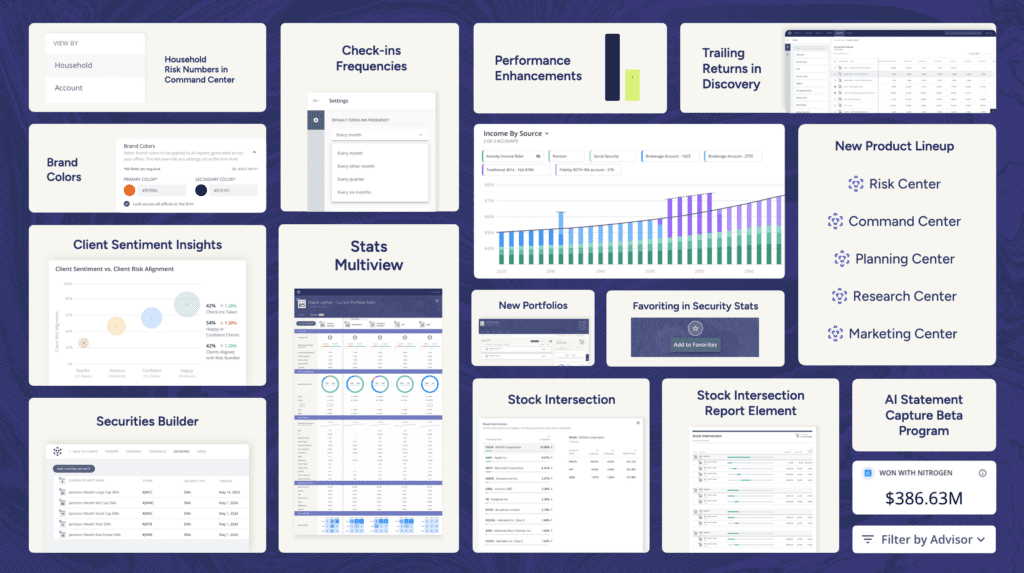
Chief Product Officer Justin Boatman revealed new features in Research Center, addressing some of Nitrogen’s most requested capabilities. Financial advisors can now use Stock Intersection to break down the equity exposure within funds, providing clients with a clearer understanding of portfolio composition. Alongside this, Stats Multiview allows for detailed, side-by-side portfolio comparisons, giving advisors a powerful tool to showcase investment options and align client portfolios with their goals.

“The ability to illustrate underlying equity exposure and showcase deep portfolio comparisons has been the #1 request from advisors. We’re thrilled to deliver these to Research Center,” said Boatman.

Additionally, advisors can now analyze trailing returns in Discovery, Nitrogen’s intuitive fund screener, and “favorite” securities for faster proposal creation.


Risk Center: Driving Conversations with AI-Enhanced Insights

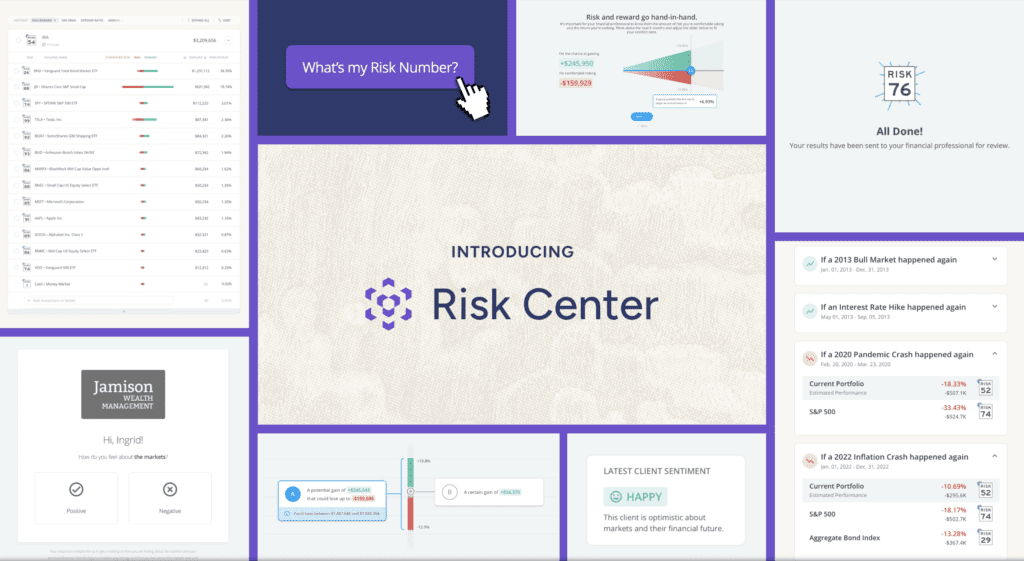
In a powerful step forward for Risk Center, Nitrogen unveiled AI Statement Capture, now available for beta testing, which leverages artificial intelligence to convert client statements into actionable portfolios in seconds. This tool streamlines data entry, enabling advisors to engage in more meaningful discussions with clients about their portfolios, rather than focusing on administrative tasks. With new, customizable Check-ins and the release of Nitrogen’s State of Investor Sentiment report, Risk Center gives advisors greater control over client communications and sentiment analysis.


Income Center: Income by Source for Smarter Decumulation Planning

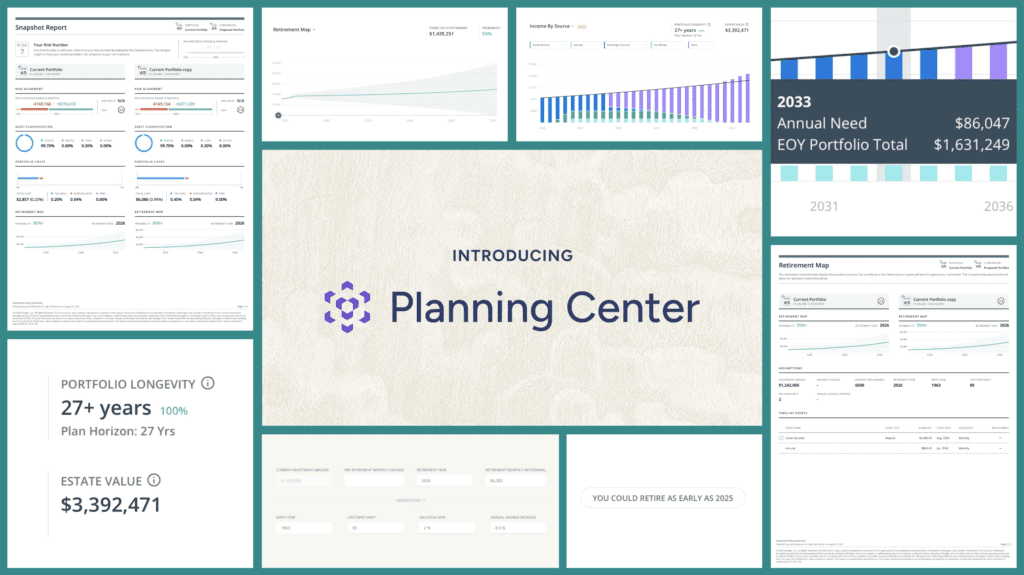
Managing Director Stephanie Walker introduced Income by Source, an innovative addition to Income Center that addresses one of advisors’ most-requested features: detailed retirement income modeling. Income by Source allows advisors to visually map out decumulation strategies and illustrate income sources throughout retirement. Clients can see exactly how their income needs will be met, bringing peace of mind and a clear roadmap for their retirement.


Marketing Center: Content Designed to Delight

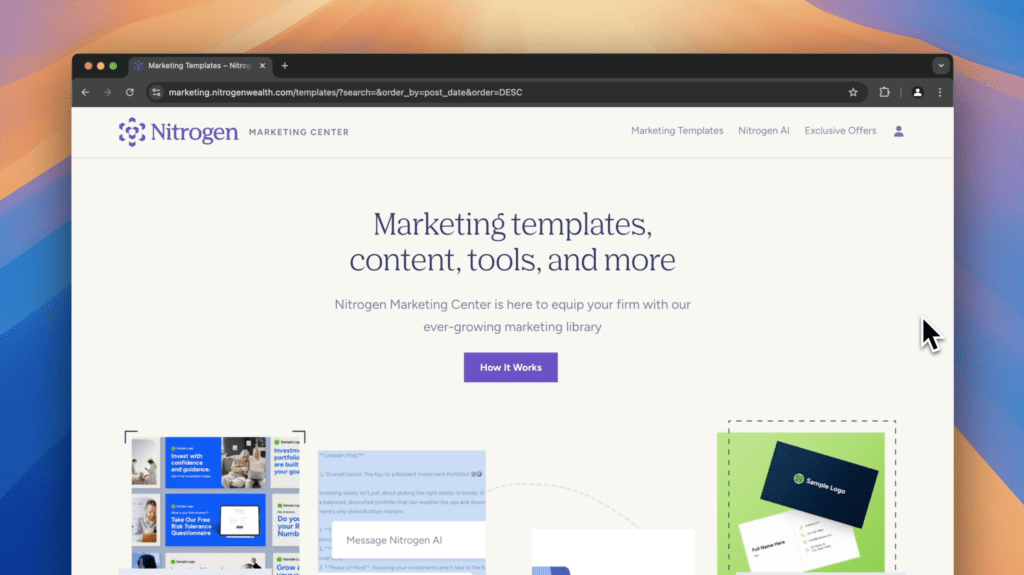
Marketing Center received new AI-powered features, including a library of over 80 pre-built marketing assets that help advisors enhance their client engagement. Advisors can access email campaigns, social content, and best practices curated from industry experts. Additional updates include the ability to instantly add disclaimers to assets, and generate images via AI prompts. With Marketing Center, advisors can effortlessly connect with clients and stay top-of-mind, boosting retention and client satisfaction.


Command Center: Oversight and Customization for Wealth Management Firms

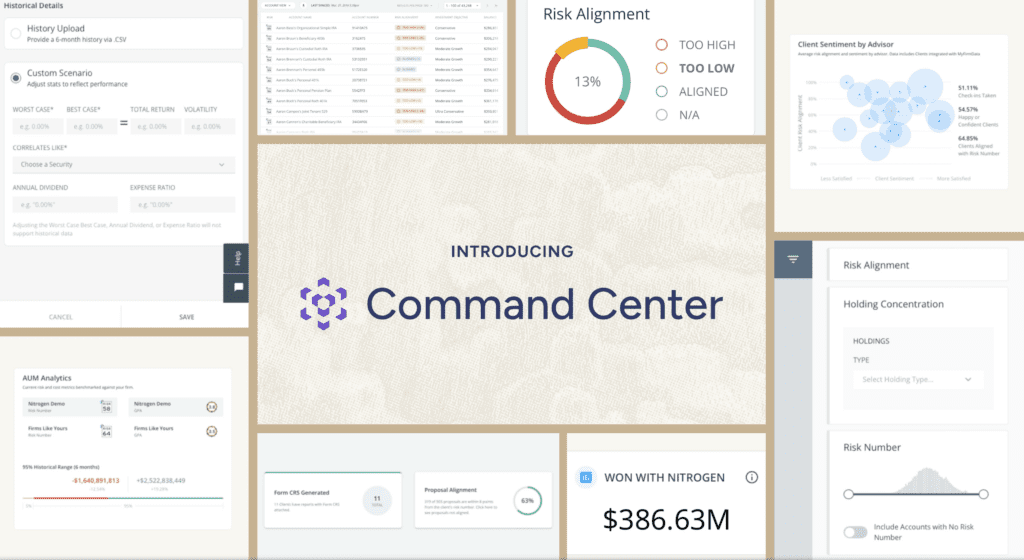
For enterprise firms, Nitrogen’s Command Center now includes Advisor Filters, Subdomains, and Securities Builder for better oversight and customization across teams. Firms can now filter insights by advisor, manage compliance with household-level risk alignment, and create reusable custom securities with historical performance data. Command Center ensures every team, from small RIAs to firms with over 1,000 advisors, can work efficiently and stay compliant.


A Vision for the Future

As Dan Zitting noted in his closing remarks, Nitrogen’s innovation journey is far from over. We plan to continue delivering quarterly updates, with advancements in AI, risk analytics, and tax planning integrations on the horizon. With this year’s product keynote, our mission remains committed to supporting advisors with innovative tools that drive growth and deepen client trust.

The next Fearless Investing Summit is set for October 22-24, 2025, in Denver, Colorado, at the award-winning Hyatt Regency. We’re already looking forward to raising the bar for the tens of thousands of advisors around the country who use Nitrogen. 

For more details or to schedule a demo of Nitrogen’s latest features, visit nitrogenwealth.com.

Why 40% of Clients Say an Advisor’s Value is Emotional Support

Money is emotional for everyone, and watching the volatility of the market can be both exhilarating and hard to watch for your clients. In fact, those emotions and psychological makeup play a big role in how investors make decisions and how they perceive your value and relationship. 

A recent Vanguard study found that clients believe 40% of their advisor’s value comes from the emotional support they provide—as opposed to portfolio returns or other financial gains.

An advisor can serve as a crucial sounding board, voice of reason, and unbiased expert when it comes to making informed investment decisions. Your challenge, however, is helping current and prospective clients understand these benefits. 

In this blog, we’ll take a look at investor psychology and the strategies you can use to address client reactions to market changes.

How Investor Psychology Impacts Financial Decision-Making

Psychology is prevalent in financial decision-making, thanks to a few common emotional or behavioral biases. Investors are humans, after all, and that means they’re going to make decisions based on their past experiences or expectations for the future. 

As an advisor, you need to acknowledge the potential biases at play, educate your clients on them, and help them make decisions that ultimately support their long-term goals and tolerance for risk.

Some common biases include:

  • Loss aversion: Some people have such a strong emotional reaction to losing money or seeing their portfolio drop in value, that it outweighs the satisfaction they feel when gaining money. This emotional response to losing money may make them naturally averse to risk—though it can also persuade them to pursue larger gambles (think high-risk, high-potential-reward investments).

  • Confirmation bias: People naturally seek out information that supports their existing beliefs. If your client is interested in investing in a certain company, they may seek out articles or data that support their decision while ignoring sources that may contradict their beliefs.

  • Hindsight bias: There’s no way to know what the markets will do, but people who have experienced success in the past will sometimes assume they can accurately predict the future. Rather than take hindsight knowledge for what it is, they’re convinced they knew all along what the outcome would be—and they can accurately predict it again.

  • Herd mentality: You’ve likely heard of the phrase “herd mentality” in other contexts, but it’s something that often impacts the markets as well. If an investor hears that lots of other investors are doing something (like buying or selling a certain stock), they may be more inclined to do the same—even if it goes against their investment strategy.

Tailoring Your Advice to Address Investor Behavior

As an advisor, it’s your job to account for the psychology that goes into your client’s decision-making, so you can help them stay on track with their goals and be comfortable with regular market movements.

The key to addressing investor behavior is to communicate effectively and personally with your clients and prospects.

Make sure your clients know you’re accessible and available to discuss their concerns. Encourage them to reach out anytime they feel compelled to make an impulsive or emotional decision about their money. Being proactive with your communication better ensures your clients feel supported and cared for from an emotional perspective, which, as we discussed earlier, increases your perceived value as their financial partner.

If you haven’t already, consider creating a clear, scalable communication strategy that ensures you’re providing personalized attention to every client (without taking too much time away from other important tasks).

3 Strategies for Managing Client Reactions to Market Changes

As you work to enhance your existing client relationships with more effective communication, you may find it helpful to leverage AI-driven tech tools and platforms. Here are three strategies for managing client reactions to market changes, which you can accomplish with the help of Nitrogen’s client engagement tools.

Strategy #1: Check-in Regularly
How will you know how your clients are feeling about the markets unless you ask? Investor sentiment is incredibly important to understand, and on a larger scale, it has the power to move markets.

Nitrogen’s automated Check-ins ask your clients two simple questions, which you can use to tailor your messaging and prioritize your additional communications:

  • How are you feeling about the markets?
  • How are you feeling about your financial future?

In seconds, your clients can share critical data about their emotional well-being as it pertains to their portfolio, so you can better serve as a trusted guide and leader.

Strategy #2: Help Them Understand “What If”
By visualizing how different financial decisions might impact future outcomes, you can engage your clients in a more meaningful and impactful way. Nitrogen’s custom scenarios enable you to combine up to five key factors (proposals, indexes, blended benchmarks, individual stocks, and funds) to help your clients understand what will happen based on their financial decisions today.

Strategy #3: Use Historical Events to Stress Test Their Strategies
Did your clients experience major portfolio changes during the 2008 global financial crisis? Considering it was over 15 years ago, it’s possible your clients haven’t been through a major market event of that magnitude—or they may have forgotten just how stressful the whole situation can be.

With Stress Tests, you can run individual portfolios through historical events to illustrate those hypotheticals in a way clients understand. By proactively addressing concerns, you also empower clients to make informed decisions while managing their expectations.

Create More Effective Client Engagement with Nitrogen

Your clients are humans too, and that means they’re susceptible to emotional biases and investor psychology. As their advisor, it’s your job to help them navigate the ups and downs of the markets using research and discipline—while avoiding gut reactions and short-sighted decision-making.

Nitrogen’s client engagement tools can help you keep the lines of communication open and proactively gauge your clients’ concerns, so you can tailor your relationship to address their needs more effectively. Schedule your free demo of Nitrogen today to learn more.

Revisiting Cash Asset Assumptions: Updated Returns and Volatility in a Changing Market

Periodically, Nitrogen conducts a review of the rate and volatility assumptions for the asset type classified as “Cash.” The category includes a broad range of cash-like instruments or cash equivalents, such as certificates of deposits (CDs), savings accounts, money market instruments, high-yield savings accounts, money market deposits, cash sweep assets, money market mutual funds, and of course cash.  

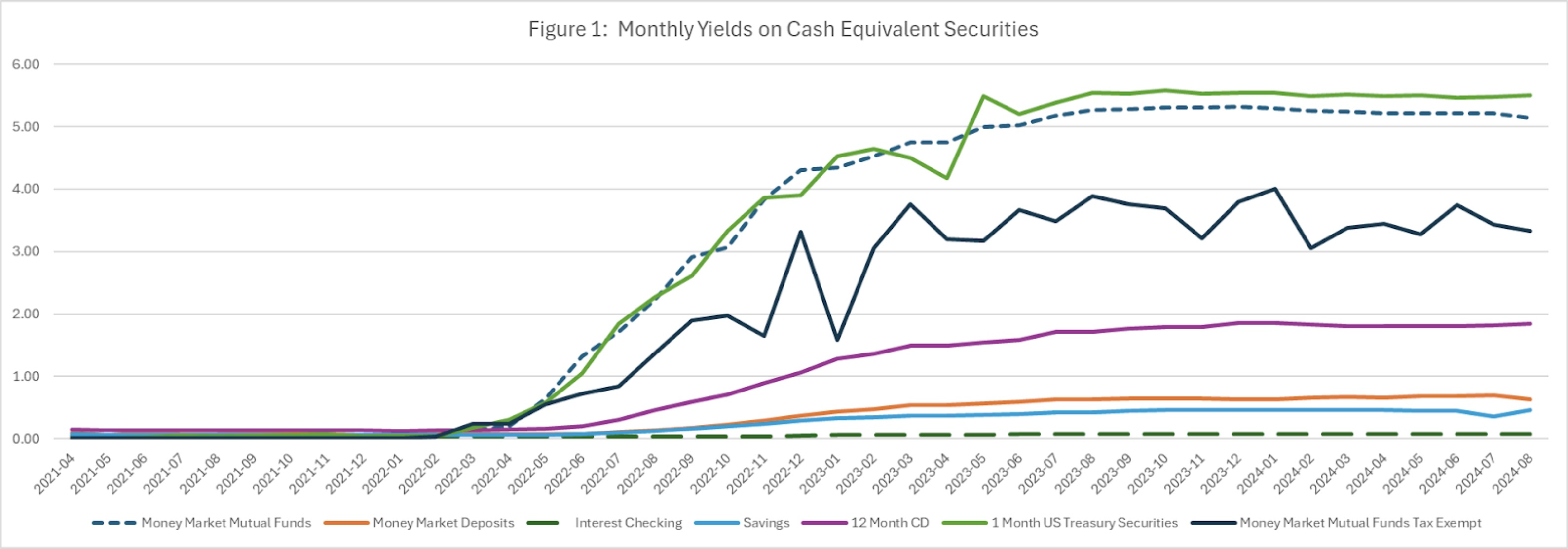
Each of these instruments carries its own historical return and volatility. Traditionally, the yield differences between them have been minimal, making it reasonable to assume an annual return of 0.842% (or a 6-month equivalent of 0.42%) with zero volatility. However, the spread between these products has measurably widened in recent years, and current rates for some cash equivalents are much higher, though not universally so.

As mentioned above, the current assumption is a 0.42% 6-month return with zero volatility. The illustration in Figure 1 shows that the rate spread between various cash equivalent instruments began to widen in mid-2022. Instruments like money markets and treasury yields have seen significant increases. However, others, such as interest-checking, money market deposits, and savings rates, remain at or below Nitrogen’s current rate assumption. 

Source:  Federal Reserve Bank of St. Louis and SEC.gov

By applying Nitrogen’s annual average return calculation to the 30-day treasury yield (shown in Figure 2), the result is a 1.5% average annualized return with a 1.64% annualized volatility.  If this calculation is performed for the time period prior to the interest rate increase starting in June 2022, the annual average return is 1.12% with 0.75% volatility.  As you can see in the chart, and as these figures demonstrate, volatility has increased noticeably over the past two years. 

Source:  Federal Reserve Bank of St. Louis

To better align with this data, Nitrogen is increasing the cash return and volatility assumptions to better reflect the broader range of securities included in the “Cash” category. While some security types are currently yielding 5% and higher, others are not. The overall average must account for this disparity. The cash return is being updated to an annual average return of 2.95% with an annual volatility of 1.25%. This adjustment allows for a more accurate representation of the various instruments included in the cash classification. As market conditions evolve, particularly if interest rates decline, Nitrogen will reassess and potentially lower these yields to maintain accuracy.

In addition to these updates, the return on cash is now included in the annual dividend.   Previously, any yield or return from cash was not reflected in an account’s or portfolio’s dividend yield.

What impact does this change have on accounts that hold cash?

The updated assumptions have a modest impact on the overall Risk Number for portfolios and accounts holding cash. In general, increasing the cash return may reduce the Risk Number, improve the GPA, and raise the annual return midpoint. For accounts or portfolios with a large cash balance (over 50%), this change results in a modest reduction in the overall Risk Number. Accounts with lower cash balances are unlikely to see any impact to the Risk Number or GPA. The change also results in a wider distribution for the 95% range; a higher best case and a lower worst case with a higher average return. The table below demonstrates the impact on certain metrics based on the level of cash. The non-cash portion of the portfolio in these examples is allocated 50/50 between SPY and AGG.   

This update reflects Nitrogen’s commitment to ensuring that our assumptions align with current market conditions and the evolving nature of cash and cash equivalent instruments. By adjusting the return and volatility metrics, we aim to provide a more accurate representation of the potential risks and rewards associated with holding cash in a portfolio. As always, Nitrogen will continue to monitor market conditions and make adjustments as necessary to maintain the accuracy and relevance of our assumptions.

Why Client Engagement Drives Firm Growth

It’s no secret that referrals remain one of the top drivers of firm growth for advisors – but how do you actually get those referrals?

In a recent survey by Russell Investments, 60% of surveyed investors indicated that “more frequent and more personalized contact would give them more confidence in their financial plan.” To take it a step further, 81% of clients are more willing to refer their advisor to others if their advisor would communicate more often and more personally.

Client engagement is more important than ever, particularly for those firms who want to continue scaling and growing. Let’s take a look at what successful client engagement looks like, how to measure your success, best practices, and more. 

What Does Client Engagement Look Like in Financial Advisory Firms?

Client engagement is all about making your clients feel valued, well-cared for, and included in the conversation. It’s being proactive about checking in through market volatility or life events and responding swiftly to concerns.

Between the ever-increasingly competitive advisory landscape, robo-advisors, and other DIY or cost-effective options, clients who work with advisors want a relationship that feels personalized – they need to know you care about the person behind the portfolio.

Here are a few examples of what a strong client engagement strategy might look like:

  • Your clients feel comfortable communicating with you often
  • They voluntarily update you on important life or financial events
  • Your conversations go beyond investments to include personal, non-finance-related life topics
  • Clients interact with your messaging (including your email newsletters, social media posts, or other marketing materials)
  • You receive regular and relevant questions about portfolio specifics. 
  • Clients involve their families or additional advisors in the financial planning process.

Keep in mind that not all clients have the same communication styles. For example, a client may refuse to divulge personal information but may respond to questions quickly and provide relevant information. Client engagement data can help you prioritize client communication and needs, but knowing your client’s communication style can give you context to their engagement level.

How does client engagement contribute to firm growth?

As we mentioned before, 61% of 2024 Firm Growth Survey respondents said referrals were the biggest source of leads for their advisory firms.

The great thing about client referrals is that they tend to come already familiarized with who you are and what you do – as compared to somebody who may have received a mailer or promotional email. Clients also tend to gravitate towards others who are in similar socioeconomic positions or industries, meaning their referrals are likely to be a good fit for your target audience.

But if you’re not exceeding your client expectations in terms of communication, collaboration, reporting, and accessibility, they will be less likely to refer you to others. Ultimately, your growth goals will be that much harder to accomplish.

What are the key metrics for measuring client engagement?

So, how do you know if your efforts to engage effectively with clients are working? You’ll need to decide what key metrics can most accurately measure your efforts and find a way to track and review them regularly.

Some key metrics to consider include:

  • Referral rates: How often are clients sending qualified leads through your doors? You’ll not only want to consider the frequency of referrals, but the close rate as well (meaning how many actually become new clients). If you notice your referral rate declining over time, it may be a good indication that your client engagement efforts are slipping.
  • Surveys: Sometimes, all you have to do is ask your clients for feedback if you really want to know how they feel about your efforts. A simple survey or questionnaire can help you gauge how your client engagement is being perceived and where you may be able to improve.
  • Content engagement: Things like email open rates or clicks, as well as interactions with social posts or other content, can help you understand what resonates with your target audience. 

What are the Best Client Engagement Strategies for Financial Advisors?

The more you’re able to personalize your interactions with clients, the better – mass marketing and general communications aren’t cutting it anymore. But you can’t personalize and standardize the client experience on your own, especially as you scale.

Leveraging client engagement tools can help your advisory firm offer better client support, streamline communication, improve the overall client journey, and, of course, create more consistent and positive client engagement. 

From lead-nurturing risk assessment questionnaires to personalized emails and visual reporting tools, your entire tech stack should work together to help you regularly connect and communicate with clients in a personalized way.

Fuel Your Firm’s Growth Goals with Nitrogen

The way clients perceive financial guidance is changing, and their expectations for the client-advisor relationship have evolved as a result. As you continue on your journey of growing your AUM and scaling your firm (without sacrificing the client experience), you’ll need to leverage the right tools to keep client engagement strong.

Book a demo of Nitrogen today to learn more about how our platform can support your client engagement efforts.

Industry News: August 2024

As the summer winds down, significant events in finance have shifted market dynamics and influenced the fintech industry for investors across the globe. Here’s your roundup of the must-know August 2024 fintech news. 


Large Canadian Bank Prepares to Pay Up 

What happened: Canada-based Toronto-Dominion Bank (which has roughly 10 million clients and 1,200 branches located in the U.S.)  is selling Schwab shares to round up $2.6 billion for money laundering-related fines following a U.S. Justice Department investigation.

Why it matters: While a strong compliance program can be costly and time-consuming for financial institutions, it’s essential for investor protections. TD’s hefty fines underscore the increasing regulatory scrutiny regarding anti-money laundering (AML) here in the U.S., and as the bank sells Schwab shares to offset those fines, it’s a good reminder to firms to closely review their AML compliance policies and procedures.


Bitcoin Buyers Take Advantage of “Discounted” Prices 

What happened: Bitcoin value dropped 28% in early August – but many institutional investors took the opportunity to buy into the dip.

Why it matters: The fact that institutional investors bought into the Bitcoin dip shows confidence in the long-term potential of cryptocurrencies (despite its high volatility). For retail investors, this signals that large players still believe in Bitcoin’s staying power. However, it also highlights the importance of being strategic during market downturns, balancing potential opportunities against risks. 


Edward Jones Expands Both Advisor Software and Customer Services

What happened: By the end of 2025, Edward Jones customers can expect to have more credit card and checking account options, while advisors will gain access to Salesforce Financial Services Cloud and Envestnet MoneyGuide software.

Why it matters: Edward Jones’ software expansion is a signal to investors that traditional financial institutions are ramping up efforts to compete with fintech disruptors through more holistic client experiences fueled by tech automation. As for the new credit card and checking account options, they will be co-branded with their partner company, US Bank, and are expected to roll out by the end of next year – likely in an effort to attract new and retain existing customers.


G Squared Rounds Up Over $1 Billion 

What happened: G Squared, a venture capital firm founded in 2011, takes a non-traditional approach through secondary market investments in startups

Why it matters: G Squared’s model is based on the idea that investors can buy shares at a significant discount through start-up employees and investors, paying an estimated 30% less than the company’s value. The new fund (the sixth of its kind from G Squared) has raised $1.1 billion as of August 2024 and will reportedly hold about $4 billion in AUM – which may point toward increased activity in venture markets with a focus on established startups.


Corporate Crypto Fuels the 2024 Presidential Election

What happened: According to a recent report from Public Citizen, crypto companies are heavily investing in the 2024 presidential race – accounting for “nearly half of all the corporate money flowing into the election.”

Why it matters: Digital currency companies, including Coinbase and Ripple (both of which “have been engaged in legal battles with the Securities and Exchange Commission”), have contributed around $119 million to the 2024 election. Their involvement highlights the growing political influence of the digital asset sector. For investors, this could have long-term implications for regulatory environments surrounding cryptocurrencies (which are still in their early stages, relatively speaking). 


Ikea Supports Your Thrifting Habit

What happened: Similar to eBay or Facebook Marketplace, Ikea Preowned is a new platform for individuals to buy and sell used furniture directly from one another. 

Why it matters: For investors, IKEA’s entry into the secondhand marketplace signals a growing trend in sustainable consumerism and circular economies. As more companies adapt to environmental, social, and governance (ESG) standards, the ability to capitalize on resale markets could become a key revenue driver, appealing to socially-conscious customers and potentially offering long-term growth.


Rate Cuts Are Arriving Soon

What happened: The Federal Reserve Chair, Jerome Powell, says “the time has come” for a cut to its key policy rate

Why it matters: Lower interest rates typically lead to lower borrowing costs, which can stimulate economic growth and potentially boost equity markets. However, they may also compress yields on fixed-income investments, pushing investors to seek higher returns in riskier assets. While we don’t yet have an exact timeline for the cut to occur (or what number it will land on), it’s a good idea for both advisors and investors to start thinking about how this upcoming switch could impact their financial plans.

Client Reporting Tools and Features Every Advisor Should Know

Financial advisors face the challenge of delivering a hyper-personalized, one-on-one experience that’s both efficient and scalable. On their own, accomplishing such a balance may seem nearly impossible, which is why today’s growth-focused advisors leverage powerful tech platforms and solutions to help automate and streamline where possible. 

Client reporting tools can help you communicate with your clients in a way that’s easy to understand and tailored to their specific needs. Considering the complexity most financial conversations tend to take on, having an easy-to-read report, for example, can be a major advantage. 

Not only does having the right client reporting tool in your back pocket make it easier to deliver tailored reports in a digestible way, but it also demonstrates your value as their trusted financial partner.

But what makes one client reporting tool stand out from the others? Let’s take a look at the specific features and functions wealth management firms may want to consider.

What are the Essential Features of Client Reporting Tools for Financial Advisors?

Client reporting tools can be your secret weapon for fostering trust, enhancing communication, and ultimately growing your firm. The question is: How do you know which one is right for you?

Your financial advisor tools and platforms should enable you to foster closer connections with your clients (and prospects), ultimately strengthening the relationship and further solidifying their trust in you. It should also help you operate more efficiently, communicate your value clearly, and support your compliance policies and procedures.

How Do Client Reporting Tools Improve Financial Advisory Services?

Client reporting tools help advisors enhance the client experience in a number of different ways, including:

  • Greater customization: Your reporting tool should enable you to tailor reports to align with each client’s specific goals, risk tolerance, and investment timelines. Delivering clients a personalized report can better demonstrate your commitment to addressing their individual needs and reinforce your services’ value. 
  • Automation: The more you’re able to automate, the less time you or your staff will need to spend on mundane, repetitive tasks. Additionally, automation can help ensure data isn’t mistyped and certain steps or clients aren’t forgotten. 
  • Standardization: We can’t mention automation without touching on the importance of establishing a standardized and repeatable process. When your client reporting tool includes the flows and features necessary to automate certain functions, you can better ensure that every client feels well-cared for and receives the same high standard of care – no matter how large your firm grows. 
  • Clearer communication: Every client will come to you with varying levels of financial literacy. By utilizing a reporting tool that generates visually dynamic, easy-to-understand reports, you can better ensure your clients know what you’re presenting them, have the right amount of context, and are interested in the information provided. 
  • Educating clients: When your reporting tool incorporates educational content within reports, you can better explain key concepts and metrics that will be important for clients to understand as they interpret the data presented. This can be accomplished by using short, concise statements and easy-to-follow analytics, charts, and graphs. Educating clients is critical, as this can help them better appreciate and trust your expertise.

How Can Client Reporting Tools Help with Regulatory Compliance?

You cannot garner trust with clients and build a successful financial planning firm unless you take your regulatory responsibilities seriously. This includes creating compliance policies and processes that address the top concerns of SEC or state regulators. 

Compliance-friendly client reporting tools like Nitrogen can help advisory firms automate the recordkeeping process for all reports (and related client communications) and ensure compliance with client information privacy and data security regulations.

In the event your firm is audited by the SEC or state regulators, you’ll understand the importance of leveraging tools that are designed with compliance in mind. For example, your firm will have the ability to easily and quickly run reports and export data directly from Nitrogen – as opposed to spending months and countless hours digging into disorganized or out-of-date data.

How to Choose the Right Client Reporting Tool for Your Advisory Firm

As you continue to build your advisory firm’s tech stack, you’ll come across different client reporting tools with varying functions, costs, and abilities to grow or scale with your firm.

Here are some important factors to consider when weighing your options:

  • Firm size: Depending on the size of your firm, you may need an enterprise solution that can support advisors spanning multiple teams or office locations. On the other hand, if you’re a small team or solo advisor, you don’t want to feel forced to pay for an oversized solution. 
  • Scalability: Researching potential tech tools takes time and energy. Depending on the product, you may be required to lock into a certain long-term commitment or subscription as well. Because of this, you’ll want to find a reporting tool that can support your growth journey by scaling with you – whether that means supporting more clients or team members over time. 
  • Data security: Again, cybersecurity is not only important for keeping your clients’ information protected, but it’s a top priority for regulators as well. Any tool you choose to incorporate into your firm should be able to keep your client data protected. 
  • User experience: Your client reporting tool should make your life easier, not harder. If you find it to be clunky, inefficient, or otherwise hard to use, it’s not going to streamline your operations and support your growth goals. Along the same lines, your reporting tool should offer easy access to customer service team members and resources any time you have an issue.

Try Out Nitrogen Today

Ready to learn more about the powerful capabilities of our tech-driven client reporting tool? Schedule your free demo of Nitrogen today.