What Is Risk Tolerance in Financial Planning?

Whether you’re reassuring current clients they’re on the right track or looking to attract new prospects to your firm, quantifying your value as an advisor is important. But did you know that leveraging powerful platforms like Nitrogen can help you transform something as unique as a client’s risk tolerance into a long-term growth and retention strategy?

Let’s take a look at how risk tolerance has evolved over the years to become a powerful metric for advisors, especially when it comes to achieving their firms’ growth goals. 

Related: Click here to read “Nitrogen 101: What is the Risk Number?”

Risk Tolerance in Financial Planning: 6 FAQs

1. What Is Risk Tolerance in Financial Planning?

According to the Securities and Exchange Commission (SEC), the definition of risk tolerance is “an investor’s ability and willingness to lose some or all of an investment in exchange for greater potential returns.”

Traditionally, risk tolerance has been demonstrated using a sliding scale from “conservative” to “aggressive.” The former indicates an investor is able to take on the least amount of risk, and therefore expects to receive the least amount of return. The latter is the opposite – an investor takes on the most amount of risk, with the potential for the greatest amount of return.

Of course, most individuals lie somewhere between those two extremes, and it falls to you as their advisor to quantify each client’s risk tolerance and then build a strategy that aligns with it.

2. How Can Financial Advisors Assess a Client’s Risk Tolerance?

Advisors can use a risk tolerance questionnaire or survey, like the Next Gen Risk Assessment, to help determine and quantify their clients’ risk tolerance.  

Before data-driven questionnaires became the new industry standard, advisors may have used different methods to assess a client’s tolerance for risk (though they presented some difficulties):

  • Assessing market sentiment: Basing a client’s risk tolerance solely on the market’s movements is not only too narrowly focused, but it sets the advisor up to chase a forever-moving target (since market sentiment is constantly changing).
  • Stereotyping investors: Sticking investors into broad categories like “aggressive” or “conservative” based solely on age creates overgeneralizations and often does not accurately describe an individual client’s true tolerance.
  • Using hypotheticals: Since they aren’t tied to real, relevant dollar amounts, hypothetical scenarios may be good for demonstrating certain strategies but ultimately don’t get to the heart of an individual investor’s true risk tolerance.

While risk tolerance questionnaires have been around for a while, some legacy versions lacked appeal and ease of use. As a result, they often left clients feeling overwhelmed and confused – not to mention, they often created unrealistic expectations.

Today’s risk assessment tools are designed with two things in mind: delivering high value to a client or prospect and generating qualified leads for advisors. 

The Next Gen Risk Assessment, for example, uses a Nobel Prize-winning scientific framework for generating an individual’s unique Risk Number® on a scale from 1 to 99. This number provides an objective, quantitative measurement of an investor’s true risk tolerance – no generalizations, stereotyping, or unrealistic expectations.

3. What Are the Best Practices for Discussing Risk Tolerance with Clients?

When you’re able to kick off a new client relationship by determining their tolerance for risk, you’re demonstrating a few important things right off the bat.

First, you’re telling your client that you’re committed to providing tailored advice that addresses their unique needs based on their risk tolerance and long-term goals.

And second, you’re assuring them that you’re acting in their best interest – all while putting them in the driver’s seat of their financial life.

But what can you do to make conversations around risk a little less stressful for your clients? While every advisory firm operates differently, it may be helpful to start by explaining what risk tolerance means, why it’s important to understand, and what factors influence it. Sometimes, simply “demystifying” investing terms can help ease investor anxiety.

We’ve seen some advisors find great success in transitioning away from the corporate office feel and conducting risk questionnaires in a more relaxed environment—like the team at CornerCap does. By guiding clients through the questionnaire in a more relaxed environment, advisors have found they can get investors to be more transparent and open about their needs and goals.

4. Why Is Understanding Risk Tolerance Important for Investment Strategies?

Knowing a client’s risk tolerance enables an advisor to compare the current risk in the client’s portfolio to the risk they want and need. In short, it enables the advisor to determine the appropriate asset allocation within each client’s portfolio.

It’s also worth noting the potentially long-term consequences of delivering investment advice and strategies that are not aligned with a client’s risk tolerance. Not only can this lead to client dissatisfaction (and the potential loss of a client or future referrals), but it can expose clients to unwarranted financial loss as well. In the most extreme cases, regulators may find that you did not act in your client’s best interest and you could be subject to further investigation or fines.

Working with a client’s objectively defined risk tolerance can help advisors avoid misaligned strategies from the start of the relationship.

5. How Can Risk Tolerance Questionnaires Help in Client Engagement?

Risk tolerance is critical to setting expectations. Advisors can use a client’s quantified risk tolerance number to illustrate what a normal, diversified portfolio should look like, especially as the market jumps up and down. 

Demonstrating this to clients can help them remain invested long-term despite varying market conditions while trusting you to manage their portfolio appropriately. 

6. How Can Leveraging Risk Tolerance Help Advisors Grow?

Confusion and uncertainty don’t lend themselves to a successful growth strategy – which is why advisors who plan to grow their firms must find ways to create clarity and transparency with clients and prospects.

Being able to quantify risk tolerance can help you reframe your client and prospect expectations while giving you the tools and data you need to deliver ultra-personalized strategies and portfolio analytics.

Ultimately, the ability to quickly quantify, understand, and communicate a client or prospect’s risk tolerance number gives you the power to deliver more value, showcase your difference, and demonstrate your fiduciary duty. 

Discover What Nitrogen Can Do For You

Not all risk tolerance questionnaires are created equal – especially when it comes to leveraging results to drive growth. Schedule a free demo of Nitrogen today to learn more about how our Next Gen Risk Assessment can power your firm’s growth goals.
Behind the Growth of Nitrogen’s Systems: Insights from Dan Getz, Principal Engineer

As one of Nitrogen’s earliest software engineers, Dan Getz, now Principal Engineer, has witnessed firsthand the remarkable growth of our technology and systems over the past decade. What began as a simple product offering a single portfolio view with a risk questionnaire has evolved into a comprehensive wealth management platform, featuring accounts, portfolio analytics, stress tests, investment research, and more. As Nitrogen expanded its offerings, the underlying technology had to scale and adapt in tandem. Dive into the journey of Nitrogen’s technical evolution through the eyes of Dan Getz.


Back in 2013, we had two engineers and neither a customer support department nor a quality assurance department. All employees handled customer support, and engineers did their own testing. Once an engineer felt comfortable with their code, they would ship it to production and then do a quick follow-up test in production. If it failed, that meant a few panicked minutes where we would quickly undo the changes. Our infrastructure was simpler, with a virtual server for each segment of the application.

Back then, most of our code was written in either PHP or JavaScript. We used Matlab to calculate portfolio analytics. While this worked, PHP had some limitations that were holding us back and our process for using Matlab with a web application was so fragile that we had an emergency process that we could use to get us back up and running, just in case.

As we looked to the future, one of the first changes we made was exploring the programming language Node.js. Node.js allowed us to innovate in two significant ways. First, Node.js could process some tasks much more efficiently than PHP. Second, Node.js allows multithreading, which means that we can process some tasks in parallel instead of one at a time. Using Node.js, we built the first version of our import pipeline that powered the product that would later become Command Center.

We believe in using the right tool for the problem, which means that to continue innovating, we reevaluate our tech stack from time to time, growing it as needed. This led us to replace Matlab with the programming languages R and Python, both of which have a strong math focus. Python is particularly well-known among software engineers and is also extensively used to power many statistics and web-based applications.

Our innovation didn’t stop with just growth in programming languages. We also built out integrations and worked with partners to allow them to build integrations with Nitrogen. Moving data around and supporting single sign-on (SSO) meant new patterns and new research. We implemented an OAuth-based API and supported SAML for inbound SSO. Our early integrations focused on account data, giving our users the power of the Risk Number without having to hand-enter all of their clients’ holdings.

As we continued to grow, (and added amazing teams of customer care and quality assurance people) our processes and infrastructure also grew. Code reviews and dedicated quality assurance engineers allowed us to decrease the chance of a system outage and to catch edge cases before they made it into our product. New infrastructure patterns such as containerization allowed us to scale resources up and down as needed.

We still haven’t stopped innovating. We’ve implemented data warehouse technology to power our custodial data imports and Command Center. We’ve researched and implemented search engine systems to power Research Center. Risk Center is powered by technologies that allow us to return calculations faster, and we’ve embraced generative AI with the launch of Nitrogen AI. We’ve done all of this to create powerful solutions for top wealth management firms to use directly with their clients.

Over the past decade, I’ve seen a lot of growth in our engineering team, our technical systems, and the features that we can offer you. I’m excited about what we have in the pipeline and can’t wait to deliver even more wealth management platform innovation and value to financial advisors.

Retirement Maps is Moving to Nominal Dollars

Retirement Maps is transitioning to nominal dollars to provide a clearer view of how inflation impacts income needs over time. Learn how this update, along with the new ‘Income by Source’ feature, enhances your retirement planning by offering more accurate projections and consistent visuals.


Currently, Retirement Maps uses an adjusted inflation rate to present all dollar values in today’s prices (real dollars). To help provide more detailed information on income needs, Nitrogen is introducing a new feature called “Income by Source,” which will also help show how assets will meet income needs in the decumulation phase. This feature displays values in nominal terms, as it’s important to illustrate for clients how inflation can cause income needs to grow over time. To maintain consistency across retirement features, Retirement Maps will be updated to use nominal dollars. 

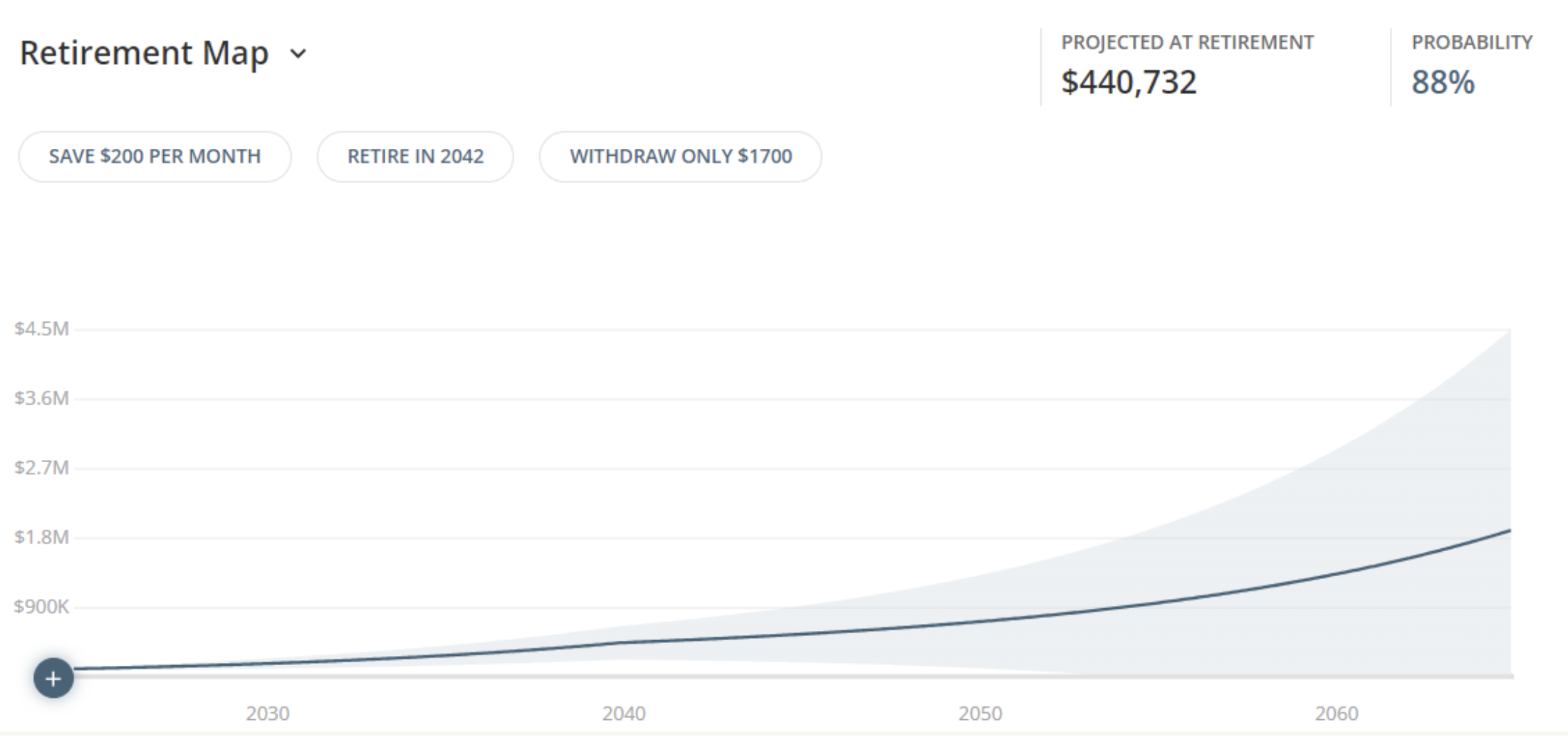
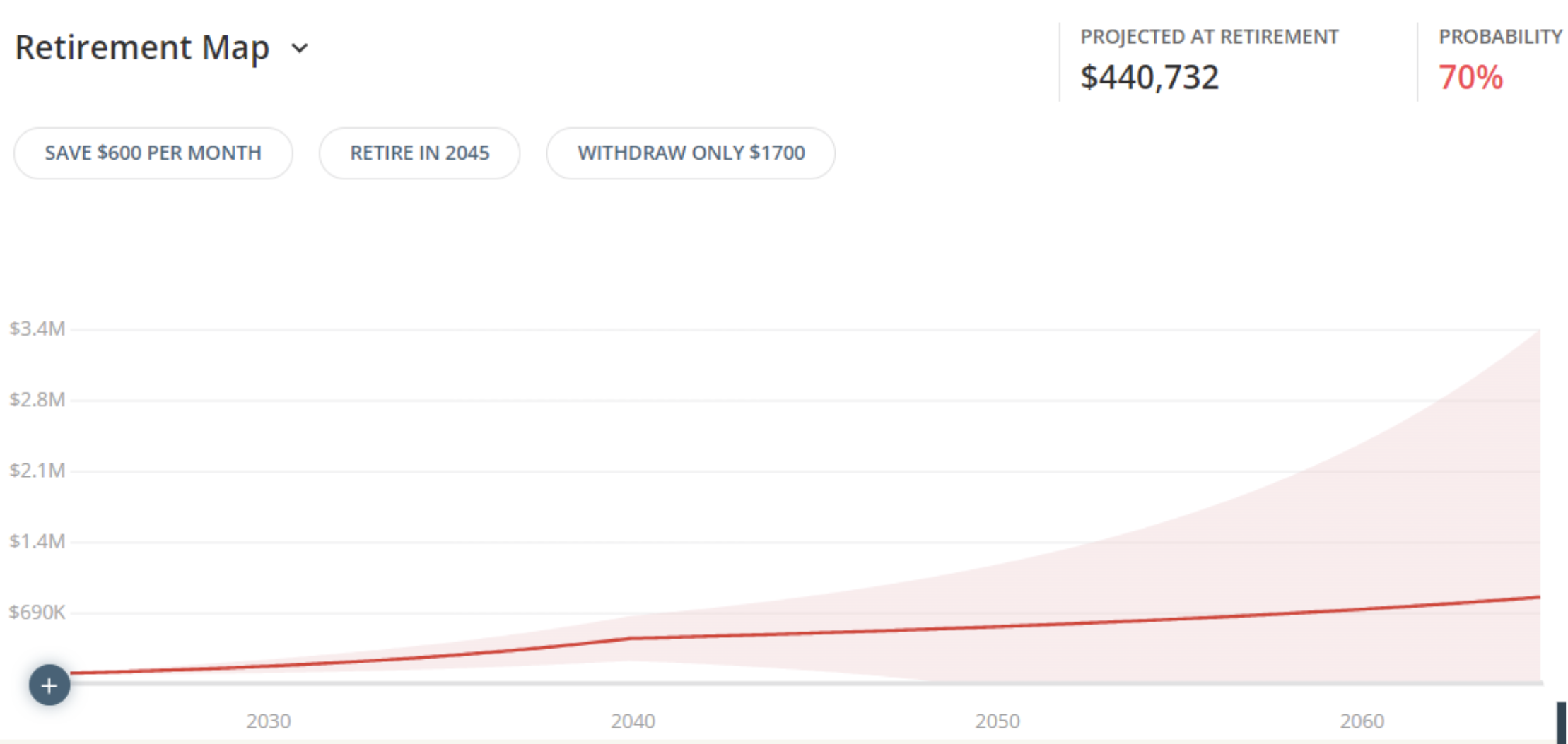
This update will not negatively affect the likelihood of success or the appearance of visual graphics. Figure 1 below is the current graphic for real returns and Figure 2 is the new nominal graphic.  (Note:  Figure 2 adjusts the withdrawal timing and the future value.) Dollar values will be larger to reflect inflation, and income needs will be adjusted to grow with inflation over time. Investment returns will no longer be adjusted for inflation, and withdrawal amounts will represent future values. For instance, if retirement is set for 2040 with a $5,000 monthly withdrawal, the first withdrawal will be $5,000. 

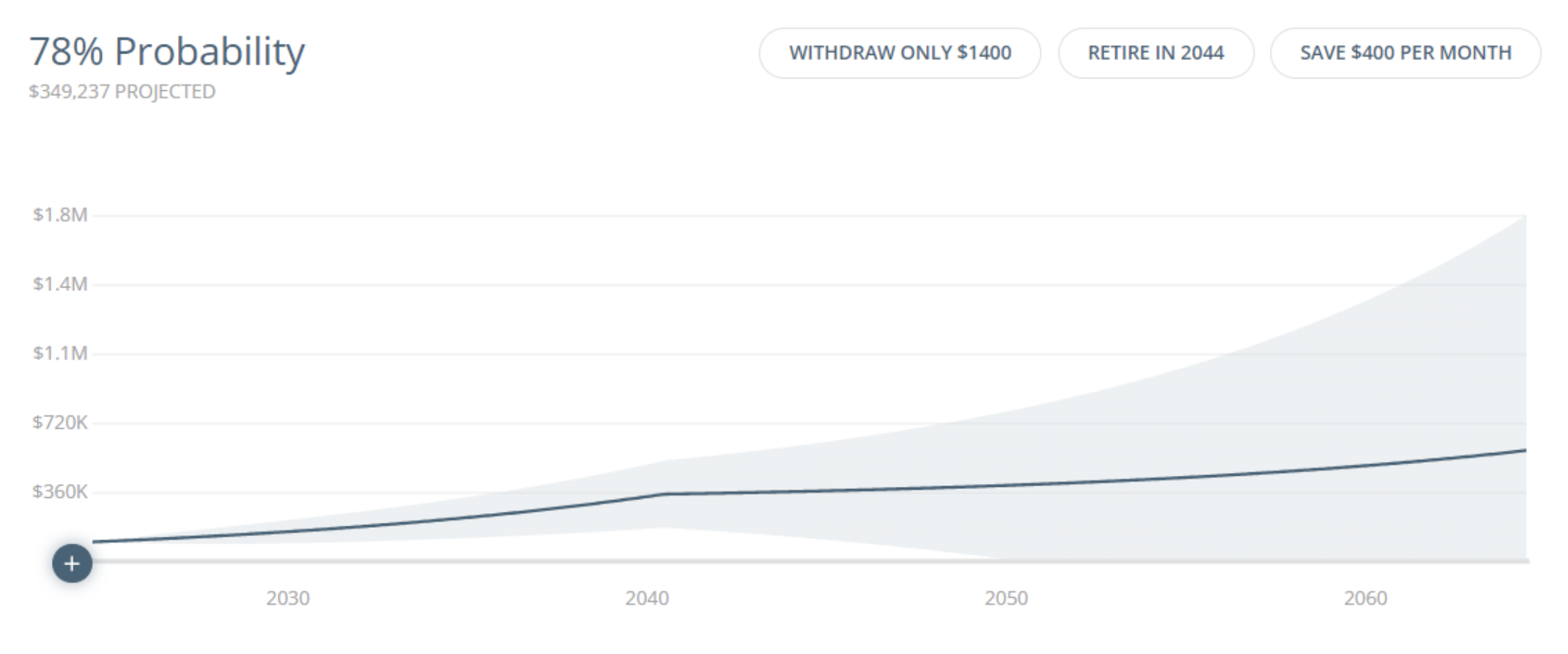
Additionally, the assumed retirement start month will be set to January of the selected retirement year, and life expectancy will be assumed to end in December of the final forecasted year. These changes effectively extend the retirement period by one year. As a result, this adjustment may impact the likelihood of success and forecasted retirement and estate values, see Figure 4.  Users can shift their selected retirement year forward by one year to maintain the same retirement duration and similar probability as demonstrated in Figure 2.  Figure 3 represents the new assumptions without any adjustments to retirement timing or withdrawal amounts.  

Figure 1: Current Retirement Maps Graphic

Figure 1 Assumptions:

  • Starting Investment Amount: $100,000
  • Retirement Year:  2040 – August
  • Retirement Monthly Withdrawal: $2,000
  • Inflation Rate: 2%
  • Portfolio Return: 10.06%
  • Life Expectancy: 2064-August

Figure 2: New Nominal Retirement Maps Graphic

Figure 2 Assumptions:

  • Starting Investment Amount: $100,000
  • Retirement Year: 2041 – January
  • Adjusted Retirement Monthly Withdrawal: $2,714
  • Inflation Rate: 2%
  • Portfolio Return: 10.06%
  • Life Expectancy: 2064-August

Figure 3: New Nominal Retirement Maps Graphic with New Timing Assumptions w/o Withdrawal Adjustment

Figure 3 Assumptions:

  • Starting Investment Amount: $100,000
  • Retirement Year: 2040 – January
  • Retirement Monthly Withdrawal: $2,000
  • Inflation Rate: 2%
  • Portfolio Return: 10.06%
  • Life Expectancy: 2064-December

Figure 4: New Nominal Retirement Maps Graphic with New Timing Assumptions with Withdrawal Adjustment

Figure 4 Assumptions:

  • Starting Investment Amount: $100,000
  • Retirement Year: 2040 – January
  • Retirement Monthly Withdrawal: $2,714
  • Inflation Rate: 2%
  • Portfolio Return: 10.06%
  • Life Expectancy: 2064-December

Disclaimer: Results may vary from the above examples based on individual circumstances, market conditions, and other factors. Users are encouraged to review their retirement plans to ensure that the strategies remain aligned with stated goals.

How do I know if these changes have taken place in my account?

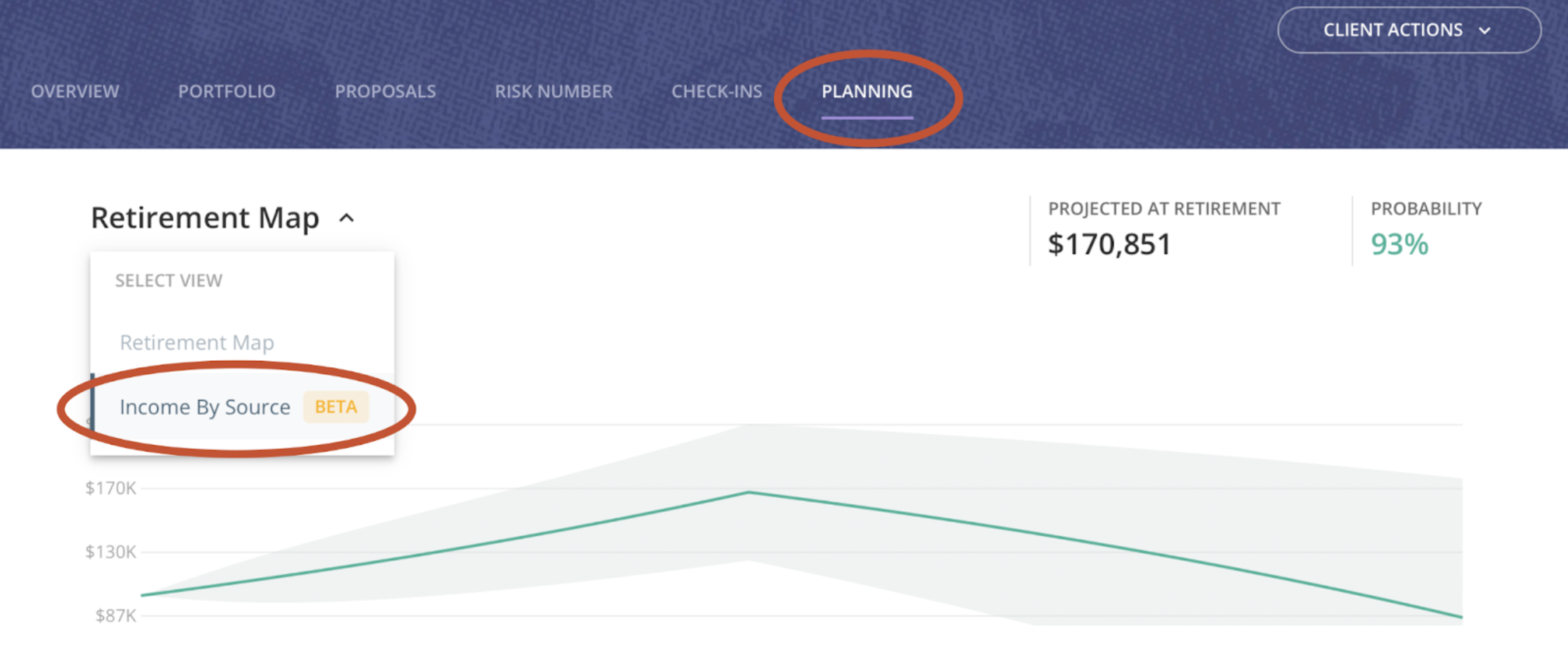
These changes to Retirement Maps accompany the rollout of other features in Income Center. If you have access to “Income by Source” under a tab that has been relabeled “Planning,” these changes are active in your account.

Have any questions? The industry’s leading support team is here to help—just reach out to us at support@nitrogenwealth.com.

Lead Generation for Advisors: How to Optimize Your Website and Social Media

How Can Advisors Generate Leads Through Their Website and Social Media Platforms?

From designing effective CTAs to boosting your social media engagement, there are several ways you can increase your lead generation online. Read on for simple steps you can take today to generate leads through your social media platforms, optimize your website, and potentially grow your AUM. 

How Can Financial Advisors Optimize Their Website for Lead Generation?

  1. Get in Your Prospects’ Heads 

    Think of your website from a user experience (UX) perspective. Your website should be easy to navigate and mobile-responsive, with fast loading times. Hubspot reports that “a B2B site that loads in one second has a conversion rate three times higher than a site that loads in five seconds.” 

    Related: The Top Advisor Websites of 2024At any location on your website, your prospect should have a clear, value-driven prompt of where to go next, which leads us to our next point: CTAs.

  1. Revamp Your CTAs 

    Calls-to-action (CTAs) are crucial for converting website visitors into leads. You’ll often find them along the top menu bar (“Get in Touch!”) or at the end of a blog (“Click here to learn more!”). The key to creating CTAs that convert is in strategically placing them without being overwhelming – nobody likes an endless stream of pop-ups they have to click out of.We also encourage you to consider what language best resonates with your target audience. A short and snappy CTA that speaks to their pain points, is interactive, or offers something of value, such as “Claim Your Free Tax Planning Guide,” is likely to win over the more generic “Learn More.”

  1. Invest in Lead Magnets 

    Lead magnets, such as eBooks, white papers, newsletters, and webinars, are valuable tools for attracting prospects and establishing yourself as a trustworthy source of information.If you’re unsure where to start, consider what questions you hear most often from your current client base. Perhaps your retirees are interested in how to best leave their assets to children and would find an estate planning checklist helpful. Or, if your young professionals need help choosing life insurance, you could host a quick introductory webinar.

How Can Financial Advisors Optimize Their Social Media for Lead Generation?

  1. Create a Realistic Posting Cadence 

    Consistency is key when it comes to social media – but it can also be incredibly time-consuming to create posts for each platform every week. Often, advisors will focus on creating and scheduling content rather than engaging with their audiences online, which can be counterproductive to generating quality leads. 

    We recommend that you focus on consistently posting on the platforms where your audience is most active rather than trying to be present on all platforms. Creating a regular posting schedule can help you plan and stay on track, even when your firm gets busy.Then, use your additional time to fuel meaningful conversations with your prospects by interacting with them online – the social media algorithms may even reward you for employing an engagement-focused strategy!

  1. Recycle Your Content 

    Another efficiency-friendly way to engage leads is to practice repurposing your content.Essentially, this means you take a piece of content (like a blog, video, webinar, email, etc.), and break it down into smaller pieces you can share across your social media.

    For instance, a blog post can be turned into a series of tweets, LinkedIn updates, or Instagram stories. This approach saves time and ensures you maintain a steady stream of content for your prospects without having to create everything from scratch.

  1. Dig into the Data 

    Analyzing social media data can provide insights into what’s working and where improvements are needed.Use analytics tools – which are typically built into whatever platforms you’re using – to track engagement, reach, and conversions. If a certain type of content or topic is garnering more attention than others, that could help you learn and refine what messages are driving lead generation.

    Related: How Financial Advisors Can Use Social Media to Drive Firm Growth

Boost Your Lead Gen with Nitrogen

Did you know that Nitrogen customers who use our proprietary Lead Generation Questionnaire have 2.4 times more prospects on average than those who don’t? 

Related: How Nitrogen’s Lead Gen Tools Save Time, Build Connections, and Fuel Growth

Optimizing your website and social media platforms for lead generation can have a significant impact on your firm’s growth. By focusing on user experience, refining your CTAs, investing in lead magnets, maintaining a consistent posting cadence, recycling content, and analyzing data, you can enhance your online presence and attract more prospects.

Book Your Free Demo 

Ready to boost your lead generation efforts? Schedule your free demo and discover how Nitrogen can help you achieve your goals.

12 Productivity Hacks for Advisors Facing the Summer Slump

The summer months are often slow for financial advisors – tax season has past, clients are busy enjoying their vacations, and suddenly, you’re left with extra time to tackle all the to-dos that have been pushed to the side throughout the year. But where do you begin?

To help you make the most of your newfound time, we’ve put together a quick guide to staying productive and growth-focused during the summertime. Read on to explore our top tips for productivity, marketing, client relationship, and more.

How Can Financial Advisors Stay Productive During the Slow Summer Months?

Staying productive during the slower summer months ensures that you maintain momentum and continue to provide value to your clients. While it may be tempting to cut the office hours short, this period can be used to improve your practice, develop new skills, and set the stage for a successful end-of-year push.

3 Summer Productivity Tips for Advisors

  • Stick to a schedule. Give some structure to your more open days by setting aside times for specific areas of focus. You might set schedule time to work on marketing on Tuesday afternoons, or block off Friday mornings for catching up on emails.
  • Set a few short-term goals. For example, you could dedicate the month of August to reviewing and updating client profiles in your CRM. 
  • Consider growing your skillset. Professional development for financial advisors never ends – and there’s always a new skill you can learn. Consider whether now would be a good time to start working toward that extra designation or earning a new certificate

Related: 3 Ways Financial Advisors Can Maintain Work-Life Balance

What are Effective Marketing Strategies for Financial Advisors in the Summer?

Effective marketing strategies can help maintain visibility and engagement with your clients and prospects. By leveraging these slower months to refine and execute your marketing campaigns, you can set yourself up for successful client acquisition and retention in the last half of the year.

Click here to explore Nitrogen’s Marketing Center Solutions

3 Marketing Strategies for Financial Advisors in the Summer

  • Leverage your social media. Forbes reports that 79% of younger Americans are getting financial advice from social media. If you’ve fallen behind on posting and engaging online, now is a great time to pick it back up. 
  • Develop summer-specific marketing content. Think through what financial obstacles your prospects might be facing during this time of year, and how you can provide value to help them solve those challenges. For example, a guide to cutting costs during family vacation, or a checklist for making your home more energy efficient might be especially useful in the summer months.
  • Consider launching a referral program. Use your extra time to create an email campaign encouraging clients to refer their friends and family members in need of financial planning advice.

Related: Boost Your Advisory Marketing with Wealth Management Webinars

How Can Advisors Use the Summer to Strengthen Client Relationships?

It’s no secret that clients want more communication from their advisors. Furthermore, ??regular and personalized interactions can lead to better client satisfaction and loyalty. From in-person interactions to digital communications, the summertime offers ample opportunities to build those connections. 

Related: Improve Your Client Experience With These Thoughtful Engagement Strategies

3 Tips for Strengthening Client Relationships During the Summer

  • Host summer events, workshops, or webinars. You can organize social events, financial planning workshops, or virtual webinars on relevant financial topics to educate and engage clients.
  • Send timely and personalized messages to their inboxes. With client engagement tools like Nitrogen, you can automatically wish your clients a happy birthday, check in on how they’re feeling about their progress, and more. 
  • Offer a mid-year check-in meeting. Consider asking clients if they’d like to schedule a mid-year check-in meeting to discuss their financial goals and any changes in their circumstances. This proactive approach can address concerns early and let them know you’re here if they need you.

How Can Financial Advisors Improve Their Online Presence During the Summer?

A strong online presence is essential for staying competitive in today’s digital world. By boosting your visibility online, you can reach more prospects, establish your firm as an authority in the financial space, and grow your network.

3 Strategies for Boosting Online Presence in the Summer

  • Conduct a content audit. With a content audit, you can take stock of all the content you’ve already published, and update older assets to improve SEO rankings and relevance. 
  • Dive into marketing analytics. The general rule of thumb is that goals should be both specific and measurable – if you haven’t already, now’s a great time to set up your Google Analytics account and start tracking your progress. 
  • Embrace client testimonials and case studies. It’s time to finally get comfortable with the recent marketing rule updates. Consider requesting feedback or testimonials from clients, or even developing case studies you can use to add social proof to your website. 

Related: How Your RIA can Embrace the New SEC Marketing Rule

Summertime might be slow, but it doesn’t have to be unproductive. By focusing on productivity, marketing, client relationships, and online presence, you can turn the summer months into a period of growth for your book of business.

Keep Your Goals on Track with Nitrogen

Want to learn more about how Nitrogen’s tools can enhance your productivity and client engagement? Click here to schedule your free demo today.

Industry News: July 2024

From new tokenization projects to potentially high-profile acquisitions and even hefty FINRA fines, our July 2024 fintech news roundup explores top stories financial advisors need to know to stay ahead of the curve.

Goldman Sachs Takes On Tokenization Projects 

What happened: Mathew McDermott, the Global Head of Digital Assets at Goldman Sachs, announced that the company will roll out three new tokenization projects in 2024 via private blockchains. 

Why it matters: As Goldman Sachs, Blackrock, and Franklin Templeton dive deeper into the world of digital assets, spot Bitcoin ETFs find their place in U.S. markets, and investor interest in crypto continues to grow, it remains to be seen how these companies will set themselves apart from the pack. For Goldman Sachs, a focus on private blockchains (versus its competitors’ use of public blockchains) is the first step in the differentiator direction. 


Apple Reverses “Buy Now, Pay Later” Feature

What happened: Just months after rolling out Apple Pay Later in the US, the tech company has announced a switch to third-party-fueled loan services in its stead. 

Why it matters: Apple has decided to discontinue its Apple Pay Later service, a “buy now, pay later” (BNPL) offering introduced last year and rolled out to US users in early 2024. Instead, they’ll offer a new installment loan service through partnerships with third-party credit and debit cards. The backtrack reflects a broader period of change in the financial services landscape as interest rates rise, markets shift, and consumer options evolve.


The Crypto Crackdown Continues

What happened: The SEC is suing blockchain tech company Consensys for offering and selling securities as an unregistered broker. 

Why it matters: The SEC’s actions against Consensys are part of the regulator’s ongoing focus on decentralized currency, which is still a relatively new scene for advisors and investors alike. While crypto compliance finds its footing, it’s crucial that advisors help their clients to understand the evolving regulatory landscape impacting the crypto industry, so they can make informed decisions. 


Vanguard Group Names Salim Ramji as New CEO

What happened: Vanguard’s previous CEO, Tim Buckley, passes the hat to industry veteran Salim Ramji.

Why it matters: Vanguard is one of the largest asset management firms globally, and the leadership change could mean a new vision and direction for the investment management company. Advisors will likely be in the lookout for any shifts in investment strategies, product offerings, and overall market dynamics throughout the transition. 


FINRA Fines UBS for Less-than-Stellar Supervision

What happened: A FINRA investigation reveals a registered representative sold unapproved securities to UBS clients for over a decade without raising alarms – resulting in a hefty fine.

Why it matters: UBS’s $850,000 fine underscores the importance of robust supervisory systems to avoid costly penalties and maintain client trust. Advisors should use this as a reminder to regularly review their own compliance procedures and ensure they are meeting regulatory standards to protect client assets. It also offers a solid example of why a keen eye on firm-wide compliance is so critical, even if certain things have passed through previous internal regulatory checks.


That’s a Lotta Yotta Gone Missing

What happened: Following the collapse of fintech company Synapse, roughly $109 million in Yotta customer’s funds have disappeared

Why it matters: The collapse of Synapse serves as a cautionary tale for the entire financial industry, emphasizing the need for stringent oversight and risk management practices. As regulators, banks, and victims sort through the aftermath of Synapse’s bankruptcy, advisors would do well to carefully evaluate the stability and regulatory compliance of any fintech partners they may choose to work with. 


Tesla Loses Their Majority Market Share in the US

What happened: Tesla’s electric vehicle (EV) sales are in a decline, putting their US market share under 50% for the first time ever

Why it matters: As other automakers like Ford and Kia find more sales success, Tesla’s long-held majority market share slipped to 47.9% – indicating a diversifying market landscape. Understanding these shifts can help both advisors and their clients in making informed investment decisions, identifying emerging opportunities in the EV sector, and adjusting portfolios to potentially capitalize on the growing competition.

A New Era of Nitrogen: Products, Pricing, and More

Nitrogen is committed to providing purpose-built wealth management technology and equipping financial advisors across the country with the latest innovations and resources to serve their clients and grow their firm. 

That’s why we’re thrilled to share a significant transformation in how we deliver our services to you. Whether you’re a solo practitioner or part of a growing RIA, our platform offers flexible options to suit your needs.

Introducing Plans for Advisors and Solutions for Teams

Nitrogen’s expanded client engagement platform can be assessed in one of two ways: by individual advisors purchasing a Plan for Advisors or by home offices and enterprise who choose a Team Solution:  

  • Plans for Advisors: Individual advisors can access our products à la carte with annual subscription plans. The Riskalyze plan, the industry-standard risk tolerance and proposal generation tool, is now available for just $99/month.
  • Solutions for Team: For growing RIAs, we offer accounts-based pricing with unlimited users, powered by our Command Center for firmwide data management and oversight, and our Risk Center for risk tolerance proposal generation and client engagement tools. Solutions for Teams have the option to add on addition Team Centers. 

Powerful Centers with Tools to Transform Your Practice

Let’s dive into how each of our new products can elevate your advisory services:

    • Risk Center: Leverage the #1 risk tolerance, proposal generation, and client engagement solution in the industry. Use our proprietary Risk Number® to attract, win, and retain clients as fearless investors.
    • Research Center: Upgrade your investment analysis capabilities with advanced fund screening, model management, and detailed portfolio and security statistics. Impress even your most sophisticated clients with rich, data-driven reports
    • Income Center: Create client-facing plans with unprecedented speed. From goals-based accumulation projections to retirement income modeling, help your clients visualize and understand the long-term value of your advice.
    • Command Center: For RIAs and enterprises choosing our Team Solutions, Command Center puts you in control of your technology. Monitor AUM growth, manage risk parameters and brand application, and create custom strategies for deployment across your advisor team
    • Marketing Center: Available for solo advisors, Marketing Center provides advisors with a database of high-quality, customizable marketing materials. Upload your firm’s branding and disclaimers and watch your firm’s unique branding seamlessly integrate across dozens of assets, with no need for specialized graphic design or copywriting skills. 

With these five centers, your firm can deliver more personalized advice to your clients and address some of the most pressing questions in wealth management today:

  • How can financial advisors effectively attract and win new clients?
  • What are the best practices for documenting fiduciary care to ensure compliance and build trust with clients?
  • In what ways can advisors leverage investor psychology to improve client relationships and investment outcomes?
  • What strategies can firms employ to consistently and efficiently distribute their investment strategies and models across their advisor teams? 

Join the Fearless Investing Movement

At Nitrogen, we’re committed to empowering advisors like you to deliver exceptional value to your clients. Our platform is designed to create a common language between advisors and clients, allowing you to focus on building your business rather than getting bogged down in management tasks.

Are you ready to join the tens of thousands of advisors and revolutionize your practice?

Schedule a Demo

How Nitrogen Streamlines Your Financial Planning Process in 4 Simple Steps

Your financial planning process is the very core of what you do, as it serves as the foundation of your advisor-client relationship. While every advisor has their own process, when was the last time you took a step back and reviewed it with a fine-toothed comb? Ask yourself: Am I operating as efficiently as possible? What am I doing to consistently deliver exceptional value to my clients?

Whether you’re serving a few clients or several hundred, identifying opportunities to streamline is never a bad idea – especially if it means more time back in your day. Here are four steps you can take to ensure your planning process supports your growth goals and client concerns. 

How to Streamline Financial Planning Process in 4 Simple Steps

Step #1: Build a Consistent Client Experience

One of the most critical components of scaling your firm effectively is to deliver a consistent client experience across the lifecycle of the advisor-client relationship. Better yet, you need to be able to repeat that consistent client experience with every single client (no matter how large your book of business becomes). 

Being consistent is so important because it helps build trust with your clients, which also creates long-lasting loyalty. Additionally, consistency can help solidify your reputation and improve your brand recognition.

Every Second Counts

While we say “client experience,” the reality is that investors won’t wait until they become clients to start forming an opinion. In fact, Forbes reports that you have just seven seconds before your prospect starts forming an opinion about you and your business!

Prospects begin making up their minds about you from the very first interaction – a post on LinkedIn, an email newsletter, your website, a handshake at a networking event, etc. In a sense, the planning process really starts from the moment you introduce yourself to when you meet with a prospect for the first time, and it continues all the way until the relationship has concluded. 

Step #2: Drive Up Conversion Rates with Personalized Proposals

The long-term success of your client relationship stems from your ability to “wow” prospects. Offering personalized proposals, for example, demonstrates your value and showcases your attention to detail. When you leverage a tech tool like Nitrogen’s proposal solution to do the heavy lifting, it gets even easier to drive growth without taking time away from current client tasks.

Nitrogen’s proposal solution replaces the old-school 40-page report (that few people will ever read) with an intuitive, tailored presentation that pinpoints the most pertinent information to each prospect.

Related: Click here to read the case study, “Equity Concepts has a 90% Close Rate Using Nitrogen”

Step #3: Make Retirement Planning Simple and Effective

In order to maintain a consistent client experience, you’ll want to find opportunities to connect the work you did during the proposal process with your ongoing engagement. 

Nitrogen’s Retirement Maps, for example, pulls critical data points from the client profile already created during the prospecting process to instantly show their probability of success, time horizon, and risk capacity in retirement. The best part? The Maps act as a living document – growing and changing alongside your clients’ journeys. 

Leveraging information like a client’s monthly savings, investment amount, retirement year, monthly withdrawal rate, and more can ensure the retirement planning process is both personalized and scalable, all while presenting clients with the most important information in an easy-to-understand format.

Related: How To Use Analytics to Win Clients

Step #4: Illustrate Success Quickly and Retain Clients

Retirement Maps offers impactful, real-time illustrations of retirement scenarios, which can help you and your clients stress test different decisions and their potential outcomes.

Having the ability to make decisions proactively and understand what’s coming down the line is a huge value add for those in or near retirement – as no one wants to feel unsure about their ability to live comfortably and enjoy financial independence to the fullest. That concern is relevant to many Americans, however. An AARP study found that the majority of individuals over the age of 50 worry they’ll outlive their retirement savings. 

As an advisor, empowering your clients to feel confident and excited about retirement is key to long-term satisfaction, retention, and growth. Keeping your clients informed and confident about their financial plan is especially important during periods of market volatility which, when unaccounted for, have the potential to diminish a portfolio’s long-term potential. 

With a tailored, proactive retirement plan in place, your clients can feel comfortable knowing they’re prepared to weather any storm. 

Related: 6 Ways Financial Advisors Can Calm Clients During Market Volatility

Throughout the entire lifecycle of your advisor-client relationship, you’ll have opportunities to add value, bolster client confidence, and establish a strong foundation of trust. In doing so, you can more effectively secure long-lasting relationships, increase referrals, and ultimately leverage your brand and reputation to grow your firm. 

However, the key to a truly streamlined planning process is to deliver a consistent client experience that makes every client feel seen and well cared for.

Simplify Your Financial Planning Process

Nitrogen’s planning tools can be used to help you deliver valuable, tailored information to clients and prospects in a visually appealing and impactful way. To learn more about how Nitrogen was built to streamline your financial planning process, book a demo today.

Using Reports to Grow Your Firm and Exceed Client Satisfaction

Written by Shari Hensrud, VP Risk & Analytics at Nitrogen

One of the key components to growing your firm and maintaining client satisfaction is being able to build lasting trust and communicating with your clients in a way they understand. But how do you do this when financial conversations can quickly become complex? The key is building reports that are easy to deliver, easy to explain, and easy to understand. Delivering thoughtful, compelling reports helps demonstrate your value to your clients and helps enhance decision-making.

Here are some key elements to think about when you’re building out your reports:

Make It Client-Focused

Tailor reports to align with each client’s specific goals, risk tolerance, and investment timelines.  Personalized reports demonstrate your commitment to addressing individual needs, reinforcing your services’ value. Use reports to track progress towards goals and provide regular updates on goal achievement. These components build confidence and trust, demonstrating your commitment to your clients’ long-term success.

Include Portfolio and Market Insights

Insights identify strengths, reveal weaknesses, and spotlight opportunities. The right combination of portfolio analytics presented in easy-to-understand charts or graphs will result in satisfied clients.  

It is common practice to glean insights from historical performance. Including performance reports is not for every client and can be a distraction from the more important focus of goals.  Conversations around performance are often the most complex and can require a lot of education and explanation. If you find yourself looking at the analytics and starting to craft an explanation in your head, add the analytics necessary to fill in the gaps. Incorporate the necessary analytics to support the reasons for the performance. For example, consider an example where 70% of the portfolio is well-diversified, but the remaining 30% is a concentrated position. Place the concentrated position on a separate line when quoting performance or add it as an additional benchmark. Be thoughtful when selecting benchmarks to ensure accurate representation. By including the correct elements, it reassures clients about the stability and safety of their investments and the quality of your investment strategy. 

Risk management analytics demonstrate the strength of the portfolio and how well it is positioned for goal success. Risk management analytics such as stress tests or scenario analysis help keep the focus on the client goals.

Have Educational Content Throughout Your Report

Include educational content within your reports to explain key concepts and metrics. Be sure to tailor the content to the interests of your target audience.  Educational content is best understood through short concise statements, supported by easy-to-follow analytics, charts, and graphs.  Adding educational content empowers clients to make informed decisions and fosters a deeper understanding of their investments. Educated clients are more likely to appreciate and trust your expertise.

Offer detailed and transparent reports on a regular basis. Consistent communication builds trust and keeps clients informed, which leads to client engagement and satisfaction.

By leveraging solution-focused portfolio analytics in your reporting, you can demonstrate your expertise, build client trust, and highlight the value of your services. Customized, transparent reports that emphasize performance, manage risk, and track goals can significantly enhance client satisfaction and drive firm growth. Embrace advanced technology and continuous education to stay ahead in the competitive landscape and consistently exceed client expectations.

Industry News: June 2024

The June 2024 Fintech News roundup features a recent FDIC warning, AI advancements, new fintech collaborations, and more – giving you a quick overview of what’s shaking the financial services industry and why it matters to you and your clients.


BlackRock and Citadel Securities Announce the Texas Stock Exchange

What happened: BlackRock and Citadel Securities are spearheading the launch of the Texas Stock Exchange (TXSE) in Dallas, securing around $120 million in funding to compete with the NYSE and Nasdaq.

Why it matters: Set to begin operations as early as 2026, TXSE aims to offer more cost-effective and business-friendly listing and trading options, providing a viable alternative to the stringent compliance regulations of established exchanges. This new player could attract companies and innovators seeking reduced compliance burdens and pave the way for significant industry advancements, undoubtedly shaking up the investment landscape.


Consumers are Warned to Take Caution with Neobanks and Fintech Providers Lacking FDIC Insurance

What happened: In early June 2024, the FDIC issued a new warning for consumers: Be wary of banking with neobanks and fintech companies that fall outside FDIC protections when selecting your bank, especially in light of Synapse Financial Technologies’ bankruptcy.

Why it matters: It’s estimated that over one million Americans were left unable to access their funds after Synapse shuttered its doors. Many of those individuals may not have even been fully aware that their “banks” were actually third-party apps that simply connected banking institutions for consumers. The warning underscores a need for more transparency between fintech companies, banks, and the people they serve, and likely signals increased regulatory focus heading to that section of the financial services industry.


JP Morgan Jumps Aboard the AI Train with IndexGPT

What happened: JPMorgan Chase has launched IndexGPT, an AI tool that uses OpenAI’s GPT-4 model to create thematic investment baskets.

Why it matters: By automating the creation of thematic indexes through keyword association, IndexGPT will facilitate a more efficient approach to identifying and investing in trends like cloud computing or cybersecurity, potentially enhancing portfolio performance and pushing for more innovation within the industry?. Some experts, however, say that only time will tell if IndexGPT has a long-term place among the lineup of AI-fueled systems currently flooding the finance sector. 

Related: What Software Will Financial Advisors Use in 2024?


Fiserv and Plaid Partner to Enhance Secure Data Sharing in Finance

What happened: Fiserv and Plaid announced a partnership in late 2023 aimed at improving the security and efficiency of data sharing for consumers through API connectivity.

Why it matters: Through this new collaboration, over 3,000 financial institutions hosted by Fiserv and 8,000 applications and services connected via Plaid can offer more robust and secure services to their clients who wish to share financial information with third parties. The sheer scale of the partnership highlights just how crucial API-driven connectivity is in the modern financial services world – opening the door for faster, more reliable, and more secure data sharing. 


The SEC Charges Broker-Dealers and Investment Advisors Over Recordkeeping Failures (Again)

What happened: In February 2024, the SEC brought over $81 million in new charges against broker-dealers and investment advisors for failing to properly maintain records of off-channel communications, such as those conducted via WhatsApp and other text messaging platforms.

Why it matters: This crackdown is another in a string of charges against off-channel communications betweens advisors and their clients in recent years. As technology evolves and new communication methods become available, it’s critical that your firm practices due diligence and devotes the resources necessary to comply with recordkeeping rules. If not, the message from the SEC is clear: Regulators are keeping their focus on off-channel comms, and those that flout the rules will continue to incur penalties.

Related: Nitrogen Helps Independent RIA & Broker-Dealer with $3B+ AUM Set the Bar for Fiduciary Care


CFP Board Reaches Milestone with Over 100,000 Certified Members

What happened: The Certified Financial Planner (CFP) Board has announced that it now has over 100,000 certified members, marking a significant milestone in its mission to promote high standards of professional conduct in financial planning.

Why it matters: No matter what new threat seems to emerge to challenge advisors — from robo-advice to AI — the industry continues to make gains. In fact, the Bureau of Labor Statistics still predicts faster-than-average growth for financial advisory employment – and this milestone reflects that growth. It also underscores the recognition and importance of the CFP certification, which enhances credibility, ensures adherence to rigorous ethical and professional standards, and gives professionals access to a large network of other certified planners for peer learning. 


TradeZero Fined $250K for “Finfluencer” Activities

What happened: Brooklyn-based brokerage firm TradeZero has been fined $250,000 by regulatory authorities for compliance failures related to its promotion of financial products through social media influencers, commonly known as “finfluencers.”

Why it matters: The TradeZero fine serves as an important reminder: Influencers and other forms of social media outreach can be an effective way to reach your target audiences – but those partnerships can also put your firm at regulatory risk. Before hiring a “finfluencer” to promote your next campaign, it’s critical that you set clear expectations and guidelines, while also monitoring all content in regards to compliance (paying particular attention to any necessary disclosures and keeping language fair and balanced). 

Related: Click here to watch the on-demand webinar, “How Financial Advisors Can Use Social Media to Drive Firm Growth”