Unlocking Success: A Wealth Management Firm’s Guide to Effective Software Onboarding

There are more types of software for investment advisors than ever before. From financial planning to marketing tools and billing automation, advisory firms require a complete tech stack to be fully competitive. We know a solid tech stack matters because we asked hypergrowth firms about their technology in our 2023 Firm Growth Survey, but one quick look at Kitces’ Advisor Tech Map can quickly scare the tech-saviest among us.

Hypergrowth firms reported using technology more than slower growth firms, often using their software daily and prioritizing their tech investments. While it’s clear that technology is vital to growth, implementing a tech stack can be a complex process. According to a report from BCG, a global business consulting group, only 30% of digital transformation projects succeed. The other 70% fail due to a myriad of reasons, including internal organizational changes, lack of long-term adoption, or even an initial failure to launch.

How can your advisory firm join that 30% who win with technology?

Free Download: Your Guide to Building a Technology Stack

In this article, we’ll cover key actions to set up your software correctly, no matter your solution. The following best practices can be used for every vendor you come across in wealth management technology. 

Map out your processes

Related: What Makes a Great Tech Stack?

Just as you need client account information to begin planning their retirement proposal, it’s important to write out your current workload and tech stack. It can be tempting to skip this step, especially if you are a solo advisor. However, fully mapping your process in real-time makes it easier to spot discrepancies, unnecessary redundancies, and inefficiencies. 

Generally, you’re going to want to write out multiple aspects of your firm, including:

  • Client onboarding
  • Marketing and advertising
  • Advisory services
  • Billing and taxes
  • Scheduling
  • Client follow-ups and communication
  • Continuing education
  • Compliance and other regulatory requirements
  • Partnerships with CIOs like local tax experts, lawyers, and other professionals

Consider each process’s first point and follow it through to the end. Some items, such as client follow-ups, may have multiple paths. For example, you will likely have different emails for following up with a client post-meeting than after resolving a client problem. You may also have different email automation for client satisfaction surveys, portfolio updates, and firm news.

Mapping your workload enables you to better determine what software solutions you need and will help you evaluate your choices. 

Assign roles

For firms with multiple advisors, delegating responsibilities from the beginning is essential. Assigning roles standardizes processes, helps you determine whether to hire another professional in billing or marketing, and clarifies security for your tech stack.

The security aspect is often overlooked. For instance, your client relationship management (CRM) software may offer different levels of roles, each with its own level of permissions. The Administrator role allows a user to view and edit everything, and so this should be limited to key stakeholders or the firm’s founder. You may want to assign junior advisors to a lower-level member that lets them only view and edit specific client data or the data they input. Your marketing consultant may have access to the internal portion of the CRM that contains advisor contact information but not the client data.

Evaluate software in terms of customizations and connections

As you browse software solutions for marketing, billing, research, financial planning, retirement planning, or another function, you’ll want to use your process map and consider the full picture. Integrations make it possible to reduce or completely eliminate redundant data entry, thus saving you time and decreasing errors. Customizations allow your firm to match software to your unique processes and create a branded experience. 

For example, using Nitrogen, you can integrate with every major wealth tech software. You will also want to review the level of customization for each software in your stack to ensure that your brand presentation will be consistent. 

Explore the software with test data

Mock data or a “sandbox” environment allows you to test software before you commit. This approach provides a chance to test the functionality, customization capabilities, and security of your new software without affecting real client data. 

Adding this step into your implementation process makes it easier to understand the software, see how it interacts with the rest of your tech stack, and train other advisors or staff members. 

Develop a training program

Related: The Top 5 Most Common Pitfalls when Onboarding New Tech

Selecting and implementing software in larger firms can be challenging due to the technology learning curve. Some advisors may quickly pick up on the new tool, while others struggle to remember basic steps. If you think you’re the only one facing this struggle, know you’re not alone. A recent study from LearningHub found that the top digital transformation challenge for half of business leaders is employee resistance. A training program can make this adjustment less stressful for everyone involved.

Often, your software will offer regular training sessions, free courses, or guides. You may also want to create an internal guide that takes your customizations, integrations, and user roles into account. It can also be helpful to provide employees with regular training sessions for the first few months of bringing on a new software tool. Advisors using Nitrogen have a suite of training options, including live chat, self-paced courses, events, articles, and more on nitrogenwealth.com/training. 

Once your team better understands the new software program, they are more likely to accept changes in the process and maybe even suggest new creative ways of using your tech tools. 

Get feedback

Feedback from your team is essential to success. Keeping a pulse on advisor feelings towards your tech stack will allow you better to adjust the process, customizations, and training program. You may also discover new ways to optimize your stack.

Inform client when relevant

Client-facing software is any program that the client interacts with. Invoices, scheduling tools, your website, and emails are all common examples. However, when adding or changing a new tool, there can be discrepancies. Clients may be confused when an invoice looks different than the one they received the month before or if they’ve had a website redesign.

There should never be a question that your tools represent your firm. Letting clients know ahead of time that you’ll be using new software can help mitigate confusion. And, in the long-term, this level of transparency improves client relationships. 

Create a successful tech stack

Related: Industry’s First “Build My Tech Stack” Tool

Successfully setting up software for investment advisors demands the same process as developing a client’s portfolio: Research, planning, customization, and communication. Those who spend time assuring their team and clients understand how the new software will affect the wealth management process will see better results in the long term.

That said, a sound tech stack begins by carefully reviewing each solution, from investment management to CRM software. Ideally, you’ll want to ensure your software integrates with current solutions to maximize efficiency and reduce the learning curve. 

You may be wondering what this could look like in practice. Check out our interactive tech stack builder to see how growth platforms like Nitrogen can centralize client data by working together with other financial planning software. 
Easy Ways to Analyze and Understand Financial Sentiment

What is financial sentiment analysis?

Understanding the undercurrents of a client’s sentiment can offer a decisive edge for wealth management firms. Financial Sentiment Analysis stands at the forefront of this endeavor, employing advanced data analytics and technology to decode the complex web of emotions and perspectives influencing market movements and asset valuations. This intricate process not only unveils the prevailing mood across markets—be it optimism, skepticism, or neutrality—but also empowers investors and financial strategists with the clarity needed to navigate investment decisions with confidence. At the heart of this innovation, Nitrogen’s ‘Check-ins’ feature is revolutionizing the way advisors harness sentiment analysis, automating the intricate task of capturing and interpreting financial sentiments to inform more nuanced, client-centric strategies.

Common methods for analyzing financial sentiment

There are various methods to analyze financial sentiment. Some common methods include sentiment analysis using natural language processing (NLP) techniques, analyzing financial news and social media, and monitoring stock market trends and patterns. NLP techniques can help identify positive or negative sentiments in financial texts, while analyzing financial news and social media can provide valuable insights into public perception and market sentiment. Monitoring stock market trends and patterns can also help gauge investor sentiment and market dynamics. These methods play a crucial role in understanding and forecasting financial sentiment.

Sentiment analysis tools and techniques

There are various sentiment analysis tools and techniques that can help in analyzing financial sentiment. These tools can range from simple keyword-based analysis to more advanced natural language processing algorithms. Some common sentiment analysis techniques include:

  1. Keyword-based analysis: This technique involves identifying and analyzing specific keywords or phrases that indicate a positive or negative sentiment towards financial entities or markets.
  2. Machine learning algorithms: These algorithms use historical data to train models to automatically detect and analyze sentiment in financial texts, such as news articles, social media posts, and financial reports.
  3. Natural language processing (NLP): NLP techniques can be used to process and analyze unstructured financial data, extracting sentiment and insights from textual information.

By using these tools and techniques, individuals and organizations can gain valuable insights into financial sentiment, which can help inform investment decisions and market strategies.

Key factors affecting financial sentiment

Factors such as economic indicators, market news, and social media sentiment can influence financial sentiment. Economic indicators include unemployment rates, consumer spending, and inflation, while market news can impact sentiment through events like mergers, acquisitions, and earnings reports. Social media sentiment refers to public opinions on platforms like Twitter and Facebook, which can sway investor sentiment. Understanding these factors can help in analyzing and interpreting financial sentiment effectively.

Impact of financial sentiment on markets and investments

Financial sentiment has a significant impact on the stock market and other investments. Positive sentiment tends to drive stock prices up, while negative sentiment can lead to market downturns. Investors often monitor sentiment indicators to gauge market trends and make informed decisions. Market sentiment can be influenced by various factors such as economic data, corporate earnings, geopolitical events, and investor behavior. Understanding the relationship between financial sentiment and market movements can help investors make more informed decisions and ultimately improve their investment outcomes.

Easy ways to interpret financial sentiment data

Financial sentiment data can be interpreted through various methods to understand market trends. One way is to analyze social media and news articles to gauge public opinion. Sentiment analysis tools can also be used to quantify the emotional tone of conversations. 

Nitrogen has built its Check-ins tool as an automated behavioral coaching tool that allows you, the advisor, to take the pulse of your clients on a regular basis. That way, you’re set to receive an early warning sign if a client’s psychology needs a little care.  

Now, you get data points on how your clients are feeling about the markets and their financial future, allowing you to take action at the first sign of trouble.

With two taps on their smartphone, clients see adaptive analytics that helps them understand what is “normal” for their portfolio, giving you an ally in the never-ending fight to keep client psychology positive.

We’ve engineered this to be simple with just two questions:

  • How are you feeling about the markets?
  • How are you feeling about your financial future?

Once they’ve responded, you can include a dynamic message to build a strong foundation between client reviews.

Case studies showcasing successful sentiment analysis

In the field of sentiment analysis, case studies play a crucial role in demonstrating the effectiveness of various analytical methods. These real-life examples provide concrete evidence of how sentiment analysis can be used to gain valuable insights into financial markets and customer behavior. By examining successful case studies, you can understand how sentiment analysis has been utilized to predict market movements, identify emerging trends, and make informed investment decisions. These examples offer practical demonstrations of the power and applicability of sentiment analysis in the financial domain.

Conclusion and actionable steps

Analyzing financial sentiment can provide valuable insights for making informed investment decisions. After evaluating the sentiment of financial data, it is essential to draw conclusions based on the findings and take actionable steps. Here are some straightforward ways to utilize financial sentiment analysis effectively:

  1. Identify Trends: Look for recurring patterns in the sentiment data to identify trends that could potentially impact the market.
  2. Adjust Investment Strategy: Use the sentiment analysis to adjust your investment strategy accordingly, whether it involves buying, selling, or holding on to assets.
  3. Monitor Changes: Continuously monitor the sentiment data to stay updated on any shifts in market sentiment and adjust your actions as needed.
  4. Incorporate Other Data: Combine sentiment analysis with other relevant financial data to gain a more comprehensive understanding of the market landscape.

By utilizing these steps, you can leverage financial sentiment analysis to make informed decisions and enhance your overall investment approach.

Understanding Lead Generation for Advisory Firms

Attend any conference, webinar, or training on growing a wealth management firm, and you will hear the same message again, and again, and again: mastering lead generation is not just beneficial; it’s essential for advisory firms aiming to scale their operations and enhance their market reach. The art of attracting and converting potential clients into long-term partners is at the heart of an advisory firm’s growth strategy, directly influencing both revenue and firm valuation.

Lead generation transcends basic marketing efforts, requiring a strategic approach to identify and engage potential clients who not only seek financial services but are precisely aligned with your firm’s specialty or target demographic. Achieving success in lead generation means expanding your firm’s opportunities to connect with qualified prospects—increasing what we might call your ‘at-bats’ or ‘success surface area.’ This not only elevates your chances of enhancing your client roster but fundamentally shifts the trajectory of your firm’s growth.

But how do you navigate the complexities of lead generation to truly harness its potential for your practice? This guide will unveil the strategies that can transform your approach, ensuring your efforts not only resonate with the right audience but convert them into the pillars of your firm’s success.

Defining strategic lead generation techniques

Strategic lead generation techniques are targeted methods to attract potential clients to your advisory firm. These techniques are designed to identify and engage with prospects who are more likely to be a fit for your business and convert into paying clients. By utilizing strategic lead generation techniques, you can focus your efforts on the gold standard in marketing and lead generation: having the right message at the right time to the right audience using the right channels. Here are a couple of real-world examples: 

Bad: A financial advisor decides to launch a direct mail campaign by purchasing a bulk mailing list for their town without segmenting the list based on income level, investment interests, or suitability for their wealth management services. The campaign promotes high-net-worth investment strategies, including estate planning and tax optimization.

Why It’s Bad:

  • Lack of Segmentation: The message reaches a broad audience, many of whom may not have the financial capacity or interest in high-net-worth investment services, leading to wasted resources.
  • Irrelevance: Recipients who are not in the target demographic may view the message as irrelevant, potentially damaging the firm’s reputation among potential future clients.
  • Inefficient Use of Channels: Direct mail can be effective for targeted messages but becomes inefficient when the targeting is broad and unsegmented.

Good: A wealth management firm uses digital marketing tools to identify and target individuals aged 40-55 who have shown interest in retirement planning, based on their online activity and subscription to financial planning newsletters. The firm then crafts a personalized email campaign offering a free webinar on “Maximizing Your Retirement Savings in Your 40s and 50s,” scheduled at a time when engagement rates are highest among the target demographic.

Why It’s Good:

  • Highly Segmented Audience: The campaign targets a specific demographic likely to be interested in the services offered, increasing the relevance and potential engagement.
  • Timely and Relevant Message: By focusing on retirement planning for individuals in their 40s and 50s, the message resonates with the audience’s current life stage and financial concerns.
  • Optimal Use of Channels: Utilizing digital marketing and email allows for personalized messaging and tracking of engagement metrics, ensuring the message is delivered through a channel with high engagement among the target audience.

Identifying Your Target Audience and Ideal Clients

As noted in the example above, to boost your advisory firm’s growth, it’s important to identify your target audience and ideal clients. This involves understanding the demographics, interests, and needs of the individuals or businesses you want to serve. By knowing your ideal clients, you can tailor your marketing efforts to effectively reach and resonate with them, ultimately leading to more conversions and business growth. Additionally, identifying your target audience helps you focus your resources on the most profitable market segments, maximizing your return on investment.

Crafting Engaging and Targeted Content for Lead Generation

Crafting engaging and targeted content for lead generation is crucial for growing your advisory firm. According to HubSpot, content marketing generates three times as many leads as traditional outbound marketing, and it costs 62% less. To create compelling content, ensure it addresses your target audience’s pain points, provides valuable insights, and resonates with their needs. Utilize a mix of blog posts, whitepapers, case studies, and videos to engage your audience. Tailor the content to align with your ideal client profile and leverage SEO best practices to improve its visibility. Engaging and targeted content will not only attract potential leads but also position your advisory firm as a trusted source of valuable information.

Leveraging Social Media for Lead Generation

Related: Six Social Media Musts for Financial Advisors

Social media platforms can be powerful tools for generating leads for your advisory firm. With platforms like Facebook, Twitter, LinkedIn, and Instagram, you can reach a broad audience and engage with potential clients. One thing to note is this isn’t following the example of bad lead generation noted above, as you’re still crafting a message that reflects your firm’s brand, and using social media requires much less in terms of resourcing. By creating compelling and relevant content that resonates with your target audience, you can consistently attract leads and nurture them through the sales funnel. Leveraging social media for lead generation involves:

  • Creating a strong online presence.
  • Engaging with followers.
  • Strategically promoting your services to drive traffic to your website

With the right approach, social media can be a key component of your firm’s lead generation strategy.

Exploring Email Marketing Strategies

Related: Why Digital Marketing is Something Every Advisor Needs: A Guide for Growing Firms

Email marketing is a powerful tool for reaching potential clients and nurturing existing ones. According to the Financial Post, email marketing has an average return on investment of $42 for every $1 spent. To make the most of email marketing, consider the following strategies:

  1. Personalization: Tailor your emails to individual recipients based on their interests and behaviors.
  2. Automation: Use email automation to send targeted messages at key points in a client’s journey.
  3. Content: Deliver valuable and relevant content to engage your audience and establish your expertise.
  4. Analytics: Measure the performance of your email campaigns and use the data to refine your strategies.

Harnessing the Power of Search Engine Optimization (SEO)

SEO can significantly improve your firm’s online visibility, making it more likely for potential clients to find your website when searching for advisory services. By optimizing your website’s content and structure, you can increase your chances of ranking higher in search engine results. This can lead to an increase in organic traffic and, ultimately, more leads for your advisory firm.

Utilizing Webinars and Events for Lead Generation

Webinars and events can be powerful tools for generating leads for your advisory firm. According to a study by the Content Marketing Institute, webinars are one of the most effective tactics for B2B lead generation. You can attract potential clients and showcase your expertise by offering valuable insights and information through webinars. Events, such as workshops or conferences, provide opportunities to network with potential leads and establish your firm as a thought leader in the industry. When utilized effectively, webinars and events can significantly contribute to the growth of your advisory firm.

Implementing Referral Programs and COI Partnerships

Leveraging personal networks and professional relationships can significantly amplify lead-generation efforts. Implementing structured referral programs incentivizes existing clients to introduce new prospects, effectively turning satisfied clients into a powerful marketing force. Similarly, forging partnerships with Centers of Influence (COIs)—such as attorneys, accountants, and real estate professionals—can create a reciprocal referral pipeline, driving high-quality leads to your practice. These COIs often work with clients who have complex financial needs and can benefit from your expertise, making these referrals particularly valuable. To maximize the potential of these strategies, it’s crucial to establish clear communication channels, articulate the mutual benefits, and maintain a consistent follow-up process to nurture these professional relationships. By integrating referral programs and COI partnerships into your marketing strategy, you not only expand your reach but also build a foundation for sustainable growth through trusted networks.

Measuring and Optimizing Lead Generation Efforts

Related: 5 Best Lead Conversion Strategies For Financial Advisors

Embarking on a journey of diverse lead generation strategies—from social media to referral programs—necessitates a rigorous approach to measurement and optimization. The essence of refining your lead generation lies in the meticulous analysis of performance data. This process allows you to decipher which strategies yield the highest return on investment, guiding you to allocate your resources appropriately. Delve deep into metrics such as lead conversion rates, client acquisition costs, and the overall quality of leads to unearth actionable insights. This analytical rigor enables you to fine-tune your tactics, enhancing efficiency and effectiveness across your firm. Furthermore, continuously optimizing your lead generation processes ensures that your business not only keeps pace with evolving market dynamics but also establishes a robust framework for sustainable growth. By prioritizing data-driven decision-making, you set the stage for a future where every marketing dollar is an investment in your firm’s prosperity.

Meet Growth Goals with Strategic Portfolio Management

An efficient strategic portfolio management (SPM) approach allows advisory firms to accelerate growth. However, optimizing resource allocation has become more challenging as technologies, processes, and expectations have evolved. Strategic portfolio management, sometimes called project portfolio management, is the practice of aligning resources with organizational goals. 

A growing firm comes with its own set of challenges. Effective resource allocation becomes essential to sustain growth as an advisor firm scales and adds more advisors, marketing staff, or other professionals. 

Like balancing an investment portfolio, you may choose to invest in a new program, drop an underperforming one, or realign one that is working. An SPM approach is not the same as project management — rather than overseeing specific tasks, SPM focuses on ensuring the firm is working on the right projects. 

It’s important to be aware of the SPM landscape. Over the years, how organizations approach SPM and resource management has run parallel digital transformation initiatives. 

Pressures to rapidly adapt to new software and frameworks to reach strategic objectives and fluctuating regulatory burdens and labor shortages have made SPM initiatives more critical than ever. Gartner’s 2023 report, Top Trends for Strategic Portfolio Leaders for 2023, reported that the absence of strategic portfolio management will cause 70% of digital investments to fail. 

In this article, we’ll cover the main trends to consider when setting your strategic priorities and managing your project portfolio. 


Strategic Portfolio Management for Advisors in 5 Key Trends

The general SPM process is reasonably straightforward. Portfolio managers must:

  1. Identify strategic objectives and all organizational resources
  2. Set and track metrics for success
  3. Align projects with the organization’s strategic priorities
  4. Manage project prioritization and execution  

In addition, there are more nuanced trends that allow advisors to dive deeper into successful SPM initiatives. Here are our top 5 trends advisory firms should be aware of: 

1. SPM Tool and Process Standardization 

According to Gartner’s 2022-2024 Strategic Portfolio Management Frameworks, Processes, and Tools Survey, SPM leaders report being highly interested in process standardization. Standardization enables organizations to measure portfolio performance better while providing a consistent process to evaluate potential assets. 

With nearly 40% of advisors planning to retire by 2032, standardized processes and tools may relieve the burden of an ever-increasing workload for those who remain. A set of guidelines, combined with automated and advanced analytical tools, accelerates time-consuming tasks and potential troubleshooting. As a result, advisors can bolster their portfolio management strategy without taking on more work. 

As management tools begin to standardize, so too should the firm’s internal practices. Part of resource management is ensuring that its processes are efficient and consistent across the firm. For example, a documented brand voice that cuts across all communication channels – from client emails to marketing materials, can make it faster for everyone at the firm to communicate efficiently. Using templates and scripts can further enhance the process. 

Organizing and documenting firm processes is its own project and will require resources upfront. 

2. Integrated Tech Stacks

Digital transformation is a core element of SPM’s success. However, the rapid evolution of portfolio management software has created a diverse array of legacy and new-generation systems. Developers have designed integrations and APIs to address the decentralized tech stack.

Moving forward, it will be essential for portfolio managers to maintain a tech stack that “speaks” to the other software. This centralization of data allows for improved performance tracking, transparent client communications, and increased efficiency.

Designing a customized tech stack that reduces redundancy, centralizes data, and streamlines tasks often requires thinking beyond project management software. Client relationship management systems (CRM), advisory software, and marketing solutions must also be considered in resource allocation.

Understanding how these programs integrate before investing is also crucial to making an informed decision and optimizing spending. For example, some programs require a third party to work together. Other solutions may have partnerships that enable direct integrations. 

3. AI and Enhanced Analytics

Artificial intelligence (AI) has proven to be a game-changer across industries. For financial advisors, this technology provides investment managers with the ability to rapidly generate content, evaluate data, and scale marketing efforts with ease. The same can be said for project management solutions. AI and in-depth analytics drive many resource management platforms. Ideally, you should be able to easily automate repetitive tasks, gain insight into user behavior (either internal staff or clients), and receive recommendations for optimization. The capability to track projects at every level enables your firm to better position your firm to reach strategic outcomes. 

4. Collaboration and Communication Software

Portfolio management firms that wish to scale require a high degree of collaboration between stakeholders, partners, and colleagues. Traditionally, there has been significant friction in communication and internal data sharing, slowing down the management process. But in an age of high volatility, it’s crucial to be adaptable. Collaboration and communication tools break down internal silos and prompt fluid communication. Furthermore, advisors and clients receive better support. 

Allocating resources to these solutions serves the strategic goal of retention. The 2022 U.S. Financial Advisor Satisfaction Study from J.D. Power noted that technology, training, support, and company culture all contribute to higher advisor attrition rates. On the client side, 72% of clients leave their advisors due to poor communication. Therefore, firms can keep advisors and clients longer by prioritizing initiatives and processes around communication and collaboration. 

5. Emphasis on Sustainability 

Socially responsible and sustainable investments continue to be popular among investors. A recent report from the Structured Finance Association found that client demand is a top driver of environmental, social, and governance (ESG) investing. However, managing regulatory risk remains a critical factor for 78% of investors regarding ESG investing. Corporate sustainability regulations are in flux worldwide as governing bodies attempt to map the best way to encourage environmentally friendly business. For investors, the lack of clarity results in suspicions of greenwashing and uncertainty about what can be considered an ESG asset. 

In addition, different states within the US may have additional disclosure requirements, thus fostering additional inconsistency. For example, while federal initiatives will make it mandatory to publicly report all scope 1 and 2 emissions annually in 2026, California will institute an additional requirement of releasing climate-related financial risk reports

While more documentation provides investors and portfolio managers with increased insight into a stock’s or bond’s viability, the lack of standardization can make clear comparisons between financial products challenging. As a result, it may be prudent to allot resources toward vetting ESG investments and keeping up with regulatory changes. Furthermore, there are likely initiatives advisory firms can take to make their own practices more sustainable and appealing to clients. This can include using carbon-neutral or negative website hosting, eliminating paper, or hiring advisors from diverse backgrounds.

Executing Your Strategic Vision

A financial advisory firm can transfer much of the same logic used in wealth management and investment planning to internal resource management through SPM. The capability of SPM to be adaptable and tailored to each firm allows for advisors to better optimize and streamline processes. 

Standardization, integrated tech stacks, AI, communication solutions, and sustainability are all strategic initiatives that can drive firm growth. 

However, successful project prioritization hinges on knowing what kinds of programs or processes will help a firm scale faster. That’s why we surveyed financial advisors—to discover what hypergrowth firms are doing right. 

Find out what growth strategies the top financial advisory firms are using in our 2023 Firm Growth Survey

How Nitrogen’s Analytics Help Advisors Reduce Tax Drag

The two best ways to show your value to clients? 

  1. Generate more income 
  2. Reduce their expenses

But most of us don’t have a crystal ball to foresee market conditions, and making promises about returns to prospects or clients is generally frowned upon (to put it mildly). 

For many advisors, the next best thing – behind developing sudden psychic abilities – is to provide tax optimization services that can help uncover money-saving opportunities for clients. 

In this overview, we’re exploring how Nitrogen’s Tax Drag capabilities allow you to optimize client returns, differentiate your firm and enhance due diligence processes.

Back to the Basics: What is Tax Drag (and Why is it Important)?

“Tax Drag” is an umbrella term for the negative impact of taxes on a client’s returns, usually triggered by distributions and capital gains in non-qualified accounts. 

Tax Drag is often considered a loss of income and a financial burden to clients, although the specific Tax Drag a client experiences will depend on their income, debts, accounts, and other factors. A recent SEI report on Tax Drag notes that “just about every change you make to your portfolio – an allocation adjustment, or even a distribution – can generate harmful side effects: taxes.”

For advisors that want to grow their book of clients and maintain a high level of service, manually optimizing Tax Drag is out of the question – it would simply be too complex and time-consuming. 

Turning Tax Burdens into Client Benefits

Nitrogen is changing that equation. With our securities and portfolio-level analytics, your firm has access to the Tax Drag within each individual holding of a portfolio or proposal. In just a few clicks, you can ensure your client has the most tax-efficient portfolio possible.

Let’s explore a few of the key benefits Nitrogen’s Tax Drag provides:

1. You can enhance your due diligence process

As an advisor, it’s critical that you have due diligence processes in place to ensure your clients are receiving recommendations best suited for their needs. However, researching information surrounding a particular recommendation (and then finding a way to clearly present your findings to clients) can be time-consuming. 

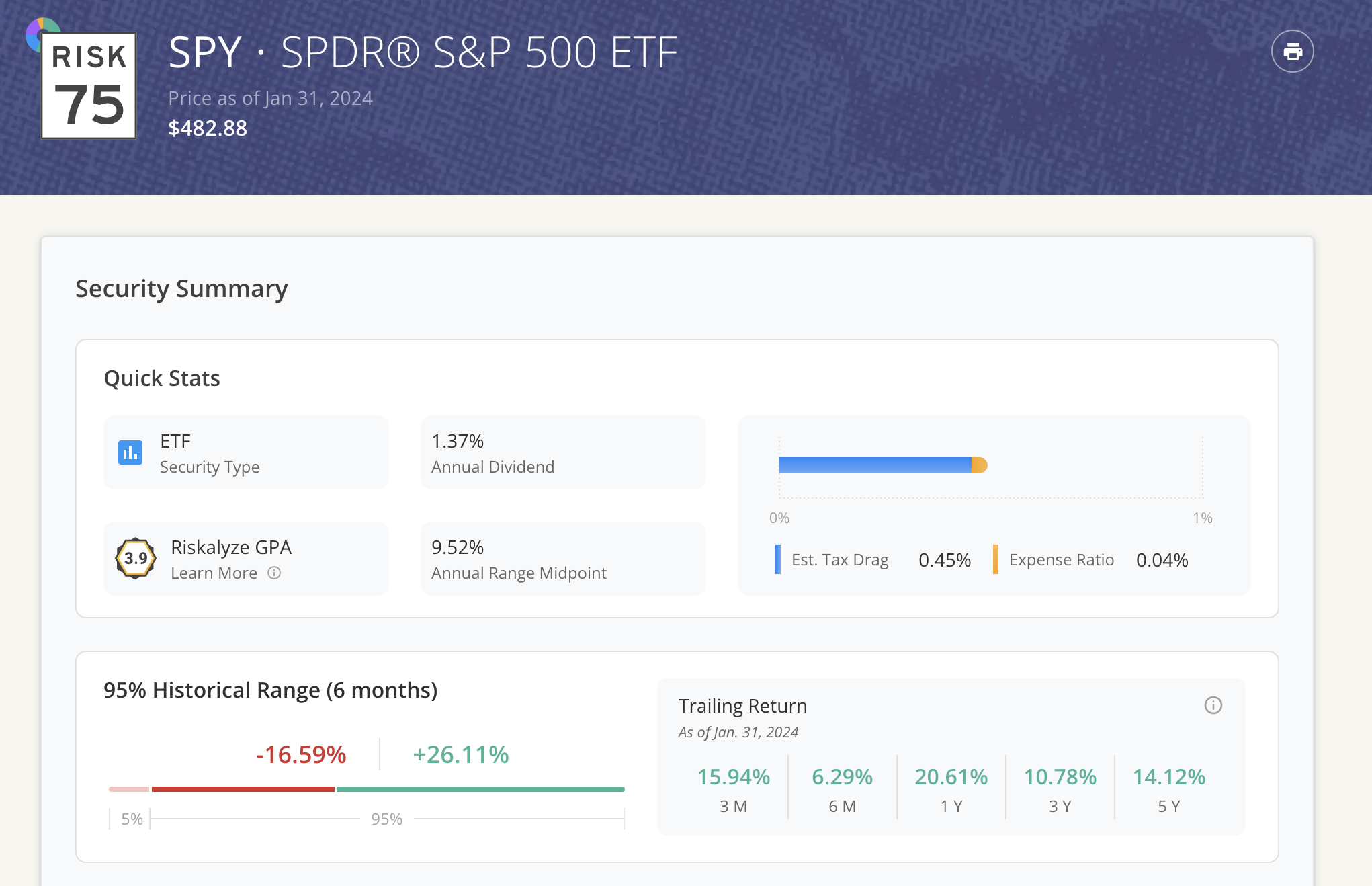
With Nitrogen’s Tax Drag, you have nearly instantaneous access to the potential tax implications of different investment options, displayed side-by-side with client insights. 

Below is an example screen of what it may look like when you click into an individual holding. Notice how the estimated Tax Drag is shown alongside other key information like the GPA and 95% Historical Range data.

With that data in hand, you can consistently select investments that are more tax-efficient for the client and better communicate the overall risks and returns within their portfolio.

2.  You can speak your clients’ language and attract more prospects

When used correctly, numbers can tell a powerful story. In all likelihood, your clients may not even be aware of the money they’re losing out on due to Tax Drag.

By translating the impact of Tax Drag into real, tangible numbers, you demonstrate your commitment to their financial well-being and foster stronger relationships built on trust and transparency.

Plus, did you know that happy clients may actually lead to more clients? One recent study found that “advisors attribute about 88% of their new business to referrals from existing clients.”

Related: Win Prospects Faster with Tax Drag

3. You can uncover opportunities for portfolio optimization

Lastly, Nitrogen’s Tax Drag capabilities allow you to optimize your client portfolios for more savings. It goes beyond traditional return metrics, revealing hidden tax inefficiencies within individual securities and the portfolio as a whole.

Additionally, money saved through a reduction of tax liabilities can stay invested for long-term impact. Every penny saved is more than earned – it’s a penny compounded. 

In the long run, smart tax strategies can translate to a significant boost in your clients’ wealth potential. 

Related: How Tax Drag Highlights Stark Differences Between ETFs & Mutual Funds

Crunch the Numbers with Nitrogen

To start calculating Tax Drag within Nitrogen, you’ll need to set the taxable status of your new or existing account. For new accounts, you will be prompted to enter that information during the initial setup. For existing accounts, you can set the status by clicking the three-dot Menu, selecting Setting and clicking Tax Status

Note that accounts set to “non-taxable” will not include Tax Drag data. 

Calculating Securities-level Tax Drag vs. Portfolio-level Tax Drag

Nitrogen calculates Tax Drag in two primary ways: at the securities level and portfolio level.

For portfolios, Tax Drag is represented by the weighted average of the Tax Drag for each security within the portfolio, assuming a constant portfolio composition of at least three years.

Related: Explore our Detailed Portfolio Stats

At the securities level, you can calculate Tax Drag for stocks, mutual funds and ETFs.  Nitrogen divides the after-tax return by the pre-tax return for a specific holding, with the assumption that the client pays the maximum federal rate on capital gains and ordinary income rate.

Tax Drag = [1 – ((1+AT) / (1+PT))] x 100, where AT = 3-Year Annualized Distribution After-Tax Return and PT = 3-Year Annualized Return (Pre-Tax).

Note that the after-tax return reflects the after-tax distribution return, meaning it does not include any assumptions or consideration for the tax consequences incurred for selling or liquidating positions. Additionally, any state and local tax liabilities are not included in the calculation.

You may not be able to see the future, but with Tax Drag you can reveal hidden tax inefficiencies and fuel growth. By embracing tax optimization and leveraging powerful tools like Nitrogen’s Tax Drag, your firm can better connect with clients and solidify your position as their trusted advisor.

Get Started with Nitrogen Tax Drag

Ready to uncover tax-saving opportunities for your clients? Click here to explore our quick guide on setting taxable statuses for new and existing accounts.

To see Nitrogen’s Platform in action, schedule a free demo today.

How to Get the Most Out of Nitrogen AI

According to the annual Nitrogen Firm Growth Survey, “bandwidth” is consistently the number one roadblock standing in the way of advisor marketing efforts. 

That’s why we created Nitrogen AI – to make marketing easier for the growing firms we serve.

Today, we want to look at some of the most popular ways advisors are using Nitrogen AI, and give you some prompts to help you get started!

What is Nitrogen AI?

Nitrogen AI is an AI-driven virtual marketing assistant that is embedded in our Advisor Marketing Kit. It’s available to Elite, Ignite, and Ultimate plan users and is powered by OpenAI. With a goal of streamlining communication for advisors, Nitrogen AI is a whole new way for advisors to create content quickly and easily.

3 Important Things to Keep in Mind When Using Nitrogen AI (or any AI, for that Matter)

AI is capable of creating full-fledged content, but there are some things to be aware of. Here are three important things advisors need to keep in mind when using artificial intelligence to create content. 

1. Always fact-check

AI has been known to make up facts and refer to sources that don’t exist. Usually, a simple Google search can help you determine what’s accurate and what isn’t.

2. Keep compliance in mind

AI tools don’t typically abide by all SEC and FINRA regulations, so watch out for the main compliance offenders: superlatives, performance claims, etc.

3. AI is a good starting place

Even with the best prompts, AI could never do a perfect job speaking on your behalf. Take some time to revise and edit the content it creates so it sounds like you and speaks to your specific audience.

Okay, now let’s move on to the good stuff! Here are seven ways advisors can use Nitrogen AI to help create content, as well as a few ideas for prompts to help you kick things off.

7 Ways Financial Advisors Can Use Nitrogen AI to Streamline Content Creation

1. Write outlines for articles

The most engaging articles online have a clear structure that makes them easy for readers to follow. No matter how good the content is, if your article is just a wall of text with no headers, sections, or bullet points, most of your site visitors won’t make it far before they click away.

Having a clear structure before you even start writing is one of the best ways to ensure you stay on-topic and cover everything you should. With Nitrogen AI, creating an outline is easy! 

Nitrogen AI Opening Prompt 1

Prompt to try:

“Write an outline for an article titled [TITLE] with at least 5 main points, an introduction and a conclusion.”

2. Write an introduction

One of the hardest things about writing blogs is getting beyond the blank page. If you’ve ever sat staring at a blinking icon on a screen of white (or black, if you prefer dark mode), Nitrogen AI can help you take that first step, which can help make the next steps a whole lot easier.

Prompt to try:

“Write an introduction to an article about [TOPIC] that includes a recent news item that is relevant to the subject.”

3. Come up with headline ideas

The headline is like the front door of any article. If you can’t get people to come in the front door, who cares how nice the house is? 

The worst thing is going to all the trouble of writing a blog only to have it fall flat and only get a few views. Sure, a great headline doesn’t guarantee results, but it can make a huge difference. 

In fact, studies show that an engaging headline can boost traffic by as much as 500%.

But headlines are hard. Enter Nitrogen AI!

Prompt to try:

“Give me five super engaging headline ideas for an article about [TOPIC].”

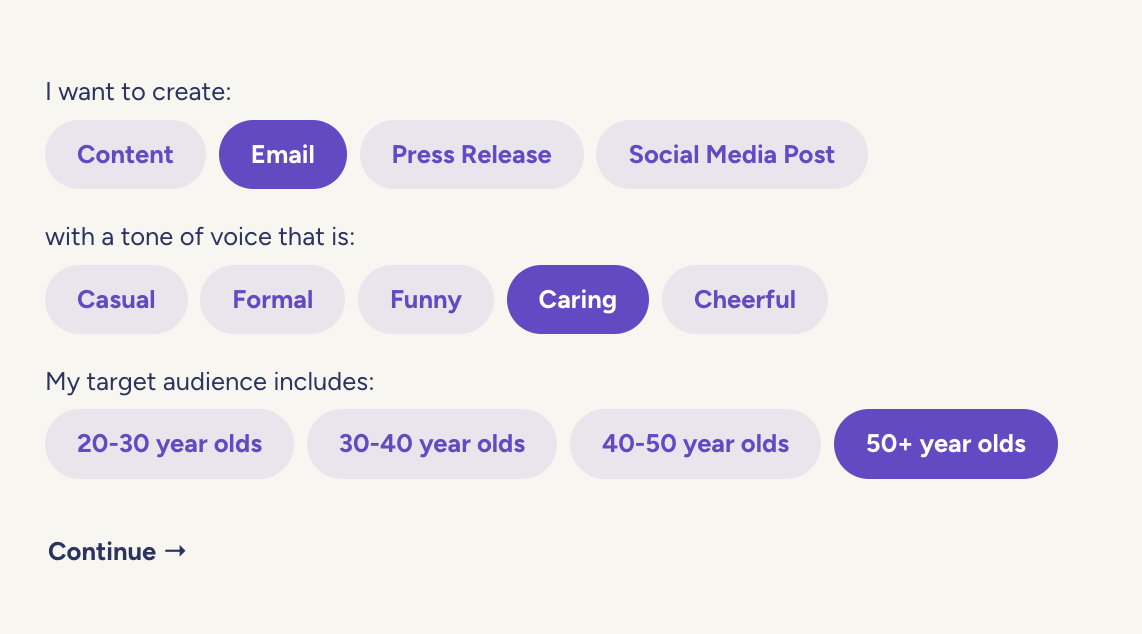
4. Write a first draft of a client email

If you’re like most advisors, you probably write so many client emails that eventually just writing a “Hi how are things going” email feels hard.

That’s why Nitrogen AI allows you to select “Email” as a content type. 

Nitrogen AI Email Opening Prompt

Prompt to try:

“Write a brief check-in email to a client from a financial advisor.”

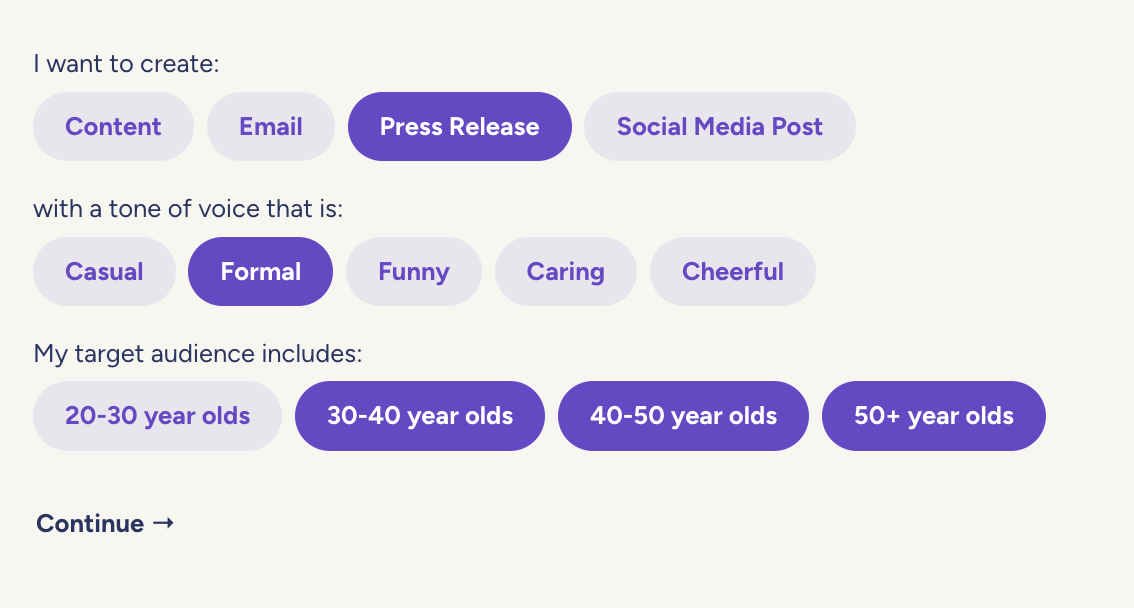
5. Write a press release about a new hire

Growing your team is always good news. When you hire a new advisor, releasing a simple press release is a good way to increase visibility for your firm and increase brand awareness overall.

Nitrogen AI Press Release Opening Prompt

Prompt to try:

“We recently hired [NAME] to be our new [JOB TITLE]. She previously worked at [LAST JOB]. Include a quote from [FIRM FOUNDER’S NAME] explaining why he’s excited to hire her.”

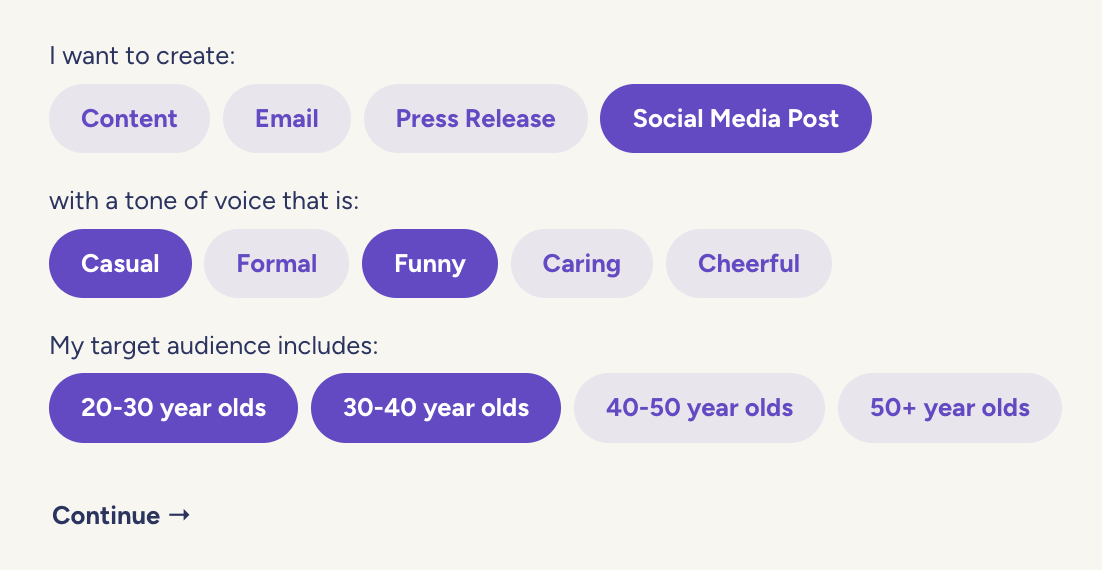
6. Create social media posts based on a new blog

Promoting your blogs on social media is a great way to raise awareness, but sometimes it can be hard to come up with the right words to explain it – especially if you wrote it yourself! 

Nitrogen AI makes social media posts easy – it even adds emojis for you!

Nitrogen AI Social Media Opening Prompt

Prompt to try:

“Create a funny LinkedIn post promoting a blog post titled [TITLE].”

Use Nitrogen AI to Grease the Gears of Your Content Engine

As you can see, the possibilities are endless. Whether you write something every week or once a month, whether you’re a one-person shop or a larger team, it’s always nice to have another item to add to your toolbelt to help refine your process.

Communicating with clients is at the heart of what you do as an advisor, and with Nitrogen AI, we hope that you can do that more easily and more clearly.

Want to See Nitrogen AI Up Close?

Come see for yourself why hundreds of advisors are using Nitrogen AI to make marketing content easier. Click here to schedule a demo.

The Top 10 Conferences Advisors Can’t Miss in 2024

Financial advisors are fortunate to have a lot of options to choose from when it comes to conferences. Whether you’re into tech or planning or marketing or all of the above – or just looking to fulfill some CE credits – there’s a conference for you!

Related: Conference Tickets Made Our List of Top Gifts to Give an Advisor

But it’s hard to decide which one (or three) you’ll attend. If you’re wondering which financial advisor conferences you should hit in 2024, you’ve come to the right place.

Without further ado, here are our picks for the top 10 can’t-miss advisor conferences of 2024! 

Top 10 Advisor Conferences of 2024

1. Shift

Dates: March 24-25, 2024

Location: Walt Disney World Swan Resort, Florida

Behavioral finance has become one of the top topics for financial advisors, and where better to learn more about it than the conference Michael Kitces named “Best Behavioral Finance Conference”? 

Shift is all about “human-first” planning and explores the latest innovations in holistic financial planning.

You can learn more about Shift here.

2. WealthManagement EDGE

Dates: May 13-16, 2024

Location: Hollywood, Florida

More than 1,000 annual attendees can’t all be wrong – there’s something special about WealthManagement EDGE! Leverage the combined strengths of Inside ETFs+, WealthStack, and RIA Edge in one conference to drive your firm’s investment, productivity, and growth strategies.

Learn more about WealthManagement EDGE here.

3. Envestnet Elevate

Dates: May 14-15, 2024

Location: Phoenix, Arizona

This year, Envestnet is celebrating their 25th anniversary, so you know it’s going to be a big one. Expect training sessions, deep-dives with their leadership, networking opportunities and more.

Learn more about Envestnet Elevate here.

4. TradePMR’s SYNERGY24

Dates: May 22-24, 2024

Location: Las Vegas, Nevada

As a leading RIA custodian, TradePMR’s annual SYNERGY conference is for RIAs who want to streamline their growth and improve efficiencies across the board. Envestnet isn’t the only one celebrating a milestone this year – TradePMR is also celebrating their 25th anniversary, so they’re planning on going a little extra this time around.

Register for Synergy24 here.

5. LPL Focus

Dates: August 11-14, 2024

Location: San Diego, California

Bringing together all of their advisors, institutional clients, sponsors and employees is no easy feat, but LPL makes it look easy – and fun! 

Registration opens in late May and you can learn more about LPL Focus here.

6. Limitless Advisor Workshop

Dates: TBD

Location: TBD

While it’s not technically a “conference,” buzz is growing around Stephanie Bogan’s Limitless Advisor Workshops, so while you’re planning your travel for the year, see if you can make the list!

Learn more here.

7. Excell

Dates: September 9-11, 2024

Location: Orlando, Florida

Carson Group’s Excell attracts 1,000+ attendees every year who are looking for growth-focused workshops and conversations. Past keynote speakers include George W. Bush, Megan Rapinoe and Michael Dubin (founder of Dollar Shave Club), so you know they’ve got something big in store.

Learn more here

8. XYPN Live

Dates: October 15-17, 2024

Location: Minneapolis, Minnesota

With one of the most robust online communities for financial professionals, XYPN Live is truly a can’t-miss event every year. Now in their 10th year, this year’s conference promises to be chock full of wisdom for independent advisors looking to scale their firms.

Register for XYPN Live here

9. Fearless Investing Summit

Dates: October 23-25, 2024

Location: Nashville, Tennessee

Named a top conference for financial advisors by both US News and Kitces.com, Nitrogen’s annual Fearless Investing Summit brings together more than 1,000 investment professionals from across the country for more than 100 sessions on everything from growth to compliance, a lineup of big-name speakers, a year’s worth of CFP CE credit opportunities, and a networking community like none other.

Learn More About The Fearless Investing Summit

10. Schwab Impact

Dates: November 19-21, 2024

Location: San Francisco, California

Advisors who work with Schwab would be wise to save a spot at this annual conference packed with informative sessions, innovative exhibitors, CE credit opportunities and much more.

Register for Schwab Impact here

Go Places with Nitrogen

While you’re improving yourself at conferences this year, improve your processes with Nitrogen’s growth platform, offering world-class analytics, research, compliance solutions, and beyond.

Click here to learn more or schedule your free demo of Nitrogen today.

The Advisor’s Guide to SEC Cybersecurity Compliance

As a financial professional, technology is intertwined throughout everything you do: prospecting, onboarding, portfolio management, financial planning, meetings – it’s everywhere. The efficiency, convenience and scalability that tech offers has completely changed the way advisors operate for the better.

But all that streamlining comes with no small amount of risk – namely, cybercrime. The cybersecurity of your systems can make the difference between protecting your firm’s (and your clients’) most valuable information, and leaving it out there for any hacker with enough skill and willpower to go after it. 

Related: What Software Will Financial Advisors Use in 2024?

The SEC has prioritized cybersecurity the last few years and implemented regulations for advisory firms to keep ahead of digital threats. Today, we’re exploring why cybersecurity is important, what laws the SEC has adopted concerning digital security and three steps you can take to stay compliant in 2024 – let’s dive in.

The Cost of Cybersecurity for Financial Advisors

If you’re wondering whether cybersecurity is really a problem, the facts paint a pretty jarring picture:

In 2022 alone, over 24 billion passwords were hacked – and for the financial industry, those attacks translated into heavy losses. The average cost of a data breach in the financial sector was $6 million, the second-highest of any industry behind healthcare. 

Statista writes that “the United States is one of the biggest financial markets worldwide and is a target for a considerable share of cyber attacks” and warns that cyberattacks within finance are evolving beyond websites to transaction systems as well. 

SEC Regulation and Guidance: What You Need to Know

The SEC’s latest cybersecurity regulations came in July 2023. Under the rules, any registered advisor are required to “disclose material cybersecurity incidents they experience and to disclose on an annual basis material information regarding their cybersecurity risk management, strategy, and governance.”

In practice, firms are required to:

  • Create processes that effectively identify and manage risks of cybersecurity threats
  • Notify affected investors of any material impacts within four days of discovering an incident
  • Provide adequate disclosures in accordance with the rule

The SEC is serious about cybersecurity

Just a year prior to the adoption, the SEC bulked up its Crypto Assets and Cyber Unit, sending a clear message that they’re serious about cybersecurity and expect firms to be, as well. 

In November 2023, the SEC brought their first ever cybersecurity case against a firm’s Chief Information Security Officer for having allegedly “misled investors about its cybersecurity practices and known risks.” 

How to Achieve Cybersecurity Compliance in 2024: 3 Steps for Success

Staying ahead of the cybersecurity curve requires a multi-pronged approach. Here are three key steps to help your firm find regulatory success and security in 2024:

1. Stay informed

To be cyber-compliant, it’s important that you stay aware of:

  • SEC regulations
  • Emerging cyber threats
  • Best practices for cybersecurity prevention and what to do in the event of a breach

While this responsibility may fall primarily on your Chief Compliance Officer (CCO), every member of your organization needs access to the knowledge and resources necessary to protect your data. 

One of the most simple and impactful places you can start: Password security. Unique passwords are the first defense against hackers, yet a staggering 88% of people use the same password for all their accounts.

You can also point your staff toward educational resources like the SEC’s cybersecurity page, which offers updates, relevant Risk Alerts and even an interactive quiz on cybersecurity knowledge.

2. Embrace tech solutions

Although it might seem counterintuitive, one of the best ways to fight cybercrime is to invest in robust technology. The right tech tools can help your firm monitor for risks and add extra layers of protection between you and would-be hackers. 

Related: Select the Best Financial Advisory CRM for Your Firm

As you explore which software solutions are a best fit for your firm, be sure to do your due diligence and ensure they uphold stringent security standards. Before you begin implementing any new programs, ask about their security practices, including how any confidential data is sent and stored. 

For example, we use a secure open API to send and receive data for our proprietary Risk Number questionnaire. Because our open API allows systems to “speak” directly to one another, we’ve eliminated the need to download data to devices, reformat and reupload information to another system – effectively reducing risk and saving your team time. 

3. Be transparent

Lastly, one of the core tenets of SEC cybersecurity compliance is transparency between your firm and investors. To that end, your firm needs to regularly disclose your cybersecurity practices and promptly inform clients of any incidents.

A commitment to transparency fosters trust and demonstrates your dedication to client protection.

By prioritizing cybersecurity and actively adhering to the SEC’s evolving regulations, you can safeguard your firm and your clients from the unfortunate reality of cyberattacks. With a complete knowledge of regulations, a security-savvy tech stack and a commitment to advisor-client transparency, you can tackle cybersecurity with confidence in 2024. 

Get Started with Nitrogen

Gain access to portfolio-level analytics that can drive your client engagement and inform your compliance processes. Click here to request a free demo today.

Client Experience Surveys for Financial Advisors: Unlocking Valuable Insights

In the competitive landscape of financial advisory services, understanding and meeting clients’ needs is paramount to success. Yet, it can be challenging to monitor client sentiment, especially as you grow your firm. Many clients do not voice their advisors’ opinions and prefer to simply fire their advisors

One study found that for every client who complains, 26 clients don’t voice their opinions. At the same time, 95% of clients share their bad experiences with others. 

Proactively gathering client feedback can combat this. 

A client experience survey is a powerful tool for gauging client satisfaction levels and identifying areas where advisors can enhance their service delivery. By collecting feedback from clients, financial advisors can gain valuable insights into the overall experience clients have throughout their interactions, including onboarding, communication, product offerings, and problem resolution. 

Furthermore, by seeking input from their clients, advisors demonstrate their commitment to their client base and support client retention strategies. This proactive approach strengthens the advisor-client relationship and enhances trust and loyalty, positioning advisors as reliable partners in their clients’ financial journeys. 

How a client experience survey differs from other sources of client feedback

There are a few different ways to monitor the client journey from their perspective outside of a satisfaction survey. Clients may write testimonials, make referrals, or ask questions during meetings. However, most of these references aren’t always easy to track. 

Client experience surveys offer a proactive approach to gathering feedback. Instead of waiting for clients to initiate contact or share their opinions spontaneously, surveys allow advisors to actively address any issues in a timely manner and improve client loyalty. 

Unlike other sources of client feedback, surveys allow for a more structured and standardized approach to collecting client sentiment. They typically involve well-defined questions to gather specific information about a client’s expectations, concerns, and satisfaction.

These experience surveys also provide a systematic and scalable method of data collection. By reaching out to a larger number of clients and consistently collecting data, advisory firms can analyze and compare feedback across different segments of their client base. Often, this is done using survey software or another digital tool. 

With some survey questions, clients can express their opinions, emotions, and experiences in their own words. This qualitative feedback provides valuable context and can uncover underlying issues or opportunities for improvement that may not be apparent from quantitative data alone. 

Lastly, client experience surveys enable benchmarking and trend analysis. By conducting surveys at regular intervals, advisory firms can track changes in client satisfaction over time and identify areas that require attention or improvement. Comparing results across different survey periods or against industry benchmarks provides valuable insights into the effectiveness of client experience strategies and initiatives.

Designing a solid satisfaction survey

While a client feedback survey can seem like a simple list of questions, there are best practices to increase survey responses and ensure you get the right data. Below are 12 steps to creating an effective client survey: 

  1. Define your objectives: Determine the specific goals of your survey. Are you looking to assess overall client satisfaction, identify areas for improvement, or gather feedback on specific services or products? Your aim will determine what questions make the most sense. 
  2. Craft clear and concise questions: Use straightforward language and avoid jargon to ensure that clients can easily understand. Make the survey questions specific and relevant. Ideally, you’ll want questions with set responses, such as multiple-choice questions or a satisfaction scale.
  3. Begin with demographic questions: Depending on your survey software, you may need to collect basic demographic information, such as age, income bracket, and occupation. However, surveys linked to your client list may already link this information to survey responses. 
  4. Measure overall satisfaction: Include a question that asks clients to rate their overall satisfaction with their portfolio or the market. This will give you insight into client sentiment without directly asking about your services. 
  5. Assess specific service areas: Ask about specific aspects of your services, such as portfolio management, investment recommendations, retirement planning, or communication. This will enable you to pinpoint areas of strength or improvement.
  6. Include open-ended questions: Incorporate open-ended questions to allow clients to express their thoughts and provide valuable feedback. This can help uncover specific issues or suggestions that closed-ended questions may not capture. However, since these qualitative survey questions require more work for the clients, they are sometimes better used when following up with negative responses. 
  7. Implement rating scales: Utilize rating scales, such as a 1-5 scale, to measure client sentiment. This allows for quantifiable data, making analysis and comparisons easier.
  8. Consider incorporating Net Promoter Score (NPS): NPS is a widely used metric to assess client loyalty. Ask clients how likely they would recommend your services to others. This provides insights into client loyalty.
  9. Optimize survey length: Keep the survey concise and focused. Lengthy surveys can lead to survey fatigue and decreased survey response rates. Prioritize questions that deliver the most valuable insights on client needs.
  10. Test and refine: Before deploying the survey to your entire client base, run a pilot test with a small group of clients to ensure the survey is clear, comprehensive, and error-free. Analyze the results and make any necessary refinements.
  11. Encourage participation: Promote the survey through various channels, such as email, newsletters, or social media. Email surveys are the most common when using survey software, but they can also be shared on private social media channels or applications. 
  12. Analyze and act on the results: Once you have collected a sufficient number of responses, analyze the data to identify trends, common themes, and areas for improvement. Use the insights gained to make actionable changes to enhance the client experience and boost retention.

12 common client survey questions for advisory firms

Asking the right questions is key to effective client satisfaction surveys. Each can provide valuable insight into the client journey and identify potential client friction points. 

  1. How satisfied are you with our advisory firm’s overall service and guidance?
  2. Did our advisors demonstrate a good understanding of your financial goals and objectives?
  3. How would you rate the responsiveness and timeliness of our communication with you?
  4. Have our advisors been able to address your questions and concerns effectively?
  5. How satisfied are you with transparency and clarity in our fee structure and billing practices?
  6. To what extent do you feel our advisors have helped you navigate financial challenges or market uncertainties?
  7. How likely are you to recommend our advisory firm to a friend or colleague?
  8. Did our advisors proactively communicate any changes or updates relevant to your investment portfolio or financial strategy?
  9. Do you feel that we have provided you with a comprehensive and tailored financial plan to meet your specific needs?
  10. How well do our advisors understand your risk tolerance and investment preferences?  

For many firms, regularly sending out several questions, especially open-ended questions, can decrease the response rate over time. Furthermore, firms will want surveys to tap into short-term client sentiment. Advisers can leverage a short survey to collect responses quickly.

Optimize outreach: The short survey

Advisory firms using Nitrogen Wealth have found success with a fast, two-question email check-in survey. This survey tool asks clients to consider whether they feel good or bad about the market and their portfolio.

This enables advisors to both generally track client sentiment and prioritize which clients need an immediate follow-up. As a result, fiduciaries can spend more time with clients and address their concerns early, thus building client loyalty and trust. 

Start tracking client sentiment

Monitoring client sentiment and satisfaction with a simple survey or questionnaire offers advisory firms many benefits. Improved client retention, rapidly addressed problem areas, and increased communication efficiency all support advisors as they grow their client base. 

And for many, it’s easier to start than you may think. There are several survey tool options available today, but you can also use Nitrogen Wealth’s check-in feature to rapidly get a pulse on client sentiment as a part of your engagement strategy.

Schedule a Demo: