Integration, Not Isolation: Why Your WealthTech Matters for Growth

As financial advisors grapple with an increasing array of technological tools designed to enhance growth and efficiency, the importance of choosing technology partners that emphasize integration has never been greater. The reason is simple—integrated technologies speak to each other, streamlining processes and amplifying productivity. 

In contrast, isolated, siloed, or all-in-one systems often lead to inefficiencies, redundancies, and communication breakdowns, becoming barriers rather than enablers of growth. At Nitrogen, we understand this dynamic deeply and strive to make integration a cornerstone of our offerings. It’s why we integrate with over 50 best-in-breed organizations because we believe when advisors are able to choose the best solutions, clients benefit. This blog post will explore why choosing technology partners who prioritize integrations is integral for wealth management firms seeking to scale.


The Importance of Integrations

Integrations in wealth tech serve as the backbone of a firm’s technology infrastructure, linking various tools, systems, and data to ensure they work harmoniously towards the common goal of business growth. In any advisory firm, where complex transactions, vast amounts of information, and intricate client relationships are the norm, the role of technology integrations cannot be overstated. Integrations foster enhanced communication between various platforms, eliminate the need for manual data entry, and reduce the chances of errors, enabling firms to deliver more efficient, reliable, and personalized service. 

Moreover, they allow for automated workflows, freeing up valuable time for financial advisors to focus on what truly matters – advising their clients and growing their business. On the flip side, a lack of proper integrations can lead to disjointed operations, inefficiencies, and potential miscommunications, obstructing growth and scalability. In essence, well-implemented integrations serve as a conduit for information flow, enabling financial advisors to operate more effectively, make better informed decisions, and provide superior service, all of which are crucial for growth in today’s competitive marketplace.


All-In-One vs. Best-In-Breed

While the appeal of all-in-one wealth management solutions is understandable, it’s crucial to consider the potential pitfalls that can arise from such a ‘boil the ocean’ approach. These encompassing systems often promise to provide a complete solution to all of a firm’s needs, aiming to cover all areas of wealth management within a single platform. For new firms under $10m in AUM, this could be a convenient path. As a firm grows past the $10m AUM mark, all-in-once solutions can introduce redundancy, hinder scalability, and limit a firm’s ability to truly customize their technology stack.

The first concern for growing firms is redundancy. These broad systems often include features and functionalities that may not be relevant or necessary for every firm. This means firms might end up paying for features they don’t use, leading to wasted resources. Additionally, these unused features can clutter the system, making it more complex and difficult to navigate. 

Scalability is another potential issue. While all-in-one solutions may work well for firms at a certain introductory stage, they may not scale up or down effectively as a firm evolves and moves between the four growth stages. As firms expand, their requirements become more complex, demanding more flexibility and customization than what all-in-one solutions can typically offer.

Furthermore, the ‘boil the ocean’ approach can limit a firm’s ability to build a technology stack that truly aligns with its clients’ unique needs. The one-size-fits-all nature of these solutions often lacks the flexibility and customization provided by a carefully selected suite of specialized tools. As a result, firms may have to adjust their operations to fit the tool rather than having a tool that fits their operations. 

In contrast, Nitrogen’s integration-focused approach provides a more efficient, scalable, and customizable solution. By allowing firms to select and integrate a variety of specialized tools and have the data work back and forth together, we help firms build technology stacks that truly cater to their unique needs, supporting growth rather than hindering it.
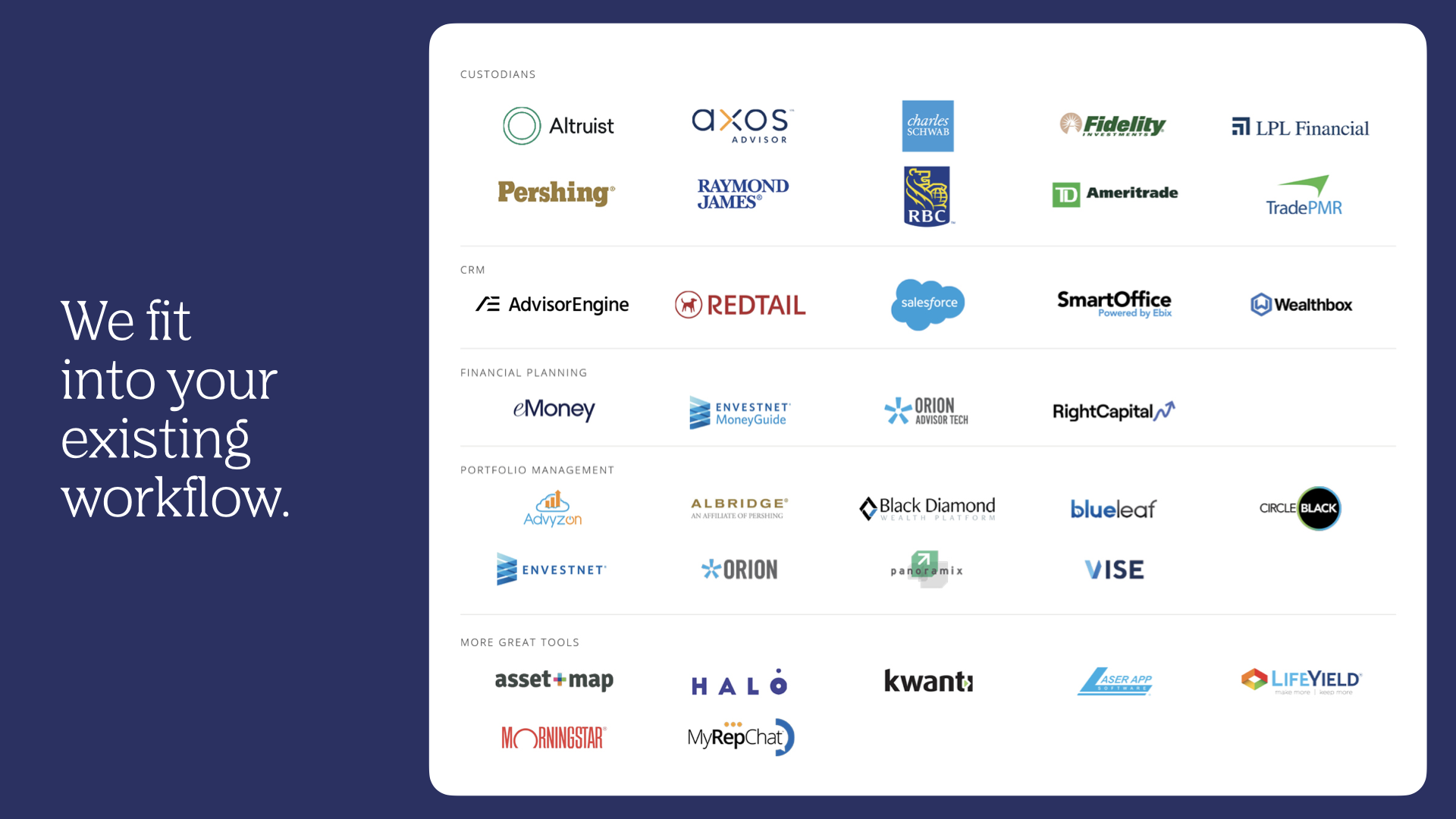
 

list-of-Nitrogen-Integration-partners-with-logos

The Benefits of Choosing the Right WealthTech Partners

So with all this in mind, choosing the right technology partners is a decision that extends beyond the immediate functionality of their tools. When it comes to scaling a wealth management firm, partners who prioritize integrations can be a game-changer. Such partners understand that their technology is not an island but a part of your firm’s broader tech ecosystem. They see the value in ensuring their tools not only work optimally in isolation but also synergize seamlessly with other tools in your arsenal, thereby enhancing your firm’s overall technological capabilities.

Prioritizing integrations means these partners invest in creating APIs, provide robust technical support, and often collaborate with other tech providers to ensure their solution fits seamlessly into your tech stack. At Nitrogen, for example, we’ve set up numerous instant messaging channels with our top integration partners. Our teams are often able to share integration enhancement ideas or generate quick fixes in minutes, instead of waiting on support phone lines. Integration-first wealth technology providers understand that their product’s value is amplified when it can ‘speak’ and ‘listen’ to other systems, automating data flow, reducing errors, and enhancing operational efficiency.

Furthermore, tech partners who prioritize integrations often have a growth-oriented mindset. They recognize that as your firm scales, your technology needs might become more complex. They are prepared to work with you as these needs evolve, ensuring their integrations can support your firm’s growth trajectory rather than being a roadblock. They provide solutions that are adaptable, scalable, and designed to handle increased complexity, allowing your firm to grow without being hampered by technological limitations.

Choosing wealth tech partners who prioritize integrations is like choosing to navigate a complex network of roads with a reliable, sophisticated GPS rather than an outdated map. Sure, you can buy a one-size-fits-all map of the entire country, but the journey becomes smoother, the risks of wrong turns are minimized, and the destination—growth and scalability—becomes that much more attainable when your tools are specifically focused on your destination.
What to Look for in WealthTech Integrations

When evaluating wealth tech integrations, there are several key aspects you should consider to ensure you’re investing in technology that will effectively support your firm’s growth and unique needs.

Firstly, consider the ease of use. An integration that is difficult to use or understand can lead to frustration, and decreased productivity, and may even deter your team from using the technology altogether. User-friendly interfaces, intuitive design, and clear instructions for setup and operation are crucial.

Next, consider compatibility. The best integrations are those that fit seamlessly into your existing tech stack and can interact smoothly with a wide range of other software solutions. They should not require massive overhauls of your existing systems or processes but rather enhance and streamline them. You can see how Nitrogen connects with your current technology using our Tech Stack Builder guide, recognized by the Wealth Management Industry Awards as a top tool for wealth management firms.

The level of support provided by the tech partner is another vital consideration. Implementing new integrations can sometimes come with a learning curve or unexpected challenges. Partners who offer robust support—whether it’s through comprehensive documentation, responsive customer service, or hands-on technical assistance—can make the implementation process significantly smoother.

Lastly, don’t underestimate the importance of customization. Every wealth management firm has its unique set of needs and challenges, and a one-size-fits-all solution is unlikely to meet all your requirements. Look for integrations that offer a degree of customization, allowing you to tweak the functionality to suit your firm’s specific needs.

Remember, the goal of integrating technology into your wealth management firm is to enhance your operations, improve efficiency, and support scalability. With these considerations in mind, you can select WealthTech integrations that align well with your firm’s objectives and unique business needs, ultimately setting your firm on a clear path to growth.


The Role of Nitrogen in WealthTech Integrations

At Nitrogen, our primary focus is building the solutions that help wealth management firms grow. We recognize that in today’s financial landscape, an integrated technology approach is no longer a luxury—it’s a necessity. That’s why we have made it our mission to ensure that our software solutions not only provide outstanding standalone functionality but also integrate seamlessly with other crucial tools in your tech ecosystem. We’re proud to connect with over 50 tools and counting while also bringing together the industry’s top fintech at our annual Fearless Investing Summit.
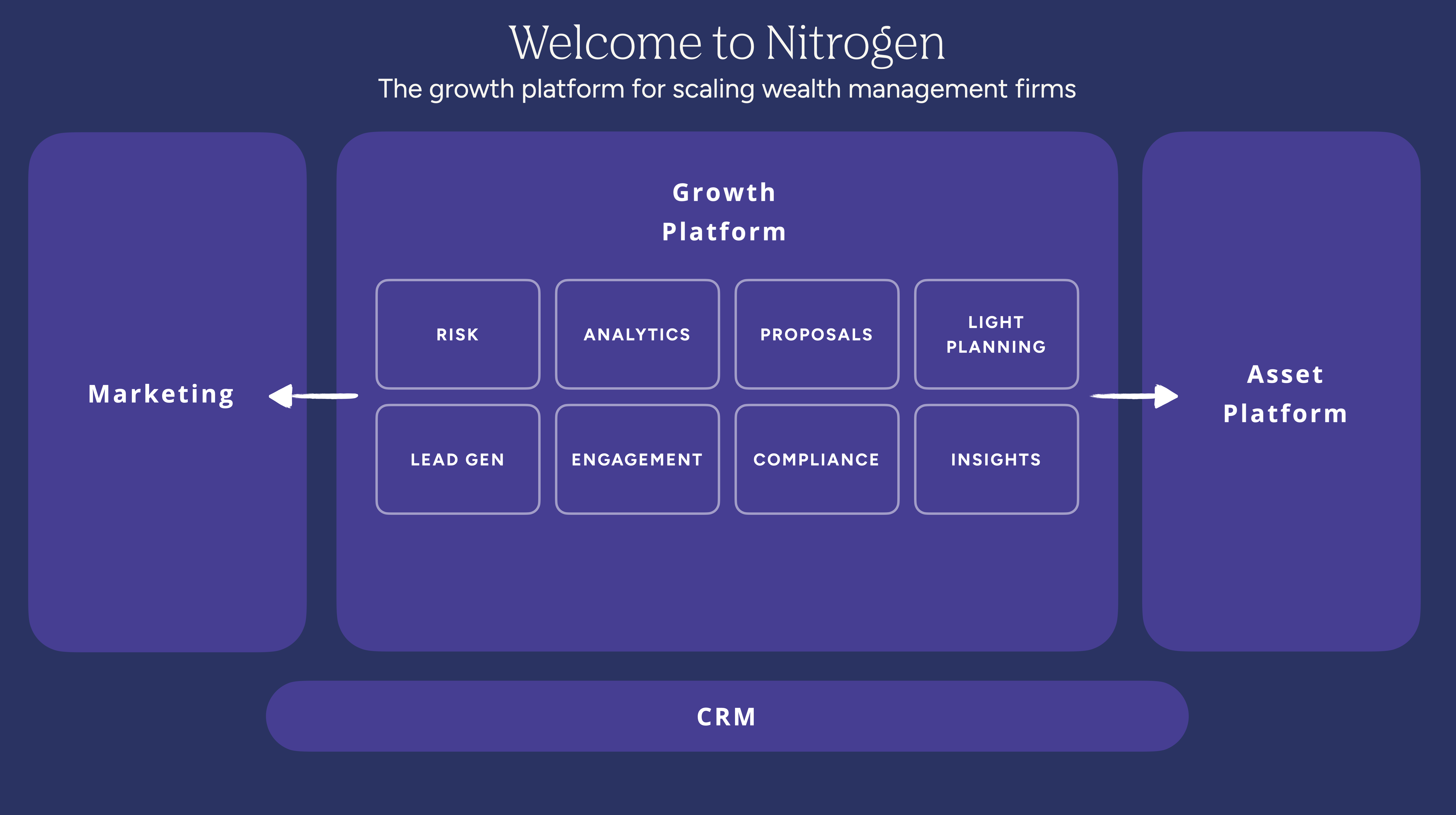
Nitrogen is designed with scalability in mind, making it perfect fit for wealth management firms at every stage of growth. We understand that as firms expand, their needs become more complex. Hence, our solutions are flexible and customizable, designed to adapt and scale with you as your firm evolves.

Our commitment to integration extends to our collaboration with other technology providers. From CRMs to Custodians to Marketing and more, we work diligently to ensure our software interfaces smoothly with various platforms. In fact, we’re often adding new integration partners throughout the year. This commitment not only means smoother day-to-day operations for our clients but also less time spent on manual data entry, lower chances of error, and more time available to focus on providing excellent service to clients.

We also place a strong emphasis on customer support. We understand that the implementation of new technology and integrations can sometimes pose challenges. That’s why our Customer Care team is always on hand to provide technical assistance, guide you through the setup process, and address any issues that arise. To view all available training opportunities, visit our training page here.

At Nitrogen, we believe that your technology should be an enabler of growth, not a barrier. With our commitment to seamless integrations, scalability, and exceptional customer support, we aim to provide wealth management firms with the tools they need to scale efficiently and effectively, navigating the path to growth with confidence and clarity.

In conclusion, the power of integration in WealthTech is not to be underestimated. It’s the key to unlocking seamless operations, greater efficiency, and scalable growth within wealth management firms. Choosing technology partners who prioritize integrations and understand your firm’s unique needs can significantly enhance your firm’s ability to grow and serve clients effectively.

At Nitrogen, we are committed to fostering this power of integration. With our robust solutions, seamless integrations, and unwavering customer support, we aim to empower wealth management firms to reach their full potential. Our mission is to ensure that technology serves as a facilitator, not an obstacle, to your firm’s growth.

We invite you to explore our integration page and discover how our commitment to getting integrations right can help your firm navigate the path to scalable growth. For any further information or inquiries, our team is always ready to assist. Let’s embrace the power of integration together and shape the future of wealth management.


The Comprehensive Guide to Financial Advisor Branding

Think of some of the most well-known experts in the wealth management industry…

…The list of industry leaders goes on and on.

When thinking about these individuals, what do they all have in common?

They all have a well-developed, trustworthy brand. 

Cultivating a personal brand as a financial advisor is critical to winning and retaining clients and earning trust over time. It’s possible to apply a few important lessons from these industry leaders. This post will cover how advisors can cultivate a personal brand, and what an advisor needs to create a brand for their firm, from choosing a name to creating a visual identity. 

Why personal branding for financial advisors is important 

The financial services industry, especially the RIA sector, lives on the foundation of trust. Money is incredibly intimate, and people will only work with those they find credible and trustworthy enough to manage their hard-earned wealth.

But what you may not know is that building that crucial trust starts much, much sooner than you realize. From the moment people hear your name, see your logo, or watch you in a video, they’re already starting to decide if they like you or not—and they may not even know it.

This means that you have the power to control the way people perceive you by building a brand that reflects your values, beliefs, and abilities. 

Financial advisor branding: best practices

So while we know it’s important to build a brand, you need to know what, exactly, “building a brand” entails.

If you are an advisor that is part of a larger RIA, BD, or wirehouse, then your focus will be on cultivating a personal brand while leaning into the brand equity of your company association. If you are an advisor starting your own firm, then your personal brand will be intertwined with the brand that you create for your firm. 

Too many small businesses like to think of a brand as their name and logo. But think back to those examples we shared at the beginning. The reality is, a successful brand paints a complete picture of who they are. You can follow these examples whether building a brand for you personally or for your firm. 

Every single touchpoint a client or prospective client experiences is a reflection of you and your brand. This could include emails, social posts, advertisements, videos, appreciation events or even onboarding documents. Creating consistency across all touchpoints is what helps make your brand stronger, more recognizable, and, ultimately, more trustworthy.

Creating growth across the firm is the key to longevity and scalability, which means your firm must prioritize building comprehensive, cohesive branding.

Choosing Your Firm Name

The first step in building a brand is to choose a name for your firm. Sounds easy enough, but this can actually be quite the challenge.

Think about what makes a good name. It should be: 

  • descriptive
  • easy to spell or pronounce
  • simple
  • reflective of you

You’ll be using this name to establish trust and credibility, which means you need to be thoughtful and perceptive when choosing it.

For example, say your family has lived in the same small town for generations. They’ve given generously to the community over the years and remain active to this day. If your primary target market is high earners in your local area, it may make sense to incorporate your family’s name somewhere in your firm name. It has the unique advantage of instant recognition and familiarity amongst your target audience.

You’ll also want to decide if your name needs a descriptive element in it, such as “Wealth Management” or “Financial Planners.” This can help viewers quickly identify what your firm does, but it’s not always necessary. You may, for example, be able to portray what you do in your tagline or logo.

As you think through potential names, try to avoid tired cliches. There are certain visuals that advisory firms tend to gravitate towards such as trees, pathways, mountains, or waterways. If you’re looking to name your firm after one of these concepts, chances are there are 100 or so advisory firms across the country that are already using that name.

Creating a Visual Identity

Once you’ve come up with some name ideas, or even solidified a final contender, then it’s time to consider how you want your visual identity to look.

People process images 60,000 times faster than they register text. The visual elements of your brand need to be just as reflective of you as your firm name is. They’ll help bring your brand to life and give viewers something easy to remember and refer back to when they hear your name.

Colors

Colors aren’t just about making an aesthetically pleasing brand, they invoke emotions in the viewer as well. For example, blue is calming and relaxing — which is why so many advisors use it in their branding.

 While you may be naturally attracted to a blue palette, keep in mind that your brand may benefit from a more unique combination of colors.

Think about how colors make people feel, or color psychology. It may not seem that important, but colors can invoke a subconscious feeling that makes potential clients either more attracted or more adverse to your branding.

Here is a quick example of how other colors tend to make people feel:

Red: While red can be energetic and exciting, it also tends to mean bad things in finance. For that reason, most firms stay away from it. But if you do choose to include red in your color palette, consider opting for something that’s subdued or desaturated.

Orange: Orange is bold, youthful, and invigorating. This can be great for a younger audience, but it may not resonate well with older or more traditional ultra-high-net-worth clients.

Yellow: Yellow is another warm tone, and it’s often associated with cheerfulness and brightness. Just keep in mind that yellow can be a hard color to view on screens, so it may not appear quite as you want it to on a website or email.

Green: Green is another common color for advisory firms. When taken quite literally, it’s the color of the money. But it also goes well with nature imagery, which can be calming and serene.

Purple: Depending on how rich or deep the shade is, purple can come across as luxurious and high-end. But lighter purples, like lavender, are more commonly used for firms that specialize in working with women.

Fonts

You also need to consider the type of fonts you use when crafting your logo and all marketing collateral (including website, printed newsletters, onboarding documents, etc.). 

While you want to be distinct and stand out from the crowd, you also want something that’s functional and easy to read, especially if your audience is older.

Maybe you’re naturally attracted to a curly, cursive font, but think about it in terms of readability and practicality. If people can’t make out what your firm name is, you’re going to face more hurdles trying to build a brand. The last thing you want is a prospective client passing your firm up because they can’t read your messaging.

Logo

The final piece of branding we’ll cover is how you can develop a logo, as well as a logo mark (which includes your logo and brand name). Both your logo and logo mark should be able to stand on their own as separate pieces that can be used for different purposes.

Think of some of the world’s most recognizable logos: Pepsi, Nike, Apple, Google, McDonalds, etc. 

When you have an effective logo that stands on its own, people can instantly recognize your brand even when your name isn’t attached to it.

Your Website

Your website should serve as the hub of your branding efforts. It’s going to be the most impactful place for your brand to be seen, and it will set the tone for how your company is perceived.

Once your website is in line with your branding efforts, it’ll act as a guide for how all other marketing collateral and firm communications should be presented visually.

Pro Tip: Think about what keywords your audience would likely search for when looking for financial advice and try to write your website to provide value around them.

How to Create a Winning Brand Message

Your brand message is where you really get to tell your story and share your value with potential clients.

To create a brand message, start by considering your current clients. What type of people would you like to attract to your firm in the future? Firm-wide growth requires a long-term look at the future. So if there’s a certain profession or industry you’d like to work with more, try to incorporate that into your brand messaging.

It’s not uncommon for firms to naturally develop certain specializations or niches over time. One client who’s a healthcare professional may tell his coworkers about a positive experience he had with your firm. More physicians come to you for financial planning services from that hospital. You quickly develop a knack for helping these doctors and physicians optimize their complex compensation packages or manage student loan debt.

As a result, you’ve developed a niche — and you may not have even realized it!

You certainly don’t have to box yourself into a corner, but letting others know you have certain specializations or areas of expertise can really help you stand out from the crowd.

Once you know who you’re marketing to, try crafting a brand message that addresses the problems your clients have and how you solve them. While it sounds counterintuitive, your messaging shouldn’t be all about you.

In fact, by taking a client-focused approach, you’re helping readers either self-identify as ideal potential clients or weed themselves out as not being a good fit. The more specific and clear your message is, the easier it’ll be for readers to do this.

Keep in mind that there are things that may be implied or obvious to you, but that’s not always the case for your readers or viewers. To make sure your branding message is crystal clear, ask some people (preferably those outside of the industry) to read it through a couple of times. If it makes sense to them and conveys the right message, then you’re probably in good shape.

Don’t Forget Your Tagline

To create a tagline, think through your unique value proposition. Use the tagline to speak directly and with transparency to current and future clients.

Again, this is something you may want to run by people who are not involved in the firm or industry. Give them a few seconds to look at your logo, firm name and tagline, then ask them to share their initial thoughts and impressions. Does it align with the vision you were going for? Or do you need to tweak your messaging? 

Taglines are important, and it’s okay that it may take your firm a few iterations to get it right.

The Best Marketing Strategies for Financial Advisors

Once you’ve spent ample time developing, testing, and finalizing your brand, you’ll need to make sure people actually see it.

One of the best financial advisor marketing strategies is to create original content. 

By creating and disseminating fresh content to your audience, you’re ensuring that your brand stays top-of-mind. The more positive impressions you make with your brand, the more likely someone is to recommend you or work with you when the time is right.

Content marketing is a great way to create educational resources that speak directly to your clients. It puts you in the “hero” position as a knowledgeable thought leader who can help them address their financial concerns. In other words, it helps them see why you could be the best fit for them.

Branding is the first step, but content marketing is really the driving force behind getting more eyes on your firm and qualified leads in your inbox. 

Build Your Brand and Grow Your Firm with Nitrogen

With a brand that’s thoughtful and reflective of your firm, you’re ready to attract a new generation of highly qualified clients. Nitrogen helps RIAs identify the right kind of leads to help with their greater goals of firmwide growth. 

Don’t forget to schedule your complimentary tour of Nitrogen today.

The Four Stages of Growing a Wealth Management Firm

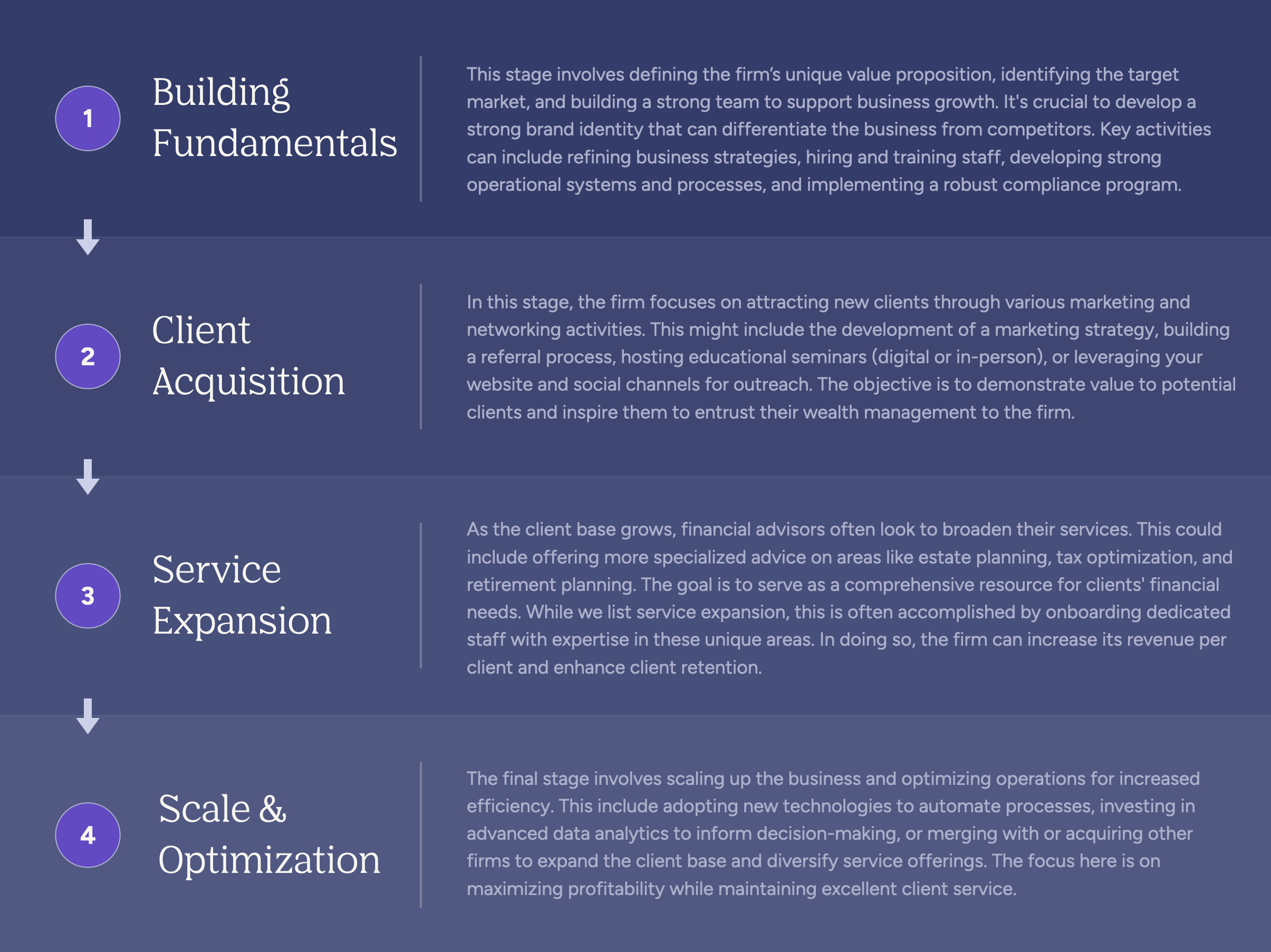
Growing a wealth management business can be a complex process that requires planning, execution, and, importantly, the right tools at each stage. While each firm is unique in their value proposition, ideal client, and services, here are the four general stages we’ve identified based on surveying 1,000+ advisors. These stages offer a general outline for what all wealth management firms go through when looking to grow:

Building Fundamentals: This introductory stage involves defining the firm’s unique value proposition, identifying the target market, and building a strong team to support business growth. It’s crucial to develop a strong brand identity that can differentiate the business from competitors. Key activities can include refining business strategies, hiring and training staff, developing strong operational systems and processes, and implementing a robust compliance program. 

Key Actions:

  1. Develop a business plan: Clearly define your mission, target market, value proposition, services, and revenue models.
  2. Complete the Value Messaging Framework & Activation Checklist. This complimentary two-page tool is helpful in organizing your firm’s value messaging.
  3. Build your team: Find the right personnel who not only have the necessary skills but also fit your corporate culture.
  4. Establish your tech stack: Implement reliable, secure, and efficient financial software solutions for CRM, risk management, marketing, compliance, and growth.

Client Acquisition: In this stage, the firm focuses on attracting new clients through various marketing and networking activities. This might include the development of a marketing strategy, building a referral process, hosting educational seminars (digital or in-person), or leveraging your website and social channels for outreach. The objective is to demonstrate value to potential clients and inspire them to entrust their wealth management to the firm.

Key Actions:

  1. Develop and implement a marketing strategy: This might include digital marketing, hosting webinars or events, content marketing, and other targeted strategies to reach potential clients. Our Marketing Activation Checklist can be helpful in creating your first marketing plan.
  2. Leverage networking: Networking with other professionals can bring referrals. Attend industry events and build relationships with professionals like CPAs and attorneys who can refer you to their wealthy clients.
  3. Establish strong relationships with your early clients: Word-of-mouth is a powerful tool in this industry. Make sure your initial clients are satisfied and willing to refer you to others.
  4. Answer the question, “How referable is my firm?” with our Referral Scorecard.

Service Expansion: As the client base grows, financial advisors often look to broaden their services. This could include offering more specialized advice on areas like estate planning, tax optimization, and retirement planning. The goal is to serve as a comprehensive resource for clients’ financial needs. While we list service expansion, this is often accomplished by onboarding dedicated staff with expertise in these unique areas. In doing so, the firm can increase its revenue per client and enhance client retention.

Key Actions

  1. Understand your clients’ needs: Regularly seek feedback from your clients and assess their needs to know which services to add or enhance.
  2. Provide comprehensive financial advice: Instead of just focusing on investment advice, offer holistic financial planning services, including retirement planning, tax strategies, and estate planning.
  3. If you’re considering adding additional staff, our Talent Strategy Planner template is beneficial for your firm’s people operations strategy.
  4. Level up your understanding of what top firms are doing by attending the Fearless Investing Summit.
  5. Offer educational resources: Conduct seminars, webinars, or create online content that educates clients on financial topics. This adds value and cements your role as a trusted advisor.

Scale and Optimization: The final stage involves scaling up the business and optimizing operations for increased efficiency. This includes adopting new technologies to automate processes, investing in advanced data analytics to inform decision-making, or merging with or acquiring other firms to expand the client base and diversify service offerings. The focus here is on maximizing profitability while maintaining excellent client service.

Key Actions

    1. Implement advanced technology: Adopt technology solutions that enable scalability. AI-based tools, communication platforms, and automated processes can improve efficiency and help manage more clients. Nitrogen offers solutions for each stage of your business, including Risk Tolerance, Proposals, Analytics, Planning, Engagement, Lead Generation, Compliance, and Executive Insights
    2. Focus on client retention: Implement strategies to maintain relationships with existing clients. Regular communication, personalized services, and excellent customer service are key.
    3. Refine and optimize operations: Regularly review and optimize your processes, team structure, and service offerings to ensure maximum efficiency. Our Staff Weekly Assignment Matrix can identify overlap and overload, and make sure every staff member knows their operational responsibilities.
    4. Consider mergers and acquisitions: To rapidly grow your client base and assets under management, consider buying a book of business or merging with another firm.

These four stages – building fundamentals, client acquisition, service expansion, and scale and optimization – each require a set of specific, strategic actions. As financial advisors, taking the right steps at each stage can lead to a robust, client-centric firm that not only attracts clients but also retains them by offering comprehensive, personalized services. By leveraging technology, nurturing relationships, and continuously optimizing operations, advisors can ensure the firm’s sustainable growth and lasting success in the ever-competitive wealth management industry. A firm may cycle through these stages multiple times as it continues to grow and evolve. Overall, it’s an ongoing process and Nitrogen is here with you every step of the way. 

Unlocking Growth: Harnessing AI in Wealth Management

Will AI replace financial advisors?

It’s a question that’s been making rounds in the wealth management industry as advancements in artificial intelligence continue at a breathtaking pace. There’s an air of uncertainty, even apprehension, as we contemplate a future where advanced algorithms and AI automation hold sway. But as we delve deeper into this issue, we find a more nuanced reality. 

Rather than being a harbinger of obsolescence for human advisors, AI is poised to be a powerful assistant, a tool that complements our human capabilities and enhances the overall effectiveness of financial advisors. AI doesn’t herald the end of human, financial advising; instead, it signals the dawn of a new era of partnership between technology and human expertise.

So where do financial advisors start? We recommend with OpenAI’s ChatGPT. OpenAI is a leading research organization for AI, and created ChatGPT. It offers Data Analysis, including the ability to communicate complex financial data, and is a helpful in training scenarios, helping wealth management professionals and their clients learn about various financial topics through interactive conversation.

Once you’re ready to begin, the best use of your time will be understanding how to write prompts. Writing prompts for ChatGPT are essentially instructions or questions that guide what kind of response you want from the AI. They can be straightforward requests or more complex queries, depending on what you’re aiming to achieve. 

When crafting a prompt, clarity is key. Make sure your instruction or question is well-defined so that the AI can generate a useful and relevant response. For best results, provide as much context as you can to guide the AI’s response. 

Here are a few prompts financial advisors could use with GPT-4 to help them in their roles:

  • “What are the key financial considerations when starting a small business?”
  • “Create a brief summary of the impact of rising inflation rates on a balanced investment portfolio.”
  • “Write an email to a client explaining the advantages and disadvantages of investing in index funds.”
  • “Outline a strategy for diversifying an investment portfolio to limit international exposure.”
  • “How would economic indicators like GDP, inflation, and unemployment rates impact the bond market?”
  • “Draft a retirement savings guide for a client in their 50s who started saving late.”
  • “Generate an analysis of the potential impacts of the current tax legislation changes on a high-income earner.”
  • “What are some financial planning strategies for individuals approaching retirement during an economic downturn?”
  • “Create a simple explanation of dollar-cost averaging for a new investor.”
  • “Write a script for a meeting with a client to discuss their portfolio’s underperformance.”
  • “How to structure a 529 college savings plan for a client with a newborn baby?”

These prompts are just the beginning, and this is an area to unleash your creativity. 

If you’re looking for a way to seamlessly introduce AI into your firm, we recommend starting with Nitrogen AI, available in the Nitrogen Marketing Kit. It is a leading AI tool for financial advisors and in practical terms, here’s what Nitrogen AI can do for wealth management firms:

  • Client Communication
      • Email Drafting: Nitrogen AI can help financial advisors draft responses or create first drafts of emails to clients, answering routine queries or providing regular updates.
      • Report Writing: Nitrogen AI can assist in writing parts of financial reports, such as the summarization of data or initial drafting of analytical findings.
      • Preparing Meeting Agendas: Use Nitrogen AI to help create structured meeting agendas, keeping discussions focused and productive. This is a leading use case with AI for financial advisors
      • FAQs: Nitrogen AI can be used to compile Frequently Asked Questions (FAQs) for clients, saving time for the advisors.
  • Content Generation
      • Blog Posts: Nitrogen AI can generate outlines or even full drafts of blog posts on a variety of financial topics, helping to maintain an active online presence.
      • Newsletters: Use Nitrogen AI to create engaging newsletters, providing clients with updates on financial news, the performance of their investments, or changes in the financial landscape. This speeds up what used to take hours and is an effective client communication tool.
      • Social Media Content: Nitrogen AI can help draft informative and engaging social media posts for financial planners to reach a broader audience.
      • Whitepapers: While more complex, you can use Nitrogen AI to help create initial drafts or outlines of whitepapers, providing in-depth information on specific financial topics.
  • Research
    • Concept Summaries: Use Nitrogen AI to summarize and explain complex financial concepts or trends in an easily understandable format.
    • News Updates: Nitrogen AI can generate summaries of financial news articles, keeping advisors updated on the latest industry developments.

Remember, while Nitrogen AI can provide excellent information, and the tool wrote this post, it should be used in conjunction with human intelligence and industry-specific expertise. AI doesn’t replace the need for human financial advisors but can complement their work and enhance their effectiveness. To learn more about Nitrogen and using Nitrogen AI in your firm, schedule a demo here.

6 Tips for a Successful Client Experience Transformation

With a rapidly shifting market, continuing inflation, and client uncertainty, client loyalty is more important than ever. It can be challenging to manage current client portfolios and follow-ups, let alone drive growth in an uncertain market. But it’s not impossible.

The competitive advantage most firms lack is creating a superior client experience.

A client experience transformation is more than digitizing communications and creating a website. Today, financial advisors leverage multiple digital tools to foster client engagement and set clear expectations.

With the right tech stack, it’s possible to scale client acquisition while retaining a positive client experience.

Before we dive into how you can boost your client experience, let’s further define this transformation.

What is client experience transformation?

Client experience theories go back to the 1960s when the practice was often reserved for client support teams. Over the decades, more and more organizations centered on the client and their experience of a product or service across multiple operations, such as sales, marketing, and technology.

For advisors, client experience focuses on how easily clients can interact with their advisors and understand their financial advice.

The transformation aspect of this phenomenon is fairly new because life is vastly different from 10 years ago.

Today clients young and old must navigate rapidly shifting markets, an uncertain economy, and an influx of technology.

Advisors can meet clients in the middle. By transforming the client experience, you can not only better service your clients but also improve retention and acquisition.

How a better client experience fosters growth

Client experience transformation is popular across industries because, among other factors, centering the client often leads to improved growth. Think about it: When you put the client first when considering your operations, the client will likely get what they need without hassles. This leads to improved client satisfaction and engagement. A more satisfied client not only stays longer with your firm but can pull referrals.

6 ways to improve your client experience

Your transformation effort can involve updating several processes related to the client journey. The following 6 are our top picks for rapid change:

1. Break down barriers with technology

Technology often seems like a double-edged sword. It can drastically improve communication, speed up analysis, and meet client expectations. However, many advisors and their clients are rightfully concerned about security and compliance. After all, what good is a tool that puts client data at risk?

However, technology for financial advisors isn’t necessarily of the same grade as other software. High-quality platforms use sophisticated security mechanisms to protect client data and are designed to be compliant. At the same time, platforms like Nitrogen integrate with other key sales, marketing, and advisory software without sacrificing security. This makes it possible to centralize client information while improving client management processes.

On the client side, this results in fewer late appointments or missing documents. Clients are less likely to be overlooked, and as a result, they feel valued.

Advisory platforms are no longer a one-size-fits-all solution. There is no need to sacrifice personalization or personability for efficiency. The right platform enables advisors to customize client communications effortlessly and boost client satisfaction.

2. Upgrade your financial planning

Financial planning is increasingly becoming a core component of a positive client experience for retirees and younger investors. It’s easy to see why. These investors must find a way to understand how inflation, higher interest rates, and an unstable economy influence their long-term financial goals. As a result, clients want more than asset management: They are looking for expert guidance.

Improving your financial planning capabilities in relation to client needs revolves around sharing knowledge and gaining client input. Using easy-to-read visualizations, potential projections, and other financial planning tools alongside client updates inspires confidence and reduces client anxiety.

3. Introduce risk numbers

Clarity enables clients to make better financial decisions, and risk numbers offer an opportunity to simplify complex financial formulas. A risk number highlights a client’s risk tolerance over a six-month period. But unlike more stereotypical labels such as “conservative,” “moderate,” or “aggressive,” a risk number provides more nuanced insight into a client’s current tolerance.

This metric makes it easier to build portfolios that match a client’s needs, and it gives them peace of mind. At the same time, the simple number metric is fairly easy to explain. A risk number acts as a “speed limit,” with a limited range of what’s acceptable according to a client’s needs. This approach empowers advisors while improving the client experience.

4. Check in regularly

Regular check-ins help advisors gauge current client sentiment about the market. Technology can help advisors stay on top of check-ins without overcomplicating client communications.

For example, take Nitrogen’s Check-in function. Advisors can send a simple two-question survey that asks clients how they feel about the market and their portfolio. Their answer enables advisors to follow up more effectively, pinpoint client concerns, and adjust portfolios accordingly.

The check-in surveys are automated, so the advisor only needs to follow up. At the same time, this simple approach appears proactive to clients (because it is) and improves trust.

5. Personalize client communications

One of the top concerns advisors have around technology and client communication is personalization. Sending a templated email en masse is hardly ideal and can turn off many clients. After all, 82% of Americans want more human interaction across the board, not just from financial services professionals. So why shift to technology and automation when it comes to communication?

One of the most significant advantages is automation itself. When you can automate some client communications, such as check-ins, you can spend more time in 1-on-1 conversations with clients. It’s also possible to add personalization in client communications so even generalized messages feel more personal.

6. Empower your advisors

Advisors rely on their tools to effectively manage portfolios and communicate with clients, which is why your tech stack is critical to growth. Empowering your advisors with effective technology with client-centric features enables them to work more efficiently. When your team can focus on the most important aspects of their job, such as building relationships with clients, they will offer a better experience overall.

A client can tell when someone in any profession is overwhelmed or rushed. The right toolset makes it easier for advisors to slow down without sacrificing scale so they can give your clients the time and advice they deserve.

Start your client experience transformation

A great client experience fosters long-term relationships and enables growth. But you don’t need to start from scratch to create a positive experience. Growth platforms like Nitrogen bring unique features to the table while integrating with other key advisory and marketing software. This approach centralizes both the portfolio management and client acquisition process, making it easier than ever to scale.

What else creates a high-growth firm? Check out our 2023 Firm Growth Survey to discover how to position your firm for growth.

The Top Five Reasons Why You Can’t Miss This Year’s Fearless Investing Summit

Named as a top conference for financial advisors by both US News and Kitces.com and a 2022 and 2023 finalist for the Wealth Management Industry Awards, the Fearless Investing Summit is where financial advisors network with the fastest-growing firms in the country, learn how to scale their business, and join a community empowering the world to invest fearlessly. 

This year’s Summit, set to take place at the luxurious JW Marriott Turnberry in vibrant Miami, Florida, offers more than just a chance to escape your office for a few days. It’s an opportunity to immerse yourself in a dedicated environment teeming with insights, ideas, and inspirations. It’s a stage where industry leaders, game-changers, and rising stars come together to share their expertise. Why should you, as a financial advisor, consider attending? Let’s reveal the top five reasons that make the 2023 Fearless Investing Summit an unmissable event. 

Reason 1: Grow Your Network and Your Business

With 1,000+ attendees from all 50 states and multiple countries, you’ll likely make a new connection within the first few minutes of being onsite. Firm executives, solo practitioners, home office leaders, and many other financial professionals – like yourself – come to network and learn with the best in the profession. 

We curate the event believing that who you know can often be just as important as what you know. From sharing insights and experiences to forging potential partnerships, the networking possibilities are endless with an agenda exclusively designed to encourage these interactions. From social events, happy hours, engaging sessions, and more, you’ll have ample opportunities to engage in insightful discussions and possibly even find your next mentor, partner, or business connection.

Past attendees have attributed much of their growth and success to the relationships they’ve established at the Summit. Essentially, it’s an investment in your professional network that will yield returns well beyond the conference. 

Reason 2: Invest in Your Professional Development

Professional development is a foundational aspect of being a successful financial advisor. The profession is constantly evolving, making ongoing education not just beneficial but necessary to stay ahead. It’s crucial to invest in yourself and your capabilities to ensure you’re offering the best services to your clients. That’s where this year’s Fearless Investing Summit shines. Beyond the invaluable learning and networking opportunities, the Summit also offers more than 15 hours of Certified Financial Planner (CFP) Continuing Education. This allows attendees to simultaneously enhance their knowledge and satisfy professional development requirements.

The agenda offers everything from main stage sessions covering broad industry topics such as marketing, investments, and business development, to breakout sessions tailored for deep dives into Nitrogen training, regulatory trends, the latest in financial technology, and so much more. The conference gives you the education and tools needed to go back to your practice with actionable and immediately applicable insights across a variety of disciplines. 

Reason 3: Hear from Game-Changing Speakers

One of the strongest draws of this year’s Fearless Investing Summit is undeniably the stellar speaker lineup. The opportunity to learn from these industry titans is one that simply can’t be missed. Take Michael Kitces, for instance, a renowned financial planning expert and co-founder of the XY Planning Network. He needs no introduction, but his deep insights into the field of financial planning have helped shape the industry, and his perspective is invaluable for any financial advisor seeking to expand their knowledge. Then we have Donald Miller, a NY Times best-selling author and CEO of StoryBrand, who has revolutionized marketing strategies with his unique approach to storytelling in business. Or hear from Ray Lewis, NFL Hall-of-Famer now motivational speaker, whose powerful messages about overcoming adversity and building resilience have inspired many.

With more than 50 speakers scheduled over three days, the Summit promises an unparalleled learning experience. The chance to absorb lessons from such a diverse group of experts, each a leader in their respective field, is an opportunity that financial advisors cannot miss.

Reason 4: Experience Florida’s #1 Resort

Welcome to the #1 Resort in Florida and winner of the Conde Nast Traveler Reader’s Choice Award for three consecutive years in a row. We’re delighted to host the 2023 Fearless Investing Summit at the JW Marriott Miami Turnberry, and can’t wait for you to experience all this 300-acre tropical paradise has to offer. Golf on multiple championship courses situated right outside your room. Indulge for dinner at the award-winning Bourbon Steak restaurant or dine al fresco at Corsair kitchen & bar. If you’re looking to bring your family, endless fun awaits at Tidal Cove waterpark and find time to rejuvenate at âme Spa & Wellness Collective.

This 5-star property offers Fearless Investing attendees a steeply discounted rate of $259 per night (regularly $619 per night!), allowing you to enjoy all the hotel’s extravagant amenities at an affordable price. 

Known for its exceptional service and luxurious amenities, hosting this year’s Fearless Investing Summit at the JW Marriott Turnberry is not just an opportunity for professional development, but a chance to refresh and recharge in one of the most beautiful destinations in the world.

Reason 5: Discover Incredible Partner Organizations

An invaluable element of the Fearless Investing Summit is the unique opportunity to engage directly with our incredible partner organizations. These companies – the top technology, fund managers, custodians, and more – will not only exhibit at the Summit, but also lead insightful sessions on a range of topics. In the course of a few hours, meet with Altruist, FMG Suite, Blackrock, Charles Schwab, and Redtail. And then turn the corner in the exhibit hall to 40+ additional organizations.

Whether it’s about wealth management tools, investment strategies, or regulatory updates, these sessions promise to be as enlightening as they are diverse. Meeting these organizations face-to-face opens doors for future collaborations and partnerships. You’re guaranteed to leave the conference with practical, actionable knowledge that you can use to elevate your practice, delivered first-hand by some of the leading organizations in the industry.

Overall, the 2023 Fearless Investing Summit represents an invaluable opportunity for every financial advisor committed to pushing the boundaries of their craft. With its stellar speaker line-up, unparalleled networking opportunities, cutting-edge education, unbeatable location, and a keen focus on gathering the best organizations in the profession, the Summit is much more than a conference—it’s a springboard for success. Don’t wait. The Summit has sold out the past five years. Invest in yourself, broaden your horizons, and join us at the 2023 Fearless Investing Summit to navigate the future of finance with confidence, and come back to your firm equipped to deliver the best for your clients.

How to Create the Perfect Fintech Stack for Your RIA

When advisory firms incorporate the right tools into their practice, they have the power to improve processes, increase efficiency, generate qualified leads, and elevate the client experience.

But as the options to add to your fintech stack grow (just look at the latest version of the Kitces’ Financial AdvisorTech Directory), it may become more difficult to discern between the tools that are boosting your bottom line and those that just take up space as a line item in your budget. 

RIAs spend on average 2% of their firm’s revenue each year on technology. Depending on the size of your firm, that equates to a significant chunk of change. You need to know you’re building your tech stack correctly so it streamlines processes and grows your firm.

If you’ve been slow to incorporate new software, platforms, and apps into your business, you may be wondering if reevaluating your fintech stack is really necessary. Better yet, can the right tech tools actually help to accelerate your firm’s growth goals?

Today’s article will answer that question and more. Keep reading to take a deep dive into what a tech stack is and how to improve your firm’s efficiency with the right solutions in yours.

What Is a Tech Stack?

A tech stack refers to the combination of tools and technologies your firm uses to conduct day-to-day operations. It consists of a combination of back-office programs and client-facing platforms that work together to help your team run smoothly and stay organized. 

The pieces of your tech stack will have different purposes, such as automating repetitive tasks, customizing communications with clients, monitoring data, etc.

Most advisory firms have a fintech technology stack that includes:

  • Customer relationship management (CRM)
  • Financial planning technology
  • Portfolio management
  • Risk analysis
  • Other solutions like billing, data analytics, rebalancing, etc.

Customer Relationship Management (CRM)

A CRM is commonly considered to be the central hub of any digital-first financial firm. It’s a tool advisors use to keep all client information and data organized in one central location. 

There are many different CRMs on the market, but most allow advisors to track prospective clients as they travel through the sales funnel, filter client lists, record notes, and track client meetings.

If your firm takes some time to really optimize its CRM and implement automatic workflows, it’s possible to transform it from a glorified address book to a lead and client nurturing machine. A well-implemented CRM helps teams work together more efficiently and streamline communication with clients.

Financial Planning

By implementing the right financial planning software, advisors can spend less time on quantitative tasks and more time working one-on-one with their clients. Again, there are plenty of options when it comes to adding financial planning software to your fintech stack. 

From identifying appropriate tax strategies to running a cash flow analysis, financial planning software can cover a wide variety of otherwise time-consuming tasks. These programs allow advisors to implement repeatable processes into their workflow, while still personalizing crucial data points to ensure each client receives tailored financial planning solutions. 

Portfolio Management

When advisors incorporate portfolio management tools into their tech stack, they’re able to leverage powerful resources and formulas that far exceed what’s been traditionally available to small- and medium-sized RIA firms. 

Portfolio management software can be used in a variety of ways including rebalancing portfolios, reviewing investment analytics of individual client holdings, running long-term scenarios, and overall managing client portfolios.

Other Solutions

While CRM, financial planning and portfolio management software are by far the most common tools included in a firm’s tech stack, the options don’t end there.

There are plenty of ways to integrate automation and digital-first solutions into your firm. Other possible fintech stack additions include:

  • Billing platforms: Automatically calculate invoices, send bill pay reminders and collect payments.
  • Document management: Send and sign confidential documents safely, while eliminating the need to print, mail, or fax.
  • Data analytics: Get a high-level overview of important data points, or zero in on client-specific information to make data-driven decisions.
  • Communication tools: Your team may use instant messaging platforms to communicate on the fly, video conferencing for client calls, or maybe even AI-driven voice transcribers for note-taking.

What Should a Good Tech Stack Do For You?

As you sift through your current stack and the options available on the market today, you’ll need to determine what makes something a good addition to your fintech stack.

To start, a good tech stack allows you to accomplish critical tasks, many of which we’ve identified above. They include client data, secure storage, financial planning and trade securities.

You should be able to implement repeatable processes across your firm. Doing so improves efficiency and helps ensure a standardized, yet personal, experience for all clients. Repeatable processes help eliminate or reduce the opportunity for human error and make tasks easily transferable to new team members.

Not to mention, tech-driven workflows can help improve data security, provide crucial back-ups for sensitive information and save time across the board.

Even with all of these advantages, which every RIA should be utilizing, most tech stacks are still missing one important component.

What Are Most Advisor Tech Stacks Missing?

The missing piece of most tech stacks? It’s growth!

Tech stacks are meant to fill the needs of a firm, while helping advisors deliver a great client experience. But, advisory teams need to keep their eye on ROI as well. While you may have people who stick around for many, many years, your firm’s long-term success depends on its ability to continually attract new clients.

The next generation of wealth builders is out there, and now’s the time when they’re looking for a financial partner to manage an inheritance, navigate their compensation package and save for the future. But as consumers grow more reliant on technology, they expect their advisory firm to offer a digital-first experience as well. They want to know they can access resources or accounts on their smartphone, connect with you virtually and still feel like they’re receiving personalized service.

If you aren’t dedicated a portion of your tech stack to growth, you’re missing an immense opportunity to attract and retain highly qualified clients.

In other words, it’s one thing to be promised time and efficiency by your tech integrations. But it’s another thing altogether to choose the right technology that’ll actually help grow your AUM and revenue.

To achieve scalability, firms need something that gets the growth flywheel spinning. Something that turns a website into a lead-generation machine. Something that converts those prospects into ACAT form moments. And something that transforms those assets into committed clients.

In other words, RIAs need a growth platform behind it all. One that will be the true difference maker in your tech stack going forward, more so than any other fintech choice you’ll make.

What Is a Growth Platform?

A growth platform creates firmwide alignment to drive a consistent client experience across your advisors and compliance analytics for every account. In doing so, your advisors can improve their close rate (even as high as 90%) and see more money in their paycheck, month after month.

With the right growth platform in your pocket, you can more effectively win new clients, retain the people you already enjoy working with, and do right by all of them. Show them upfront how you can get them into the right portfolios, specifically by demonstrating how you’ll best align their true risk with what they want from their investing goals.

They say a picture’s worth a thousand words, and a growth platform is an effective tool for helping clients visualize and understand the information you’ve already been giving them. Having a better understanding, and a visual they can refer back to time and time again, makes clients feel more confident in their decision to work with a professional advisor.

A growth platform should help you accomplish client-focused tasks like:

  • Discovering the right assets to help you implement the financial plan you’ve created for them.
  • Proposing the perfect portfolio to get them moved over to your firm.
  • Automating rebalancing and client engagement over time to keep them invested appropriately.
  • Ensuring they’re truly invested in you and the advice you’re offering.

Build Your FinTech Stack with Nitrogen

The great news is, you’re likely well on your way to having a full fintech technology stack. But while most digitally savvy financial firms have a CRM, financial planning and portfolio management tools, they tend to miss the most important component of all: a true growth platform at the center. 

Nitrogen is a top-to-bottom growth platform designed to build efficiencies, improve your close rate and completely transform your client experience. 

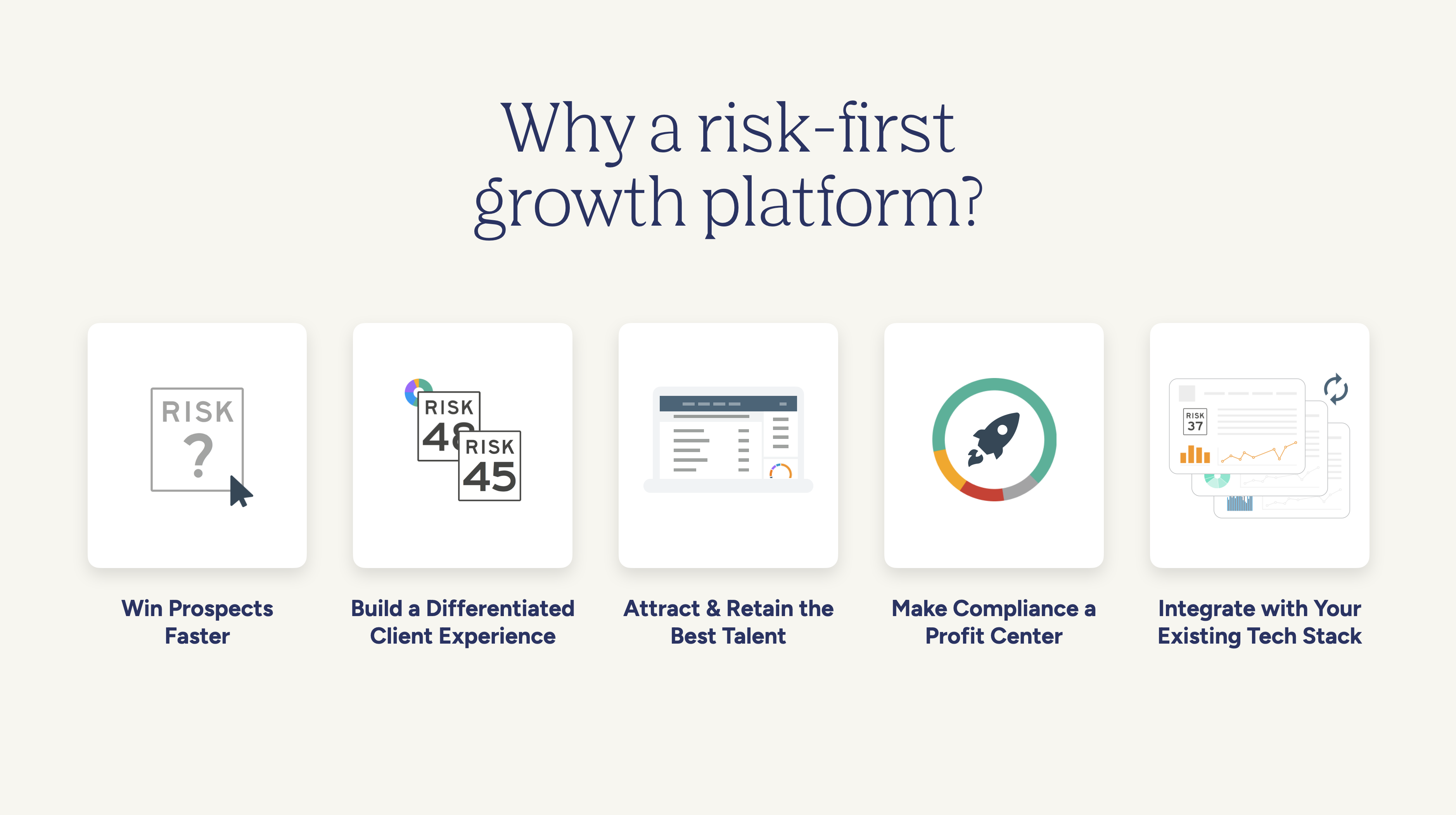
Learn how thousands of wealth management firms win prospects faster, personalize the client experience, leverage sophisticated analytics, and make compliance profitable with the Nitrogen growth platform today.

4 Tips to Increase Lead Generation for Financial Advisors

No matter what methods you’ve used to build your practice so far, one thing’s for certain: technology is changing the way people find financial advisors. 

Cold calling and word of mouth may have helped you build a solid book of business. But if growth is your firm’s primary goal, you’ll likely need to embrace the power of lead generation. In fact, 39% of financial advisors say lead generation is their marketing focus this year.

In this article, we’ll discuss four ways to improve lead generation for financial advisors from digital marketing to referral strategies. By implementing these tips into your practice, you’ll have the “secret ingredients” needed to bring more qualified leads to your inbox without spending hours of extra time on outreach.

Tip #1: Increase referrals

What’s one of the most effective ways to drive leads to your inbox? By giving your clients something tangible they can take home and talk about with their friends and family.

It can be challenging for a client to quantify the value an advisor brings to their life, especially when you look beyond returns and portfolio performance. But giving your clients something they actually want to discuss and share with others is one of the surest ways to increase referrals.

For example, Nitrogen Risk Assessments help clients take their financial well-being into their own hands — and walk away with something quantitative to discuss with both their advisor and family members.

For RIAs looking to grow in 2023, this is a huge opportunity. Client referrals are the number one source of lead generation for advisors. 

People want to know that they can trust you with their hard-earned wealth before opening up about their financial life and future goals.  Knowing their friends, coworkers or family members have had positive experiences with you helps ease those worries and builds a level of trust right off the bat.

Tip #2: Improve your circle of influence relationships

A common source for leads that shouldn’t be taken for granted is your own circle of influence. Maybe you’re familiar with local CPAs, insurance agents, attorneys, real estate agents, or other professionals. 

You might even send clients their way from time to time. If you find that they aren’t reciprocating, perhaps it’s time to give your professional network and colleagues proof of results. 

To do right by their own clients, other professionals tend to be particular in their referrals. They want to know that you’re going to provide an exceptional level of service and work in their client’s best interest.

One way to showcase your expertise and level of commitment to the client experience is to share how you incorporate Nitrogen’s full suite of services into your practice.

From helping prospective clients self-qualify to automating touch points and providing tailored portfolio guidance, the full Nitrogen process helps advisors deliver an unparalleled client experience. Sharing this information with your circle of influence should help them feel more comfortable and confident in sending more leads your way.

Tip #3: Turn up the leads

If your website feels like a glorified business card, it’s time to turn it into a dynamic, lead-generation machine. 

In 2023, it’s not enough to have your website looking like a Yellow Pages listing. While it may effectively tell your story and provide basic info about your firm, there are plenty of opportunities to build a two-way conversation with site visitors.

Your website should help readers self-identify as good potential clients by using tools like lead magnets and questionnaires.

Lead magnets are valuable pieces of content that a viewer typically has to provide certain information in order to access, like a name and email address. Lead magnets can be ebooks, fact sheets, case studies or checklists. But the most effective lead magnets are interactive with the viewer, such as quizzes or games.

A lead generation questionnaire is another way to create engagement with your website viewers. Again, this is a tool designed to improve lead generation for advisors. In order to access the questionnaire, viewers will need to provide their contact information. The benefit of a lead generation questionnaire is two-fold. As the advisor, you get access to a potential client’s contact information, and your lead gains valuable insight into their unique tolerance for risk.

Tip #4: Bring in more traffic

Once you turn your website into a lead generation machine, you can crank up the volume on traffic by creating and launching a content marketing campaign.

To start, take some time to define your ideal target audience. Create personas for them to better identify their pain points and determine how they spend their time online. For example, if your ideal client is a surgeon, their pain points may include adequate insurance coverage, student loan debt repayment, and managing their complex compensation package.

Once you know who you’re trying to attract and what issues they’re facing, you can develop a few pieces of targeted content — blogs, videos, checklists, etc. Follow best SEO practices to help boost your position in the right search engine results, and promote your content wherever possible.

If you’ve been collecting names and emails through your lead magnets and quizzes, you might find it most useful to share your content in a weekly email newsletter. Or, if you’re focused on growing your social media presence, sharing on Twitter, LinkedIn and Facebook may be a great place to start.

Discover the premier lead generation tool for advisors 

The long-term success of your firm is dependent on your ability to continually grow and attract new, qualified leads. Yet, the manual, old-school way of obtaining clients is time-consuming and lacks personalization. But if you’re trying to double your leads without doubling your efforts, enhance your tech stack by incorporating Nitrogen’s solutions into your existing workflows.

Nitrogen offers integrated tools that are designed to help advisors attract new clients, close the deal, and deliver a tailored client experience. 

Learn more about how to grow your business with the 100 Ideas to Grow Your Firm ebook. 

Improving the client experience for the next generation of investors

For years, the majority of financial advisors have identified Baby Boomers as their ideal client market. They’ve focused their efforts on attracting and retaining this generation for easy-to-understand reasons — those in their 50s and 60s have the highest net worth and need help preparing for retirement. In fact, Baby Boomers own 50.4% of the nation’s wealth, compared to just 6.6% owned by millennials.

But Baby Boomers are aging, and that means the Great Wealth Transfer is coming. In other words, the majority of private wealth (remember, 50.4% of the nation’s wealth) is going to be passed down to younger generations over the next few years. And soon, your target audience will change.

But how will the communication preferences of the next generation impact advisory firms? A younger audience, say Gen X and millennials, expect a personalized client experience in wealth management that’s driven by opportunities for digital connection. As a prime example, 43% of today’s investors use a mobile app to access their investments.

Advisors must incorporate the tools and platforms needed to deliver exceptional customer service while meeting the communication preferences of this new target market. If not, it’s likely they’ll be facing an uphill battle in meeting their long-term growth goals.

This blog will provide a look at how the more “traditional” client experience impacts opportunities for growth, and what forward-focused advisors can do to embrace technology and better serve clients. 


Why the “traditional” customer experience isn’t working anymore

When the way you’ve been doing business has been working for decades, it can be hard to find a reason to change things up. But firms that get “stuck” in their ways are going to miss out on crucial growth opportunities as the new generation of wealth builders emerges. In fact, around 80% of millennials are preparing to work with new financial advisors, rather than sticking with the planners their parents used. 

If you aren’t adjusting your customer experience to fit the needs of this growing audience, you’re likely going to lose out to someone else who will.

So what, exactly, is wrong with the traditional customer experience in advisory firms? 

Here are three primary areas of concern:

Old school practices

Money is incredibly personal, and advisors recognize that they need to establish trust with new clients. Traditionally, they believed the best way to do this was to meet face-to-face, shake hands, and have new clients tour the office.

It’s true that building familiarity and trust is easier when meeting in person, but it can be a big mistake to not give new clients the option to work together virtually. Everyone, including retirees, has grown accustomed to working or gathering virtually. It’s incredibly convenient and not having the option could turn potential prospects away.

The good news is, you can still establish trust with new clients and build a solid rapport, even if you’re sitting 1,000 miles away. People are more primed than ever before to do business online or over the phone, and working virtually doesn’t have to impede your ability to close the deal.

Lack of personalization

When you receive an email or postcard that starts with, “Dear Valued Customer,” you don’t feel especially “valued” — do you? Your clients feel the same way when it comes to your communications with them. In every aspect of your practice, you need to continually assure your clients that you care about the person behind the portfolio.

Generic communications makes people feel like they’re just a number. While that may be fine for utility companies or internet providers, it doesn’t sit so well with clients looking to trust an advisor with their hard-earned money.

But how can advisors offer a more personalized experience without adding hours to their day? By embracing automation and repeatable processes. Financial technology has come incredibly far in the last few decades, meaning it’s getting much easier for advisors to refocus their time and energy on personalizing the client experience in wealth management. Advisors are able to leverage timesaving processes while leaving room and flexibility for human interaction or connection.

Hesitance to embrace technology

Long gone are the days of stuffed file cabinets and desks crowded with paperwork. Advisors who still rely on manual processes are making it much harder than necessary to reach their growth goals for several reasons.

First, manual processes create more opportunities for human error. Even a simple mistyped number or incorrect client name can create costly and time-consuming errors. An advisor only has so many hours in a day, and they’re much better spent on client-facing initiatives.

Manual processes can be hard to follow and, even worse, hard to standardize. Your practice will never be able to meet a high level of efficiency and organization if it’s relying solely on manual processes. And when a new team member comes on board, they’ll be faced with the challenge of learning a process that isn’t recorded or easily repeatable.

Growth demands efficiency and scalability, both of which can only occur when firms successfully integrate technology into their practices.

Creating a stand-out customer experience at your firm

Now that it’s clearer why the “traditional” approach to the client experience is on its way out, it’s time to turn your attention toward the present-day approach to elevating the client experience in wealth management.

Offer virtual meetings

People like to have options. Maybe your clients do prefer to meet in person over a cup of coffee, but that doesn’t mean you should neglect other lines of communication. Even as life has resumed following the onset of COVID-19, remote meetings continue to be an important form of communication for many people.

To continue attracting and appeasing new clients, consider including them as a normal part of your practice, not just an afterthought. 

Make it simple for people to schedule digital appointments with your team, practice your virtual etiquette and offer the same level of professionalism you would when meeting with a new or existing client in the office.

Improve your online presence

Social media platforms, like Twitter, LinkedIn and Facebook, are effective places to both attract prospective clients and build your reputation as a thought leader. To use it effectively, you’ll need to build a plan, engage with your audience regularly, and create content that offers value.

If your website hasn’t gotten any attention in a while, consider this the perfect time to show it some TLC. Your website has the potential to both draw in qualified leads and serve as a resource center for your current clients. 

Curious to know what makes a website more effective? Check out our list of the top websites of 2023.

Provide a mobile-first experience

Around 60% of web traffic comes from mobile devices. If your website isn’t optimized to be viewed on smartphones or tablets, you may be turning away potential clients.

Aside from viewing optimization, consider how people tend to consume content on their mobile devices. Dense paragraphs and hard-to-read copy doesn’t engage mobile viewers. Instead, consider making your copy bite-sized and easy to digest. Share the most important information first, and give the viewer a reason to reach out and learn more. 

Prospects, especially those balancing a busy career with building a family, don’t have time to spend hours at their computer searching for an advisor. They need to know within a few seconds (maybe minutes) of finding you online how you can help and what the experience will be like.

Focus on personalization

Optimizing your online presence is critical, but knowing who your client is and how they prefer to work with an advisor is most important. 

When you invest in the right kind of technology, you have the ability to make your clients consistently feel seen and heard. Survey them regularly to learn about how they prefer to communicate and what you can change to improve their financial advisor-client experience.

According to Refinitiv’s Wealth Management Report, 57% of surveyed respondents preferred phone calls, 49% liked in-person meetings, and 48% would choose to communicate via email. The survey included participants across all regions and demographics, meaning you shouldn’t make assumptions about the communication styles of certain generations.

Just because someone’s under 55 doesn’t necessarily mean they’re opposed to meeting in person. Instead, give them options and take their feedback into consideration.

How technology shapes the financial advisor-client experience

What can advisors do to successfully implement technology and improve the client experience in wealth management?

If you haven’t embraced the power of virtual meetings yet, that’s a great place to start. You can use free or low-cost tools like Google Meet or Zoom to conduct your next introductory call, client check-in, or internal team meeting. Get comfortable conducting business in front of the camera, and you’ll have the distinct advantage of expanding your target audience and appealing to younger wealth builders.

Next, find ways to add a personal touch to the financial advisor-client experience without taking more time out of your day. For example, Nitrogen’s Check-In emails empower advisors to automatically gauge client sentiment without having to hop on a call, write an email, or have them come into the office.

When you fully embrace the benefits of going digital, you’ll find that technology can (and should!) power your entire process. Lead-generating platforms, like Nitrogen, can bring qualified prospective clients straight to your inbox — without any added legwork on your end. Enter your first meeting more prepared than ever before by pinpointing your potential client’s exact risk tolerance, demonstrating both your expertise and value.

As new prospects transition to happy clients, your integrated platforms can help drive your retention rates and improve the financial advisor-client experience. 

Develop and regularly analyze customized investor portfolios, run Stress Tests to challenge their “what ifs” and implement automated touchpoints. From onboarding to ongoing relationship management, tech solutions like Nitrogen can easily serve as your firm’s process powerhouse.

Grow your business with Nitrogen

Nitrogen recently helped a firm reach a 90% close rate by providing a simple risk questionnaire that every new client completes during their initial meeting. 

Giving prospective clients an inside look at their current financial standings and potential areas of growth helps advisors increase their perceived value and land new, qualified clients.

Click here to learn how one firm achieved a 90% prospect close rate with Nitrogen.

Learn How Advisors Use Nitrogen to Grow Their Business Without Sacrificing Client Service

As a mid-career advisor, you’ve put in the hard work to build a good-sized book of business – but that doesn’t mean you’ve left that growth mindset behind. Likely, your focus right now is on growing your business further and creating the best experience possible for your current clients.

Continue reading “Learn How Advisors Use Nitrogen to Grow Their Business Without Sacrificing Client Service”